Table of Contents
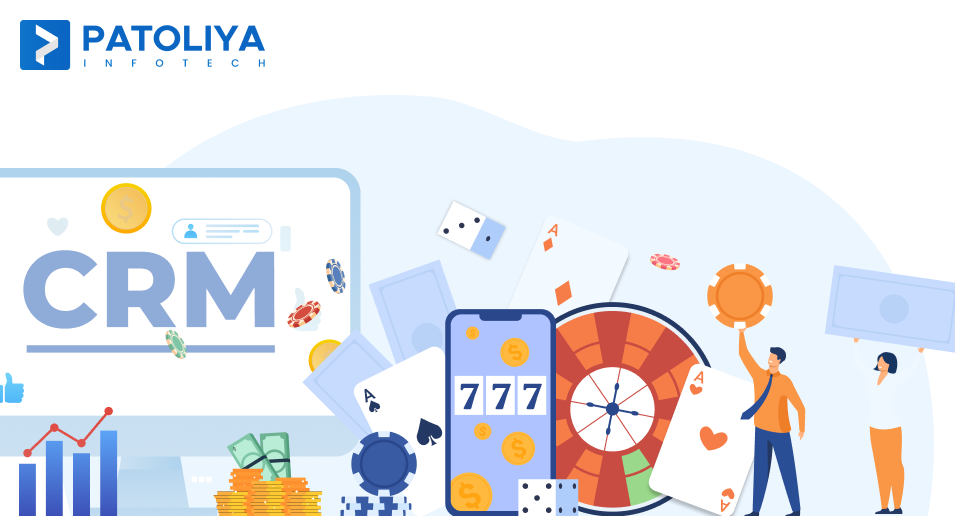
iGaming CRM strategy is important for igaming businesses that wish to maintain a long-term consumer base. Without clarity and strategy, businesses cannot go forward and take necessary action. CRM strategy is more than campaigns and traffic growth; it combines acquisition, engagement, monetization, compliance, and governance into a single executive-controlled system centered on player lifetime value (LTV).
iGaming CRM solution enables teams to gain visibility into player loyalty, forecast behavior before disengagement occurs, maximize incentives without sacrificing margins, and develop long-term trust. With the right strategies and KPIs, teams can identify the gap and take action to fill it.
Implementing the right kind of iGaming CRM strategy contributes to long-term success, and in this blog, we will go over all the strategies, KPIs, techniques, and other crucial information that businesses need to know in order to use CRM effectively and maximize return on investment.
Bringing in the right players is known as player acquisition. The emphasis is on players who are sincere, follow rules, and are likely to continue playing.
Affiliate Performance and Targeted Marketing: iGaming CRM displays which marketing channels and affiliates bring in valuable players. Teams monitor actual player value, prevent fraud or duplicate accounts, and allocate funds to high-performing channels.
Promotions and Brand Awareness: Bonuses and promotions should be tailored to the traffic source and comply with local regulations. By monitoring early player action, CRM helps manage bonuses, lessen misuse, and increase conversions.
First Session and Onboarding: Easy deposits, fast KYC, and simple sign-up are important. CRM keeps track of players' drop-off locations and helps them finish their initial session by delivering the relevant messages within the first 24 to 72 hours with the iGaming CRM strategy.
The goal of player retention is to maintain players' engagement, loyalty, and activity over time. By continuously providing players with reasons to come back, strong retention lowers churn and boosts lifetime value.
VIP Clubs & Loyalty Programs: The regular play and high-value players earn points, levels, and VIP programs as a reward. The CRM also tracks player actions and administers VIP, awards, and upgrades to the players automatically.
Customized Advertising: CRM sends bonuses, notifications, and game recommendations based on user activity. Personalized communication increases engagement and outperforms generic offerings.
Lifecycle Marketing: Lifecycle Marketing manages retention throughout the player lifecycle. iGaming CRM strategy enables campaigns that encourage churned gamers to return, onboarding for new players, and reactivation for inactive users.
Increasing player lifetime value is the main goal of monetization. Using the appropriate offer, time, and player results in a sustainable revenue increase through the iGaming CRM Strategy.
Upselling and Cross-Selling
CRM data facilitates the transfer of players across features and goods. Operators market casino games, give upgrades to high-value users, and recommend new games based on previous play. This increases Average Revenue Per User(ARPU) without compromising user experience.
Bonus Optimization & Dynamic Promotions: Real player behavior is what initiates promotions. CRM makes loss-recovery bonuses, event-based offers, and customized wagering rules possible.
Portfolio of Games and Content Optimization: CRM displays the games that convert, player dropout rates, and regional preferences. This enables teams to focus on long-term revenue content.
Responsible gaming and compliance protect the company, players, and regulators. An iGaming CRM strategy integrates these controls into every player engagement.
Data protection and regulatory compliance: CRM automatically applies location-based requirements, which helps with compliance with GDPR, KYC, and AML checks. All these features result in smooth operations while helping operators maintain compliance.
Gaming Responsibly and Protecting Players: CRM monitors player behavior to detect problematic patterns early. It makes clear communication, break times, and restrictions possible. As a result, responsible gaming is integrated into everyday activities.
Governance, Reporting, and Audit: CRM systems create regulatory reports, keep track of audit records, and manage sensitive data access. This promotes long-term licensing stability, increases transparency, and fosters confidence with regulators.
A player lifecycle-based iGaming CRM approach uses data, automation, and behavior tracking to manage players at every step of their journey. CRM increases player lifetime value, retention, and engagement by delivering the right offer, message, or action at the right time.
CRM and marketing systems must be closely aligned to attract the right players to an iGaming platform. Operators can see player quality, source performance, and early behavioral signals when CRM links campaign data, affiliates, and acquisition channels. iGaming software minimizes wasteful spending on low-value traffic and maximizes iGaming player acquisition through the iGaming CRM Strategy.
The first-time depositor (FTD) activation method uses early behavioral insights, timely incentives, and tailored instruction to guarantee that new players have a seamless initial experience and convert fast.
During the crucial first month, a successful early-life player nurturing approach, like within 1 month, introduces platform features, personalizes communication, and progressively increases interaction to foster familiarity and trust.
By matching offers, games, and content with player comfort, the player engagement ramp-up technique aims to increase activity while promoting exploration without overloading players.
Through planned events, reminders, and routine-based incentives that correspond with player behavior, an effective habit-formation technique of an iGaming CRM strategy produces consistent play patterns and long-term retention.
The retention and churn-prevention method uses tailored messaging, rewards, or assistance to keep players engaged by recognizing early warning indicators of disengagement.
Based on past engagement and player preferences, the reactivation or win-back approach revives inactive gamers with suitable promotions and experiences.
By rewarding dedication with tiered recognition, exclusive access, and milestone accomplishments, the long-term loyalty and advocacy strategy increases brand affinity.
By delivering additional products, formats, or higher-value experiences based on player behavior and engagement analytics, the player value expansion strategy optimizes lifetime value.
The exit and dormancy management plan guarantees that disengagement is managed appropriately, preserving prospects for future reactivation as well as trust and compliance.
Operators can effectively manage marketing, retention, and engagement resources to maximize profitability via the Lifetime Value (LTV)-driven iGaming CRM strategy, which prioritizes players who offer the most value over time.
By dividing players into specific segments using behavioral and transactional data, a micro-segmentation strategy enables tailored offers and campaigns that increase engagement and lower attrition.
CRM systems can rapidly modify messages, promotions, and incentives with a dynamic segmentation method, which tracks player movement across games, channels, and engagement levels in real-time.
By identifying top players and providing them with first-rate, customized experiences, the high-value player (VIP/HVC) strategy ensures advocacy, loyalty, and maximum lifetime revenue.
Optimizing spend for lower-value players, cutting back on pointless incentives, and sustaining engagement at the lowest possible cost are the major goals of a low-value and cost-control plan.
The bonus promo arbitrage containment iGaming CRM strategy ensures that the CRM system prevents players from abusing promotions so that the margins are not impacted, while the engagement level of players remains unaffected.
In understanding player intention, behavior, and betting activities, it is possible to distinguish recreational players from professional ones and thus make recommendations through offers, communication, and risk management.
The CRM solution is able to offer targeted cross-sell and upsell marketing to optimize overall player lifetime value by means of a cross-product value segmentation method, whereby player activity is evaluated across multiple products.
The geographic-segmentation iGaming CRM strategy considers the region-specific laws, customs, and behavioral trends to ensure campaign, offer, and communication optimization.
Incentives can be tailored to retain more players and increase the conversion rate. The segmentation of currencies and payment methods relies on preferences for payments and deposits, and payments.
Each player will have a personalized experience starting from the time they are onboarded, right up to engagement, due to the player journey orchestration iGaming CRM strategy that is made possible by the CRM.
In addition to that, the game and content personalization technique ensures the provision of the right games and features to the right players at the right time so as to enhance pleasure, engagement, and playing time.
The offer and bonus personalization technique ensures that promotions are timely, profitable, and relevant by customizing incentives to each player's behavior and value.
In an attempt to reduce exhaustion while keeping respondents engaged and reacting, the tailored communication pace method helps to maximize the number and timing of communications.
The UX-driven CRM process is based on product behavior to trigger offers, nudges, and specific communications through precise actions performed by the player in real time.
CRM systems may rapidly modify offers, messages, and content based on player actions, engagement signals, or session dynamics to the real-time personalization strategy.
In order to increase player retention and revenue, the recommendation engine-driven iGaming CRM strategy leverages machine learning to offer games, features, and promotions that align with player preferences.
By ensuring that messaging, content, and offers are pertinent and timely for players worldwide, the language, cultural, and timezone personalization approach improves engagement.
By customizing communications and promotions based on player attitude, such as recent victories or defeats, the emotion-based marketing strategy promotes engagement while preventing negative ones.
In order to maximize lifetime value and ensure long-term loyalty, the player preference learning and adaptation technique regularly evaluates behavior and interaction patterns to improve customization.
Ensuring a seamless and connected experience for players across email, apps, websites, SMS, and support through omni-channel engagement orchestration.
The appropriate emails are sent at the appropriate times with the help of the email lifecycle automation technique. New players receive welcome emails, inactive players receive reminders, while devoted gamers receive prizes automatically.
The goal of the push notification optimization method is to offer timely and relevant alerts that entice gamers to come back and play without overwhelming them with messages.
The SMS and WhatsApp CRM technique uses clear, prominent messages for important announcements, deals, or reminders, especially when quick attention is needed.
The app and onsite messaging strategy directs players in real time while they are already on the platform by showing them deals, guidance, or useful messages.
By integrating support conversations with player history, the customer support-integrated iGaming CRM strategy enables teams to offer quicker and individualized assistance.
In order to strengthen ties and promote player involvement, the social and community iGaming CRM alignment strategy connects social platforms and communities with CRM data.
In order to prevent communication from becoming overwhelming, the channel fatigue and frequency management method regulates how frequently participants are contacted.
Teams can concentrate on what truly motivates player involvement with the channel attribution and performance approach, which keeps track of the most effective communication channels.
If the primary channel fails, the failover channel iGaming CRM strategy ensures that messages continue to reach participants via a backup channel, ensuring continuous communication.
The goal of a successful bonus optimization approach is to maximize impact while minimizing expenses.
Operators make sure bonuses drive actual player value and not margin loss by monitoring bonus ROI, implementing risk-adjusted incentives, and utilizing customized wagering limitations.
Non-cash incentives like status and special access boost loyalty even more without raising advertising expenditures.
While cashback and time-bound offerings of the iGaming CRM strategy increase activity without long-term dependence, gamification and loyalty levels promote recurring play to sustain engagement responsibly.
Promotions that promote healthy play, lessen misuse, and safeguard player trust and long-term profitability are all ensured by a responsible incentive framework.
The predictive churn detection method looks for early indicators that a player might quit using player behavior data. This enables CRM to respond fast with the right offer and message.
The next-best-action CRM method assists each player in determining the optimal course of action, such as making an offer, recommending a game, or delaying contact.
The propensity-to-deposit or bet technique forecasts the likelihood that a player will deposit money or place a bet. As a result, Teams are using offers and messaging more efficiently.
By estimating future player value based on historical performance, the player value forecasting technique enables operators to make larger investments in players who are likely to result in long-term benefits.
By testing and modifying messages, offers, and timing to get better outcomes with less manual labor, the AI-driven campaign optimization technique of the iGaming CRM strategy continuously improves campaigns.
The real-time trigger-based CRM approach delivers relevant notifications at the appropriate time in response to player actions, such as deposits, wins, losses, or inactivity.
CRM data is utilized in the fraud and abuse detection strategy to identify unusual patterns, bonus misuse, and suspicious activity. This helps protect platform integrity and income.
The cross-sell propensity modeling technique analyzes which users are more likely to try new goods, such as switching from casino to sportsbook. This results in effective cross-sell campaigns.
To enhance player involvement and activity, the seasonality and event-based CRM planning strategy synchronizes campaigns with key events, holidays, and sports seasons.
Offer suppression is a machine learning-driven method that determines when an offer should not be sent. This lowers pointless bonuses, message fatigue, and wasteful spending through an iGaming CRM strategy.
CRM systems monitor player activity to detect risk early on and automatically implement measures such as warnings, spending limitations, cooling-off periods, and self-exclusion.
CRM flows based on KYC and AML modify access and communication until verification and risk assessments are finished. this ensuring safe and legal participation.
Simultaneously, jurisdiction-specific regulations ensure that messaging and offers comply with local laws in every segment.
Full communication tracking ensures that every activity is transparent and audit-ready. Operators encourage responsible play without sacrificing company expansion by emphasizing player trust and long-term viability.
Dedicated account managers and CRM automation are combined in VIP and relationship-driven iGaming CRM strategy to provide high-value players with highly customized experiences. High-touch retention and white-glove onboarding ensure that VIPs feel appreciated through significant interaction.
While exclusive prizes, events, and cross-brand offers boost lifetime value, CRM solutions identify early churn among the top players and initiate prompt measures. Profitability governance ensures that VIP investments continue to be viable and profitable.
CRM is used in the game launch and feature adoption strategy to market new games or features to the appropriate gamers. This facilitates their quicker discovery and adoption of upgrades.
Campaigns are planned around significant sporting seasons and events using the sports calendar-driven CRM approach. This guarantees that content and offers are updated and relevant.
The performance at the provider level CRM approach monitors the performance of games from many suppliers and leverages this data to advertise the top-performing content.
The A/B testing technique for content and offers analyzes various messages, games, and incentives to see which performs best. this helping teams to improve results over time.
By leading players from discovery to play, reward, and re-engagement, the engagement loop optimization technique aims to generate repeat play.
Simply assisting players in finding games they are most likely to enjoy, the personal game discovery technique increases player satisfaction and session duration through an iGaming CRM strategy.
CRM initiatives generate business value through measurement, governance, and executive control techniques.
A CRM KPI framework that is backed by incrementality measurement and cohort tracking helps executives in understanding factors that extend surface-level involvement and affect growth, profitability, and retention.
Strong governance strikes a balance between revenue and player engagement, and A/B testing keeps advertising getting better.
A well-integrated CRM tech stack, executive dashboards, and cost-to-serve tracking provide leadership with complete visibility and control.
A long-term CRM maturity plan guarantees that CRM capabilities develop sustainably as the company expands.
Ignoring Player Lifetime Value (LTV): A lot of operators prioritize player acquisition numbers over quality. Increasing traffic without tracking LTV results in low engagement, high churn, and wasted marketing expenditures.
Over-rewarding bonus-dependent players: While generic or excessive promos may momentarily boost engagement, they also lower profitability and promote bonus abuse. CRM needs to monitor player behavior and bonus ROI.
VIP expansion without profitability governance: VIP accounts may become financially unprofitable if high-value player expenses, net revenue contribution, and ROI are not tracked.
Gaming responsibly is viewed as a compliance checkbox: The long-term reputation of the business, player safety, and trust are all at danger if responsible gaming is not integrated into CRM flows.
CRM performance evaluated without incrementality: Campaigns that solely rely on openings, clicks, or reactivation fail to determine whether they generate more deposits, bets, or engagement. Testing for incremental impact ensures that CRM initiatives produce measurable business value.
| Key points | Key tactics | KPIs to measure |
| Player Acquisition | Personalized onboarding flows, welcome bonuses, KYC completion, and analysis of which methods have the most appealing players can help new players from creation to first funding. | Time to First Bet, Drop-off Points, First-Time Depositor Rate, Registration-to-First Deposit Conversion, and Cost per Acquisition (CPA). |
| Player Engagement and Retention | Behavior-driven triggers, personalized rewards, and cross-channel communication and challenges that make playing fun and rewarding will keep them coming back. | Churn Rate, Campaign Engagement Rate, Daily or Monthly Active Users, Retention Rate, Session Frequency, and Length. |
| Revenue and Lifetime Value Optimization | Boost player loyalty and ARPU (Average Revenue Per User) with player segmentation, cross-sell games, dynamic offers, and personalized VIP experiences through an iGaming CRM strategy. | Lifetime Value (LTV), Deposit Frequency and Average Bet, Bonus ROI, Average Revenue Per User (ARPU), and VIP Revenue Contribution. |
| Responsible Gaming and Compliance | Risk-scoring systems, real-time alerts, limit enforcement, and self-exclusion controls help to protect players and ensure audit readiness. | Players with Limits, Self-Exclusion Rate, Compliance Incidents, Responsible Gaming Intervention Rate, and Regulatory Audit Pass Rate. |
| Campaign Performance and Optimization | In fact, to avoid the issue of message overload, it is necessary to conduct more intelligent campaigns through the use of dashboards, journey mapping, A/B testing, and suppression logic in the iGaming CRM strategy. | Campaign ROI, Unsubscribe Rate, Incremental Revenue, and Message Engagement vs. Frequency. |
| Data and CRM Platform Effectiveness | Intelligent and integrated player profiles, real-time data import, predictive analytics, and business intelligence reporting will keep your CRM system up to date and help teams to act quickly. | Time to Launch Campaigns, CRM Usage by Teams, Accuracy of the Predictive Model, Completeness of the Profile Information, and Freshness of the Data. |
Operators can effectively manage the entire player lifetime by organizing CRM around the four pillars of acquisition, retention, monetization, and compliance. AI-driven decision-making, omni-channel orchestration, data-driven segmentation, and real-time personalization create valuable, timely, and relevant interactions securely.
This is where iGaming CRM's real value for executive teams lies: clear KPIs, incremental measurement, governance frameworks, and audit-ready operations. Therefore, CRM becomes marketing execution within the corporate strategy plan, where lifetime value is maximized, player trust is maintained, and growth is sustained.
Long-term confidence from the regulator, resilient revenue streams, and sustained player connections are created through igaming CRM strategy.
The right quality and implementation of a CRM strategy is critical for software efficiency and use. The right development partner gives long-term direction and support, which makes everything easier. Work with Patoliya Infotech, which has years of experience and understands all of your execution concerns. We provide ongoing guidance and support in the long run, with quality software solutions.