Table of Contents
TL;DR: Restaurant CRM software connects guest profiles, POS data, and marketing in one system, helping restaurants increase repeat visits, personalize customer engagement, and turn loyalty into predictable revenue instead of guesswork.
Most restaurant groups already collect plenty of guest data, but it remains scattered across POS systems, reservation platforms, online ordering apps, and loyalty programs that rarely work together. Without a unified customer view, personalized marketing becomes difficult, loyalty programs underperform, and valuable repeat business is lost.
Restaurant CRM software solves this by turning fragmented guest data into a single customer profile that every location can access. This guide explains how it works, what it costs, where it outperforms basic POS loyalty modules, and how to choose the right vendor without getting locked into a solution that limits future growth.
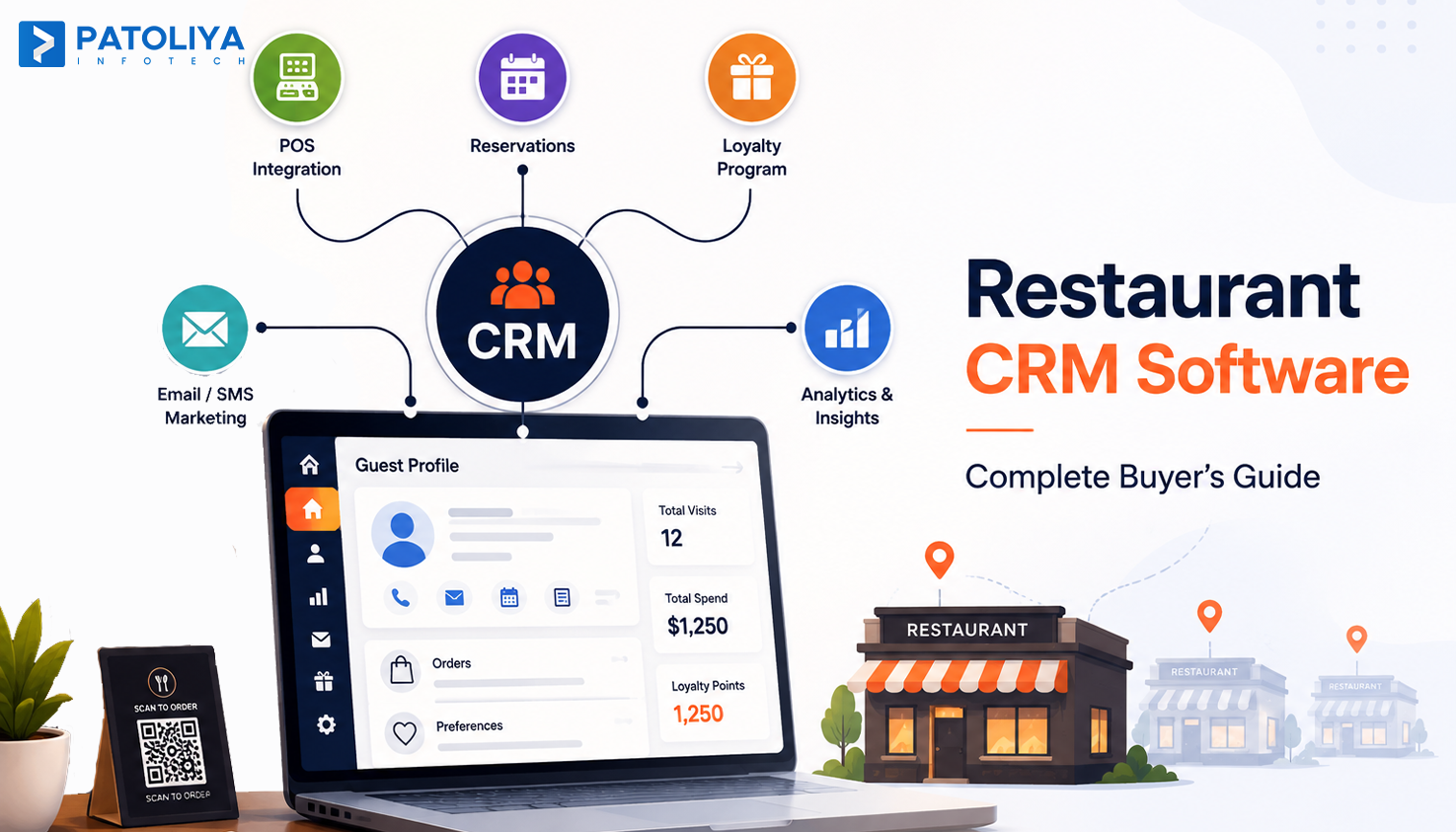
Restaurant CRM software is a system that stores every guest interaction across dine in, online ordering, reservations and delivery under one guest profile, then uses that profile to personalize marketing and rewards. Unlike a POS loyalty add-on, it builds one profile for each guest across every interaction.
A true restaurant guest data platform matches a guest across locations using phone number, email or card token, so a visit at one location updates the same profile as a visit at another. That single detail separates a real platform from a rebranded rewards app.
Here is the part vendors rarely explain clearly: matching accuracy depends on how many identifiers the POS actually captures at checkout. If your POS only logs card tokens, cross location matching breaks the moment a guest pays cash.
Restaurant CRM software typically bundles five core capabilities into one system, and missing any one of them turns the platform into a partial loyalty tool instead of true guest infrastructure.
| Capability | What It Actually Does |
| Unified guest profile | Merges POS, reservation and online order data into one record |
| Loyalty program automation | Triggers rewards, tiers and expiry without manual point entry |
| Segmented marketing | Groups guests by visit frequency, spend or menu preference |
| Real time POS sync | Syncs transaction data in real time instead of nightly batch |
| Reporting dashboard | Shows repeat rate, churn risk and campaign performance by location |
One common reason restaurant loyalty programs underperform is fragmented guest data. Most teams turn on a restaurant loyalty program software module and stop there, sending the same offer to every guest regardless of spend pattern. A guest who visits weekly and one who visits twice a year need different offers, and restaurant marketing automation software should split that list automatically based on visit recency, not require a manual export every campaign.
The honest take here: A platform without real-time POS sync between the POS and the CRM is not restaurant CRM software, it is a reporting tool with a loyalty skin.
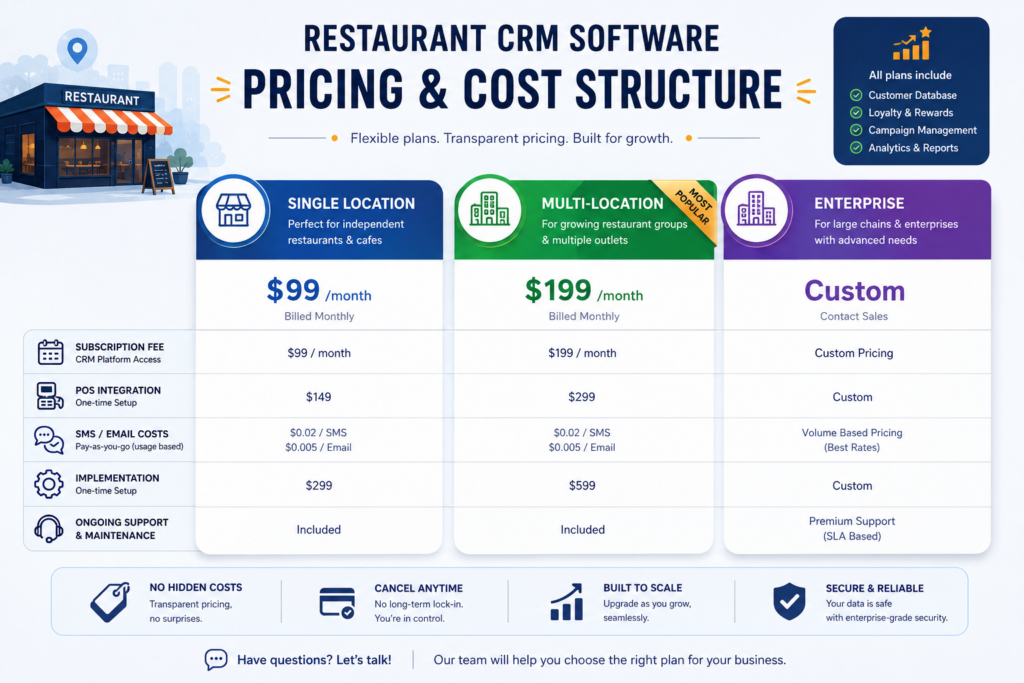
POS native modules track transactions inside one system only, so multi location matching needs a separate restaurant guest data platform layered on top. Fine for a single counter service shop, not for a five location group.
Generic CRM platforms like Salesforce, HubSpot and Zoho can run a loyalty program, but every guest field and trigger gets built from scratch. That setup cost erases what you saved by avoiding dedicated restaurant CRM software.
These apps handle points and rewards well but rarely touch table bookings or delivery orders, a gap real restaurant loyalty program software closes.
| Approach | Guest Data Depth | Multi Location Support | Marketing Automation |
| POS native loyalty | Transaction level only | Limited, per terminal | Basic or none |
| Restaurant CRM software | Full guest profile | Native, unified guest ID | Segmented, automated |
| Generic CRM | Configurable, generic fields | Yes, with setup | Strong, needs configuration |
| Standalone loyalty app | Rewards focused only | Varies by vendor | Limited without integration |
The biggest advantage of restaurant CRM software is its ability to recognize the same guest across every location. If accurate guest matching and loyalty are priorities, dedicated restaurant CRM software is the better choice because it's designed specifically for restaurant operations.
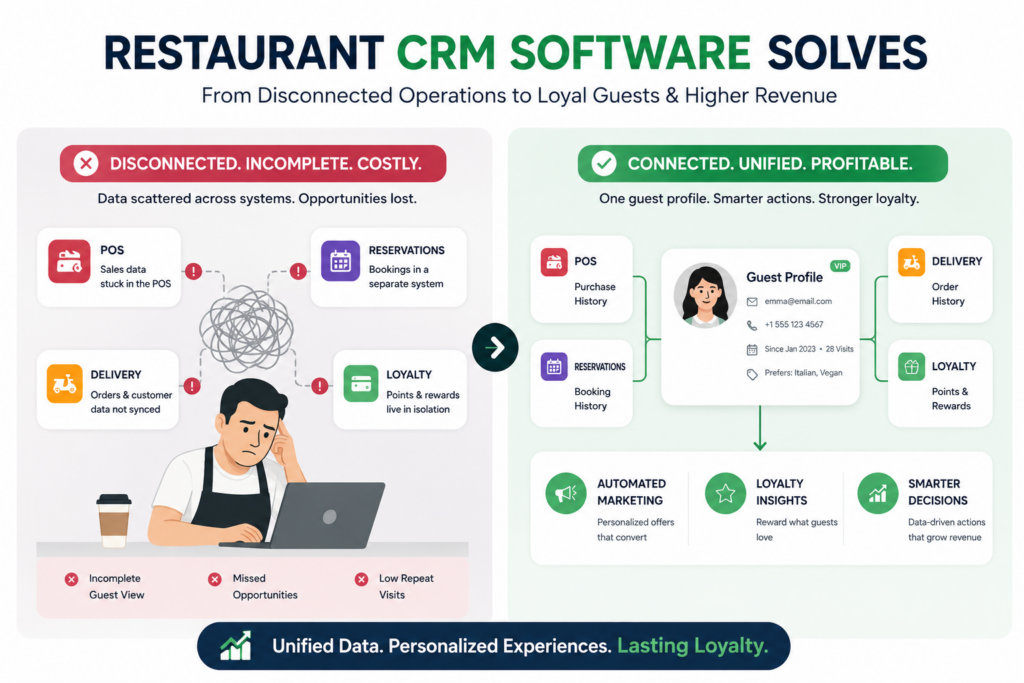
Expect a flat monthly fee for basic restaurant loyalty program software at this tier, usually covering one location and a capped guest list size. This tier rarely includes real time POS syncing, so data entry often stays partly manual.
Pricing shifts to per location fees once a brand crosses three or four sites, since real cross location matching now has to work across every terminal. Loyalty structures at this tier usually add tiered rewards and franchise level reporting.
Enterprise contracts are custom quoted and bundle restaurant marketing automation software, dedicated support and API access. Negotiate SMS and email sending volume separately, since that cost scales fast at national guest list sizes.
SMS and email sending fees, POS integration setup, and data migration from a legacy system all sit outside the advertised subscription price for most restaurant CRM software vendors. Ask for a full cost breakdown at your actual guest volume, not the entry level tier shown on the pricing page.
Month to month contracts suit single location owners testing a new vendor. Annual contracts usually unlock a lower rate but lock in a renewal window that is easy to miss.
A guest who receives a well timed win back offer spends again sooner than one who gets nothing. Restaurant CRM software turns that single insight into a repeatable system instead of a one off email campaign.
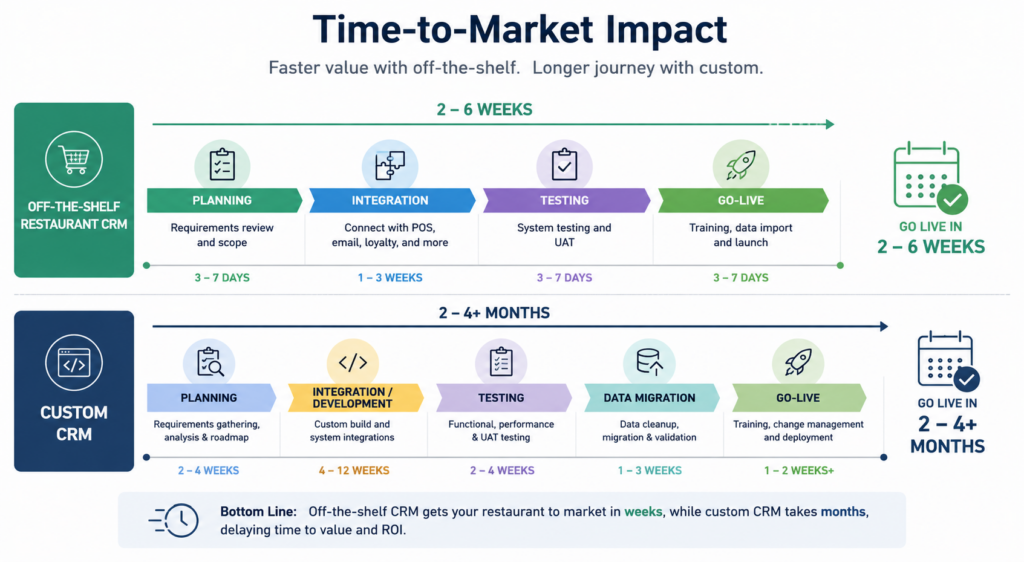
Off the shelf restaurant CRM software gets a single location live in weeks, while a custom build tied to a legacy POS can take months. Speed matters most for groups opening new locations on a set timeline.
The real ROI case for restaurant CRM software shows up at scale, not at one location. Per guest marketing cost drops as the same automation engine serves ten locations instead of one, since the segmentation logic does not need rebuilding per site. A five location group and a fifty location group run the same rules engine, so the marginal cost of adding a new site drops sharply once the initial setup is done.
most operators evaluate the platform on loyalty redemption rate alone, which undersells it. The bigger win is labor saved on manual reporting and manual segment building every single week.
A manager who used to spend three hours pulling repeat visit numbers by hand gets that time back once dashboards update automatically, and that saved time compounds across every location in the group.
Data Privacy and IP Risk: Guest profiles inside restaurant CRM software often include payment linked identifiers, so contracts need clear language on guest data export policies and who owns that data if you switch vendors later.
Communication and Timeline Risk: Custom built guest data projects slip when POS vendors change their API mid build. Confirm integration stability before signing a multi month contract.
Data Quality Risk: Restaurant CRM software is only as accurate as the data feeding it. A POS that does not capture phone or email at checkout breaks guest matching regardless of how good the platform is.
Front of house staff also need a reason to ask for that information at the register, since guests skip loyalty sign up when the ask feels rushed or optional.
Contract and Vendor Lock In Risk: Contract and vendor lock-in risk is real, some vendors make data export difficult on purpose, holding guest history hostage to push renewal. Ask for a sample export file before signing for the restaurant guest data platform, get the export format in writing as part of the contract for restaurant marketing automation software.
Run every restaurant CRM software vendor through this list before signing anything.
A quick look at five vendors restaurant groups compare most often when shortlisting restaurant CRM software.
A POS first vendor that bundles guest data and rewards directly into its own restaurant CRM software stack, built for brands already running Toast hardware.
Key Features: native POS bundled CRM and loyalty, single login for staff across POS and rewards, no separate vendor contract to manage.
Best For: single brand groups that want one vendor for POS and restaurant loyalty program software instead of stitching two systems together.
Client Review: 4.2/5.
A reservation and guest data specialist that connects table management, guest profiles and marketing under one system for full service dining.
Key Features: deep reservation and table data capture, guest tagging and preference tracking, marketing automation tied to visit history.
Best For: full service restaurants and hospitality groups needing a true restaurant guest data platform.
Client Review: 4.3/5.
A loyalty first platform under SumUp built for independent restaurants and small multi location groups that want simple rewards without enterprise setup.
Key Features: simple points based loyalty, fast single location onboarding, SMB focused flat rate pricing.
Best For: independent owners who want restaurant loyalty program software without a long implementation timeline.
Client Review: 4.1/5.
An enterprise platform under PAR Technology built for large franchise networks needing AI driven segmentation across hundreds of locations.
Key Features: AI driven guest segmentation, franchise level reporting and role based access, enterprise grade restaurant marketing automation software.
Best For: national chains and franchise networks running hundreds of locations.
Client Review: 4.0/5.
A payment linked loyalty platform that ties rewards directly to the guest's card, removing the app download step entirely.
Key Features: card linked rewards with no app required, automatic enrollment at checkout, guest data limited to what the payment network shares.
Best For: groups that want frictionless enrollment over deep guest profiling.
Client Review: 3.9/5.
| Vendor | Best For | Pricing Model |
| Toast | POS bundled restaurant CRM software | Add on to POS plan |
| SevenRooms | Full service and hotel F&B | Per venue, custom |
| Fivestars | SMB and independent | Flat monthly tiers |
| Punchh | Multi location franchise | Enterprise, custom |
| Thanx | Payment linked loyalty | Subscription or custom |
Pick based on what your POS already supports, not brand recognition alone.
Patoliya Infotech builds custom restaurant CRM software for multi-location restaurant groups whose POS and reservation systems don't integrate effectively with off-the-shelf platforms.
Our solutions include:
If your current restaurant loyalty program software treats every location as a separate guest list, that's a data architecture problem.
Book a consultation with Patoliya Infotech to discover what a unified restaurant guest data platform should look like for your business.
Restaurant CRM software has moved from a nice to have add on to core infrastructure for any multi location group serious about repeat visit revenue. The right choice depends less on brand recognition than on POS integration depth, multi location guest matching, and data portability, criteria that matter more than interface polish once loyalty spend is on the line. Before signing a contract, map your decision criteria against the checklist above and validate every vendor claim against your own POS and guest data for restaurant marketing automation software.
Let's talk about what restaurant CRM software should look like for your locations.