Table of Contents
Modern developing teams release code numerous times a day, making manual testing and deployment inefficient. A structured CI CD pipeline automates code integration, testing, and deployment. This supports teams to produce software more consistently, quickly, and reliably.
Organizations can reduce production errors, speed up release cycles, and grow engineering without incurring additional costs by using DevOps Experts to implement efficient CI CD automation and a continuous delivery pipeline. Automation improves the quality of releases and helps developers avoid deployment tasks to work on feature development.
This blog explores the value of CI CD pipelines in practical applications. The value of CI CD automation for product growth, and how a continuous delivery pipeline helps deliver reliable and high-quality releases. Engineering teams can accelerate feature delivery, achieve consistent releases, and handle fast growth while keeping things stable by looking at practical applications, challenges, and viable solutions.
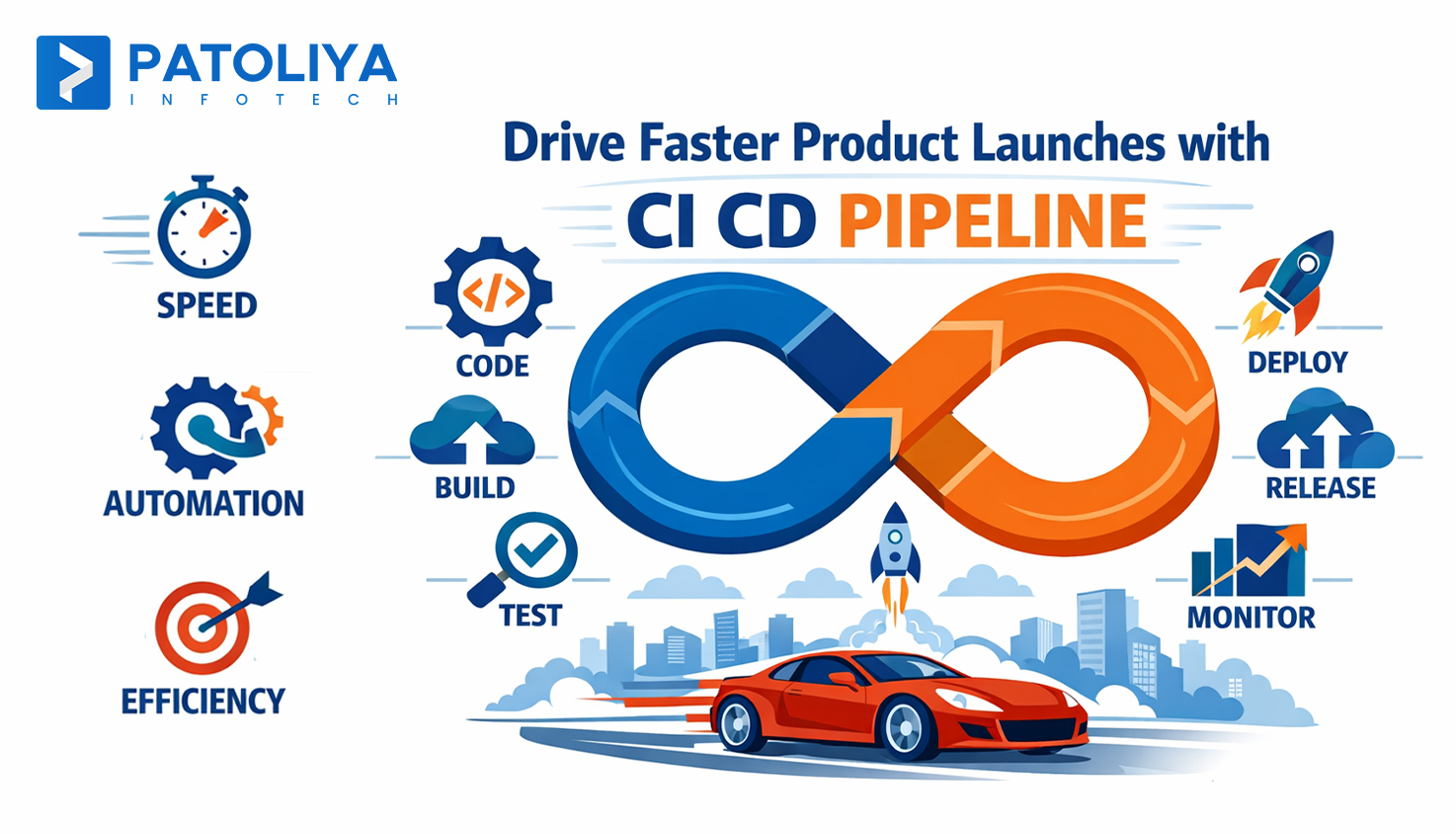
CI CD pipelines establish an automated process that effectively moves software from development to production settings. Pipeline orchestration is used in a well-designed DevOps pipeline system to manage security scans, builds, tests, and deployments. As a result, software quality increases and release cycles are shortened.
Developers combine updates into an integrated codebase. Automated builds and static code analysis are initiated with each commit through CI CD automation. Test suites evaluate integration and functionality in real time.
Continuous integration tools help in quickly verifying code quality and compatibility. Early problem identification keeps development cycles effective and stops defects from spreading downstream.
Deployment automation forces validated builds into staging environments as they go via a continuous delivery pipeline. This is where acceptance testing, environment checks, and infrastructure configuration take place through the CI CD pipeline. Approval gateways give release managers authority over the final distribution to ensure traceability and compliance.
Code that passes every validation goes straight to production when continuous deployment is enabled. The entire procedure is automatic through CI CD automation. When performance problems occur, monitoring and alert systems allow for immediate fixes by tracking the functioning of the system.
The CI CD pipeline eliminates the need for manual release approval and build coordination. Commit automatically starts builds, validations, and deployments using structured CI CD automation. As a result, teams can push upgrades reliably and frequently without experiencing operational friction, and release cycles are shortened.
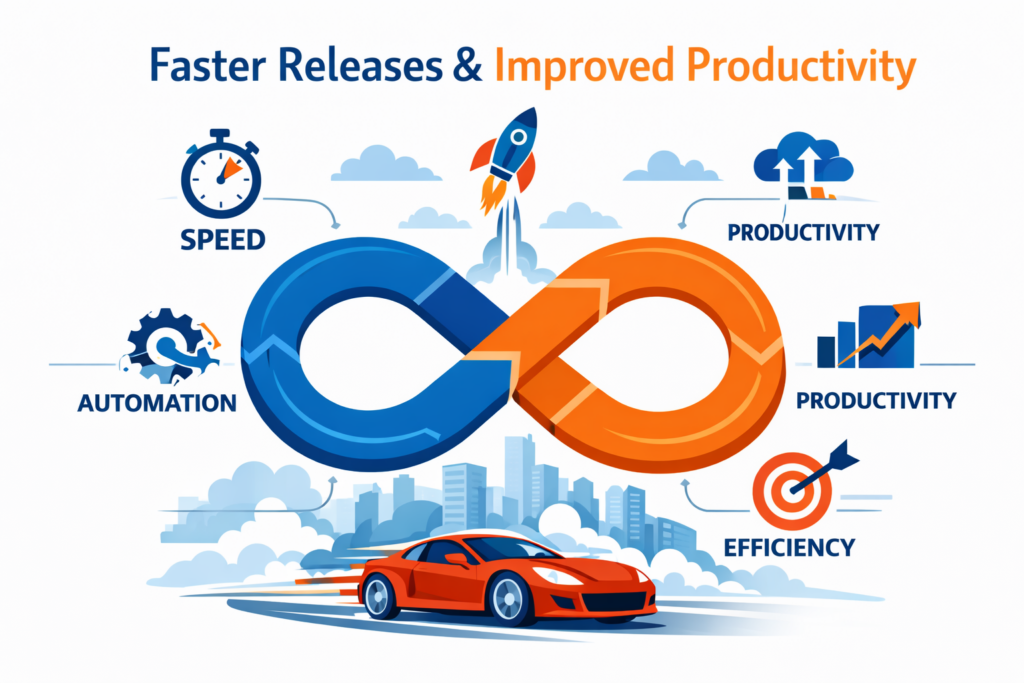
Each update is tested using an automated delivery pipeline and using regression, integration, and unit tests. If defects are detected early, unstable code may not continue to run. Continuous delivery of the CI CD pipeline and validation reduces the need for last-minute production fixes while increasing code stability.
Production systems are protected through CI CD pipelines, sequential rollouts, automated rollback mechanisms, and integrated monitoring. Teams can quickly restore previously stable versions in the event of failure, reducing downtime and impact on customers with CI CD automation.
An effective continuous CI CD pipeline delivery system, controlled by pipeline orchestration and based on a disciplined DevOps pipeline setup. Engineers prioritize feature innovation above release operations.
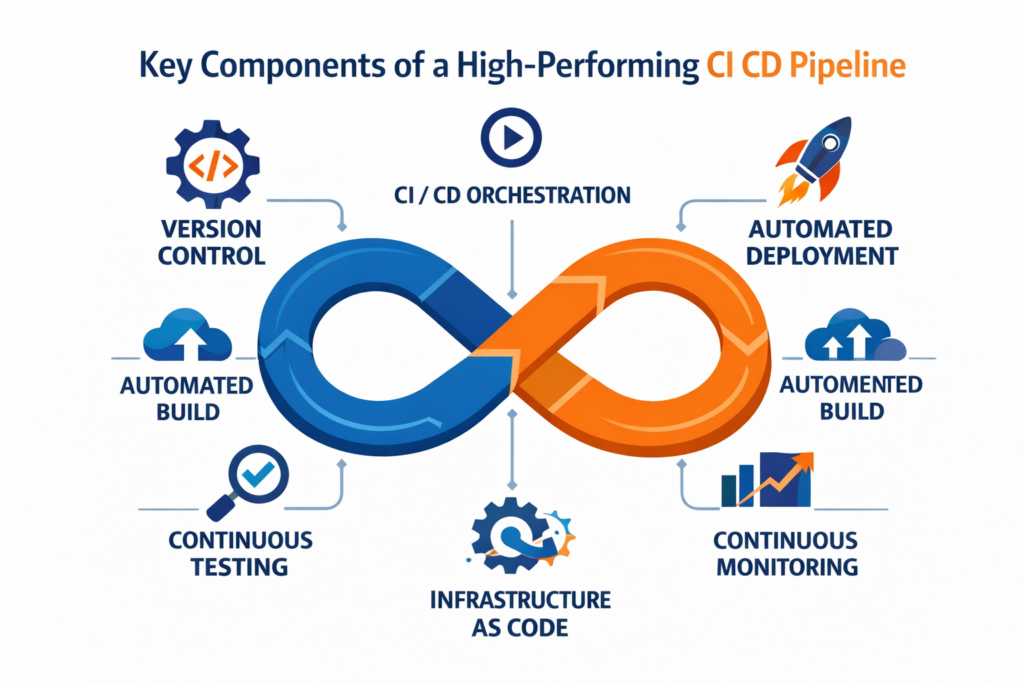
A strong source control system is the first step towards a good CI CD pipeline. Code is continuously versioned through branching techniques, pull requests, and GitOps workflow, facilitating collaboration and reducing integration conflicts.
For instance, for every feature, developers make a new branch, which they only merge into the main after passing internal code review checks.
The build automation layer packages artifacts, manages dependencies, and compiles the code using continuous integration tools. During deployment, a well-planned build and release pipeline minimizes human error and guarantees reproducibility for the CI CD pipeline.
For instance, every time a change is committed, the internal build server automatically creates deployable artifacts and compiles new code.
Automated testing is essential for better quality releases of the CI CD pipeline. Automated testing pipelines ensure code reliability and detect problems early by running security checks, integration tests, and unit tests.
For instance, before code continues, internal test scripts are triggered by each commit to confirm essential functionality.
Controlled progress through staging, QA, and production is encouraged through an organized continuous delivery pipeline. Deployment automation ensures consistent environments and seamless releases through infrastructure expertise to reduce the need for manual intervention in the CI CD pipeline.
For instance, before going to production, code is automatically deployed to staging for internal verification.
Pipeline performance and errors are tracked using dashboards and notifications. Feedback loops help in the early detection of problems and the ongoing enhancement of the CI CD pipeline for dependability and effectiveness.
For instance, if a deployment fails, the team is notified internally so that problems can be fixed quickly.
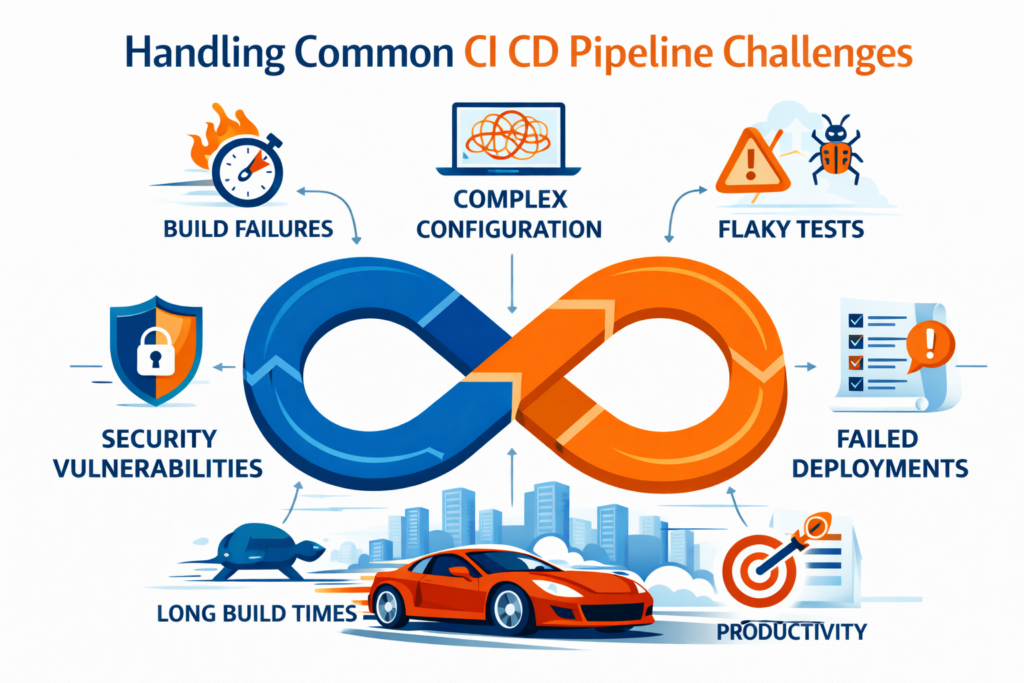
When builds are sequential and test suites are extensive, a CI CD pipeline can slow down. Execution speed is increased through task division, parallel testing, and build step optimization. Using continuous deployment tools speeds up and automates the delivery process.
Unreliable testing can prevent deployments and undermine automation confidence in CI CD pipelines. Accurate findings are ensured when test reliability is increased using repeatable techniques, stable test data, and consistent settings.
To cut down on false negatives, automated test retries and the separation of sluggish integration tests from quick unit tests are implemented. Tests that are in line with a GitOps procedure ensure that environments are consistent across branches, avoiding configuration drift-related failures in the CI CD pipeline.
Deployment problems can result from variations between development, staging, and production. All environments stay synchronized and predictable when infrastructure as code and automated configuration management are used in the release management process of the CI CD pipeline.
Late vulnerability detection raises the risk. Implementing automated scanning and moving security checks to the left as part of pipeline monitoring helps identify problems early and ensure safer deployments.
CI CD automation becomes more reliable, efficient, and secure throughout the continuous delivery pipeline when all of these issues are resolved in a practical and integrated manner.
Patoliya Infotech creates a CI CD pipeline based on the team's requirements and the product's maturity. Every DevOps pipeline configuration is built to facilitate scalable workflows, modular development, and effective code integration. this ensure architecture expands along with your product. By doing this, integration bottlenecks decreased, and the basis for quicker release cycles was formed.
To provide complete CI CD automation, we combine continuous integration and deployment tools. Code flows smoothly from development to staging and production within a continuous delivery pipeline with automated builds, testing, and deployments of the CI CD pipeline. Discuss your needs to see how a structured CI CD pipeline automates your workflow and removes operational friction
Compliance and security checks are directly involved in the build and release process, reducing vulnerabilities and production risk in the CI CD pipeline.
Our Teams can look for areas of inefficiency, minimize the number of manufacturing defects, and maximize the overall speed of engineering through continuous pipeline monitoring and optimization. The measurable outcomes include faster release cycles, fewer deployment errors, and quicker delivery times for new features.
A properly crafted CI CD pipeline is a highly valuable asset for today’s development teams. By leveraging the creation of a continuous delivery pipeline and the automation of CI CD, organizations can reduce production defects, accelerate release times, and improve engineering productivity. Organizations can scale and produce high-quality software at all times due to the reliability that a structured pipeline provides.
A CI CD pipeline ensures consistent deployments, whether new products are being introduced or old systems are being upgraded. Businesses can use automation and integrated monitoring, which results in a quicker time to market, fewer defects, and increased confidence in their software delivery processes. Prioritizing automation and monitoring helps organizations increase their engineering velocity, deployment reliability, and overall company adaptability in measurable ways.