Table of Contents
TL;DR: Multi-tenant architecture decides whether your SaaS product scales smoothly or breaks under its own growth. Pick the wrong isolation model early, and you pay for it later with security gaps, slow queries, and lost enterprise deals. The right pattern depends on your compliance needs, not your current headcount.
Picking a database model on day one can quietly decide whether your SaaS company closes enterprise deals five years from now. Most founders treat multi-tenant architecture as a backend detail. It is actually a business decision that touches pricing, security, and how fast you can onboard a new logo. Weak SaaS tenant isolation turns into lost contracts the moment a security questionnaire lands in your inbox.
This guide breaks down the real patterns behind multi-tenancy SaaS design, where teams get it wrong, and how to pick a model that still works when you have ten times the customers you have today.
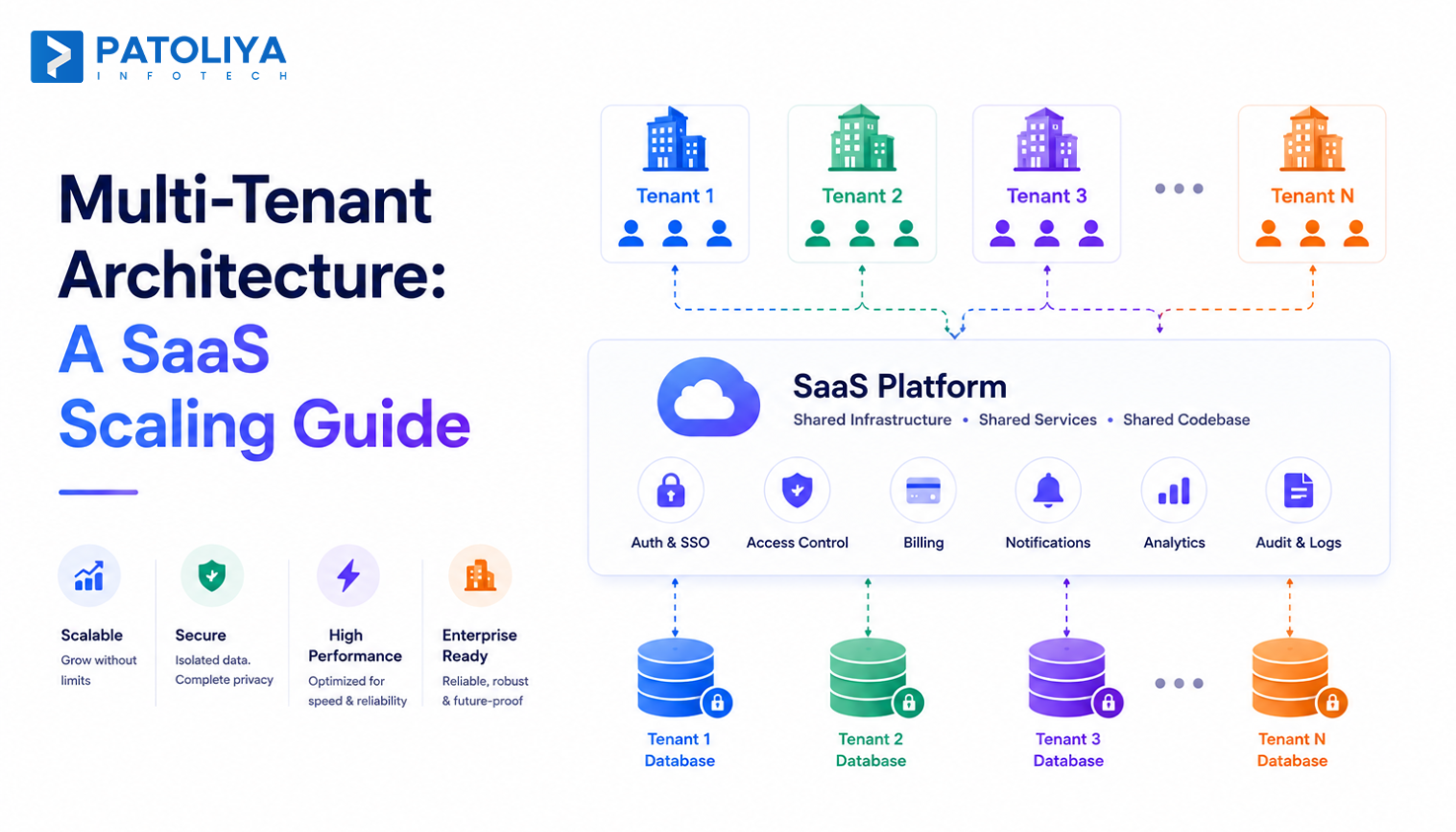
Multi-tenant architecture means one application instance serves every customer, but each customer's data stays separate inside that shared system. Think of an apartment building. Everyone shares the same walls, plumbing, and roof, yet each unit has its own locked door. That locked door is what good SaaS tenant isolation actually protects.
Why Most SaaS Products Start with Multi-Tenant Architectures
Early-stage SaaS teams pick multi-tenant architecture because spinning up one shared environment costs far less than building separate stacks for every signup. In multi-tenancy SaaS design, it also means one deployment fixes every customer's bug at once, instead of patching ten different copies of the same product.
Multi-Tenant vs Single Tenant Architecture
Single-tenant gives each customer a private database and app instance. Multi-tenancy SaaS design gives everyone the same instance with logical walls between accounts. The tradeoff is simple. Single-tenant buys isolation at a high cost. Multi-tenant buys efficiency and asks you to earn isolation through good engineering.
Shared Database and Shared Schema: In a shared database and shared schema setup, every tenant sits in the same tables, separated only by a tenant ID column. This is the cheapest form of multi-tenant architecture and the fastest to ship. It also carries the highest risk if a query forgets to filter by tenant ID.
Shared Database and Separate Schema: One database holds every customer, but each tenant gets its own schema inside it. This middle path gives stronger SaaS tenant isolation than a shared schema without the cost of running separate databases for each account.
Dedicated Database Per Tenant: Big enterprise buyers often demand their own database. This pattern inside multi-tenant architecture costs more to run and patch, but it removes the noisy neighbor problem completely and makes audits far simpler to pass.
Hybrid Multi-Tenant Models: For multi-tenancy SaaS design, most mature platforms run a mix. Small accounts share infrastructure while top-tier customers get dedicated resources. This hybrid version of multi-tenant architecture lets you keep margins healthy on small accounts and still win enterprise logos.
Choosing the Right Isolation Level: Pick isolation based on who signs the contract, not on what feels technically elegant. A healthcare buyer asking about HIPAA will push you toward stronger multi-tenant architecture isolation long before your infrastructure team feels ready for it.
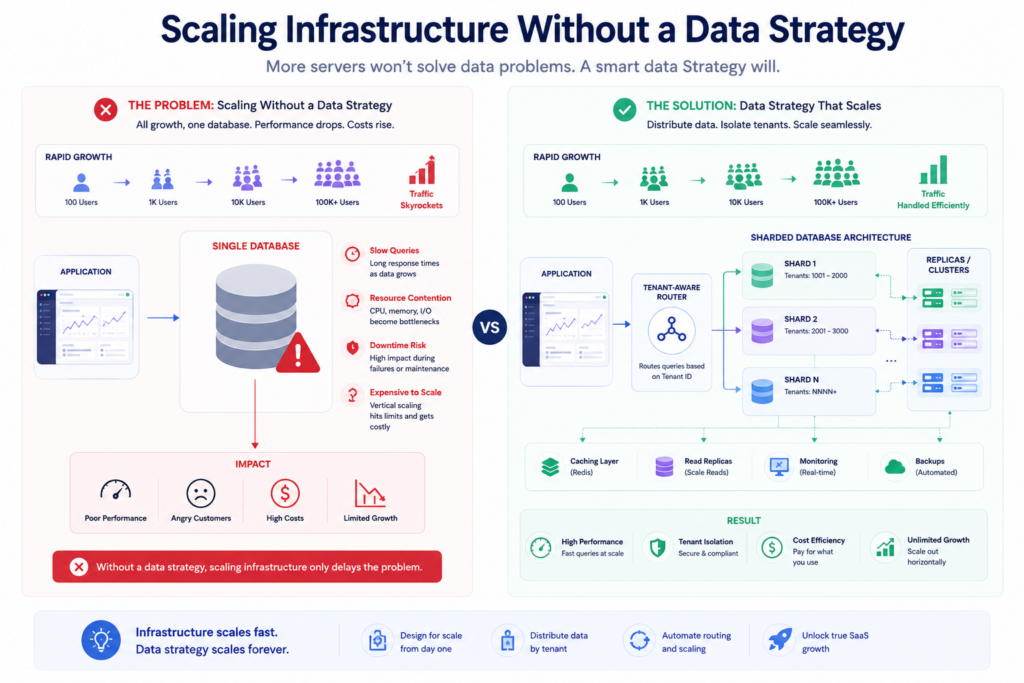
The application code checks tenant ID on every request before touching the database.
This is the weakest form of SaaS tenant isolation within any multi-tenant architecture, because one missed check in one endpoint exposes another customer's data, and that bug can sit unnoticed for months.
Postgres and similar databases can enforce row-level security multi-tenant rules directly inside the database engine.
Even if application code has a bug, the database itself blocks any query trying to read rows that belong to a different tenant, which makes this one of the more reliable patterns inside multi-tenant architecture today.
Giving each tenant its own schema inside one shared database is a strong middle ground for multi-tenancy SaaS design. It is also called schema-per-tenant architecture, and it gives cleaner backups per customer without the full cost of separate databases.
Your highest-paying accounts often deserve their own compute and storage. Wrapping this inside a broader multi-tenant architecture lets the platform stay efficient for smaller accounts while still satisfying contracts that demand full SaaS tenant isolation in writing.
Here is how the major multi-tenant architecture patterns stack up against each other on cost, complexity, and isolation strength.
| Architecture Pattern | Isolation Level | Cost Efficiency | Scalability | Operational Complexity | Best Fit |
| Shared DB, Shared Schema | Low | Very High | High | Low | Early stage SaaS |
| Shared DB, Separate Schema | Medium | High | Medium High | Medium | Growing SaaS platforms |
| Database Per Tenant | High | Medium Low | Medium | High | Enterprise SaaS |
| Hybrid Multi-Tenant | Variable | Medium | High | Very High | Large scale SaaS products |
A shared database keeps costs low and lets your team manage one set of indexes, one backup job, and one monitoring dashboard. Dedicated databases inside a multi-tenant architecture trade that simplicity for stronger isolation that enterprise buyers expect to see in writing before they sign.
Postgres handles multi-tenant architecture well through row-level security policies and connection pooling tools like PgBouncer. Index every tenant ID column first, because a missing index on that single column is the most common reason multi-tenancy SaaS design queries slow down as customer count grows.
Partition large tables by tenant ID range or hash once a single table crosses a few million rows. Good SaaS tenant isolation inside any multi-tenant architecture depends on partitioning being planned before the table gets large, not patched in afterward under pressure during an outage.
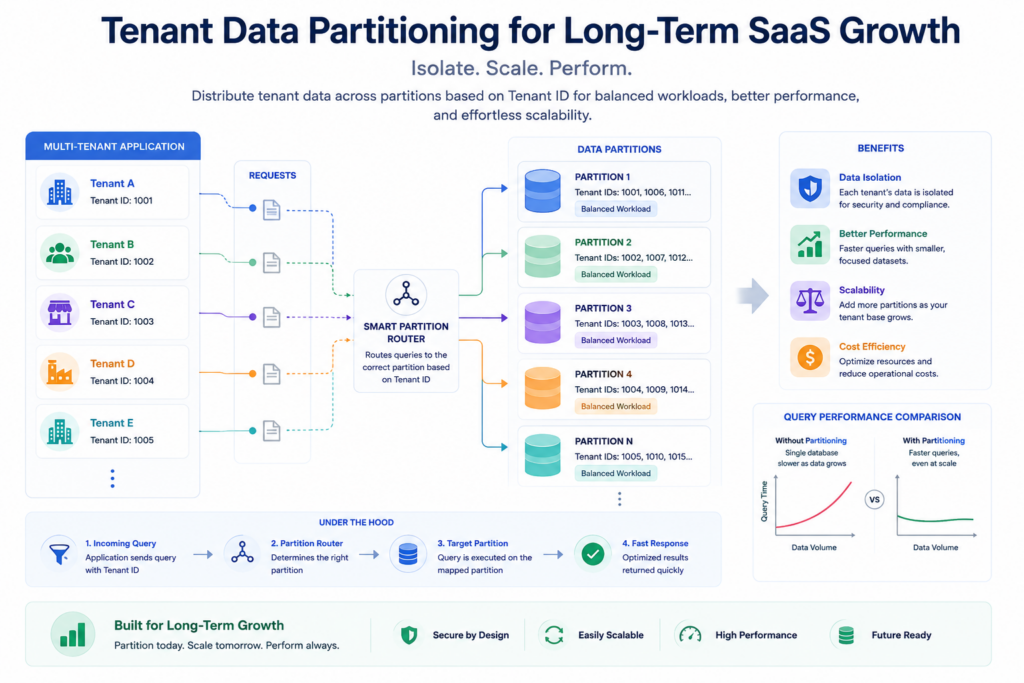
Every tenant needs a restore path that does not touch any other customer's data. A mature multi-tenant architecture treats per-tenant backup and restore as a real feature, not an afterthought buried in a runbook nobody reads until something breaks.
Shared schema setups cost the least per customer because compute and storage are spread across hundreds of accounts. Dedicated database setups inside multi-tenant architecture can cost three to five times more per customer, and that gap only grows as your customer count climbs.
More isolation always means more things to patch, monitor, and back up separately. In multi-tenancy SaaS design, Teams that pick heavy isolation early often end up hiring a dedicated platform engineer years before revenue justifies that headcount.
You need per-tenant dashboards, not just system-wide ones. A slow query affecting one customer can hide completely inside an average that looks healthy across your full multi-tenant architecture.
Strong SaaS tenant isolation is not only a database decision. It touches support tooling, billing logic, and compliance paperwork, and most teams only budget for the database part of the bill.
Sharing compute and storage across customers cuts your cost per account dramatically compared to running separate stacks. A well-built multi-tenant architecture can turn a thin-margin SaaS product into a genuinely profitable one within a year or two.
New customers can sign up and start using the product within minutes instead of waiting for a dedicated environment to get provisioned. This speed is one of the biggest reasons startups choose multi-tenancy SaaS design over single-tenant setups at launch.
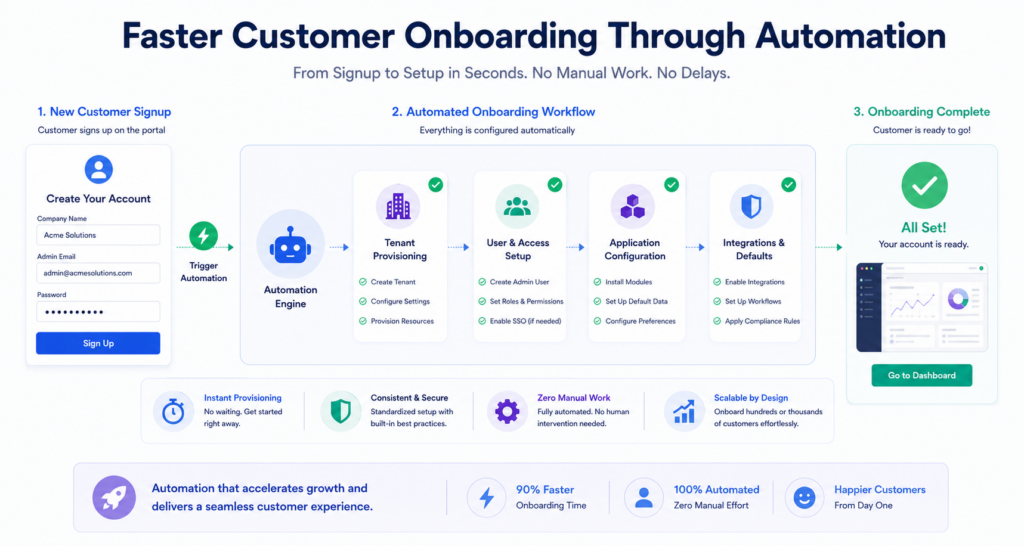
One codebase, one deployment pipeline, and one set of dashboards means your engineering team supports thousands of accounts without growing headcount at the same pace. That efficiency is the real return on a solid multi-tenant architecture investment.
Enterprise buyers will ask hard questions about SaaS tenant isolation during procurement. A platform built on a flexible multi-tenant architecture that can offer dedicated resources to top-tier accounts wins those deals without a full rebuild.
Tenant data leakage risk is real: A single missing filter in one query can expose another customer's records to the wrong account.
This is the scariest risk inside multi-tenant architecture, and it is also the easiest one to prevent with row-level security and code review discipline.
Performance Noisy Neighbor Problems: One tenant running a heavy report can slow down query response times for every other customer sharing that database inside the same multi-tenant architecture.
Strong SaaS tenant isolation at the resource level, through quotas or dedicated read replicas, keeps one account from ruining performance for the rest.
Compliance and Data Residency Challenges: Compliance and data residency challenges arise when customers legally need their data stored in a specific country or region.
A multi-tenant architecture built without data residency in mind will block you from closing deals in regulated industries like healthcare, finance, or government.
Migration and Architecture Lock-In: Migration and architecture lock-in hits hard when moving from shared schema to dedicated databases means rewriting connection logic across your entire codebase.
Planning your multi-tenancy SaaS design with future migration paths in mind from the start saves months of painful rework down the line.
| Checklist | Why It Matters |
| Customer Compliance Requirements | Compliance standards such as HIPAA, GDPR, SOC 2, or PCI DSS can determine how tenant data must be stored, accessed, and isolated. |
| Tenant Isolation Expectations | Some customers, especially enterprises, may require dedicated databases or infrastructure as part of contractual agreements. |
| Projected Customer Growth | The architecture that works for 10 tenants may struggle with 10,000. Growth projections influence scalability decisions. |
| Data Residency Requirements | Certain industries and regions require customer data to remain within specific geographic boundaries. |
| Infrastructure Budget | Stronger isolation models provide better security but often increase hosting, maintenance, and operational costs. |
| Team Operational Capacity | More isolated environments require additional monitoring, maintenance, and support resources from engineering teams. |
| Database Scaling Strategy | Planning for partitioning and performance optimization early helps prevent database bottlenecks as data volumes grow. |
| Enterprise Sales Roadmap | Future enterprise customers may demand higher levels of security, customization, and tenant isolation than SMB customers. |
| Disaster Recovery Requirements | The ability to restore a single tenant without affecting others is critical for business continuity and customer trust. |
| Long-Term Platform Vision | A multi-tenant architecture should support future product expansion, compliance needs, and operational scale without requiring a major redesign. |
Skipping even one of these almost always means redesigning your multi-tenant architecture under pressure later.
Postgres remains the most common database choice for multi-tenant architecture because row-level security ships built in, with no extra license cost.
Key Features: native RLS policies, strong indexing, mature ecosystem.
Best For: teams wanting strict isolation without separate databases.
AWS SaaS Architecture Patterns cover running shared and siloed tenant models side by side on the same account structure.
Key Features: multi-account strategies, tenant-aware IAM roles.
Best For: teams already standardized on AWS infrastructure.
Azure offers SaaS tenant isolation through resource groups and subscription-level separation for customers needing dedicated compute inside a shared platform.
Key Features: subscription isolation, Azure AD tenant separation.
Best For: enterprise SaaS selling into Microsoft-heavy organizations.
Kubernetes-based tenant isolation uses namespaces and network policies to let one cluster safely host workloads for many tenants without separate hardware for each one.
Key Features: namespace isolation, resource quotas per tenant.
Best For: platforms running containerized multi-tenant architecture at scale.
Automated provisioning tools spin up tenant-specific configuration the moment a signup completes, removing manual setup work entirely.
Key Features: automated tenant ID generation, self-service signup flows.
Best For: high-volume SaaS products onboarding hundreds of accounts monthly while keeping multi-tenant architecture consistent across every signup.
Patoliya Infotech designs multi-tenant architecture for SaaS teams that need to move fast without rebuilding the database layer twice.
The team has shipped row-level security setups, schema-per-tenant migrations, and hybrid isolation models for products scaling past their first thousand customers.
If your current multi-tenant architecture is starting to creak under new enterprise demands, book a short architecture review with Patoliya Infotech and walk away with a concrete migration plan.
Multi-tenant architecture is not a detail you fix later. It shapes your costs, security posture, and ability to support future growth. Strong SaaS tenant isolation today can prevent expensive migrations and operational challenges tomorrow. The right approach balances scalability, compliance requirements, and infrastructure efficiency without adding unnecessary complexity.
As your customer base grows, architectural decisions become harder and more expensive to reverse. Talk to Patoliya Infotech about a multi-tenant architecture review designed around your long-term product roadmap, growth plans, and enterprise requirements.