Table of Contents
TL;DR: Cloud cost optimization is not a one-time audit you run and forget. It is an ongoing discipline of right-sizing instances, buying the correct commitment discounts, and catching billing anomalies before they land on the invoice. Teams that treat cloud cost optimization as a release process habit recover a meaningful share of wasted spend within one quarter.
Most engineering teams do not know exactly which products, features, or workloads are driving cloud costs until the invoice arrives. Cloud cost optimization works best when engineering teams track and manage spending continuously.
Done right, cloud cost optimization operates on three levers: instances sized for actual load, commitment discounts applied against actual usage, and storage that automatically ages out of expensive tiers. This guide breaks down where AWS and Azure budgets leak, how teams reduce AWS cloud costs without slowing release velocity, and what cloud spend management looks like when your environment spans multiple providers.
Cloud cost optimization means matching cloud spend to actual workload demand instead of cutting budgets across the board. It covers instance sizing, commitment discount strategy, storage tiering, and removing idle resources nobody remembered to shut down.
Cost cutting freezes budgets and kills projects outright. Cloud cost optimization keeps the same workloads running on infrastructure that fits their real usage pattern, which is why mature teams treat it as cloud spend management, not austerity.
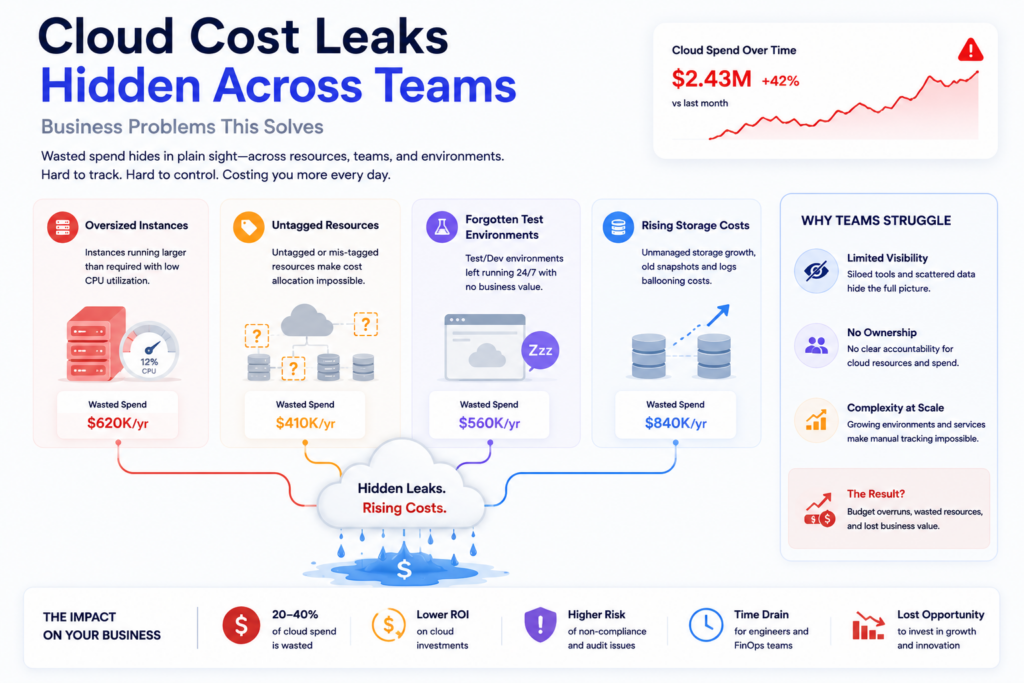
Instances provisioned for a launch day traffic spike keep running at that size long after traffic normalizes. This single issue is usually the first thing any serious cloud cost optimization review uncovers, and it sits there quietly for months.
When tagging is inconsistent, finance cannot tell which product line is driving the spend increase. Cloud spend management cannot effectively reduce AWS cloud costs without a tagging standard enforced at deployment time rather than added months later.
Without effective cloud spend management, a runaway query or forgotten test environment can add thousands of dollars to a bill before anyone notices.
Catching this in real time, not after the invoice closes, is now table stakes for serious cloud cost optimization work.
S3 cost reduction rarely gets the same attention as compute optimization, even though storage costs compound silently as snapshots and backups pile up without expiration policies.
Teams that ignore storage often miss opportunities to reduce AWS cloud costs, ending up spending more on stale data than on the workloads serving customers.
Native tools show the spend breakdown for free but stop at the recommendation stage and never touch the infrastructure. A dashboard full of suggestions nobody implements is not cloud cost optimization; it is just visibility with no follow-through.
FinOps tools add multi-cloud normalization, automated commitment purchasing, and cloud spend management capabilities on top of native dashboards, closing the gap between seeing waste and fixing it.
Most platforms here price on a percentage of verified savings instead of a flat license fee.
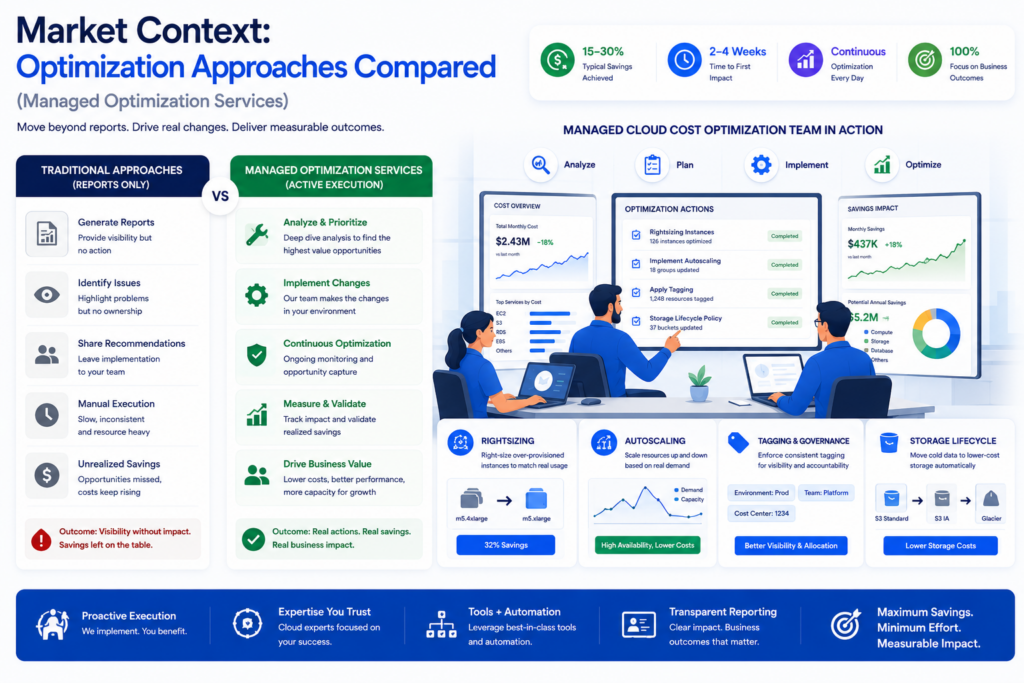
Managed optimization services implement the fix directly, touching autoscaling groups and storage policies under scoped access instead of handing over a report. This route fits teams without a dedicated FinOps engineer on staff today.
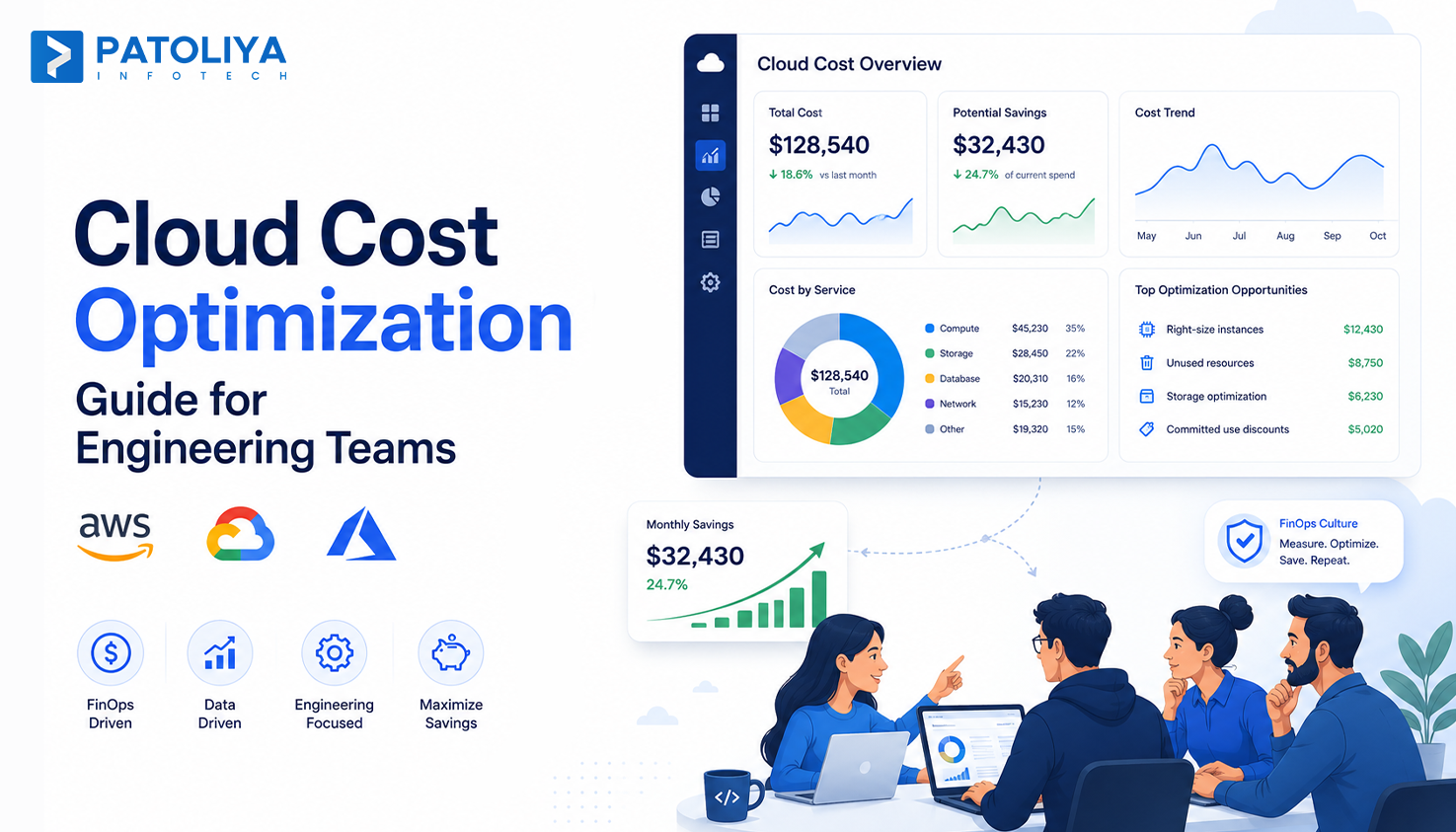
For instance, A SaaS company running workloads on AWS identified oversized EC2 instances through Cost Explorer, used a FinOps platform to optimize Reserved Instance purchases, and then leveraged a managed optimization service to automate rightsizing and storage lifecycle policies, reducing monthly cloud spend by over 25%.
One Time Audit Pricing: A single cloud audit typically runs a flat fee scoped to current monthly spend, with smaller environments costing less than enterprise multi-cloud footprints.
This model fits companies looking to reduce AWS cloud costs through a one-time cloud cost optimization review before making a longer-term commitment.
Monthly Retainer Pricing: Enterprise multi-cloud environments usually move to a retainer once the initial audit proves out savings, since ongoing cloud spend management requires continuous monitoring, not a one-time fix applied once and forgotten.
Percentage of Savings Pricing: Several vendors price purely on verified savings instead of flat fees, which aligns incentives but only works if the savings methodology is agreed upon in writing first.
This model removes the risk of paying for a cloud cost optimization engagement that delivers nothing measurable.
Compute Spend Recovery: Right-sizing alone typically recovers a meaningful share of compute spend within the first two months of a cloud cost optimization engagement, before any commitment discount restructuring even starts. This is usually the fastest internal win a team can point to.
Storage and Lifecycle Savings: Storage lifecycle policies strengthen cloud spend management over time by preventing stale data from accumulating in expensive storage tiers.
The savings curve is slower than compute optimization, but it continues to help reduce AWS cloud costs long after the cloud cost optimization engagement ends.
Engineering Time Recovered: Every hour an engineer spends manually tracking down a billing anomaly is an hour not spent shipping products. Automating that through billing anomaly detection tooling frees up engineering time that has its own cost beyond the dollar figure on the invoice.
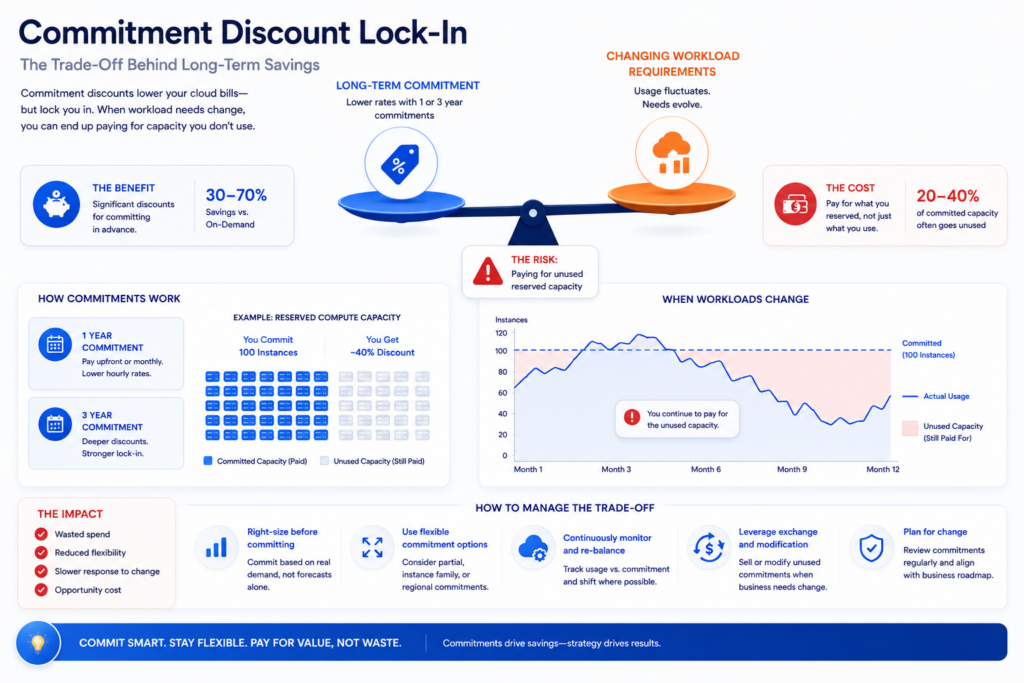
| Checklist | Why It Matters |
| Confirm exactly what access the vendor requires before engagement. | Limits security risks and prevents unnecessary permissions. |
| Read access to billing APIs before implementation access is granted. | Enables analysis while maintaining control over infrastructure. |
| A documented rollback plan for every rightsizing or autoscaling change. | Ensures changes can be reversed quickly if performance is affected. |
| Support for multi-cloud cost governance across AWS, Azure, and GCP. | Provides consistent optimization and visibility across environments. |
| Clear cloud cost optimization methodology and reporting process. | Creates transparency around recommendations and expected outcomes. |
| Pricing model disclosed upfront (flat fee, retainer, or savings-based). | Prevents billing disputes and unexpected costs later. |
| Savings calculation methodology agreed in writing. | Ensures both parties measure results using the same criteria. |
| Defined service-level agreements (SLAs) and support commitments. | Establishes accountability and response expectations. |
| Proven track record with similar cloud environments. | Reduces implementation risk and improves confidence in outcomes. |
| A defined exit plan for transitioning optimization activities in-house. | Allows long-term independence without vendor lock-in. |
These four names come up most often when engineering leaders compare cloud cost optimization platforms that actually implement fixes, not just dashboards full of suggestions.
Founded in 2017 with a team of 50 to 100, ProsperOps runs an algorithmic engine focused entirely on cloud cost optimization through automated commitment discount purchasing and rebalancing.
Best for: Mid-market and enterprise AWS teams that want cloud spend management automated without a dedicated FinOps hire.
Founded in 2011 and now operating at enterprise scale under IBM, Apptio Cloudability gives large organizations a single normalized view of spend across AWS, Azure, and GCP.
Best for: Large global enterprises running governance across more than one cloud provider at once.
Founded in 1998 and pivoted into cloud with a team of 100 to 150, Densify runs a machine learning engine that continuously matches VM and container sizing to real workload behavior.
Best for: Enterprises running large VM or container fleets who need cloud cost optimization running on autopilot instead of manual review cycles.
Founded in 2016 with a team of around 50, nOps focuses only on AWS, pairing SOC 2 aligned governance tooling with automated savings recommendations.
Best for: AWS-first mid-market companies that want cloud cost optimization without managing a second platform vendor relationship.
Patoliya Infotech runs a scoped audit first, then implements the fix directly instead of handing over a report and walking away. Cloud cost optimization only works when someone actually executes the change, not just recommends it.
This is best for Engineering teams that want cloud cost optimization implemented directly, with a clear exit point instead of an open-ended vendor relationship.
Cloud cost optimization stopped being optional the moment cloud bills became a board-level conversation instead of an engineering line item buried in a budget review. Waste does not disappear on its own, and tooling alone will not fix attribution gaps or oversized fleets nobody revisits month after month. Teams that reduce AWS cloud costs make right-sizing and lifecycle policies part of every release, not a yearly cleanup task.
The cost of waiting is not neutral either. Every quarter without a tagging standard or a commitment discount review is a quarter of compounding waste that gets harder to untangle the longer it sits.
Want to know exactly how much of your AWS or Azure bill is recoverable right now? Let's run a scoped audit and find out.