Table of Contents
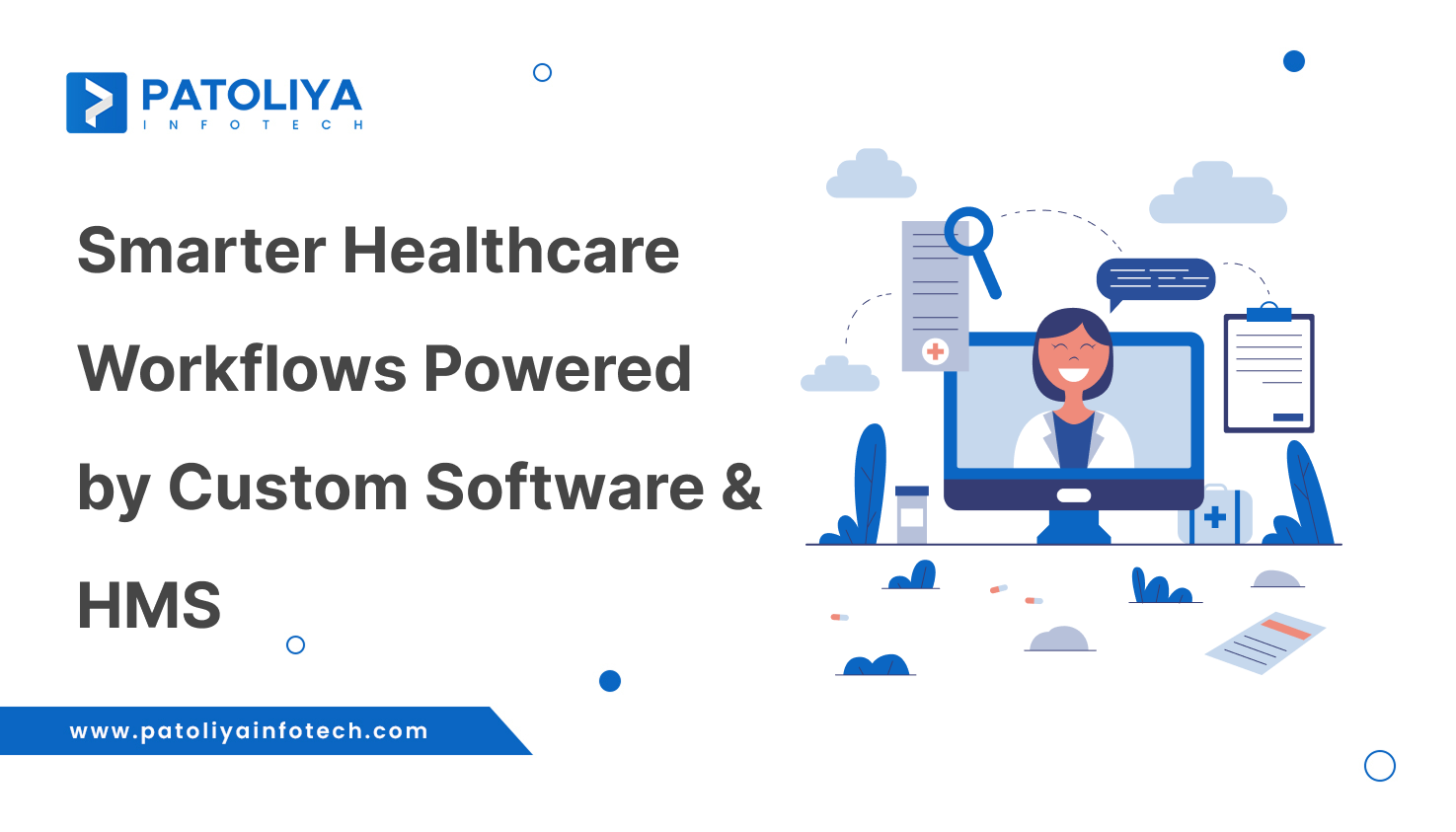
Custom software & HMS are intended to satisfy the needs of hospital workflow. One software or system for all duties can make things complicated. Just like a size T-shirt does not fit everyone, each workflow is unique and necessitates the use of specific software and systems.
The right software and systems boost workflow efficiency, which leads to increased productivity. It enhances security in addition to automating processes and providing better patient care. This results in a healthier revenue cycle. When hospital volumes expand, new modules can be simply integrated without modifying the system.
Proper training is essential for personnel to make better use of resources, and there are various types of educational software available to help with this.
Another issue associated with data migration and technology integration can be mitigated by picking the right software development partner. In the long run, custom software & HMS become valuable assets for the healthcare industry.
Hospitals can develop workflows that precisely match how their departments operate using Custom Software & HMS. This speeds up daily activities and operations. This helps with specialty-specific requirements such as multiple branch coordination, OPD flow, and EMR templates.
A strong custom HMS easily integrates with labs, pharmaceutical systems, PACS, billing platforms, and government portals. This prevents double entry and reduces errors. This makes sure that all departments are in harmony.
Cloud-based HMS enhances access to patient information because clinicians can view data from any location. This provides insights and enhances decision-making. This software is built on cloud architecture and operates online, providing an overview of the operational cycle at any moment.
Custom software & HMS (Hospital Management System) assist hospitals in migrating away from manual processes and toward a system that is suited to their specific workflow. A customized HMS adapts to the hospital's needs and improves operational efficiency.
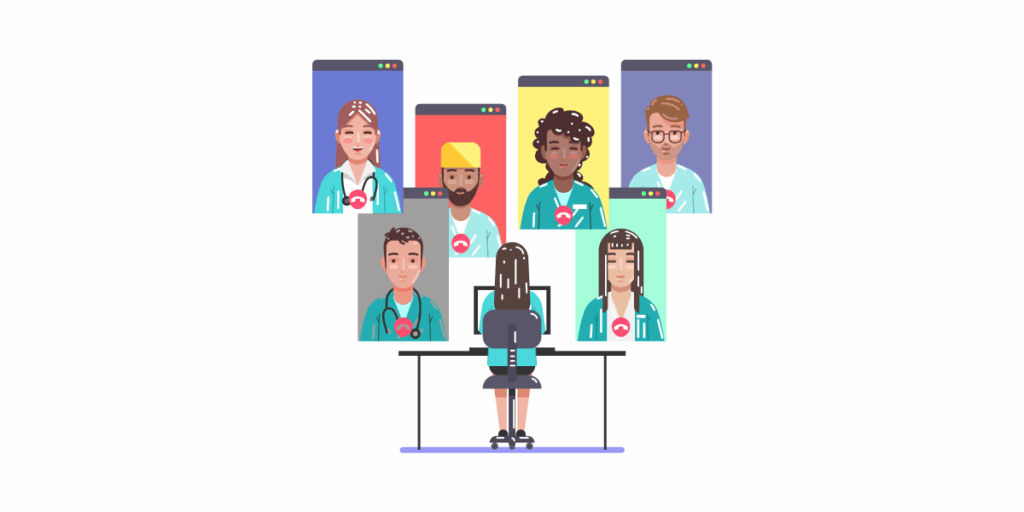
Healthcare SaaS provides a digital workplace to teams, reducing the need for them to focus on maintenance and manual tasks.
All patient information is stored in one dashboard.
A personalized HMS speeds up management and lowers billing errors.
Custom HMS platforms combine information from radiology, pharmacy, labs, and previous visits into a single and updated view. Physicians have instant access to data and can use it to make decisions. This results in quicker treatment planning, fewer diagnostic mistakes, and earlier treatments.
Custom software automates tasks to reduce manual labor:
This lessens employee burnout and ensures that patients have a seamless administrative experience.
Custom software & HMS enforce standard forms, mandatory fields, and automated verification checks. This avoids problems such as incorrect patient IDs, duplicate tests, missing lab values, and inappropriate drug dosages. This measurably reduces Clinical or billing errors and data mismatches in hospitals.
Cloud-based HMS ensures that everything is synchronized and up to date. This could be a billing modification, a radiological report, or a nurse's note. This gets rid of the paper slips, WhatsApp messages, and phone calls that frequently lead to misunderstandings. This is useful in emergencies where all updated data is needed.
Custom software & HMS enable hospitals to observe:
This enables management to maximize everything, including surgeries and staffing. Wait times are decreasing, and operational efficiency is rising as a result.
Custom software & HMS enhance patient interaction at every single point. This increases client happiness and builds a loyal customer base.
Custom HMS systems automatically keep audit logs and track role-based access. This encrypts important data and stores each action securely.
This allows hospitals to be prepared for healthcare audits, insurance inspections, and regulatory requirements.
This creates a great ecosystem for operational efficiency.
A cloud-based HMS expands as the hospital does. Systems don't need to be rebuilt, and new departments or modules can be added.
Continuous queue management, appointment scheduling, and physician availability are automated by custom software & HMS. Faster room assignments, quicker check-ins, and improved hospital flow are provided to patients.
Patients can check their lab results, prescriptions, medical history, and previous visits quickly with a cloud-based HMS.
Test results, billing status, appointment reminders, and care instructions are automatically updated for patients. Everything is communicated effectively and on time.
Hospitals may set reminders, keep track of follow-ups, and assess patient progress with a customized HMS. Also, doctors have a comprehensive understanding of a patient's experience and continue to offer individualized care even after discharge.
Custom software & HMS automate repetitive and complex tasks like as registrations, test orders, billing updates, and report sharing. This allows staff to focus on important work and reduce errors in routine tasks.
Custom software ensures everything remains synchronized. This includes role-based access, duty rosters, intelligent scheduling, and continuous task updates. This improves productivity and time management.
A cloud-based HMS delivers real-time information on stock levels, expirations, vendor orders, and medicine availability. This lowers waste and avoids stockouts.
Custom software optimizes billing, insurance claims, audits, and statutory compliance. Every transaction is documented accurately, resulting in an honest financial system.
| Technology | What It Means | How It Helps Hospitals | Real-Life Example |
| Cloud-Based Solutions | Hospital data, software modules, and records are securely maintained on the cloud. | Provides anytime access, faster scalability, secure backups, and lower hardware expenses. | A clinic with multiple branches uses one cloud login to access the same HMS dashboard from various locations. |
| AI, ML & Data Analytics | Intelligent systems evaluate patient data, anticipate patterns, and automate various departmental decisions. | This helps with early detection, demand forecasting, automated triage, and individualized care. | An artificial intelligence engine predicts ICU bed demand and flags bad test results for early medical assessment. |
| Interoperability & API Integrations | Different systems can easily communicate with each other. This can include LIS, PACS, pharmaceutical, insurance, and telemedicine applications. | This eliminates double entry, lowers errors, and ensures that data flows smoothly between departments. | Lab reports from the LIS are immediately shown inside the HMS. |
| Mobile & Web Applications | Doctors, nurses, administrators, and patients can all access apps and web portals. | Enables accessibility, remote care, teleconsultations, and continuous updates. | A doctor checks the patient's vitals and approves test data using a mobile HMS app. |
Forecasts of daily patient load - This helps in allocating enough nurses during busy OPD hours.
Particular to the department delays- it identifies areas where patients have to wait the longest, such as radiology, lab, and billing.
Identification of revenue leakage- automatically displays unpaid charges and missing payments.
Forecasting patterns - Alerts management when bed occupancy is expected to exceed capacity.

| Feature | Meaning | Real-Life Example |
| Custom workflows for different departments | Instead of adapting to a strict structure, each department has its own flow using Custom Software & HMS. As a result, employees are doing daily chores quickly and effortlessly. | While IPD receives nursing notes, bed management, and admission forms tailored to their routine, OPD receives rapid registration and token flow. |
| Personalized patient portals | A cloud-based HMS provides patients with a personalized portal that displays all the information they require. This includes reports, medications, bills, follow-ups, telemedicine links, and more. | A pediatric parent gets growth histories and vaccine schedules, while a cardiac patient sees ECG information and prescription reminders. |
| Modules unique to a particular specialty | For every specialty, custom HMS adds unique features. This can include dentistry, ophthalmology, pediatrics, and cardiology. | An ophthalmology module maintains refraction tests with imagery, a dental module displays tooth charts, and a cardiology module automatically loads previous ECGs. |
| Department | How a Custom HMS Actually Helps | Real-Life Example |
| ICU Monitoring | Live vitals, ventilator data, medication logs, and nursing updates are all gathered onto a single dashboard via a cloud-based HMS. | On a single screen, ICU physicians keep an eye on SPO2, blood pressure, ventilator settings, and infusion updates in real time. |
| Emergency Care Workflow | Fast triage, quick patient input, categorized priority levels, and immediate alerts to radiology or lab teams. | In less than 30 seconds, emergency room personnel register a trauma patient, and radiology receives an automated alert for an urgent X-ray. |
| Operation Theatre Management | A customized HMS manages OT bookings, sterilization tracking, surgery notes, and equipment usage. This minimizes misunderstandings and delays. | Surgeons can access prior to surgery checklists, OT availability, anesthetic readiness, and necessary instruments in one location. |
| Maternity and Neonatal Care | Custom workflows keep track of pregnancy history, labor progression, fetal monitoring, infant vitals, and vaccines. This provides a smooth transition. | A maternity team monitors fetal heart rhythms and contraction data, while the NICU records newborn vitals hourly. |
| Dental and Ophthalmology HMS | Dental tooth charts, ortho imaging, refractive readings, and procedure notes are all included in the specialty modules. These workflows were created specifically for particular departments. | Dentists digitally update tooth number charts, while ophthalmologists use the HMS to save microscope images and eyesight data. |
Numerous hospitals have HMS and software that are affordable and suitable for a wide range of tasks. This is appropriate for administration. It is unable to manage complex clinical workflows such as OPD and IPD. This mismatch is avoided with Custom Software & HMS, which adjust to the everyday life of each department.
If people don't know how to use cloud-based HMS, even the finest of them will fail. Hospitals frequently neglect adequate onboarding, which results in errors and slow acceptance. This is solved through role-based and practical training.
LIS, RIS, PACS, billing tools, and legacy systems are used in hospitals. Installing a new HMS without mapping how it will communicate with these systems is a serious error. Custom Software & HMS can establish a smooth data flow with API planning.
Implementation is not the last stage. Maintenance, security updates, UI enhancements, and scalability requirements come later. Hospitals frequently fail because they don't provide for ongoing support, which is crucial with cloud-based HMS since it changes over time.
Hospital management systems make daily tasks like billing, pharmacy, appointments, and records more efficient. However, every healthcare institution functions differently, and particular workflows are frequently not supported by a standard HMS.
Custom software becomes crucial in this situation. Instead of making teams adapt to inflexible software, it customizes the system to the hospital. Custom solutions eliminate technical bottlenecks and enhance clinical care accuracy by integrating specific departmental needs, automating manual labor, and connecting systems for continuous monitoring.
Custom software & HMS work together to create customized workflows and organized hospital administration. Patients receive excellent care from these environments.
An excellent software provider is crucial since, over time, they lower integration risk and offer software that is innovative software. Patoliya Infotech specializes in the development of high-quality solutions. Get in touch with us for further details. It is free to consult.