Table of Contents
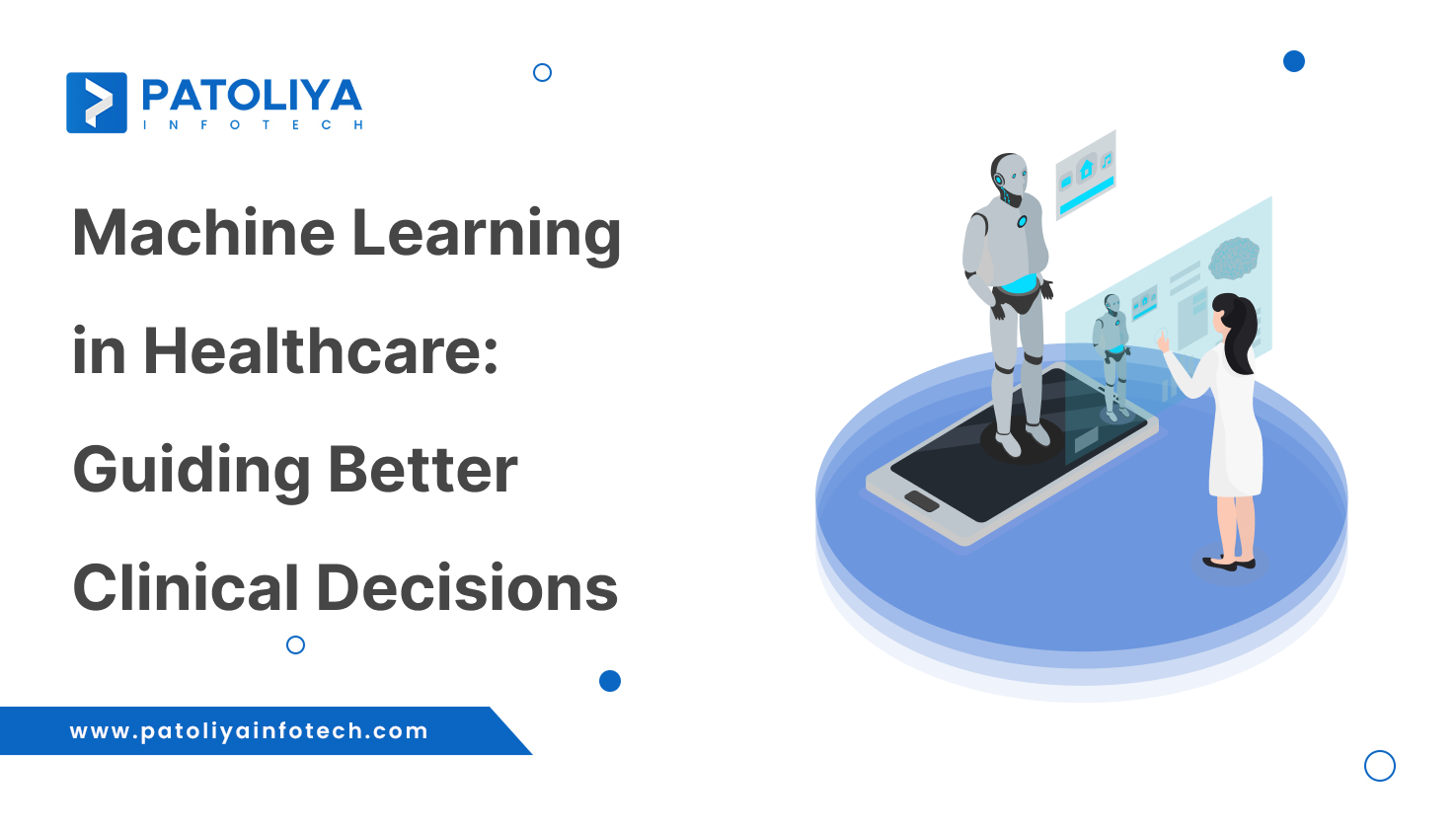
Machine learning in health care works as a consultant to doctors. Everything, from analyzing huge amounts of data for forecasts to automating operations, is as simple as pie.
Previously, doctors had to examine the data and make predictions. During an emergency, they do not have much time to analyze facts and draw conclusions. In this condition, everything becomes more difficult, and the likelihood of making a mistake increases. When technology arrives, EHR organizes all data in one location for easy access. AI becomes support, but machine learning provides significant insights and predictions.
Artificial intelligence includes machine learning. A lot of data is collected and analyzed by this technology. ML makes useful predictions and insights based on this data to aid professionals in making decisions.
In healthcare, ML supports AI activities. ML automates tasks and gathers data from all systems. It forecasts situations, helps in surgeries, and even provides an early sign of disease.
ML interprets data from all systems, like EHR, lab reports, or any devices. For any person, it takes time to interpret all the data, and there are chances of mistakes.
ML models analyze medical history, symptoms, lifestyle data, and lab reports to predict conditions such as:
Instead of responding after the illness has advanced, doctors might take preventative measures by identifying concerns early.
X-rays, CT scans, MRIs, and ultrasound pictures may all be accurately understood by machine learning methods.
They help radiologists:
Healthcare machine learning improves therapy accuracy by researching:
This allows doctors to customize therapies for the best outcomes.
ML speeds up drug discovery by predicting:
This significantly reduces R&D time and cost.
Hospitals use ML for:
Both operational effectiveness and service quality are enhanced.
Real-time health data is gathered by wearables, including:
ML models convert this into meaningful insights and early alerts.
Supervised learning and deep learning are used in the majority of hospitals. Depending on the needs, some hospitals employ the other two along with this.
Reinforcement learning and unsupervised learning are still in the early stages. Large academic hospitals, AI-first healthcare businesses, and research organizations are the main users. This is for innovation, like identifying new disease patterns and improving ICU therapies.
| Machine learning Type | How it is Used in Healthcare | How it Helps Medical Professionals and Patients |
| Supervised Learning | This helps identify conditions using CT, MRI, and X-ray images.This shows the patient's risk for diabetes, heart disease, or stroke.This streamlines medical coding and clinic paperwork.This helps to make predictions about the outcome of patient therapy. | Provide highly accurate diagnoses.This helps to make fast decisions. This reduces the amount of manual work required of staff.Provide consistent and honest predictions. |
| Unsupervised Learning | Based on symptoms, illness patterns, or lifestyle, patients are categorized.Identifies anomalies in scans or strange lab values.It aids in the discovery of novel disease subgroups.Finds operational inefficiencies in hospitals. | Provides information that physicians find difficult to understand.Enhances individualized treatment plans.Encourages innovation and research in medicine.Enhances the effectiveness and efficiency of healthcare operations. |
| Reinforcement Learning | Suggests the best line of action for complex conditions like cancer.Helps intensive care centers adjust ventilator settings or medication dosing.Improves the decision-making process when performing robotic surgery.Hospitals make better use of their staff, beds, and resources. | Customizes therapies for every patient.The likelihood of successful results is increased.During critical care, it offers continuous guidance.It increases accuracy and decreases speculation. |
| Deep Learning | Identifies anomalies and cancers in medical pictures.Identifies cancer cells more quickly by analyzing pathology slides.Transcribes interactions between patients and doctors into written notes.Investigates genetic information to identify uncommon illnesses early. | It provides exceptionally high diagnostic precision.Helps in the early detection of illnesses compared to conventional techniques.Clinicians and radiologists save time.Increases the speed, accuracy, and predictability of care. |
Nowadays, enterprises create customized healthcare software depending on their own requirements. They emphasize security and quality to achieve this. Patoliya Infotech offers these kinds of solutions.
Machine learning technology collects the following types of data for assessment and forecasting.
| Types of data | Explanation of Each Data Used in Machine Learning |
| Electronic Health Records (EHR) | These are the full medical records of a patient. This may include past medical conditions, allergies, prescription drugs, and laboratory results. ML makes use of this data to identify long-term patterns. This helps to forecast potential health hazards. |
| Medical Imaging | This includes all kinds of scans like CT scans, MRI, ultrasound, and X-rays. AI examines these pictures more rapidly and precisely to identify issues like tumors or fractures. |
| Genomic & DNA Data | The genetic blueprint of an individual is revealed by this data. It can be used by ML to detect hereditary disorders. This assists medical professionals in customizing treatment regimens. |
| Wearable Device Data | Heart rate, steps, sleep, and other live information are continuously gathered by smartwatches and fitness trackers. This is used by ML to continuously monitor health. |
| Lab Reports | DNA markers, blood tests, and urine testing provide early indicators of illnesses. AI examines these findings to identify problems before they arise. |
| Clinical Notes & Text Data | Prescriptions, summaries, and handwritten or typed notes from doctors provide insightful information. This text's patterns and meaning are extracted by NLP models. |
One hospital is merging numerous models to satisfy its various needs.
| ML Model | Explanation of Each Model |
| Support Vector Machines (SVM) | Consider SVM as an intelligent sorting algorithm. It helps to determine whether something is safe or dangerous. This can be used to distinguish between normal and cancerous tumors, as well as normal and aberrant ECG patterns. |
| Convolutional Neural Networks (CNN) | CNNs function similarly to expert radiologists. This interprets difficult-to-see medical images. Examples include lesions and fractures. |
| Recurrent Neural Networks (RNN) | The models are able to comprehend sequences. This is ideal for data that fluctuates over time, this can patient vitals, ECG signals, or the development of symptoms. |
| Decision Trees & Random Forests | These are easy to understand models that assist physicians in making decisions. This can be regarding patient risk levels, diagnosis, and available treatments. |
| Gradient Boosting Models | These advanced models provide outstanding projections. Projecting treatment results and hospital readmission rates can benefit from this. |
| Benefits | Explanations of Each Importance |
| Better Predictions | AI may identify trends in large datasets that people might overlook. This results in earlier and more precise diagnoses. |
| Faster Decisions | AI evaluates hundreds of documents or photos in a matter of seconds rather than by hand. This helps physicians in taking prompt action. |
| More Accurate Treatments | Personalized therapy is made possible by ML using extensive patient data. This guarantees that treatments are customized to the unique needs of every patient. |
| Improved Outcomes | Patients obtain better treatment when projections are more accurate and choices are made more quickly. They heal more quickly and have fewer difficulties. |
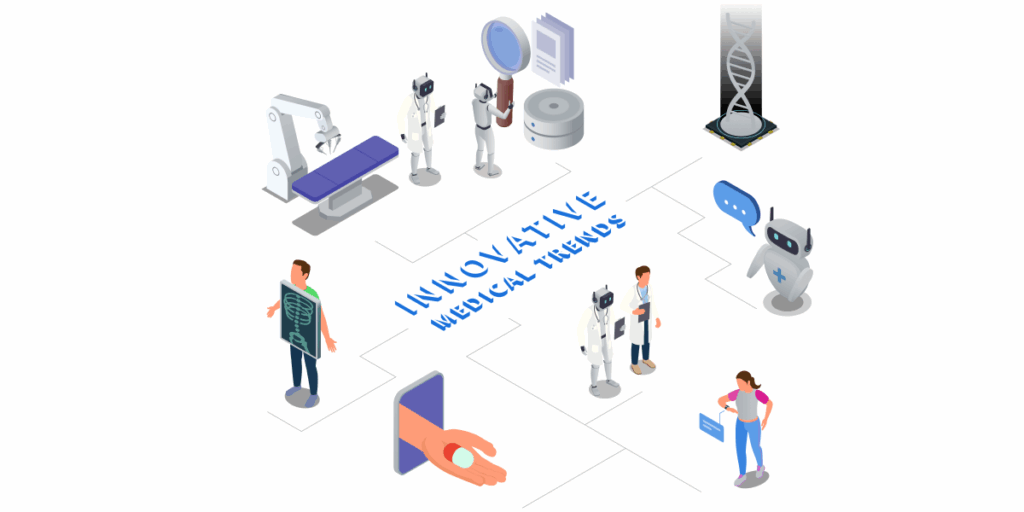
Hospitals must employ cybersecurity solutions, including encryption, cloud computing, and AI integration, to safeguard patient data. Data used for machine learning applications has to be encrypted and comply with laws like GDPR and HIPAA in order to guarantee confidentiality and privacy.
AI in healthcare could randomly favor some groups if the training data is not varied. For early models of skin cancer, lighter skin tones were more appropriate. Fairness metrics and extensive datasets are utilized to ensure that every patient receives accurate and equitable outcomes.
The use of medical data should follow strict regulations. This includes HIPAA, GDPR, and other national laws. Therefore, explainable AI systems that offer an explanation for a model's decision are needed by clinicians.
Medical professionals choose machine learning programs that explain decision-making processes. Explainable AI increases trust by identifying the data that affected a certain outcome. This helps medical professionals in validating, trusting, and responsibly acting upon AI findings.
The accuracy of each prediction in machine learning in healthcare is dependent on the quality of the data. When datasets are clear, consistent, and properly labeled, AI in healthcare yields reliable and secure findings. Insufficient information might lead to erroneous diagnoses and conclusions.
Any model cannot learn without proper data. Data cleaning and preparation eliminate duplicates, fix errors, and standardise formats. This is the conversion of raw medical data into usable information. This stage ensures that machine learning programs generate dependable and accurate results.
Electronic health records (EHRs) often have missing information in the actual world. AI systems can guess missing data without sacrificing precision. Smart data imputation and predictive analytics are used for this. AI in healthcare guarantees that no patient record is overlooked or lacking information.
Medical images often have poor quality, imperfections, and may be blurry. This could mislead AI models. Machine learning algorithms can provide a clearer analysis of MRIs, CT images, and X-rays. It uses techniques for noise reduction and picture improvement. This leads to quicker and precise diagnosis.
In the medical field, machine learning is improving cancer diagnosis. When it comes to detecting early tumor signs from scans, AI algorithms are extremely reliable. Hospitals employ these machine learning methods to improve early detection. This customizes treatment and expedites biopsy evaluations.
Incoming patients, equipment requirements, and readmission issues may all be predicted with the use of predictive analytics. Administrators can minimize overpopulation and manage resources effectively with the aid of data.
Advances in medical education, clinical documentation, and drug development are being made possible by generative AI. It expedites research while protecting patient privacy by modeling complex biological facts. Like, scientists may now create novel compounds in a few days using generative models. It used to take years to complete this process.
With artificial intelligence supported diagnosis, medical imaging is more accurate and faster. Radiology departments use automation to analyze thousands of MRIs and X-rays each day. This lowers human error and frees up physicians to concentrate on complicated situations. Predictive precision is replacing reactive diagnosis in healthcare with machine learning.
AI virtual assistants and chatbots handle appointments, respond to health-related questions, and aid with post-treatment monitoring. This enhanced patient engagement, reduced administrative burden, and offered round-the-clock accessibility for hospitals. Machine learning applications encounter this.
AI in healthcare makes it possible for systems to find early disease risk factors. This includes heart disease and diabetes. This encourages people to take control of their health journey. This proactive approach lowers hospitalizations and costs.
Although there is an initial cost associated with machine learning systems, the benefits are long-term. AI-using hospitals report increased patient throughput, lower costs, and better diagnosis accuracy. AI in healthcare improves clinical results, efficiency, and automation to produce quantifiable ROI.
Data infrastructure and integration are frequently the most expensive. Small healthcare can get ML facilities at fair prices. Scalable cloud tools and AI services model with this. Strategic partnerships reduce costs without compromising compliance and security.
Hospitals that use machine learning tools achieve noticeable outcomes. Shorter diagnosis times and less work for personnel are possible outcomes of this. AI increases productivity by automating tedious tasks and making more accurate decisions.
AI enhances patient flow and hospital productivity. This covers automated assessment and intelligent scheduling. Predictive models aid in forecasting periods of high demand and optimizing bed management. This guarantees prompt delivery. This improves the outcome and the experience.
High-quality, compliant data is essential for an AI project in the healthcare sector to succeed. Hospitals need to make investments in an efficient data infrastructure in order to do this. The integration of lab findings, imaging equipment, and EHRs into a single database is essential for this data architecture.
With this basis, your machine learning models can effectively learn, adapt, and grow.
Begin with a pilot project that has a single and specific use case. This might be AI-based radiological diagnoses or predictive analytics for patient flow. After this, observe outcomes, verify performance, and get input from clinicians. Use the same foundation for expansion to other departments after it has been effective.
Starting small lowers risk and increases team confidence in their ability to successfully execute AI.
Look for vendors who are skilled in healthcare workflows. Also, guarantee compliance, data security, and explainable AI models.

Medical personnel need to acquire new skills to work with AI-driven tools and data insights with confidence as machine learning in healthcare becomes more common.
Medical practitioners must comprehend machine learning. This covers how programs gather, process, and utilize data. They can see trends and make judgments based on facts when they have strong data literacy.
Professionals must be familiar with AI in healthcare tools such as prediction dashboards and diagnostic software. This enables them to make efficient use of technology.
Correct interpretation of AI-generated reports is essential for healthcare teams. Understanding how Machine Learning models draw conclusions fosters trust. This avoids relying too much on automation and guarantees proper decision-making.
Decision support systems driven by AI can help doctors with diagnosis, therapy planning, and patient monitoring. It's crucial to work together. This integrates AI findings with medical expertise to deliver more precise and personalized treatment.
AI in healthcare will assist practitioners in early disease detection. This uses predictive analytics to create individualized treatment plans and forecast patient risks at all times. Early illness prevention and other issues are aided by this.
With automated diagnostics and AI-driven early treatment, hospitals will transition from reactive medicine to proactive health.
Machine learning software will be utilized to optimize workflows. This automates administrative work and streamlines healthcare operations. This enhances the quality of care. Trust and acceptance will rise quickly as data and AI become more integrated and understandable.
Machine learning is improving the way healthcare analytics is done. This reduces errors and provides faster care. This automates complex procedures and provides ongoing support in both healthcare and administration. Doctors benefit from evaluating large amounts of medical data and delivering helpful insights in order to make better decisions.
Different hospitals demand different kinds of ML applications and models that meet their needs. Many healthcare industries develop specialized ML software to satisfy their specific requirements.
When machine learning technologies anticipate an early pattern of disease, patients can receive preventive care. Early detection of symptoms protects patients from possible risks.
The software solution supplier is responsible for the software's quality and security. Choose someone who is an expert in this sector and provides continuous support. Patoliya Infotech has great expertise and understands all of your problems. We offer continual assistance and high-quality solutions.