Table of Contents
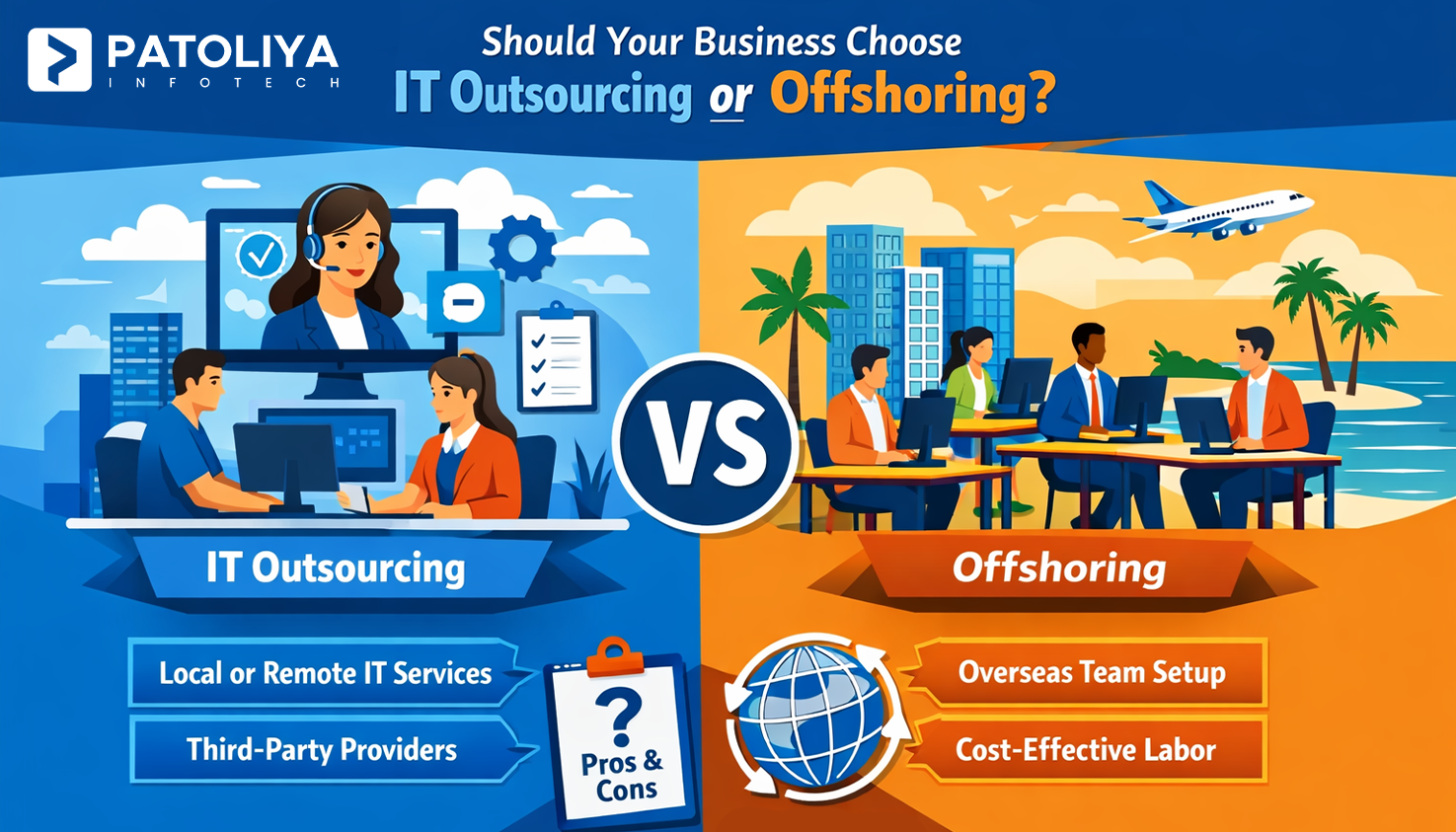
When analyzing IT outsourcing, many companies confuse it with IT offshoring, believing that lower prices necessarily equal faster delivery. Cost overruns, missing deadlines, and misaligned supplier expectations can be caused by this misunderstanding.
Outsourcing IT development effectively requires more than a reasonable supplier. This requires performance management, role-specific responsibilities, and precise specification of scope. Companies often experience delivery delays and quality issues when they view outsourced teams as a short-term cost-saving measure rather than a strategic extension of their internal operations.
When it comes to outsourced IT for small businesses, it's important to match vendor expertise with business goals. Choosing reliable outsourced IT services that provide secure development processes, clear communication, and structured onboarding ensures predictable project results.
Companies can reduce expenses while maintaining control, quality and operational adaptability by knowing the difference between outsourcing and offshoring. Many businesses partner with a reliable custom software development company to implement structured outsourcing models that balance cost, quality, and long-term scalability.
IT outsourcing is the process of working with external service providers to manage technical functions that are normally managed within the organization. Outsourcing IT development can include cybersecurity, cloud management, application development, and infrastructure maintenance in a modern delivery model. This often includes custom platforms built through professional web application development services that support scalability, security, and seamless system integration. By using this method, companies can save operating costs, focus internal teams on strategic priorities, and benefit from specialist expertise.
Software development, system integration, network administration, help desk support, and cybersecurity monitoring are among the services that organizations that use outsourcing IT development often hire vendors for. Outsourced IT for small businesses gives small and medium-sized businesses access to the best expertise without investing in infrastructure and full-time employees.
The best results from IT outsourcing occur when resources are scarce, expertise is specialized, and deadlines are tight. Clear KPIs, established SLAs, and structured communication promote accountability, quicker project execution, and measurable outcomes. Because of this combination, outsourcing IT development is a scalable and effective solution for short-term and long-term IT requirements.
Offshoring especially uses worldwide locations to lower costs and access specialist skills, whereas outsourcing often focuses on assigning jobs to outside suppliers. Teams that outsource operate remotely in another nation, frequently in different time zones. Outsourced IT services enable businesses to expand effectively while keeping supervision and control.
Businesses that outsource IT development use remote teams for technical assistance, system integration, and software engineering. Businesses can analyze performance, improve budgets, and retain cost predictability by implementing outsourcing pricing models. This includes time and material, fixed prices, and dedicated teams. These models are especially effective for outsourced IT for small businesses looking to access skilled resources without large upfront investments.
When projects require 24/7 development, quick scalability, or access to specialist skill sets not available locally, outsourced IT services are ideal. Startups, multinational corporations, and businesses looking to increase delivery speed without raising internal costs will find it very useful.
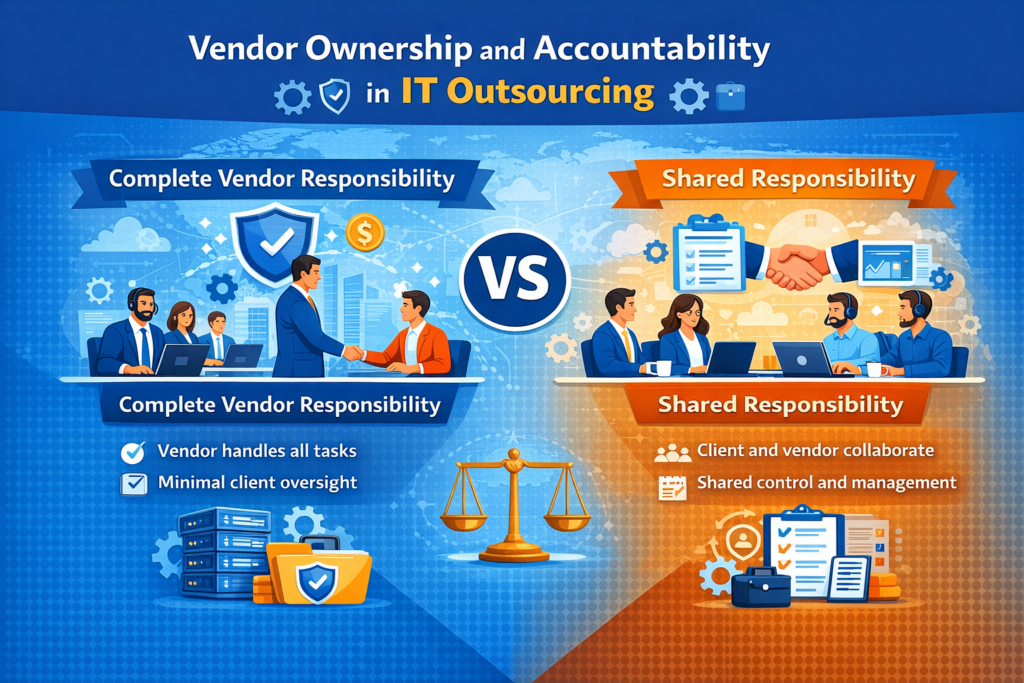
Under a well-defined IT outsourcing contract, the supplier takes the operational responsibility for outsourcing. The supplier monitors infrastructure, staffing, service levels, and performance indicators to ensure delivery based on predetermined results.
This structure works well for outsourced IT for small businesses that want less internal workload and predictable results when they outsource it. To provide full service coverage, some providers also handle specialized functions such as helpdesk outsourcing.
Offshore, ownership of the business is retained. The offshore team operates from another nation and acts as an extension of the domestic staff, with internal management controlling key decisions and strategic direction.
In outsourcing, the service provider is responsible for daily management and supervision. This enables companies to focus on their primary strategy.
Internal managers closely monitor offshore teams, coordinate goals, and maintain quality control in offshoring. This requires better structures for communication and management.
In outsourcing IT development, supplier-driven responsibility is established through contractual SLAs, which ensure measurable performance.
Offshoring involves shared responsibility; despite the cost savings offered by outsourced IT services, ultimate delivery responsibility remains in-house.
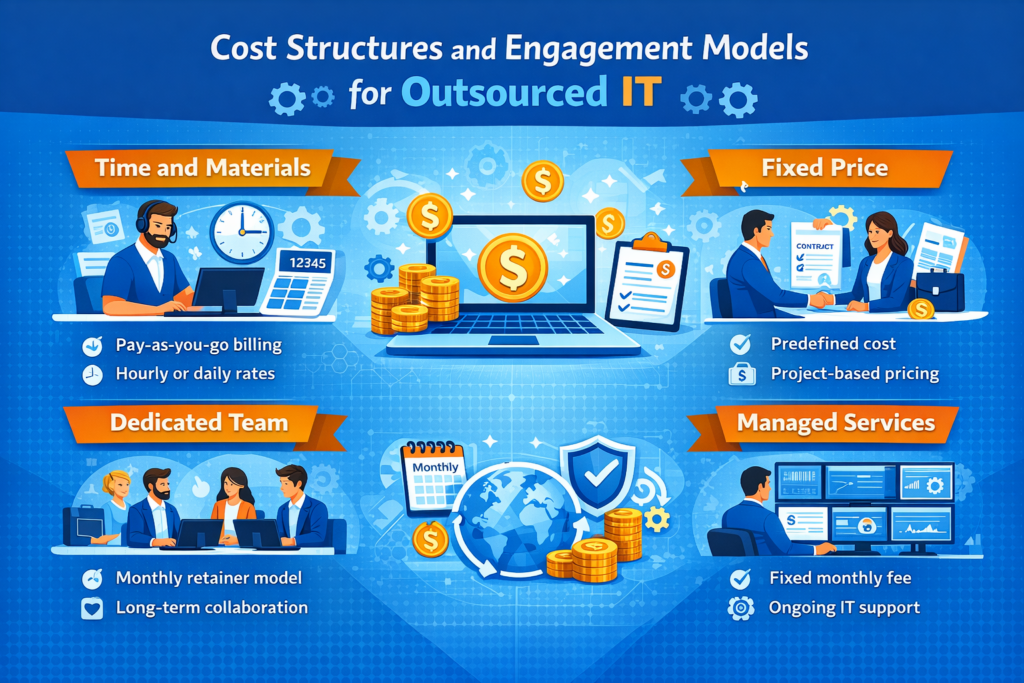
IT outsourcing providers offer dedicated team models, time and materials, or fixed cost models that are specified in the outsourcing contract. It provides transparent budgeting and payment customization to outsourced IT for small businesses. In addition, some providers include outsourced network management in their bundled pricing plans.
Offshoring is based on salary based pricing. Companies have greater internal financial responsibility as they pay directly for infrastructure, wages, compliance, and administrative expenses.
Many organizations also follow industry-recognized FinOps cost management practices to improve budget control and financial accountability.
In IT outsourcing, the scope of work, SLAs, and price terms are clearly specified, which provides good cost visibility. This applies to IT development projects that are outsourced and have measurable results and milestones.
Offshoring costs may change due to infrastructure setup, internal monitoring, and currency fluctuations.
In outsourcing, the vendor assumes the majority of the financial risk under predetermined conditions. Offshoring can result in additional expenses such as recruitment, training, turnover, travel, and management supervision.
For instance, a company that saves money on the salaries of offshore developers may still spend more on project oversight and coordination tools, which reduces the expected savings.
In IT outsourcing, suppliers maintain organized onboarding processes and clear talent pools. This enables companies to initiate measures more quickly. Employers can source qualified employees without long hiring cycles by using outsourced IT services. For outsourcing IT development projects that require immediate technical implementation, this strategy works well.
Offshoring often requires longer onboarding times as companies must recruit, train and integrate offshore employees into internal systems and processes. Effective use of outsourced IT for small businesses requires clear roles, structured governance, and the right engagement model to ensure value, predictable results, and scalable IT support outsourcing.
Through outsourcing IT development, suppliers can quickly scale up or down teams in response to demand. Scalability in offshoring is dependent on internal management bandwidth, infrastructure capacity, and hiring speed, all of which can inhibit growth.
Rapid team deployment allows outsourced IT for small businesses to compete without the need for large in-house departments. Immediate access to knowledge increases operational efficiency and time to market.
For instance, a company preparing to launch a product can hire an external development team in just a few weeks, rather than spending months on recruitment, training, and setup.
Established SLAs and liability provisions transfer contractual operational and performance risk to the supplier in IT outsourcing.
Service continuity, problem solving, and established security standards are the supplier's responsibility. Leading providers align their processes with international cybersecurity standards to ensure consistent data protection and regulatory compliance. As a result, the company's direct operational risk is reduced through outsourced IT services.
The risk offshore is still mainly internal. The parent company remains responsible for administration, quality assurance, and final delivery results, while offshore teams carry out the activities.
Outsourcing requires contractors to meet regulatory and industry compliance obligations under contract terms, thereby improving oversight.
Companies that must monitor compliance with foreign tax, labor, and data protection laws separately. Strong internal audit processes are essential to prevent fines or reputational threats resulting from increasing legal complexity.
Data security functions are clearly established through outsourcing, making advantage for outsourced IT for small businesses that lack in-house compliance teams.
Since accountability ultimately remains internal, companies managing outsourcing IT development must continue to have direct control over cybersecurity monitoring, access controls, and breach response.
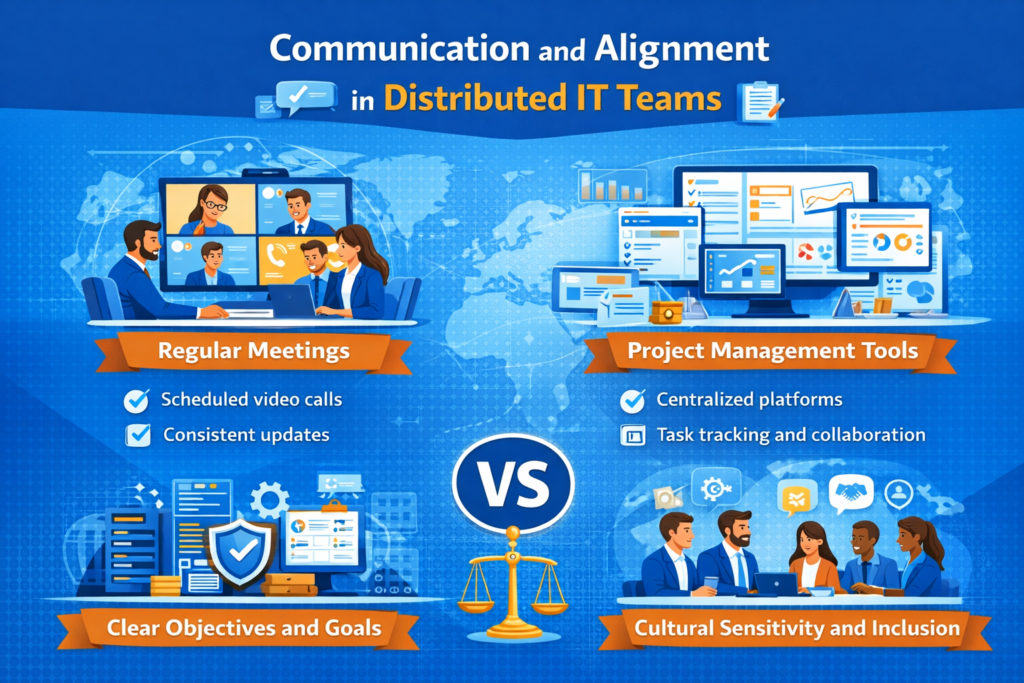
SLAs, consistent reporting systems, and specified workflows are used to structure communications in outsourcing to ensure transparency.
Especially in outsourcing IT development projects, suppliers keep track of milestones and ensure adjustments. Vendors with IT support outsourcing often use help desk or ticketing tools for real-time updates.
For instance, a company that outsources application support can get monitored problem logs and weekly reports to improve clarity.
Direct collaboration between internal management and offshore employees is more important for communication in offshoring.
Providers specializing in outsourcing have standardized processes and experience managing clients worldwide, making communication easier.
Strong internal oversight is important because outsourcing can lead to misunderstandings and slow down collaboration due to cultural differences, time zone differences, language difficulties, and different working methods. For outsourced IT for small businesses, experienced outsourcing providers simplify communication, and strong oversight prevents misunderstandings.
Structured reporting and supplier responsibility increase predictability and measurable results when outsourcing.
Delivery consistency when outsourcing depends to a large extent on the quality of internal coordination, which can affect deadlines and overall production.
Business objectives should guide IT outsourcing decisions. Before proposing solutions, Patolia Infotech uses a consultant-based model to assess operational requirements, risk tolerance, and scalability plans. Whether a business needs to outsource IT development for long-term infrastructure support or product acceleration, there is still a focus on strategic alignment. Offshoring opportunities are carefully evaluated to ensure clarity of compliance and management availability.
When it comes to IT outsourcing, clear and detailed agreements specify scope, SLAs, and accountability. Flexible contracts support growth goals and adapt to changing priorities, ensuring measurable performance and managed risk.
Both large and small companies that outsource their IT benefit from a scalable model. Options, ranging from managed outsourced IT services to specialized development teams, are built to accommodate growth without straining operations.
In many cases, organizations benefit from having experts review their IT delivery strategy to identify gaps in cost control, compliance, and scalability.
IT outsourcing vs IT offshoring is a strategic delivery option, similar to a price comparison. Offshoring can have labor advantages, but IT outsourcing provides scalability, accountability, and established governance. Outsourced IT for small business need to take care of Control priorities, compliance requirements, and long-term growth strategy, all of which influence the best choice. Before deciding on the best engagement model, businesses should consider risk exposure and operational readiness.