Table of Contents
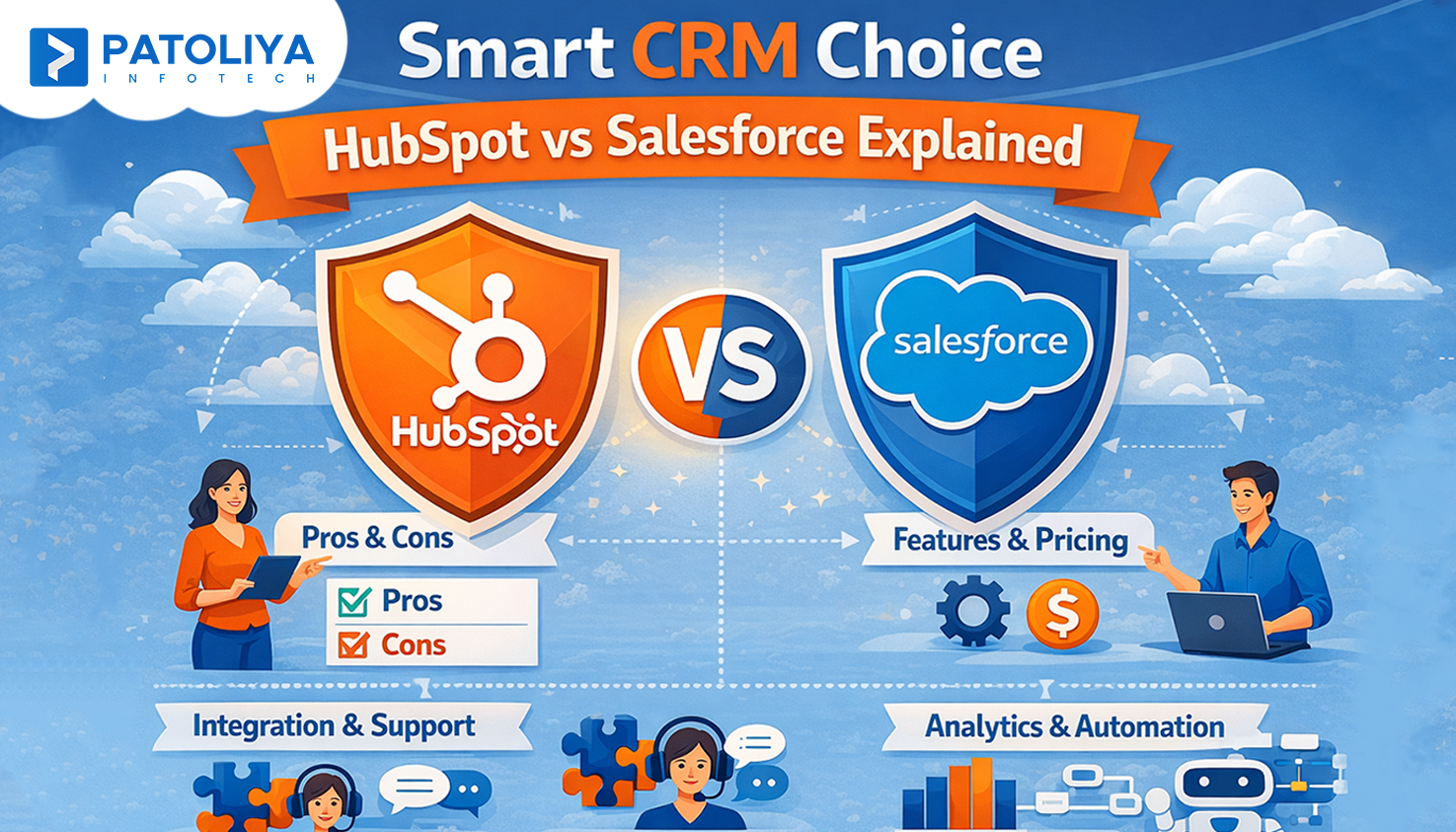
Decision makers evaluating HubSpot vs Salesforce usually face one core challenge: aligning marketing execution with sales performance at scale. The HubSpot and Salesforce debate is rarely about features alone; it is about operating model maturity, data visibility, and long-term system ownership. Growing companies analyzing HubSpot vs Salesforce pricing often underestimate workflow complexity and integration impact. In practical deployments, HubSpot vs Salesforce decisions influence reporting architecture, automation depth, and revenue forecasting discipline. Teams comparing HubSpot cost vs Salesforce must consider onboarding structure, customization scope, and internal technical capacity. A realistic salesforce vs hubspot comparison focuses on scalability, governance, and adaptability. Ultimately, HubSpot or Salesforce selection determines how efficiently marketing and sales collaborate as growth accelerates. Many organizations work with a strategic digital transformation partner to ensure CRM selection aligns with long-term operational scalability.
The HubSpot cost vs Salesforce positioning reflects different philosophies. HubSpot emphasizes ease of adoption and integrated campaign execution, while Salesforce prioritizes structured customization and process governance. In real-world HubSpot vs Salesforce pros and cons discussions, smaller teams value HubSpot’s simplicity, whereas enterprises prioritize control. Comparing hubspot crm vs salesforce crm reveals that HubSpot suits growth-focused teams, while Salesforce supports layered departmental structures. Enterprises requiring advanced customization often rely on structured custom CRM development services to tailor automation, reporting, and governance layers. Many leadership teams reference independent CRM market research insights to evaluate long-term platform positioning.
From the onboarding experience, HubSpot vs Salesforce implementation timelines vary significantly. HubSpot delivers faster operational readiness. Salesforce often requires configuration workshops and technical administration. A serious salesforce vs hubspot comparison must account for internal resource availability and change management capacity. Independent research on CRM adoption trends shows that platform selection increasingly depends on automation maturity, reporting depth, and scalability rather than feature checklists.
The hubspot vs salesforce distinction becomes clear in go-to-market design. HubSpot supports inbound-led growth and content-driven engagement. Salesforce aligns with enterprise selling frameworks and an account-based revenue strategy. When evaluating HubSpot cost vs Salesforce, organizations must assess funnel structure, buying cycle complexity, and sales coordination needs.
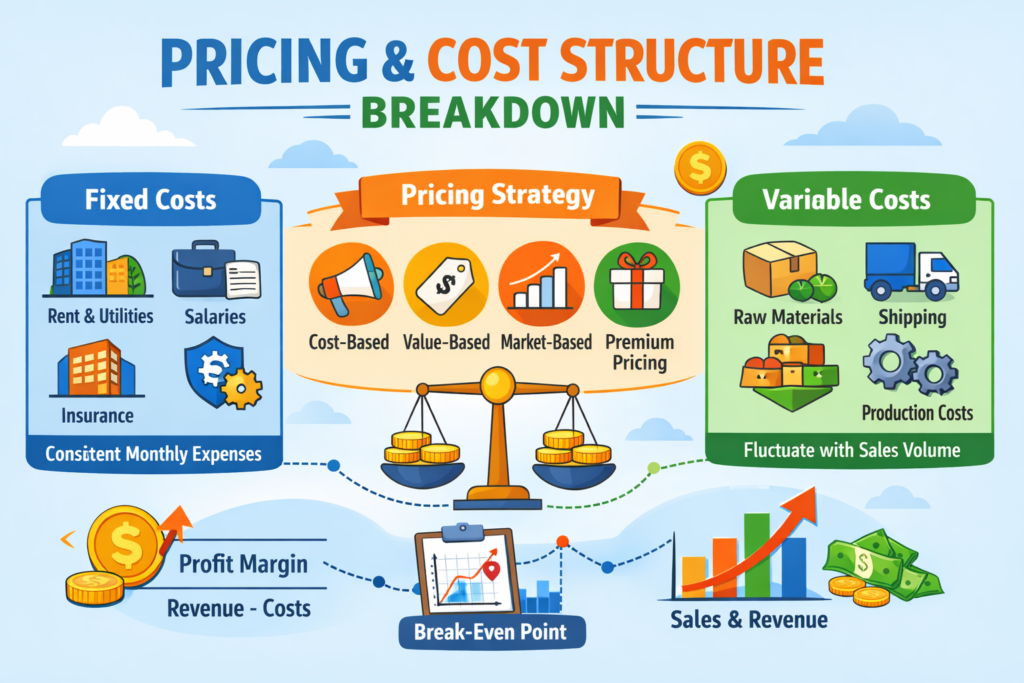
The hubspot vs salesforce pricing comparison often begins with subscription transparency. HubSpot pricing scales through tiered hubs and contact growth. Companies analyzing HubSpot cost vs Salesforce frequently find HubSpot easier to forecast during early expansion phases.
Marketing Hub and Sales Hub expansion increases user seats, automation limits, and database size. Predictable HubSpot onboarding cost structures reduce early-stage financial uncertainty.
However, scaling automation increases total cost gradually within the broader HubSpot vs Salesforce pricing landscape.
Salesforce licensing varies across editions and clouds. In most salesforce vs hubspot comparison scenarios, Salesforce requires budgeting for integration middleware and configuration services. Rising Salesforce implementation cost becomes a critical evaluation factor in enterprise deployments.
Sales Cloud pricing expands with user roles and feature upgrades. Within HubSpot vs Salesforce pricing, Salesforce can become significantly higher when customization layers increase.
A detailed HubSpot cost vs Salesforce analysis must include maintenance, admin resources, and scalability planning. Beyond subscription fees, businesses should account for optimization, integrations, and data governance that increase total ownership cost over time.
In long-term scenarios, platform flexibility, upgrade needs, and ecosystem dependency also matter. Ultimately, total cost depends on customization depth, operational maturity, and how strategically the CRM supports revenue growth.
In the HubSpot cost vs Salesforce, marketing automation depth depends on workflow complexity. HubSpot enables visual automation building, while Salesforce supports rule-based enterprise orchestration across departments.
For instance, a SaaS startup launched a 6-step onboarding journey in HubSpot within a day, while a manufacturing enterprise used Salesforce to automate distributor level campaign approvals globally.
The Hubspot vs Salesforce for marketing automation comparison highlights segmentation scale differences. HubSpot supports behavioral triggers, while Salesforce processes enterprise data models at volume.
For instance, an eCommerce brand personalized cart reminders in HubSpot, whereas a telecom provider segmented millions of users via Salesforce logic trees.
In Hubspot vs Salesforce reporting, HubSpot offers faster funnel visibility. Salesforce supports advanced multi-touch modeling across departments. For instance, A digital agency tracked blog to demo conversions in HubSpot; a multinational firm modeled cross-channel attribution in Salesforce.
The Salesforce vs HubSpot comparison maturity gap becomes visible in multi-channel orchestration. HubSpot fits growth-focused execution; Salesforce supports enterprise compliance layers and structured automation governance.
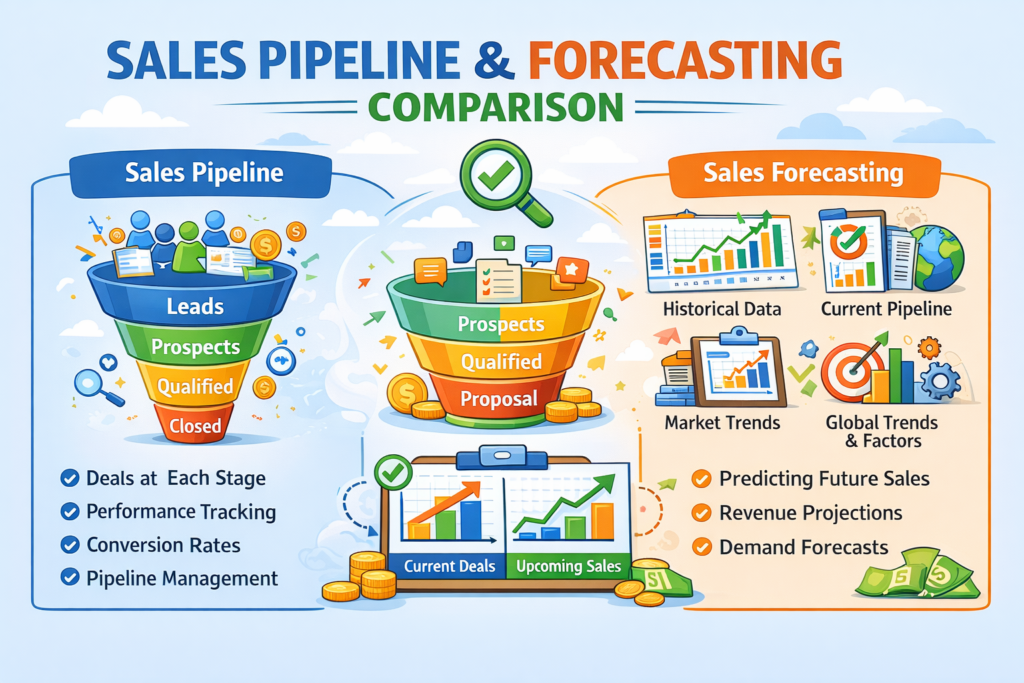
Efficient routing defines many Hubspot vs Salesforce pros and cons discussions. HubSpot supports straightforward lead assignment, while Salesforce enables territory logic and hierarchy mapping.
For instance, a mid-market tech business routed demo requests in HubSpot automatically, while an enterprise healthcare company used Salesforce territory-based allocation.
The hubspot vs salesforce pipeline difference becomes evident in forecasting layers. Salesforce supports revenue recognition tracking and multi-stage probability weighting. HubSpot focuses on simplified pipeline visualization.
In the Salesforce vs HubSpot comparison, Salesforce delivers structured approval flows and governance checkpoints. HubSpot supports lightweight automation suitable for scaling teams. For instance, a startup automated proposal reminders in HubSpot; an enterprise embedded compliance approvals in Salesforce.
The HubSpot Sales Hub vs Salesforce Sales Cloud comparison often reflects revenue complexity. Smaller teams prefer HubSpot speed, while enterprises rely on Salesforce governance depth within the HubSpot cost vs Salesforce evaluation models.
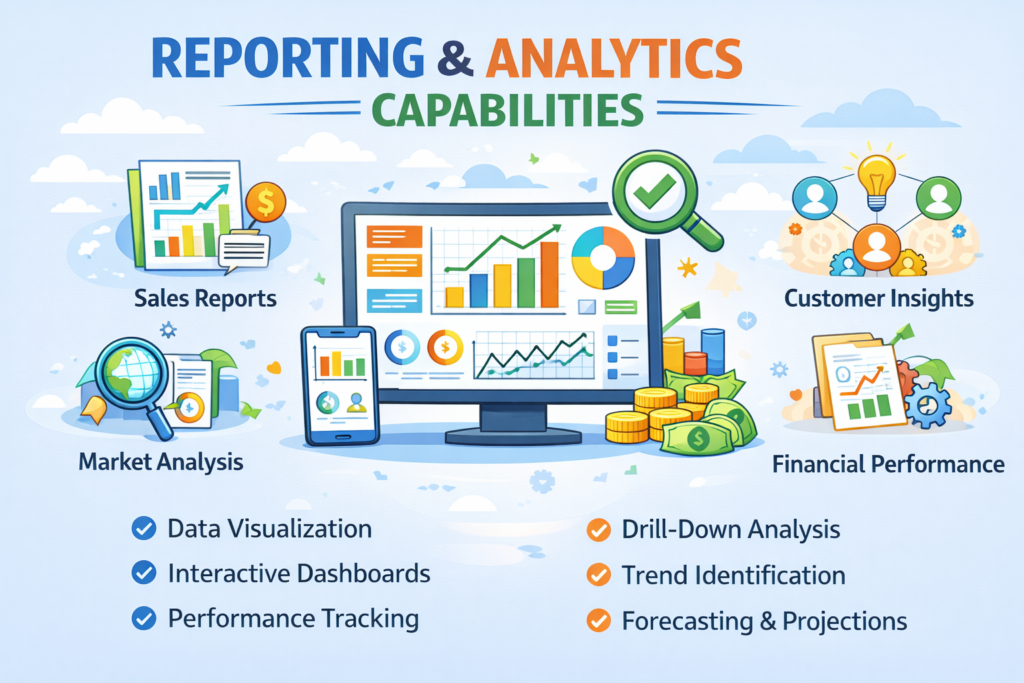
In HubSpot vs Salesforce reporting, HubSpot delivers prebuilt dashboards for fast operational visibility. Salesforce requires more setup but enables layered reporting structures across departments.
For instance, a B2B agency reviewed campaign to close metrics in HubSpot daily, while a financial enterprise built compliance ready executive dashboards in Salesforce.
Salesforce enables advanced cross-object reporting, relationship modeling, and large-scale business intelligence analytics. In the HubSpot vs Salesforce reporting comparison, Salesforce is better suited for financial forecasting, compliance reporting, and enterprise performance modeling.
In most Salesforce vs HubSpot comparison discussions, executives favor Salesforce for structured forecasting. However, Hubspot vs Salesforce pricing often influences how much reporting customization leadership is willing to fund.
The HubSpot vs Salesforce integration comparison shows that HubSpot connects easily with marketing stacks, while Salesforce supports enterprise ERP and finance integrations across multi-entity environments. Scalable CRM ecosystems often depend on strong web application development expertise to ensure seamless integrations and performance optimization.
For instance, a startup integrated HubSpot with Slack and Google Ads in hours, while an enterprise linked Salesforce with SAP and regional billing systems spanning multiple subsidiaries and compliance jurisdictions.
In the Salesforce vs HubSpot comparison, Salesforce leads in API extensibility, middleware support, and advanced customization layers. Complex environments often favor Salesforce for high-volume system architecture requiring strict data governance and performance optimization controls.
A realistic HubSpot vs Salesforce migration plan must evaluate automation rebuild, data mapping, reporting continuity, and historical record integrity. Many HubSpot vs Salesforce pros and cons conversations intensify during migration planning phases, particularly when cross-department data dependencies are involved.
The HubSpot vs Salesforce for small business evaluation usually favors HubSpot for simplicity, predictable onboarding, and lower early operational burden. In practical deployments, founders prioritize speed over structural complexity and minimal administrative overhead. For instance, a SaaS team launched CRM tracking in HubSpot within a week without hiring a Salesforce admin or external implementation consultant.
In HubSpot or Salesforce, mid-market companies assess governance against agility and internal reporting maturity. A balanced salesforce vs hubspot comparison often centers on reporting discipline versus campaign velocity, especially as teams expand sales territories.
The HubSpot cost vs Salesforce Enterprise discussion typically favors Salesforce for layered approval flows, compliance tracking, and structured revenue governance across global business units operating under regulatory scrutiny.
Our advisory approach evaluates HubSpot or Salesforce through revenue architecture, lifecycle automation, and operational scalability. We conduct structured discovery workshops to align automation, pipeline stages, reporting models, and executive KPI expectations.
We reduce HubSpot onboarding cost through phased rollout planning, automation prioritization, and database hygiene audits. In real projects, clients avoid unnecessary contact tier upgrades within HubSpot vs Salesforce pricing planning by modeling realistic growth projections.
We manage Salesforce implementation cost by controlling customization scope, approval hierarchy design, and governance layers. A disciplined HubSpot cost vs Salesforce evaluation prevents over-engineering and unnecessary third-party middleware expansion. Many enterprises reduce Salesforce implementation cost through structured CRM staff augmentation support for administration and configuration management.
Every Hubspot vs Salesforce migration includes data validation, reporting redesign, structured training, and stakeholder readiness assessments. This minimizes disruption, accelerates adoption, and protects revenue continuity during transition phases.
Choosing HubSpot or Salesforce is less about brand dominance and more about operational alignment, scalability vision, and governance discipline. A serious Salesforce vs HubSpot comparison must evaluate automation maturity, reporting depth, integration complexity, and long-term scalability expectations. Organizations comparing HubSpot vs Salesforce pricing should calculate implementation effort, admin capacity, ecosystem integration requirements, and internal change management readiness.
The right HubSpot vs Salesforce decision improves collaboration, forecasting clarity, customer lifecycle management, and executive visibility. Businesses planning a HubSpot and Salesforce migration should prioritize structured data governance and proactive change management. Ultimately, sustainable CRM success depends on aligning architecture with growth strategy rather than reacting to short-term feature appeal.