Table of Contents
Managing people at scale requires more than intuition; it demands the right technology. A Human Resources Information System gives HR teams a unified platform to handle workforce operations, much like a modern IT Software development company builds tailored systems aligned with business workflows. But not all systems deliver equal value.
Understanding the components of HRIS helps HR leaders identify which HRIS modules truly matter for their organization. The right HRIS features eliminate manual work, reduce compliance risk, and give employees better access to their own data and HR processes.
Whether you are evaluating your first platform or upgrading an existing one, knowing each module's role is critical. This guide breaks down the top 12 components of HRIS every business must know. It explains what each module does, why it matters, and how it drives smarter, faster, and more reliable HR operations across your entire workforce every day.
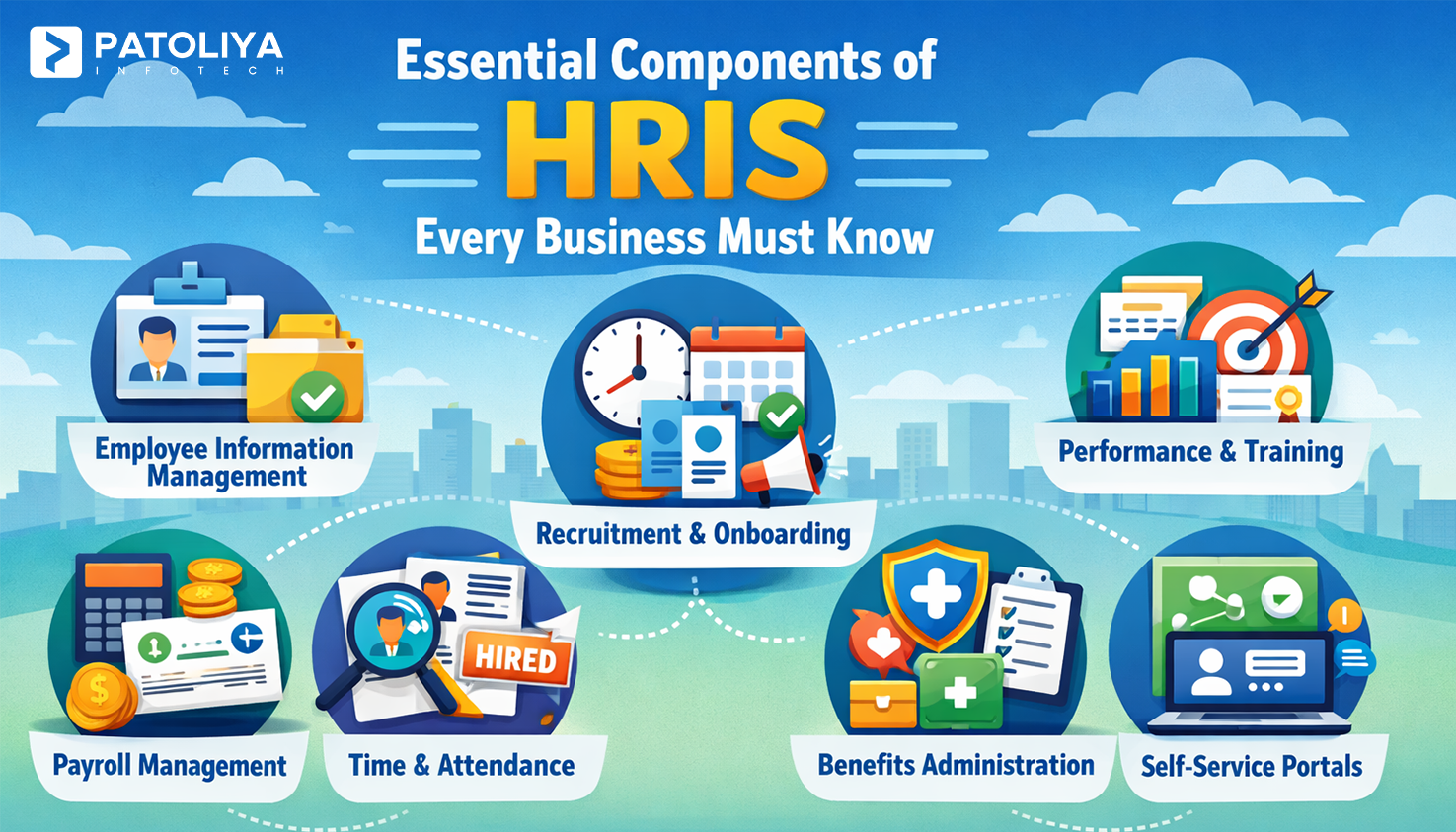
The components of HRIS are the functional modules that together make a human resources information system fully operational and effective. Each component handles a specific HR responsibility, from maintaining the employee database to running payroll management and generating HRIS analytics generating HRIS analytics that leadership teams rely on, as also highlighted in modern HR technology frameworks explained by IBM.
Together, the HRIS modules eliminate data silos, automate repetitive tasks, and give HR professionals reliable, real-time information for better workforce decisions. Understanding the components of the HRIS list is essential before selecting or upgrading any platform.
When every HRIS feature aligns with your workforce's needs, HR transitions from administrative support to a true strategic function. This guide covers all 12 key components of HRIS importance so you can evaluate, prioritize, and implement each module with complete clarity and confidence going forward.
| Category | HRIS Components | Business Value |
| Core Operations | Employee database, time tracking, payroll, and recruitment | Streamlines daily HR processes |
| Workforce Management | Performance, benefits, self-service, training | Improves engagement and productivity |
| Strategic & Tech | HRIS analytics, compliance, integrations, mobile | Enables scalability and data-driven decisions |
The employee database stores every employee's personal details, job history, compensation, and contract data in one central location. It is the foundation that all other components of HRIS rely on for accurate, consistent processing and reporting across every HR function daily.
Role-based access controls, encryption, and audit trails protect the employee database from unauthorized access or breaches with the help of components of HRIS. These human resources information system features ensure strong compliance support while restricting sensitive compensation and medical records strictly to authorized HR and payroll personnel only within the organization.
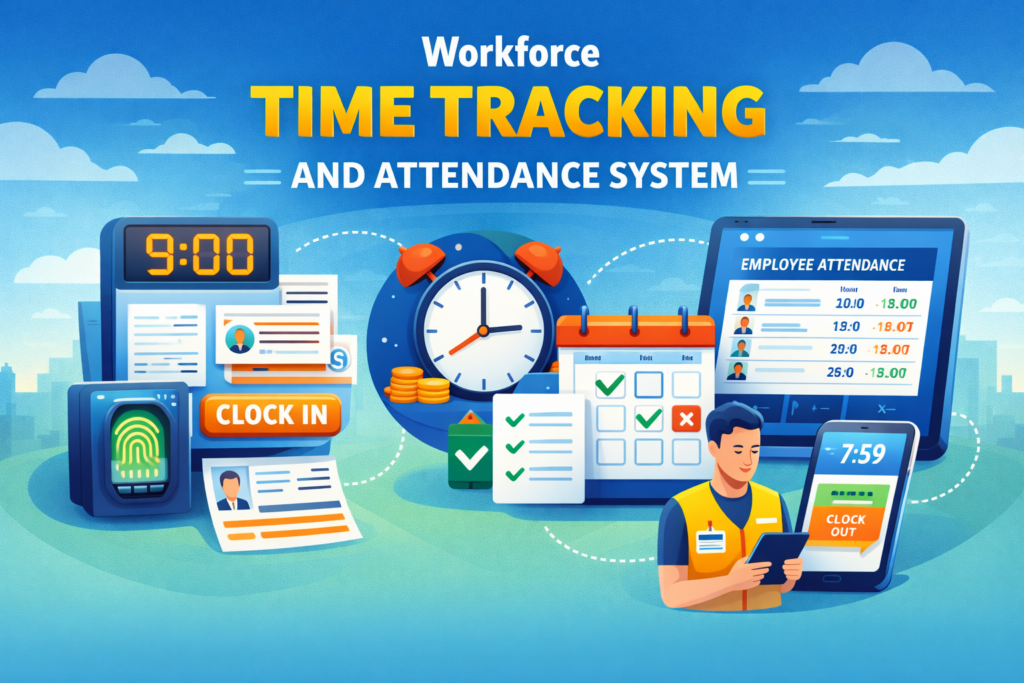
Time tracking captures employee work hours through web portals, mobile apps, or biometric inputs. Managers approve entries digitally, feeding accurate data directly into payroll management. This makes it one of the most operationally essential components of HRIS functions for shift-based and hourly workforces requiring precision.
Leave management within HRIS modules automates leave requests, tracks accruals, and notifies managers instantly. components of HRIS sync with the employee database and payroll management to deduct approved leave balances automatically each pay cycle without manual HR input.
Payroll management, as a components of HRIS, automatically calculates gross pay, deductions, bonuses, and net pay using live data from time tracking and benefits administration. As a core HRIS features, it eliminates manual calculation errors and ensures consistent, accurate, on-time salary processing for every employee across all departments and pay grades.
The payroll management module, as part of the essential components of HRIS, applies correct tax withholding rates, generates statutory contribution reports, and handles year end filings automatically without HR intervention. This critical HRIS function directly strengthens compliance support, significantly reducing the organization's penalty risk from payroll miscalculations or missed government reporting deadlines each period.
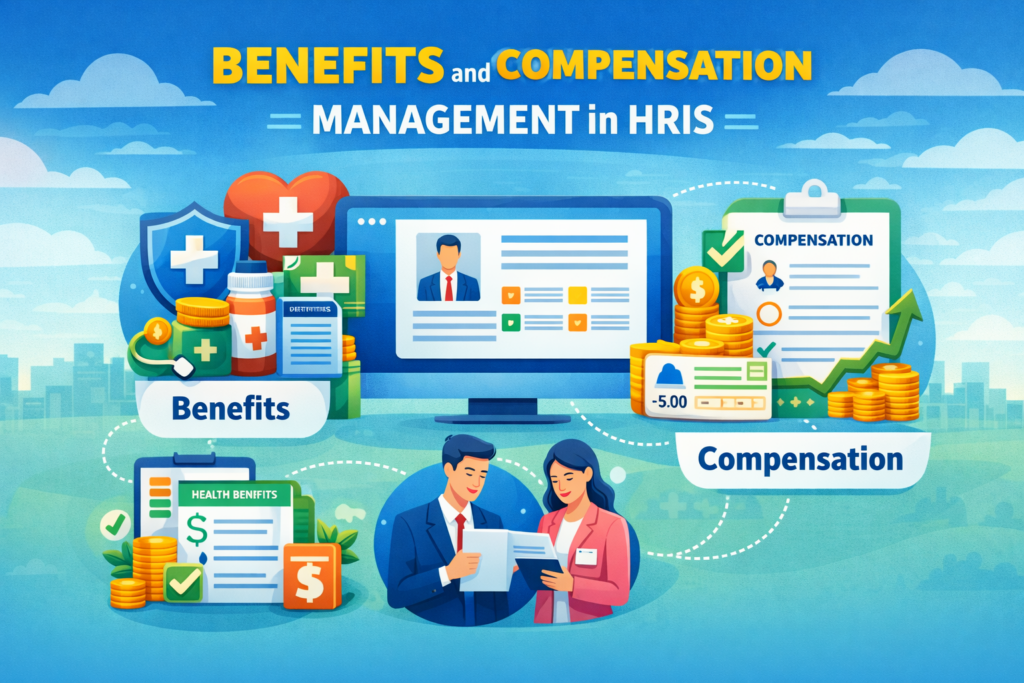
Benefits administration within HRIS modules lets employees enroll in health, dental, and life insurance plans through employee self-service portals independently. A components of HRIS tracks coverage details, dependents, and contribution amounts, syncing directly with payroll management to ensure accurate benefit deductions are applied every single pay cycle.
This HRIS features configure retirement plans, provident funds, travel, and meal allowances by employee category or location. All components of HRIS contribution rules flow automatically into payroll management, making benefits administration essential for compensation accuracy across the entire workforce.
Recruitment management handles the full hiring pipeline through components of HRIS, including job postings, application screening, interview scheduling, and offer letters, all within one HRIS module. Once hired, candidate data transfers directly into the employee database without any manual re-entry, completely eliminating duplication and saving significant administrative time for HR teams.
HR automation as a part of the components of HRIS within onboarding assigns document submissions, policy acknowledgments, and IT provisioning tasks automatically to new hires. These HRIS features deliver a consistent onboarding experience and ensures no compliance support paperwork is ever missed during the critical first days of employment.
Performance management within HRIS modules structures goal-setting, review scheduling, and 360-degree feedback collection entirely in digital workflows. Employees access their own goals through employee self-service, building accountability and engagement while HR and components of HRIS maintain complete, auditable documentation for promotions, disciplinary actions, and organizational succession planning decisions.
Continuous dashboards powered by HRIS analytics of components of HRIS let managers monitor team performance indicators in real time throughout the year. These HRIS features identify high performers for talent management programs early and flag disengagement signals before they result in costly, preventable employee attrition.
Employee self-service portals let staff independently view payslips, tax documents, and leave balances, and update personal details without contacting HR. This significantly reduces routine administrative workload across all components of HRIS organization-wide.
Through employee self-service, employees submit leave, reimbursement, and training requests digitally. Each submission triggers automated approval workflows routed to the right manager, making this HR automation capability one of the fastest return on investment components of HRIS modules available to modern HR teams.
Talent management through HR automation assigns mandatory compliance courses and role-specific training automatically based on job title or tenure. Employees receive enrollment notifications via employee self-service. These components of HRIS ensure that consistent workforce development happens without any manual HR coordination or intervention required.
This HRIS module monitors certification expiry dates and sends automated renewal alerts to employees and managers. It connects directly to compliance support and HRIS analytics of components of HRIS, ensuring professional qualifications remain current. This is especially true in heavily regulated industries requiring active licensure maintenance.
HRIS analytics, as a part of the components of HRIS, aggregates data from payroll management, performance management, time tracking, and recruitment management into real-time visual dashboards. HR leaders use these HRIS software capabilities to present turnover trends, headcount costs, absenteeism patterns, and compensation equity insights clearly and confidently to executive leadership and board stakeholders.
Custom reporting within HRIS features allows HR teams to build and schedule specific reports without exporting raw data to spreadsheets. This HRIS function reduces manual reporting hours and sharpens data-driven decision-making across every HR domain and business unit.
Compliance support within components of HRIS automatically monitors wage laws, overtime thresholds, and statutory entitlements. HR automation of compliance checks ensures employment contracts and benefit structures remain consistently aligned with current regulations, protecting the organization from costly government penalties and legal disputes.
Every HR transaction is stored in a tamper-evident audit log within the components of HRIS. When inspections or disputes arise, this HRIS module generates complete documentation packages instantly, one of the most underappreciated yet critical HRIS functions available.
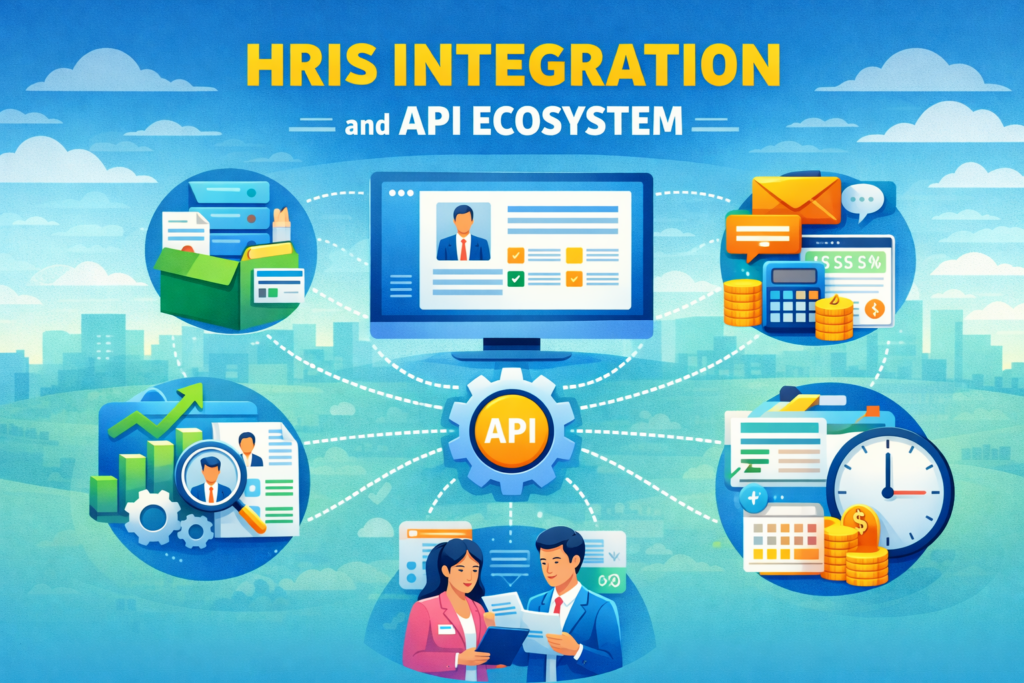
Integration ranks among the most vital HRIS software capabilities, especially when organizations rely on custom software development services to connect HR systems with finance, ERP, and third-party tools. Pre-built connectors link the components of HRIS to accounting software, learning management systems, and background verification tools. This ensures that data entered once flows automatically to all connected platforms without duplication or manual synchronization effort from HR teams.
Connecting HRIS modules with ERP systems gives finance teams real-time labor cost visibility. These HRIS features eliminate manual reconciliation between HR and finance, delivering one of the highest operational efficiency gains across all components of HRIS implemented today.
Mobile-enabled HRIS features give distributed and field-based employees full access to employee self-service, time tracking, and approval workflows directly from their smartphones. Mobile access significantly increases system adoption and eliminates approval delays across all HRIS modules for remote and on-site teams.
A well-designed HRIS reduces onboarding time, improves data quality, and drives consistent adoption. Among modern components of HRIS, intuitive UX has become a primary selection criterion because underused HRIS software capabilities deliver zero measurable value to any organization.
Selecting the right implementation partner matters as much as selecting the right platform. We bring proven, hands-on expertise across all components of HRIS, from employee database architecture and payroll management configuration to HRIS analytics setup and compliance support workflow design.
Our team customizes HRIS features around each client's unique workforce structure, industry requirements, and growth roadmap. Integration specialists ensure seamless connectivity between HRIS modules and existing ERP, finance, and third-party systems.
With a demonstrated track record of reducing administrative overhead, accelerating HR automation adoption, and strengthening HRIS functions organization-wide, we consistently deliver measurable, lasting ROI for every client.
Our Implementation Expertise Covers
For businesses serious about maximizing the full value of every component of HRIS, Patoliya Infotech is the trusted implementation partner that makes it work. If you are planning to implement or upgrade your HRIS, get in touch with our team to discuss your requirements.
The 12 components of HRIS covered in this guide, from employee database management and payroll management to HRIS analytics and compliance support, represent what a complete human resources information system must deliver for modern organizations. Each HRIS module plays a distinct role, but real transformation happens when they integrate into one connected, automated system. HR automation eliminates repetitive tasks.
Employee self-service empowers your workforce daily. HRIS analytics enables smarter, faster decisions at every level. Together, these HRIS features elevate HR from an administrative function into a genuine strategic business driver. Organizations investing in platforms that cover this complete HRIS components list will manage talent better, meet compliance obligations confidently, and scale operations more efficiently. Review your current system against these components of HRIS and close the gaps today.