Table of Contents
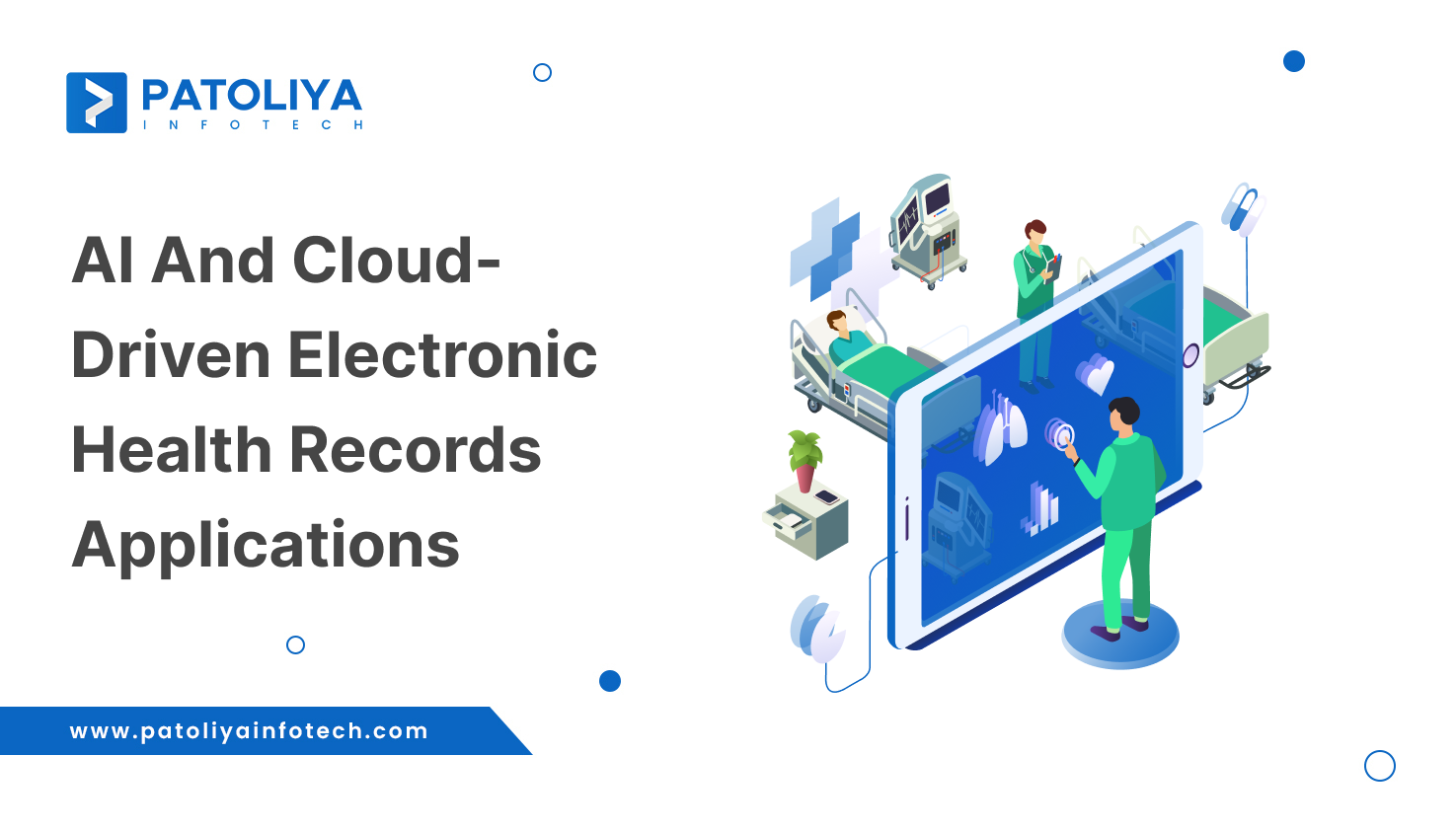
Electronic health records applications are popular for storing and transferring data in a secure manner. EHR discovery is primarily for a vast amount of data management, but nowadays it has become popular. Patients can actively participate in their healthcare journey. Electronic health records are helpful in research and development.
The key aspects the EHR uses are lower cost, quality care, and a population health approach. Using a massive patient database from all across the world, scientists can discover medications and identify health trends using population health. This overcomes geographic, generational, and environmental limitations. Also, save costs and contribute to social epidemiology.
All things have limitations. Some people do not know how to use technology. Some require training to use it. If patients are unable to understand, how will they care for their health? Researchers have access to data on people's privacy. Cybersecurity measures are also in place. All of this can be easily overcome.
There are various specialized healthcare software types, and EHR is one of them. Electronic health records store medical records and transfer them safely from one location to another.
Electronic health records applications provide all diagnoses, lab images, and records in one place. EHRs function as patient portals. EHR gives data analytics and alerts concerning problems. This helps doctors to make better decisions.
The primary reason that EHR systems are being developed is to manage large amounts of data. It takes time to evaluate all of the data in one location, even though doctors use it to make better decisions. Current EHR systems are developed and provide data analytics.
In 2009, the HITECH Act provided significant subsidies to hospitals for the adoption of EHR.
As new technologies emerge, the cybersecurity of this data has been a worry. For this, EHRs have evolved for the secure sharing of records. Integration with technology such as AI and automation makes EHR extremely powerful for healthcare applications.
Electronic health records applications enhance patient safety and improve the quality of care. This improves communication between the two departments and automates administrative processes.
EHR is one of the key components of the Clinical Information System(CIS). This increases work efficiency and data analytics. This makes decision-making easier.
Doctors can order tests, treatments, and medications digitally in EHR using CPOE. This speeds up the operation and enhances patient safety as it reduces human error.
E-prescribing is a feature of electronic health record apps that sends prescriptions directly to pharmacies. Clinicians can monitor drug histories, avoid duplicate medications, and avoid potentially hazardous interactions.
CDS features in EHR systems provide evidence-based suggestions, reminders, and alarms. Errors decrease, and clinicians are more capable of making decisions.
Electronic health records applications integrate data. This data can be lab results, allergies, and medical history. The whole picture of the patient helps doctors make better diagnoses and treatment plans.
EHR apps provide seamless information exchange across care teams and departments. This ensures the continuity of care for long-term and chronic disease management.
Appointment scheduling, room assignment, and doctor availability tracking are all made easy using EHR apps. This reduces wait times and stops reservations from being made twice. Electronic health records applications guarantee that all resources are used efficiently. This can include workers, beds, and equipment.
EHR systems reduce human error by automating claims. Hospitals can decrease claim denials while expediting reimbursements. This facilitates the maintenance of financial records.
EHR apps enable accurate treatment coding and speedy insurance information verification. Cleaner claims, quicker approvals, and fewer billing disputes result from this.
By digitizing reporting and internal communications, EHR software helps employees work more productively. Teams can focus on patient care rather than paperwork, manage tasks, and lessen administrative burden.
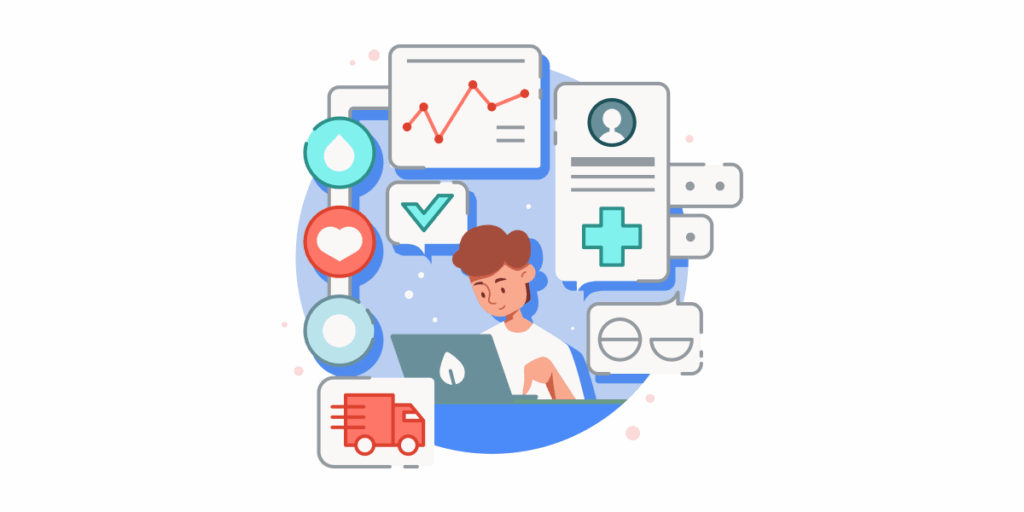
Electronic health records applications make it simple to evaluate huge datasets and investigate community health patterns. This allows healthcare institutions to better design policies and improve long-term outcomes. This can help detect care gaps.
Through the utilization of records and predictive analytics, EHR systems facilitate early illness surveillance. This enables authorities to reduce widespread hazards and react swiftly to pandemics.
Electronic health records applications help to streamline public health reporting. This allows for automated data submission to national registers and government dashboards. This minimizes manual errors and saves time.
EHR data supports Clinical trials, evidence-based, and medical research. Organizations can compare treatments, detect patterns, and enhance future care with the use of detailed patient data.
EHRs help doctors and researchers turn real patient data into real impact. They make it easier to spot trends, respond faster, and improve care for entire communities.
They facilitate the identification of patterns and speed up response times. This enhances community-wide care. EHRs make it simpler to comprehend how a person's environment and way of life affect their health. This can be integrating local environmental and social elements with patient data.
EHR software protects lab results, diagnoses, treatment plans, and medical histories. This facilitates accurate information access for providers at all times.
EHR systems provide effective data exchange between hospitals, labs, pharmacies, and specialists. This increases interoperability. This provides continuity of care and reduces errors.
Clinical decision support systems are linked to EHR software. This includes alerts, best-practice standards, and evidence-based recommendations. This enables clinicians to make safer decisions. also enhances treatment outcomes.
Patients can access their information and track their prescriptions using patient portals. Further helps in communicating with their providers and downloading reports. This increases patient engagement and trust in care.
Electronic health record apps make use of encryption, access control, and audit logs. To protect sensitive data, HIPAA-compliant software measures are required for security. This ensures data privacy and prevents unauthorized access.
| Feature | What it Does | Real-Life Example |
| Workflow Automation | Electronic health records applications automate common chores. This could include patient check-ins, follow-ups, reminders, and internal approvals. | The EHR system at a clinic creates automated appointment reminders. Patients who receive SMS or email reminders without the need for staff engagement had a 50% lower rate of appointment cancellation. |
| Revenue Cycle Management (RCM) | This simplifies billing, claims processing, and payment tracking. This improves cash flow while reducing manual errors. | A hospital submits insurance claims directly through the EHR system. This is resulting in faster payments and fewer rejected claims. |
| Role-Based Access & User Management | This provides regulated access to staff members. This could include a doctor, a nurse, the billing staff, or an administrator. This helps protect patient data and ensure compliance. | A nurse can view lab reports, but can not change diagnosis notes, doctors may. This protects against illegal alterations and guarantees data security. |
| Performance Dashboards & Reporting | This tracks KPIs using real-time dashboards. Patient wait times, staff productivity, appointment volume, and claim status are a few examples of these KPIs. | An administrator looks at a monthly report in the EHR and discovers peak patient hours. They change staff shifts and lower wait times. |

EHR systems centralize all documents, making it easy to understand everything. Doctors can view all medical histories, diagnoses, and important documents in one place. This reduces human error and empowers medical practitioners to make intelligent choices based on information and analysis.
In an emergency, electronic health records applications are helpful since they speed the document acquisition process.
Patients can easily take part in their health journey. They become aware of their condition and take critical steps to improve their health. Reduced operational cost
Online documentation reduces the cost of manual labor. Electronic health records applications automate all repetitive operations. Billing, coding, arranging appointments, and insurance verification are a few examples of this. Revenue cycles and operational efficiency are enhanced as a result.
The EHR system sends alerts for missing appointments and drug interactions. Doctors can identify health patterns and track chronic diseases. This allows treatment programs to be customized to specific health patterns.
As all departments become integrated care ecosystems, care becomes continuous and easy to flow, much like water.
Law-quality electronic health records applications cannot provide doctors with complete access to records. Electronic record transfers become slow, and data security becomes a worry.
For this, Electronic health records applications that conform to FHIR (Fast Healthcare Interoperability Resources) and HL7 standards are necessary. Only professionals can provide this.
EHR programs handle a vast amount of sensitive patient data. This data must be protected when it is transferred from one department to another.
Data security measures must be put in place. Data encryption, multi-factor authentication, secure cloud hosting, and frequent audits are some of the cybersecurity precautions.
It is important to follow country-specific legislation and compliance. It ensures that your Electronic health records applications are both high-quality and patient-safe. Some laws include HIPAA in the United States and GDPR in Europe. Failure to comply may result in legal consequences.
Staff training is required as part of the adoption of technology. They are the ones who will carry this out. Training is essential for maximizing the ROI of your EHR system.
Electronic health records applications might be difficult to integrate with older systems. The latest technology is essential. A poorly managed transfer process might result in data loss, system outages, and inaccurate patient information.
Someone with high-level expertise is desired. Patoliya Infotech has an excellent track record of producing high-quality software. We are a leading company in the healthcare sector. We provide innovative and secure software solutions.
| Feature | EHR (Electronic Health Record) | EMR (Electronic Medical Record) | PHR (Personal Health Record) |
| Definition | A complete digital record of a patient's medical data that circulates between hospitals and departments. | A digital copy of paper charts used in a hospital and medical facility. | A medical record that the patient owns and controls. |
| Data Ownership | Healthcare providers' ownership and safe transfers among authorized systems. | Healthcare provider or clinic. | The patient. |
| Data Included | Medical history, lab results, medications, allergies, imaging, treatment plans, immunizations. | Clinical notes, test results, diagnoses, and treatment details. | Personal health metrics, medications, allergies, wellness data. |
| User Type | Hospitals, large healthcare systems, and multi-specialty networks. | Small clinics, solo practitioners, or internal departments. | Individual patients and caregivers. |
| Main Benefit | Enhances care coordination, accuracy, and patient outcomes. | Improves efficiency and recordkeeping within a single practice. | Empowers patients to manage their own health information. |
| Example Use Case | A patient visiting multiple specialists. All can access and update the same health record. | A family doctor tracking patient history within their clinic. | A patient tracking fitness data and sharing it with their physician. |
| Best For | Healthcare providers are seeking integrated, long-term, and secure data management. | Independent practices need internal digital records. | Patients want control and visibility over personal health data. |
When electronic health records applications are combined with artificial intelligence, they give excellent decision-making analytics. It recognizes trends and forecasts health risks. AI recommends customized treatment plans and improves clinical workflow.
There are practical impacts of AI and EHR. AI is changing the way we care for our eyes. It is helping doctors spot problems sooner and give better care as technology and data keep improving.
The future of EHR technology is moving toward voice-enabled documentation. This enables clinicians to record notes, prescriptions, and patient updates in natural speech.
Speech recognition and natural language processing (NLP) transform spoken words into structured information. This improves team productivity.
The future of healthcare is highly focused on building digital ecosystems. Electronic health records applications are part of the digital ecosystem that connects all departments.
Remote and connected patient care have become more common because of EHR systems. This results in a very efficient operational and revenue cycle.
Electronic health records applications redefine everything from data storage to data management. EHR technology enables people to take an active role in their health while also facilitating safe data communication. A quicker operational and revenue cycle is made possible by the integration of automation technology, artificial intelligence, and electronic health systems. This promotes task automation, decision-making, and efficiency in care procedures. This enhances teamwork and coordination.
Patients can actively participate in their health journeys, but educating those who are hesitant to use new technology is critical. EHR data is useful for research and development of new medications and procedures.
There are some hurdles in terms of cybersecurity, adoption training, and legacy system integration. This is a regular occurrence in the adoption of any new technology. This can be overcome through the use of innovative technology and strict compliance with laws.
Proper implementation of this technology is critical for improved interoperability. Choose someone like Patoliya Infotech, which offers high-quality integration and technology. Someone with verified health records, security measures, and compliance. We at Patoliya Infotech understand your problems and expectations.