Table of Contents
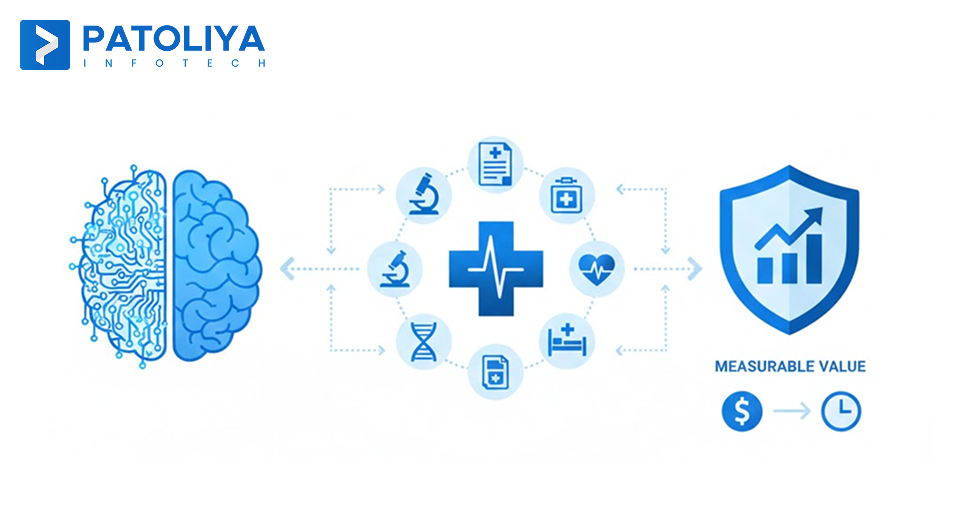
Machine learning use cases in healthcare could help healthcare providers reduce systemic costs, maximize staff and resources, and anticipate patient concerns before they become emergencies.
A hospital's efficiency is based on both the number of people it treats and how well it uses its data. Actually, 50% of healthcare efficiency is determined by how efficiently hospitals manage and analyze their data.
By using technologies like artificial intelligence, machine learning, and predictive analytics to convert raw data into real-time insights, the healthcare industry enhances both patient care and operational performance. It facilitates hospitals' conversion from reactive care to proactive and data-driven decision-making. The results include improved patient outcomes, improved financial performance, and higher patient satisfaction.
Through early risk identification and timely clinical response, Machine learning use cases in healthcare improve patient safety and outcomes in a wide variety of healthcare settings.
Predictive analytics in healthcare helps early diagnosis, preventive care, and reduced long-term treatment costs by enabling accurate disease risk assessment.
Readmission prediction can help healthcare teams control operational costs, improve post-discharge care, and reduce preventable hospital returns.
Early detection of sepsis allows for a quicker clinical response, which lowers accident rates, ICU stays, and overall treatment costs.
Clinical decision support systems improve diagnostic accuracy and treatment consistency while assisting doctors in managing challenging patients.
In medical imaging, Machine learning use cases in healthcare reduce human error and clinician workload while improving diagnostic speed and accuracy.
Customized treatment suggestions enhance the effectiveness of medication, reduce side effects, and promote improved long-term health results.
Predicting medication compliance allows for focused interventions that lower complications and save needless hospital stays.
For instance,
Read More: What is AI Automation & Predictive Analytics in Healthcare
Hospitals can boost efficiency while retaining high-quality treatment by using Machine learning use cases in healthcare to convert operational data into meaningful insights through hospital management analytics.
Patient flow optimization improves productivity and the general patient experience across departments by lowering traffic and wait times.
Predicting bed occupancy helps with proactive capacity planning, which lessens overcrowding and enhances the use of hospital resources.
Forecasting staffing demand ensures the optimal labor distribution, reducing expenses, avoiding fatigue, and preserving continuity of care.
Optimizing the operating room maximizes the use of expensive resources, reduces delays, and improves surgical efficiency.
Length-of-stay prediction lowers needless inpatient expenses while enhancing bed management and discharge planning.
Hospitals could ensure continuous staffing and infrastructure availability by using demand forecasting to prepare for patient surges through Machine learning use cases in healthcare.
For instance,
By identifying high-risk claims early, claim denial prediction reduces rejections, rework, and revenue loss through Machine learning use cases in healthcare.
By anticipating reimbursement slowdowns, payment delay forecasting facilitates improved cash-flow planning.
Coding optimization ensures quick, accurate reimbursements by improving accuracy and compliance.
Fraud, waste, and abuse detection finds irregularities to stop monetary losses and legal risks through Machine learning use cases in healthcare.
For instance,
Read More: What Is AI in Medical Imaging and How Does It Work
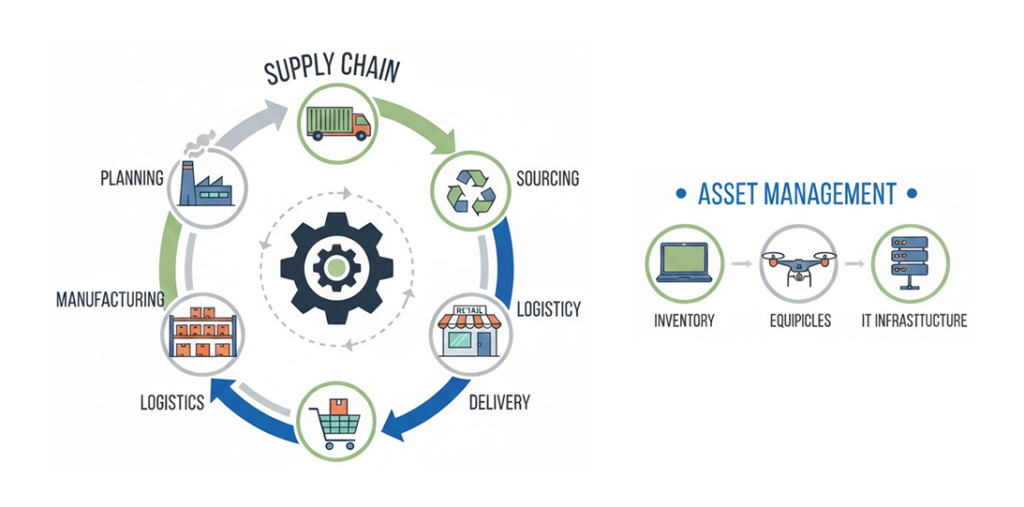
Machine learning use cases in healthcare enable intelligent supply chain decisions by improving forecasting accuracy, reducing waste, and ensuring ongoing patient care. This is a key part of healthcare supply chain optimization.
By employing inventory demand forecasting to maintain optimal stock levels, hospitals can prevent shortages and save money.
Stockout prediction ensures the continuous supply of essential medical supplies, allowing for proactive risk management.
Vendor performance rating improves procurement decisions by promoting reliable suppliers and reducing dependency on poor vendors.
Fraud and overpayment can be prevented through the use of these anomaly detection programs, which allow a more transparent and economical procurement process.
Asset Utilization Optimisation lowers the associated capital costs and downtime by extending asset life and improving the maintenance plan.
For instance,
The Machine learning use cases in healthcare are shifting healthcare from reactive treatment models to value-based population health management through predictive analysis of patient data to discover patterns.
Healthcare professionals can take a proactive approach to early treatment and lower hospital admissions from complications by identifying high-risk patients with chronic diseases.
Healthcare professionals will be able to assist patients with their compliance concerns by providing them with preventative care needs at the appropriate time, such as screenings, immunizations, and examinations, using this information about patients who may develop chronic diseases.
The identification of social determinants of health will allow for a more equitable approach to patient care as non-medical conditions that influence health outcomes are taken into account.
When identifying who would benefit from preventive care, outreach efforts provide a greater opportunity for patient engagement with preventive care therapies.
For instance,
Using Machine Learning, organizations are able to improve the engagement of patients, the patient experience, and their long-term retention with the organizations by enabling patient-to-provider interactions that are both timely and personalized.
Predicting appointment no-shows gives organizations the ability to send proactive reminders, reschedule visits, and provide telehealth options in order to reduce the number of missed appointments and associated lost revenues.
Predicting patient satisfaction provides organizations with the ability to early identify service-related issues and, therefore, increase patients' loyalty.
Using chatbots and virtual assistants enables patients to receive real-time support and also reduces the administrative workload for providers; therefore, chatbots and virtual assistants will continue to play an important role in the future of AI (Artificial Intelligence) and Machine learning use cases in healthcare.
By communicating with patients through personalised communications, organizations can enable patients to be more engaged with the organisation, follow through on care recommendations, and be more successful in outreach programmes.
For instance,
Read More: What Is a Machine Learning Healthcare Monitoring System?
Machine learning use cases in healthcare improve medical results by detecting diseases earlier and enabling quicker and more accurate treatment selections. It reduces preventable risks and helps healthcare professionals respond before conditions get worse.
Machine learning use cases in healthcare increase hospital efficiency by optimizing staff, reducing administrative delays, and improving patient flow. Better resource management and more effective operations flow from this.
Through cost reduction, increased billing accuracy, and fraud prevention, Machine learning use cases in healthcare enhance financial performance. This enhances revenue cycle management and strengthens cash flow.
By identifying high-risk populations and facilitating focused preventative care, machine learning promotes population health. This enhances community health outcomes and lowers long-term care expenses.
By cutting down on wait times, decreasing missed appointments, and customizing communication, machine learning enhances the patient experience. This improves patient retention and engagement.
Machine learning use cases in healthcare are benefiting the healthcare sector by improving patient outcomes, reducing operational inefficiencies, and increasing financial performance. The entire healthcare ecosystem is benefiting measurably from machine learning (ML), from early disease detection and tailored treatment plans to improved revenue cycle management, effective staffing, and more better supply chain decisions.
Adoption of ML will ultimately put healthcare professionals in a better position to deliver better care, boost patient satisfaction, and ultimately reduce costs.
Their development partner determines how well machine learning and other technologies are used. At Patoliya Infotech, we offer the finest solutions with efficient execution and ongoing assistance.