Table of Contents
The machine learning healthcare monitoring system not only analyzes data but also delivers useful insights. Healthcare is no longer limited to hospitals, as remote care is now possible. There is one scientific notion that our environment influences us. Patients may find that their home is where they can heal the fastest. A person cannot employ a doctor to stay with a patient 24/7, and the doctor is unable to continuously check the patient's vitals or symptoms.
In such circumstances, machine learning monitoring systems continuously monitor remote patients and hospital patients, collect additional device data, and provide insights to doctors. Doctors may care for high-risk patients since the predictive analytics healthcare system is a component of the ML monitoring system. This prioritizes important patients and sends notifications to allow for early intervention before symptoms occur.
With the appropriate execution and strategy, anyone can use this system and resources to generate the best return on investment.
A machine learning healthcare monitoring system is an intelligent infrastructure, or platform, that continuously evaluates patient data from software, systems, and devices. It provides prioritized notifications and ongoing risk inference throughout clinical workflows.
This promotes better patient safety, earlier intervention, less effort for clinicians, and measurable operational results.
Data is generated in every area of modern healthcare, including software and systems. This high-volume or high-velocity data is collected and normalized by a machine learning healthcare monitoring system to create an integrated overview of patient health.
This makes Continuous patient monitoring, early risk identification, and personalized notifications across care settings.
A supervised machine learning healthcare monitoring system is used to predict outcomes, such as patient deterioration, readmission risk, or sepsis, using labeled historical data.
Unsupervised machine learning finds abnormalities and hidden patterns in patient data. This helps to detect early warning signs that do not satisfy clinical standards.
Different learning strategies are needed for various clinical situations. When combined, these models enhance healthcare predictive analytics while lowering alert fatigue and false alerts.
An effective machine learning healthcare monitoring system strikes a balance between depth and speed.
By identifying abnormal vital signs or sudden fluctuations in risk as they occur, continuous monitoring enables quick clinical treatments.
In order to identify patterns, improve care pathways, and improve predictive models, batch analytics examines data collected over time.
This combination provides long-term intelligence for operational planning, patient safety, and quick response.

Wearables and other integrated medical equipment can be used to continuously monitor patients with machine learning. RPM systems minimize needless hospital stays by identifying early indicators of decline through the analysis of vital signs and behavioral patterns.
A patient with heart disease wears a smart device that alerts clinicians when changes in vital signs occur, resulting in disease prevention.
Machine learning algorithms examine real-time streams of vital signs, lab results, and device data in extreme settings to identify small changes that come before critical occurrences. In intensive care units, this enables fast action and lessens the cognitive burden on clinicians.
It uses real-time data on patient vital signs, lab data patterns, and more to determine risks of sepsis.
A machine learning healthcare monitoring system makes way for monitoring patients for chronic ailments like diabetes, heart failure, and COPD. This is achieved by recognizing patterns, predicting relapses, and allowing personal treatment plans.
It keeps track of glucose measurements in diabetic patients and signals a higher risk before the development of diabetic complications.
Early Warning Systems that have performed better than fixed criteria in identifying complicated risk patterns across various data sets.
These early warning systems give more importance to high-risk patients. This reduces the occurrence of unintentional events related to degradation.
In this approach, the priority is placed on the patients who have vital signs and clinical information consistent with a high risk of deterioration. In effect, fewer significant events occur unseen.
Machine learning follows up with the patient’s progress even after they are discharged through home care monitoring. This serves to minimize instances of readmission to the facility.
After surgery, it monitors irregular patterns of recovery from home, advising follow-up care to avert hospital readmission.
Early detection of clinical risks: The healthcare machine learning technology finds signs of patient decline by analyzing patient data. It helps to take action before symptoms arise.
The reduction of human effort and exhaustion: The processing of relevant risk data is the primary focus of machine learning. This helps in eliminating any unnecessary information.
Personalized patient monitoring: After finding the patient's baseline, the machine learning models modify the level of care. In the end, the unique strategy lowers the frequency of false positives.
Better patient outcomes and security: Better results come from accurate monitoring, fewer missed events, and quick action. As a result, there were fewer ICU admissions, shorter hospital stays on average, and better patient safety.
| Challenge | Why It Matters in Healthcare Monitoring | How to Overcome It |
| Inconsistent and fragmented data | Since patient data comes from multiple sources in different formats and levels of quality, this limits the reliability of the model. | Use popular data frameworks with reliable data pipelines, such as HL7 and FHIR, for normalization, validation, and quality control. |
| Clinician Confidence and Tiredness | Doctors lose faith in monitoring systems due to overwhelming and inconsistent signals. | Prioritize alerts based on risk, combine machine learning with clinical guidelines, and include physicians in the validation process. |
| The Model's Explainability and Visibility | Invisible forecasts make it difficult for clinicians to comprehend and react to signs. | Make use of explainable AI (XAI) techniques and provide a clear explanation of the logic underlying risk evaluations and alerts. |
| Privacy, Security, and Regulatory Limitations | Machine learning Healthcare monitoring systems have to comply with GDPR, HIPAA, and local legislation while protecting sensitive patient data. | Integrate data classification, encryption, auditability, integrity by design, and safe access controls from the start. |
| Difficulties with Workflow Integration | Healthcare workflows are disturbed, and the adoption of independent ML technologies is restricted. | For efficient clinical decision-making, incorporate data directly into monitoring systems, EHRs, and ICU dashboards. |
Assessment and prediction of health risk: Continuously assesses clinical patterns and vital signs to determine if the patient is at high risk.
Predicting significant events: It helps in the early detection of sepsis, cardiac events, and breathing difficulties before they occur or worsen.
Shift from reactive to proactive care: This helps in taking fast action, thus reducing complications and improving patient outcomes.
Design-based regulatory compliance: To ensure the privacy of patients' personal information is preserved as per the law, a machine learning-based monitoring solution for the healthcare sector must adhere to the respective laws of HIPAA, GDPR, and other medical laws.
Access control and safe data pipelines: Administrative data segregation, role-based security, and complete encryption safeguard patient data throughout its intake, processing, and storage.
Explainability and auditability of the model: The technology is positioned as clinical decision assistance, facilitates regulatory clearance, and fosters clinician trust through the clear visibility of forecasts and risk assessments.
The foundation of governance: For safe, scalable adoption in healthcare settings, explainable machine learning and privacy-first architecture are crucial.
First, point out areas such as the detection of deterioration of patients early, monitoring ICU patients, and remote monitoring of patients, where machine learning adds the most value. Carefully observe the areas where the applications bring a large degree of therapeutic benefit.
Get high-quality data from systems and software. Create techniques to handle anomalies, noise, and missing values. Then, use FHIR and HL7 to standardize the data.
Supervised learning for known results, such as the prediction of sepsis.
Unsupervised learning for early warning signs and anomaly identification.
Give preference to models that strike a balance between comprehension and accuracy.
Use real-time inference models to identify risks early and send out notifications. To minimize false positives and prevent physician alert fatigue, properly construct alerting logic.
Integrate information straight into monitoring platforms, ICU dashboards, and EHRs. With the least amount of disturbance to workflow, ML results have to show up where physicians already work.
Make that doctors can examine, verify, and disregard signals produced using machine learning. Creating feedback loops and activation routes enhances model performance.
Create the system in accordance with local laws, GDPR, and HIPAA. Make use of explainable models, audit logs, role-based access control, and secure data pipelines.
Monitor model relevance, bias, and accuracy on a regular basis. Retrain models to change in patient demographics, treatment procedures, or data trends.
Monitor key performance indicators (KPIs) such as patient outcomes, physician adoption, time to intervention, and adverse event reduction. Expand to other departments after value and trust have been created.

| Challenge | Why It Matters | How to Overcome It |
| Data quality and bias | Biased or incomplete data might lead to unsafe results and lower forecast accuracy. | Create robust data governance, standardize inputs, maintain bias, and evaluate models for a range of patient demographics. |
| Integration with legacy systems | Clinical response and real-time insights are limited with siloed EHRs and monitoring systems. | Connect systems using API-based integration and interoperability protocols like HL7 and FHIR. |
| Clinician trust and adoption | Confidence in ML-generated alerts decreases with insufficient transparency and workflow disruptions. | Make projections that are easy to understand and incorporate insights into existing procedures. |
| Model drift and continuous validation | With time, model performance could decline due to shifting patient demographics and care procedures. | To maintain continuous progress, ensure performance, retrain models, and implement feedback loops. |
| Metric Area | Key KPI | What It Measures | Why It Matters |
| Results for Patient Safety | Decrease in unfavorable occurrences. | Reduction in unscheduled ICU transfers, cardiac arrests, or the worsening of sepsis. | Shows improved patient outcomes and a direct clinical benefit. |
| Speed of Care Delivery | Time for intervention. | Duration between risk identification and clinical intervention. | Proactive care methods are supported, and survival rates are increased with quicker intervention. |
| Performance of the Model | Accuracy of alerts and elimination of false positives. | Accuracy of the ML system's notifications. | Decreases alert fatigue and boosts adoption among clinicians. |
| Clinical Efficiency | Time savings for clinicians. | Decrease in the amount of time spent on manual monitoring and documentation. | Allows medical professionals to concentrate on high-value patient care. |
| Effectiveness of Operations | Enhancement of resource consumption. | Improved utilization of ICU personnel, beds, and monitoring equipment. | Supports cost optimization and capacity planning. |
| Impact on Finances | ROI in clinical and operational settings. | Efficiency improvements and cost savings from preventing issues. | Provides leadership with an explanation for investing in ML healthcare monitoring systems. |
| Trust & Adoption | Rate of alert response | The proportion of alerts that physicians respond to. | Shows efficiency in the actual world and alignment with workflow. |
| Dimension | ICU Monitoring in hospital settings | Home and Remote Monitoring in RPM- remote patient monitoring Setting |
| Data Volume and Frequency | Infusion pumps, ventilators, bedside monitors, and telemetry devices produce continuous, high-frequency data in intensive care units(ICUs). This keeps updating every second. | Wearables, mobile apps, and connected gadgets provide random or periodic data to home healthcare monitoring systems. This is often measured in minutes and hours. |
| Data Security and Quality | Trained personnel calibrate, validate, and oversee the data. It is highly reliable for continuous ML inference. | Device constraints, patient adherence, connectivity problems, and background noise affect data quality. Further validation and preprocessing are required. |
| Clinical Urgency and Risk Profile | High-risk patients are the focus of ICU surveillance because even minor physiological abnormalities can signal a serious decline. | Patients at low to moderate risk are the focus of home monitoring. This prioritizes long-term condition care, early warning signs, and trend identification above quick intervention. |
| Design of ML Models | Real-time inference, low latency, and high sensitivity are prioritized by machine learning healthcare monitoring systems in intensive care units to identify rapid deterioration. | Home monitoring models emphasize long-term pattern recognition. This gives priority to robustness, customisation, and tolerance to missing data. |
| Strategy for Alerting | To prevent alarm fatigue in high-stress situations, alerts must be accurate, clinically actionable, and promptly escalated to care teams. | In order to inform care coordinators or clinicians only when sustained risk thresholds are exceeded, alerts are often tiered and delayed. |
| Human Supervision | Continuous clinician monitoring enables immediate validation of ML results. This facilitates quicker model refining and precise feedback loops. | Because human assessment is unpredictable, models need to be patient-specific, conservative, and clear to preserve safety and trust. |
| Integration Conditions | It is essential to integrate EHRs, ICU dashboards, clinical decision support systems, and alarm management platforms deeply. | Connectivity focuses on mobile health apps, care management systems, remote patient monitoring platforms, and EHR summaries. |
| Expectations for Safety and Regulation | ICU machine learning models often serve as clinical decision support tools, necessitating strict control, auditability, and validation. | Home monitoring systems must strike a compromise between usability and compliance. this ensuring confidentiality and explainability without placing an undue burden on persons. |
| Flexibility and Customization | Models with defined methods are often population-based and customized for critical care groups. | Models need to be customized, adjusting to each person's baselines, habits, and long-term health patterns. |
Healthcare monitoring systems are always in operation, taking data at all times from wards, intensive care units, wearables, and homes. They directly influence clinical prioritization, risk classification, and early alerts when paired with machine learning.
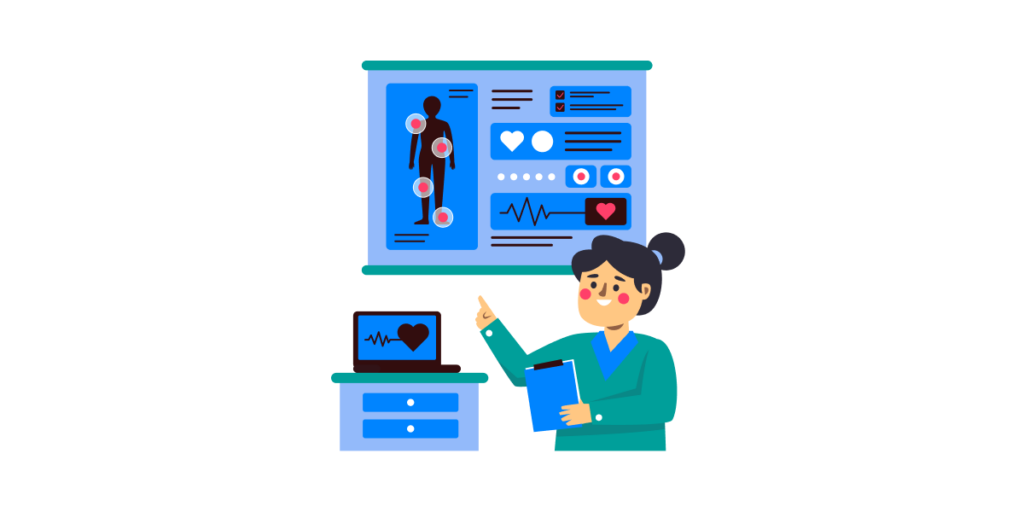
These systems are regarded as essential clinical infrastructure since they have an impact on patient outcomes and clinical decisions. Therefore, it needs the same institutional ownership, control, and reliability as EHRs.
A long-term clinical benefit is a machine learning healthcare monitoring system. Strong data management, strict model validation, regulatory compliance, clinical ownership, and ongoing performance monitoring are necessary.
In the absence of governance, patient risk rises, trust decreases, and models become inconsistent.
Platform-based monitoring is scalable across care settings, diseases, and departments. This enables centralized governance, standard data pipelines, reusable machine learning models, and quicker innovation.
This strategy supports system-wide resilience while lowering fragmentation and clinician workload.
Static algorithms give ways to develop models that continuously learn from new patient data in healthcare monitoring systems, increasing accuracy over time.
Vital signs, test findings, wearable data, and medical imaging will be combined using machine learning healthcare monitoring systems to provide a comprehensive view of patients' health.
Generative AI systems will receive input from ML-driven monitoring. This facilitates proactive treatment decisions, clinical summaries, and early risk detection.
Healthcare generates massive amounts of data, and it is far more challenging to increase, analyze, and extract insights from this data. Continuous monitoring of this data, as well as real-time data on patients' vital signs and glucose levels, increases the difficulty. A machine learning healthcare monitoring system provides continuous, predictive monitoring that detects risk earlier and more accurately than rules or manual surveillance alone.
With numerous advantages, a Machine learning healthcare monitoring system requires strong ownership, explainability, security, regulatory alignment, and ongoing performance validation. Different forms of high-frequency work demand different systems. The amount of ROI you obtain depends on your strategy and implementation.
At Patoliya Infotech, we offer constant support and understand all of your concerns. We have proven expertise and provide high-quality software solutions.