Table of Contents
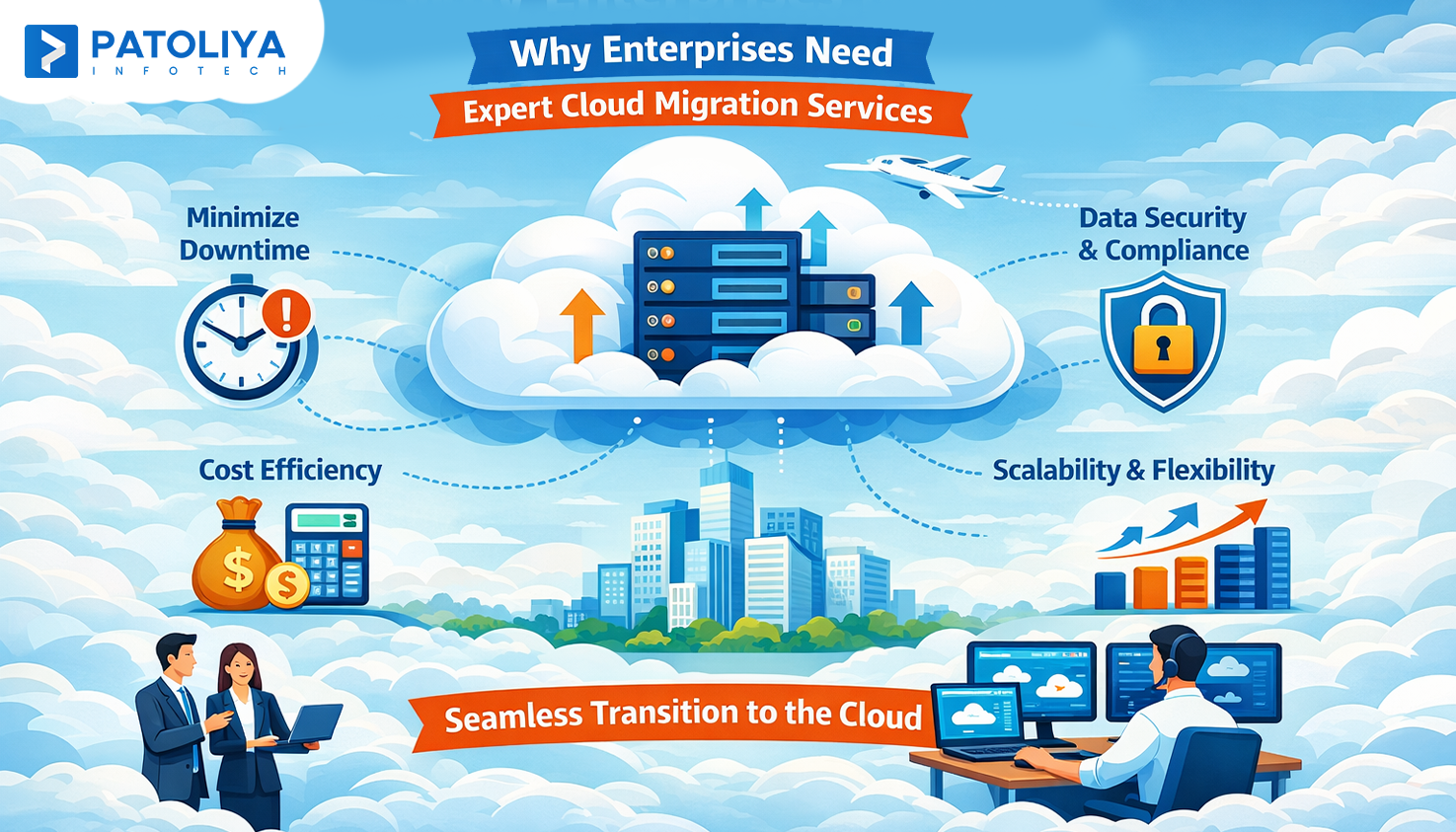
Cloud migration services have evolved far beyond basic infrastructure relocation. Enterprises today manage legacy applications, compliance-heavy workloads, hybrid architectures, and strict cost controls as they plan modernization. Moving workloads now requires strategic planning, governance alignment, performance benchmarking, and expert cloud migration consulting rather than simple rehosting. Complex environments include tightly integrated databases, global user bases, and security-sensitive operations that cannot tolerate downtime.
Successful application migration to cloud initiatives demands structured assessments, dependency mapping, and phased execution models. Without expert planning, organizations risk budget overruns, compliance violations, and operational instability. Modern migration strategies combine technical redesign, financial governance, and long-term scalability planning to ensure measurable business outcomes. Many organizations collaborate with a trusted enterprise technology partner to align modernization strategy with long-term operational stability and governance.
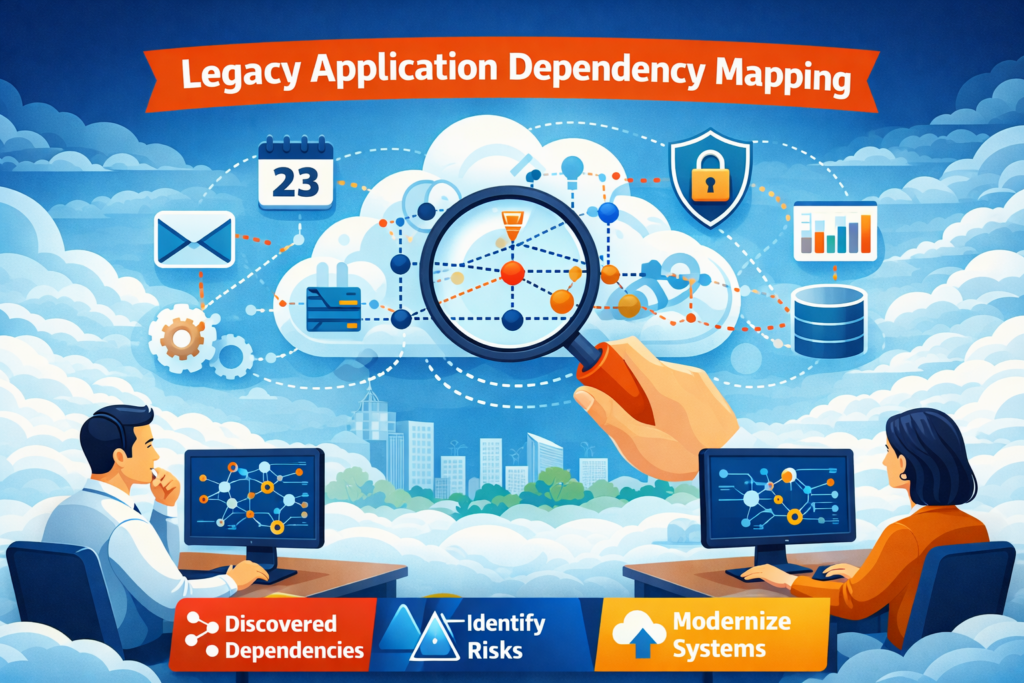
In real projects, application migration to cloud exposes tightly coupled databases, shared storage, outdated libraries, and undocumented integrations. Many legacy applications rely on fixed IP configurations, background jobs, and manual operational processes. Without structured discovery and dependency mapping, migrations risk broken workflows, performance degradation, or unexpected downtime. Refactoring monolithic systems into scalable cloud-ready architectures adds further technical effort.
Organizations handling financial or personal data must meet strict compliance rules. Highly regulated sectors such as finance often require structured cloud modernization in fintech ecosystems to maintain compliance, transaction security, and operational continuity. Practical cloud migration consulting includes region selection, encryption planning, identity governance, audit logging, and documented security controls before any workload transition begins.
Businesses often operate hybrid environments, connecting on-premise infrastructure with public cloud platforms. This introduces networking complexity, latency considerations, and policy management challenges across environments.
Systems that interact with customers need a disaster recovery setup, replication planning, zero-downtime tactics, and thorough performance testing. Business continuity, organized cutover preparation, and operational stability are the main priorities of trustworthy cloud migration services.
Strong cloud migration services and cloud migration consulting begin with infrastructure audits, workload classification, cost modeling, and risk assessment. Providers should define migration waves, continuity safeguards, and measurable success metrics aligned with business priorities.
Look for documented methodologies, automation accelerators, rollback procedures, and testing frameworks. Experience in application migration to the cloud reduces disruption, improves predictability, and strengthens post-migration validation. Complex transformations often require structured cloud-native application development services to redesign legacy systems for scalable cloud environments.
Teams delivering AWS migration services and Azure migration services should demonstrate certified expertise, secure architecture design, and platform-native optimization practices tailored to each environment. Many providers align execution models with the official AWS migration framework to ensure secure and structured transitions.
Beyond deployment, vendors must provide continuous monitoring, rightsizing recommendations, governance controls, and usage analytics to achieve sustainable cloud cost optimization and long-term financial efficiency. Similarly, enterprise migrations often follow the Azure cloud adoption framework to maintain governance and compliance consistency.
Built for Fortune-level environments, this provider delivers structured cloud migration services for multi-country data centers, ERP landscapes, and tightly governed IT ecosystems. They execute phased migration waves, executive dashboards, and risk-controlled cutovers. For instance, they may migrate a global SAP environment region by region to avoid operational disruption.
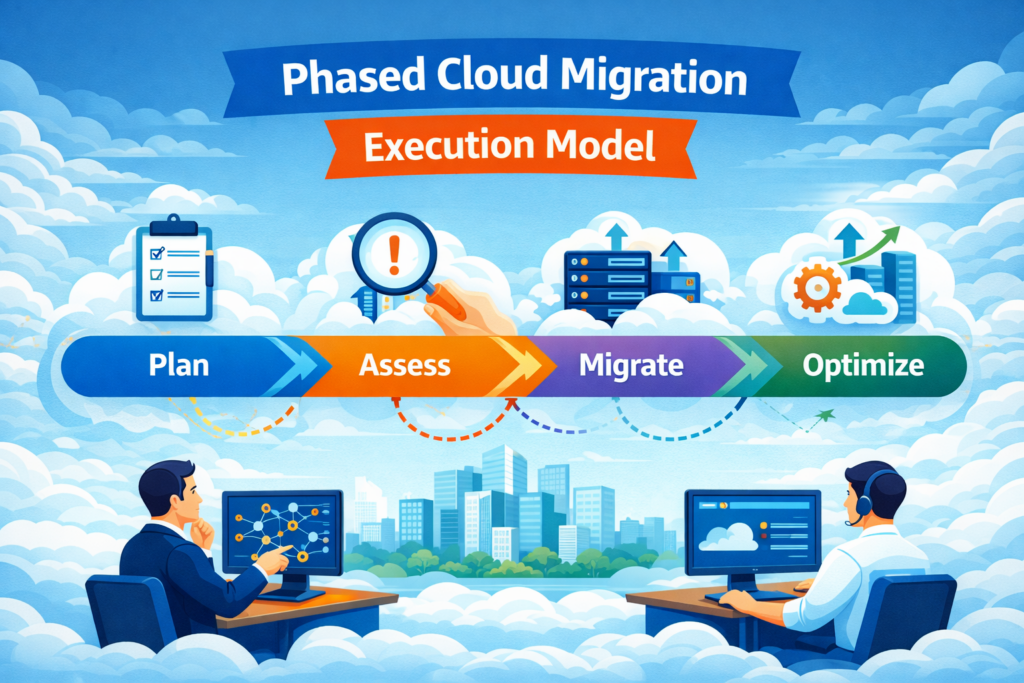
This firm begins with architecture transformation, not infrastructure lift-and-shift. Their cloud migration consulting emphasizes refactoring, containerization, and dependency mapping before transition. Strong in application migration to the cloud, they help convert legacy monoliths into scalable microservices to improve agility and resilience.
This specialist supports businesses standardizing on Amazon infrastructure. Their cloud migration services include automated assessments, landing zone design, and optimized workload placement. They also guide clients in choosing between modernization and lift and shift migration strategies based on timelines, risk appetite, and technical debt.
Ideal for Microsoft-centric enterprises, this provider aligns identity management, compliance controls, and data services during complex migrations. Their cloud migration services ensure seamless integration with enterprise productivity and governance frameworks.
Designed for analytics-heavy operations, this firm manages large database migrations and real-time processing workloads. Their approach to application migration to the cloud includes parallel data replication and validation checkpoints to protect reporting accuracy.
This partner prioritizes financial discipline. Their cloud migration services include infrastructure redesign, rightsizing, and cost governance frameworks. For example, they may consolidate underutilized workloads before migration to maximize ROI.
This specialist leads hybrid cloud migration programs, securely connecting on-premise systems with public cloud platforms. Their cloud migration consulting includes network architecture design, latency management, and consistent policy enforcement across environments.
Security-led execution defines this provider. Their cloud migration services integrate encryption, IAM configuration, audit logging, and compliance automation to support regulated industries.
Growth-focused SaaS firms benefit from this provider’s application migration to cloud expertise. They implement CI/CD pipelines, auto-scaling, and container orchestration to support subscription growth and rapid feature deployment.
With distributed teams and standardized playbooks, this organization executes scalable cloud migration services across multiple regions while maintaining governance transparency.
This provider supports mid-sized enterprises with structured yet flexible cloud migration services, balancing modernization goals, budget constraints, and phased execution for sustainable growth.
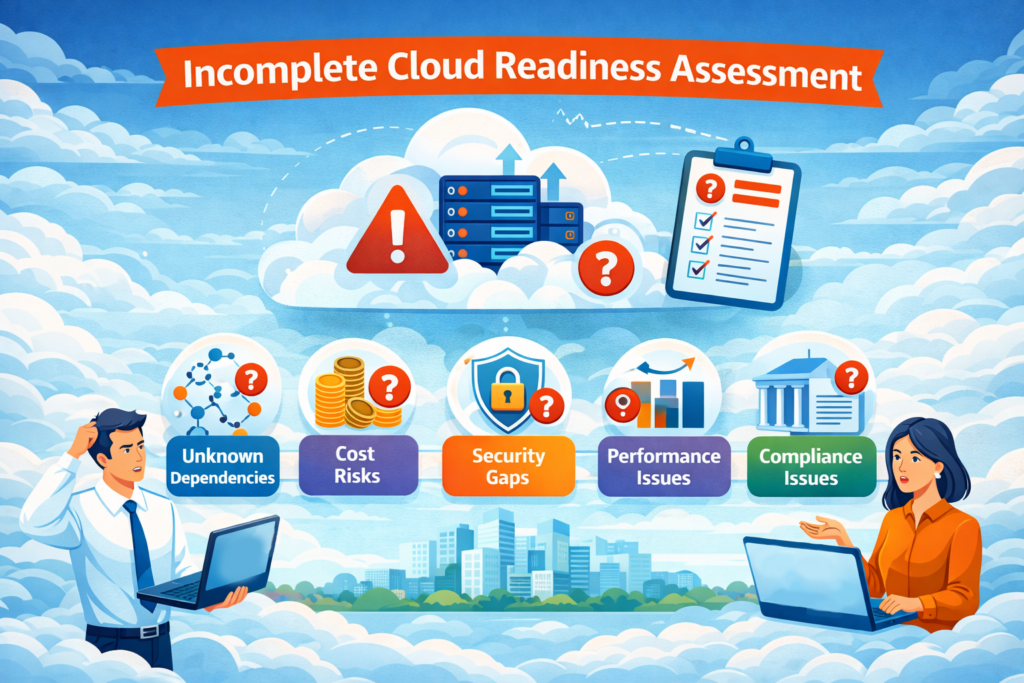
Many enterprises begin cloud migration services without a structured cloud readiness assessment, leading to misaligned workloads and security gaps. Experienced cloud migration services providers conduct infrastructure audits, dependency mapping, and compliance reviews before planning execution. Strong cloud migration frameworks prevent rework, reduce risk, and improve long-term scalability outcomes.
Hidden APIs, shared databases, and legacy integrations complicate transitions. Professional cloud migration services teams analyze architecture layers early to avoid failures during data migration to cloud. By sequencing workloads correctly, cloud migration services reduce disruption and improve migration accuracy.
Inadequate planning leads to higher expenses. Well-developed cloud migration services put governance controls, usage monitoring, and rightsizing into practice. After launch, strategic cloud migration ensures budgets remain consistent.
Unplanned outages damage operations. Reliable cloud migration services apply phased cutovers, load testing, replication strategies, and rollback mechanisms. Structured cloud migration services maintain uptime, protect performance, and deliver measurable stability improvements.
Patoliya Infotech approaches complex transitions with a structured, business-first methodology. Their cloud migration consulting and cloud migration services begin with architecture discovery, risk analysis, and performance benchmarking to define clear migration waves. Instead of defaulting to lift-and-shift, they evaluate modernization readiness and workload prioritization based on operational impact.
With strong application migration to cloud expertise, the team focuses on refactoring legacy systems, optimizing infrastructure footprints, and implementing governance controls early in the process. They also design hybrid connectivity frameworks and implement proactive monitoring to prevent performance degradation after launch.
Patoliya infotech combines technical precision with financial discipline to provide predictable execution, minimal downtime, and measurable scalability benefits for organizations navigating challenging cloud conversions.
As enterprise environments grow more interconnected and regulated, selecting the right cloud migration services partner becomes a strategic decision rather than a technical one. Organizations must evaluate execution depth, governance expertise, and long-term scalability planning. Effective cloud migration services go beyond infrastructure movement and support sustainable growth.
A structured application migration to cloud strategy ensures reduced risk, optimized performance, and stronger financial control. The right partner converts migration complexity into a controlled, value-driven modernization journey. Organizations planning complex transitions can discuss your migration roadmap with specialists before initiating execution waves.