Table of Contents
TL;DR: Marketplace integration services connect Amazon, Walmart, Shopify, and your ERP into one system so orders, inventory, and pricing update automatically. Brands running three or more channels without this setup spend hours every week reconciling spreadsheets that a connected system handles in seconds.
Selling on Amazon, Walmart, Shopify, and other marketplaces without marketplace integration services creates disconnected operations, inconsistent inventory, and unnecessary manual work. As your business grows, managing orders, stock, and pricing across multiple channels becomes increasingly difficult, especially during peak sales.
This guide explains how ecommerce marketplace integration connects your sales channels with ERP and business systems, what to prioritize during implementation, and how to choose the right integration partner for long-term success.
The Operational Cost of Disconnected Sales Channels
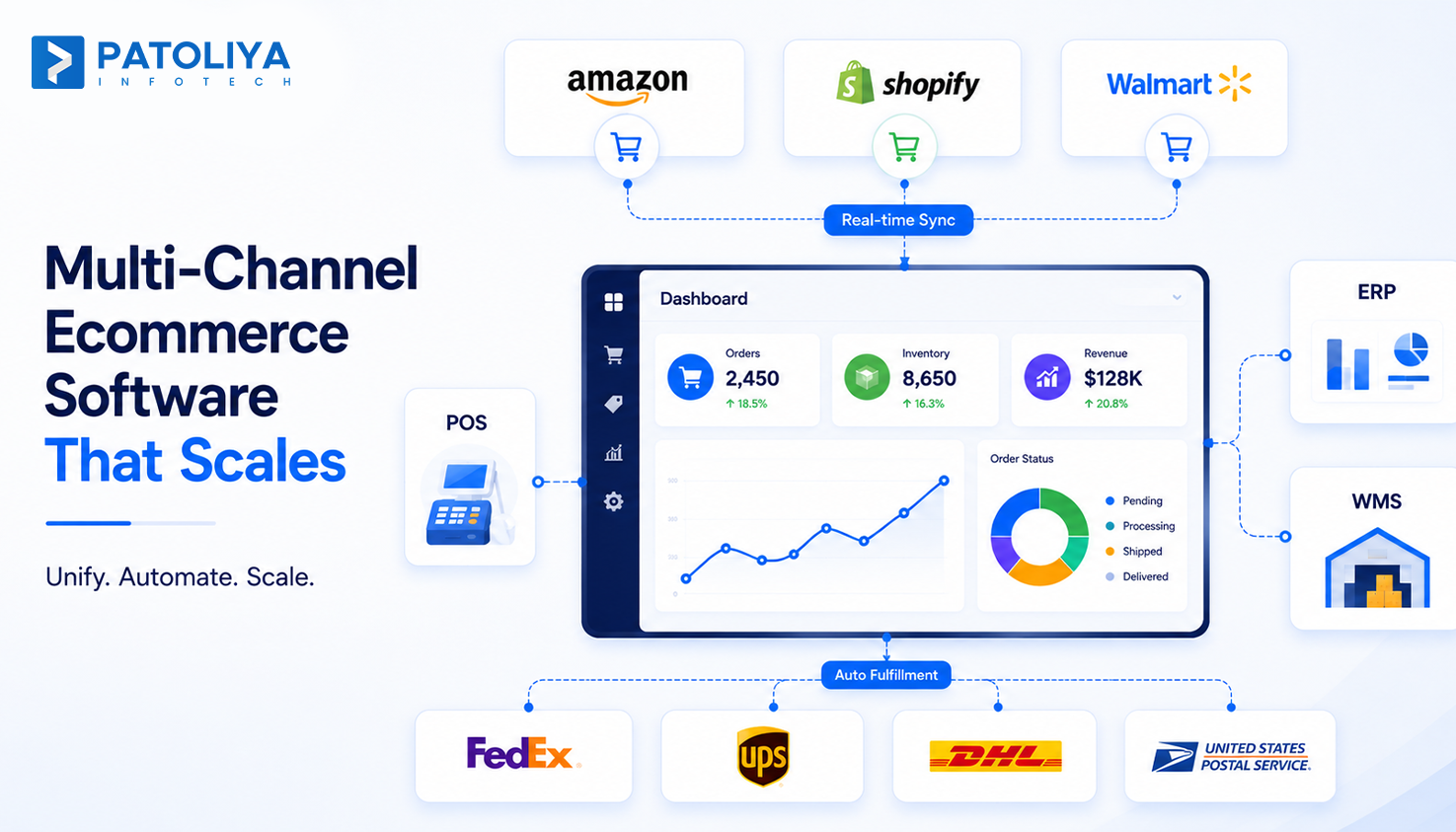
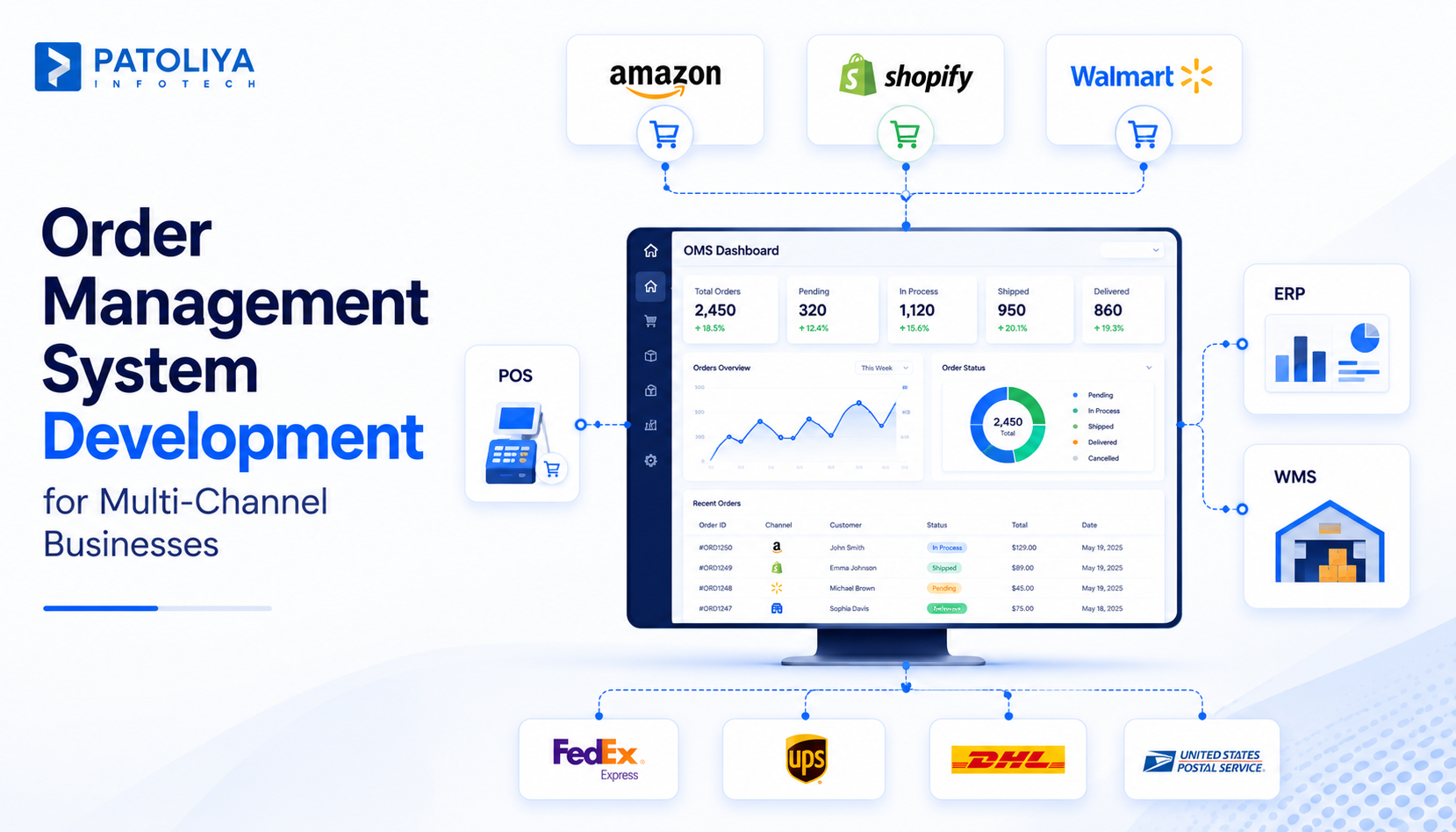
Every new sales channel adds manual work: updating inventory, processing orders, and managing pricing across platforms. Without connected systems, these tasks become slower and more error-prone. Marketplace integration services automate data flow, keeping orders and inventory synchronized across channels.
Why Growing Brands Outgrow Manual Marketplace Management
Manual processes may work for a small order volume, but they don't scale. As sales grow, delayed updates lead to overselling, fulfillment errors, and poor customer experiences. A connected integration solution centralizes operations, enabling businesses to manage multiple marketplaces efficiently and scale with confidence.
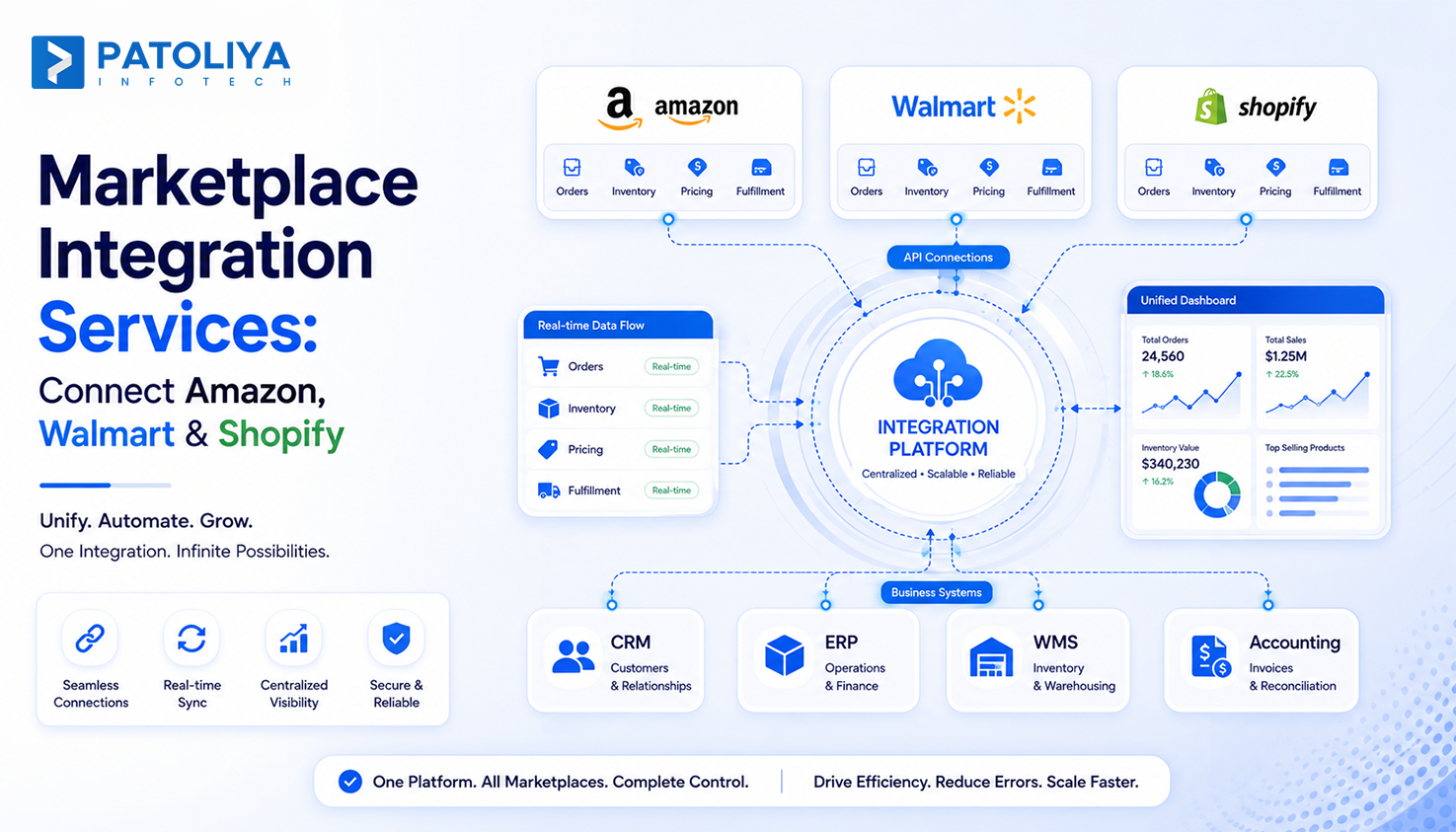
Real ecommerce marketplace integration links Amazon, Walmart, and Shopify to your ERP, CRM, warehouse system, and accounting software in one flow. Order data lands in the ERP the moment it is placed. Customer records sync to the CRM.
Stock levels update in the warehouse system without anyone touching a keyboard. This is the core function of marketplace integration services, and skipping any one of these connections just moves the manual work somewhere else.
Getting ERP integration ecommerce connections right at this stage saves a rebuild six months later.
Data flow has to move in both directions across the whole system. Pricing changes in the ERP need to push back out to every channel. Returns processed in the warehouse system need to update stock everywhere at once.
Good ecommerce marketplace integration treats this as a two-way street, and brands that only sync one direction end up with the same stale data problem they started with.
Native plugins work for one platform pair but break down past three channels. Amazon, Walmart, and other platforms each enforce their own listing, packaging and performance rules, governed through standards like Amazon's Selling Partner API, which a connected system can monitor automatically before a listing goes live. Which is why most enterprise marketplace integration services are built this way, avoiding five separate plugins that were never designed to talk to each other.
An architecture built for three channels today should handle eight channels next year without a rebuild.
Build a central integration layer first, then connect every marketplace to it. This avoids creating separate connections between every system, making it much easier to add new sales channels and manage operations as the business grows.
Real-Time Order Processing Across Platforms: Orders should hit the ERP and warehouse system within seconds of being placed, on every channel, without a person touching them. This is the single highest impact process to automate because delayed order visibility is the direct cause of missed shipping windows.
Inventory Allocation Without Overselling: Inventory allocation without overselling means stock gets distributed across channels based on real demand. If Amazon sells faster than Shopify, the system should shift available stock toward Amazon automatically.
This is where inventory sync matters most, since a five-minute delay during a flash sale can mean dozens of oversold units.
Product Catalog Synchronization: Titles, images, descriptions, and attributes should update from one master catalog to every channel at once. Editing a product description in five places is how listings drift out of sync and start showing conflicting information to shoppers.
This is one area where ecommerce marketplace integration pays for itself fast, since catalog errors are what buyers notice first.
Shipping, Fulfillment, and Returns Automation: For shipping, fulfillment, and returns automation, once an order is confirmed, labels, tracking numbers, and delivery confirmations should push back to the marketplace automatically. Returns need the same treatment, so refunded stock goes back into available inventory without manual reentry.
Financial Data Reconciliation: Every marketplace fee, tax, and payout should sync directly to the matching order in your accounting system, eliminating manual reconciliation.
This is a common gap in cheaper marketplace integration services, and it costs finance teams real hours every close. Choosing marketplace integration services built around finance workflows, beyond basic order sync, closes this gap for good.
For instance, A home appliance retailer selling on Amazon, Walmart, and Shopify has automated order processing, inventory updates, and ERP synchronization. As a result, every order reached the warehouse instantly, stock remained consistent across all channels during peak sales, and the finance team no longer spent hours manually reconciling marketplace payouts.
Two prices for the same item on two channels erodes buyer trust fast and can trigger marketplace penalties. A single source of truth for pricing, pushed out through ecommerce marketplace integration, closes this gap permanently.
Businesses with multiple warehouses or 3PLs need one real-time inventory view instead of manually combining stock from different locations. Marketplace integration services pull every location into one live number that every channel reads from.
Solid ERP integration ecommerce planning at this stage is what makes multi-warehouse visibility possible in the first place.
Amazon, Walmart's marketplace API, and other platforms each enforce their own listing, packaging and performance rules. A connected system can flag compliance issues automatically before a listing goes live, avoiding suspensions that take weeks to reverse.
Peak sales quickly overwhelm manual processes. Marketplace integration services automate orders, inventory, and fulfillment, allowing businesses to handle higher order volumes without adding more staff.
Manual tasks slow operations and create errors. Marketplace integration services automate data syncing across systems, reducing repetitive work so teams can focus on customers instead of manual updates.
Prioritizing Business-Critical Integrations: Start with the processes causing the most damage today, usually order accuracy and inventory visibility, before automating lower priority workflows like reporting dashboards.
Designing for Scalability and New Sales Channels: Build the middleware layer to accept new marketplaces as plug-in connections, avoiding custom projects each time. This single decision determines whether adding a TikTok Shop next year takes two weeks or two months.
Creating a Single Source of Truth for Business Data: Every price, stock count, and product detail should originate from one system, usually the ERP, and flow outward.
Ecommerce marketplace integration built around a single source of truth avoids the sync conflicts that plague brands running data in multiple directions at once.
This is the same principle that makes ERP integration ecommerce work reliably at scale, and skipping it is the most common reason integration projects need a redo within a year.
Preparing for Continuous Platform Updates: Marketplaces change their APIs often, sometimes without much notice. A strategy that assumes zero maintenance will fail within a year. Budget for ongoing monitoring beyond the initial build.
The number of channels, internal technical staff, and the specificity of your multi-platform selling rules all play a role in the decision between a managed service, a self-serve iPaaS platform, and a totally custom creation.
| Option | Best For | Balance |
| SaaS Connectors | One or two channels, simple catalogs | Limited customization, breaks at scale |
| iPaaS Platforms | Mid-size teams with in-house developers | Requires ongoing internal maintenance |
| Managed marketplace integration services | Enterprise brands with complex ERP and multi-channel rules | Higher upfront cost, lowest long-term maintenance burden |
Most brands outgrow SaaS connectors within eighteen months of adding a third channel. Custom development gives full control, but only makes sense when internal engineering resources are dedicated to it long-term.
Managed marketplace integration services sit in the middle and usually win for enterprise teams that need reliability without hiring an internal integration team. Our experience building marketplace integration services for enterprise clients backs this pattern up consistently.
Real-Time Inventory Sync: Stock counts update across every channel the moment a sale, return, or restock happens, closing the gap that causes overselling.
Automated Order Sync: Orders route from every marketplace into the ERP and warehouse system through automatic order sync, cutting processing time from hours to seconds.
Centralized Product Information Management: One catalog feeds every channel, so descriptions, images, and specs stay identical everywhere a product is listed.
Multi-Marketplace Pricing Control: Pricing rules apply across every channel from one dashboard, including channel-specific markups or promotions where needed. This single capability is often the reason brands first go looking for marketplace integration services in the first place.
Unified Reporting and Analytics: Unified reporting and analytics gives you one report with sales, margin, and inventory data from every channel instead of combining multiple exports manually.
Workflow Automation Across Business Systems: Workflow automation across business systems triggers approvals, alerts, and exception handling automatically, for example, flagging an order that cannot be fulfilled before it sits unnoticed. Strong marketplace integration services treat this automation as core infrastructure, not an add-on feature.
For instance, A fashion retailer managing Amazon, Shopify, and Walmart used marketplace integration services to keep inventory, pricing, product listings, and orders synchronized from a single system, giving operations and leadership one real-time view of sales without manual spreadsheet consolidation.
Automating Procurement and Inventory Planning: ERP integration, ecommerce connects sales velocity data straight to purchasing, so reorder points adjust based on actual multi-channel demand.
Finance and Accounting Synchronization: Every marketplace payout, fee, and tax line reconciles against the ERP automatically.
This is where ERP integration for ecommerce delivers the clearest return, since finance teams stop manually matching bank deposits to marketplace settlement reports.
Warehouse and Fulfillment Coordination: Pick, pack, and ship instructions flow from the ERP to the warehouse floor the moment an order is confirmed, keeping fulfillment times consistent across every channel that feeds into it.
Executive-Level Operational Visibility: Leadership gets one dashboard showing sales, margin, and stock health across every channel, replacing five separate reports from five different people.
This is the practical payoff of investing in ERP integration ecommerce, and it changes how fast decisions get made at the leadership level. A properly connected ERP integration ecommerce setup also shortens the time it takes to spot a stockout risk before it becomes a lost sale.
Faster Order Fulfillment
Orders move to the warehouse within seconds. There is no queue for manual entry, so the time between purchase and shipment shrinks. This speed is the first result most teams notice after ecommerce marketplace integration goes live.
Lower Manual Processing Costs
Staff hours spent on data entry drop sharply once ecommerce marketplace integration removes the copy-paste work between platforms, freeing that time for higher-value tasks. Finance teams see the same benefit once ERP integration ecommerce replaces manual settlement matching.
Reduced Inventory Errors
Overselling and stockouts drop once every channel reads from the same live number, not a count that is updated by hand once a day.
Better Customer Experience
Accurate stock counts and faster shipping directly improve marketplace ratings, which affects visibility in search results on Amazon and Walmart alike. This is a direct ROI line item brands can trace straight back to their marketplace integration services investment.
Higher Marketplace Scalability
With the right marketplace integration infrastructure, adding a new sales channel becomes a quick configuration instead of a complex implementation project, making it easier to scale your business.
High order volume across multiple channels makes manual processes impossible to sustain, which is why large retailers were early adopters of marketplace integration services.
Retailers with complex finance stacks lean hardest on ERP integration ecommerce to keep reporting accurately.
Manufacturers adding DTC channels alongside wholesale need an accurate inventory split between both, something manual spreadsheets cannot track reliably at scale.
Distributors managing thousands of SKUs across regional accounts need catalog and pricing consistency that only a connected system can maintain, which is exactly the gap marketplace integration services are built to close.
Brands selling through retail stores, their own site, and marketplaces need one inventory number across all three, which is the core promise of ecommerce marketplace integration.
Sellers operating across the US, UK, and EU marketplaces need currency, tax, and compliance handling built into the sync layer. This is where ecommerce marketplace integration designed for multiple regions from day one saves months of rework.
Patoliya Infotech delivers marketplace integration services that connect Amazon, Walmart, Shopify, and enterprise systems without disrupting your existing ERP.
We build scalable integrations that automate orders, inventory, fulfillment, and financial workflows, helping businesses simplify operations and scale with confidence.
What sets us apart:
To learn how a linked marketplace environment may boost your company's expansion, schedule a consultation.
Disconnected sales channels create operational bottlenecks, inventory errors, and unnecessary manual work that slows business growth. Marketplace integration services connect Amazon, Walmart, Shopify, and your enterprise systems into a single automated ecosystem where orders, inventory, pricing, and fulfillment stay synchronized in real time.
Businesses that invest in ecommerce marketplace integration early are better prepared to scale, adapt to demand spikes, and deliver a consistent customer experience across every sales channel.
If you're planning to expand your marketplace operations or simplify your existing workflows, let's discuss the integration approach that best fits your business.