Table of Contents
TL;DR: A single SKU listed on Amazon, Shopify, and a physical store creates three separate inventory records unless something connects them. Multi-channel ecommerce software closes that gap by updating stock the moment any channel sells.
Growth becomes difficult when every new sales channel creates another system to manage. As businesses expand across marketplaces, ecommerce stores, and retail locations, inventory discrepancies, overselling, and manual order processing quickly become daily challenges.
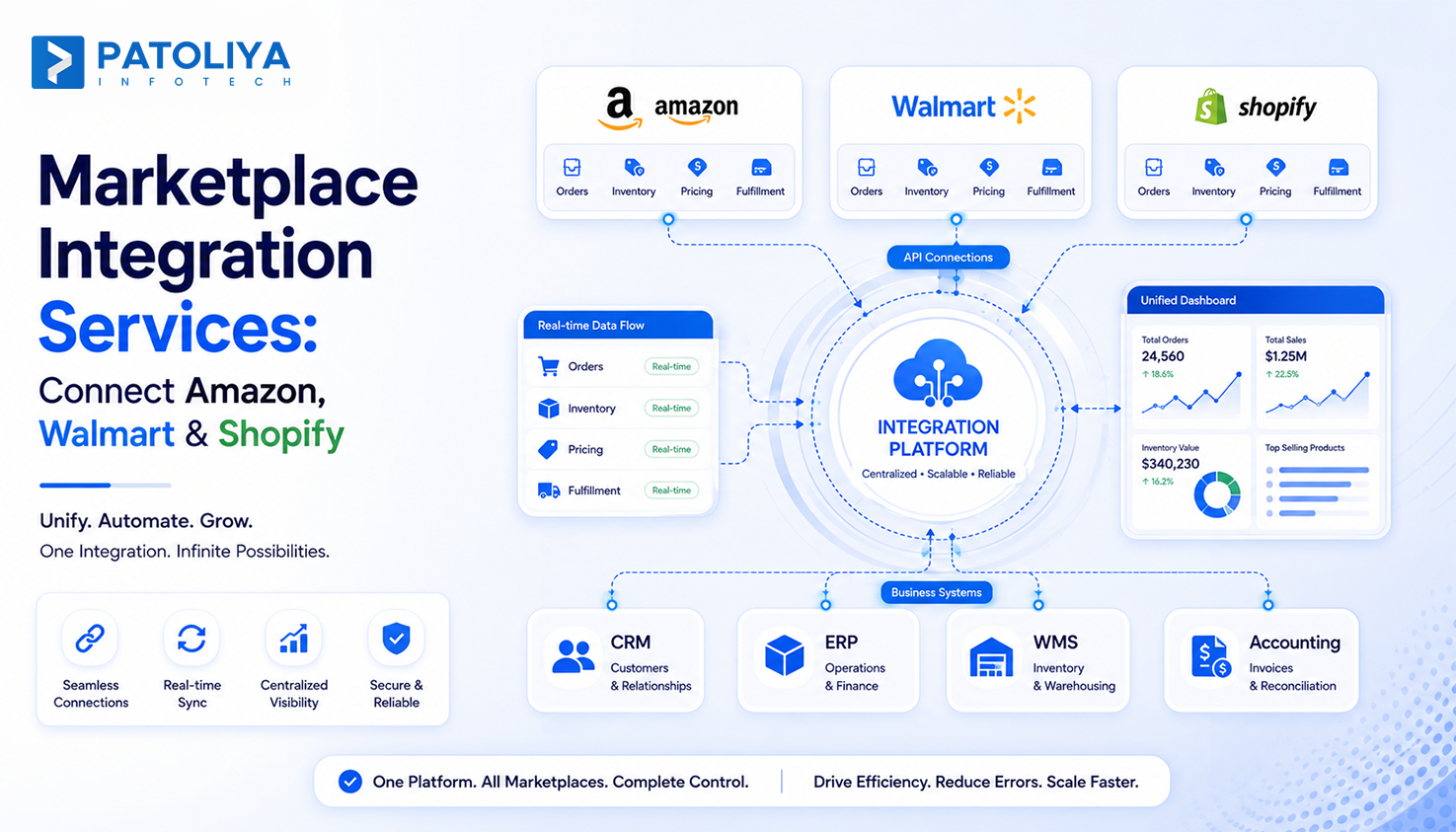
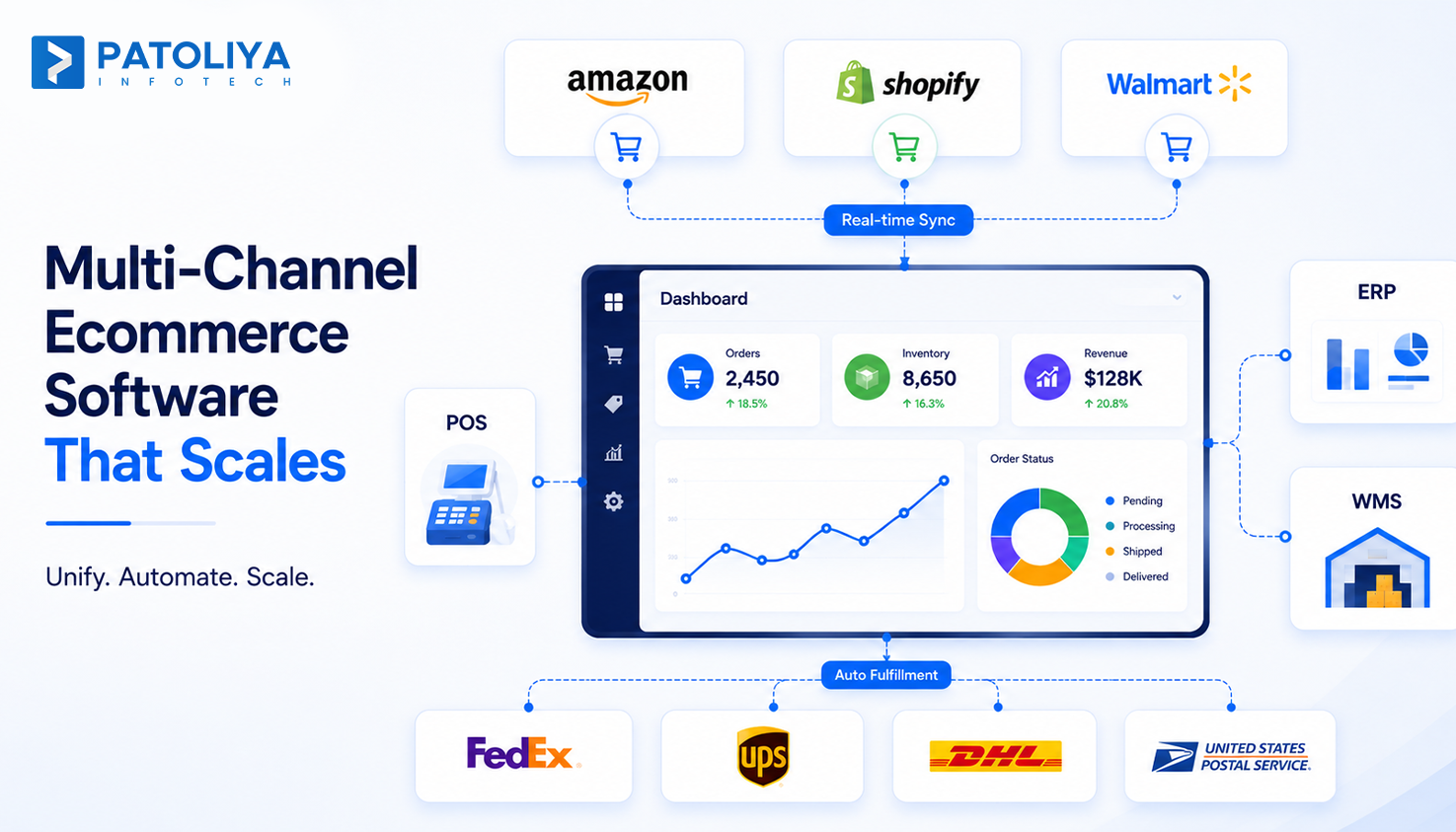
Multi-channel ecommerce software provides a single operational hub that synchronizes inventory, automates workflows, and improves visibility across every channel. This guide explores its key features, benefits, implementation considerations, and when a custom solution makes the most sense for sync inventory across sales channels.
Every channel you add multiplies the number of places a stock count has to live, and most teams underestimate how fast that turns unmanageable.
When One SKU Exists in Five Different Systems
A retailer selling on Shopify, Amazon, a POS terminal, and two marketplaces stores the same SKU count in five separate places.
Each platform updates on its own schedule, so a shirt sold out on Amazon at 9 am can still show "in stock" on Shopify at noon. The fix is removing the four extra copies of the truth, not adding a sixth spreadsheet.
The Operational Cost of Unsynced Inventory
Unsynced stock does not just cause overselling; it wastes staff hours chasing the correct number and slows fulfillment for every channel.
Why Scaling Sales Often Slows Operations
Adding a channel should grow revenue, but without a synced backend, it grows the workload faster than the revenue, because every new channel is another place errors start.
A single source of truth means one system owns product data and stock counts, and every channel reads from it instead of keeping a separate copy.
Centralizing Product Catalog Management
Product titles, images, and descriptions should live in one place and push to every channel, not get typed separately into Amazon Seller Central, Shopify, and a POS system.
This is a basic channel management software discipline, and it cuts listing errors dramatically because there is only one place to fix a mistake.
Building a Unified Inventory Layer
A unified inventory layer sits between your warehouse and every sales channel, holding the real, current stock count. When Amazon sells three units, the layer updates instantly, and every other channel sees the new number, not a stale one from an hour ago. This layer, the kind of work we handle through database and cloud transformation, is the working core of any multi-channel ecommerce software.
Creating One Order Pipeline Across Every Channel
An Amazon queue, a Shopify queue, and a POS log running separately create three places to check. One pipeline pulls every order into a shared view, built on the same discipline covered in trust strategies for a smoother workflow. Warehouse staff pick and pack from one screen, no matter where the order came from.
Eliminating Duplicate Business Data
Duplicate customer records, duplicate SKUs, and duplicate order numbers are the quiet cost of running channels separately. Multi-channel ecommerce software removes duplication by giving every channel one shared record for products, stock, and orders, the foundation of unified commerce.
Multi-channel ecommerce software watches every channel simultaneously and pushes stock updates within seconds of a sale.
The moment a customer completes checkout on any channel, good multi-channel ecommerce software deducts that unit from the shared stock count and pushes the new number to every other connected channel.
There is no batch job running once an hour; the update fires on the transaction itself. That is what inventory synchronization looks like in practice, not a nightly export that leaves you blind for hours.
A smart system reserves inventory the second checkout starts, not after payment clears. Without that step, two customers on two channels can buy the last unit in the same minute, and one order gets cancelled.
Reservation windows, usually 10 to 15 minutes, hold the stock so the second buyer sees it as unavailable before they finish paying.
Retailers running more than one warehouse need software that decides which location fulfills which order, based on proximity, stock level, and shipping cost.
A Texas order should pull from a Dallas warehouse over a New Jersey one whenever both carry the SKU. Getting this wrong adds days of shipping time and real freight cost.
Buffer rules hold back a small percentage of stock, protecting against last-minute cancellations, returns, or counting errors. A 3 to 5 percent buffer on fast-moving SKUs prevents confirming an order you cannot fulfill.
Flash sales push transaction volume up fast, exactly when unsynced systems fail. A system built to sync inventory across sales channels in real time has to handle order spikes without lag, since a five-minute delay during a flash sale can mean dozens of oversold units.
Retailers running high-volume promotions need to stress test their sync speed before the sale, not during it.
| Scenario | Without Real-Time Sync | With Real-Time Sync |
| Amazon sells the last unit | Shopify still shows in stock for hours | Shopify updates within seconds |
| Flash sale spike | Manual stock checks needed | Automatic reservation and deduction |
| Multi-warehouse order | Manual routing decision | Rule-based automatic allocation |
Real-time sync is not a nice-to-have feature; it is the reason multi-channel ecommerce software exists.
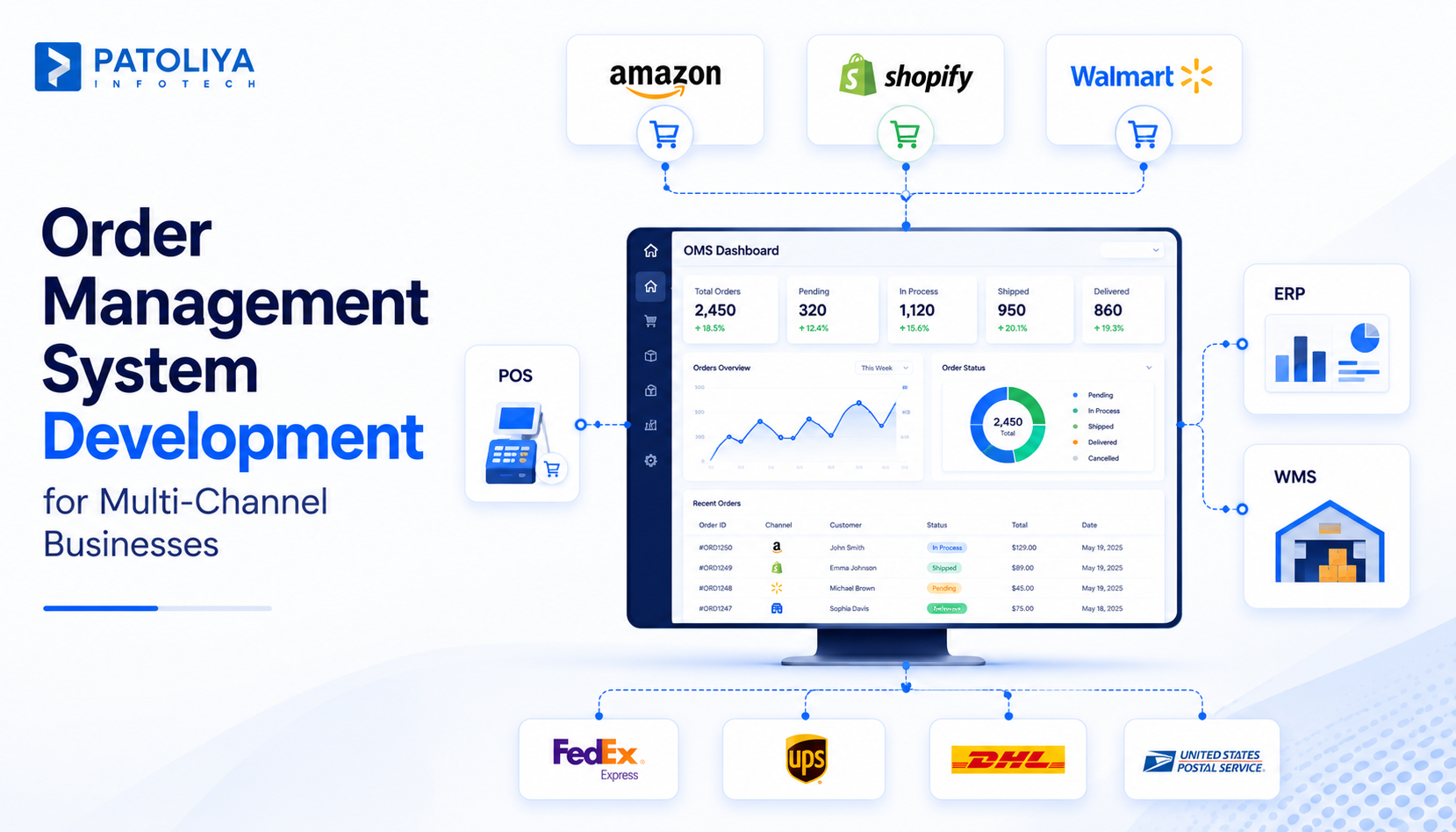
Order orchestration takes an order from any channel and routes it to the right warehouse, staff member, or carrier without manual decisions every time. It is the second half of what strong multi-channel ecommerce software does.
For sync inventory across sales channels, every order, regardless of channel, lands in one queue with the same fields: SKU, quantity, shipping address, and priority level. Staff stop switching between four seller dashboards to find out what needs packing next.
Routing logic assigns each order to the warehouse or fulfillment partner best positioned to ship it fastest and cheapest. A rule-based engine checks stock location, carrier zones, and current warehouse load before making the call, which is far more consistent than a person guessing under pressure.
When a customer orders three items and only two are in stock at a single location, the system automatically splits the order and ships what is available. Customers get a clear update instead of a delayed, silent order.
Returns need to update stock counts the moment they arrive, not after a weekly audit. A returned item that is returned to sellable inventory should reappear across all channels within minutes.
Retailers that sync inventory across sales channels on returns, not just new sales, avoid a whole category of phantom stockouts.
Address errors, payment holds, and stock exceptions should trigger automatic workflows, not sit in an inbox. Good exception handling means a human only steps in for the 2 to 3 percent of orders that genuinely need judgment.
Order orchestration and inventory sync work as one system, because an order that is not routed correctly undoes the accuracy the inventory layer just created.
The architecture behind your multi-channel ecommerce software decides whether it scales smoothly or breaks with every new channel.
API-First Integration: An API first approach connects each channel directly through its native API, giving real-time data instead of waiting on file exports. This is the standard for sales channel integration today.
Event-Driven Synchronization: Event-driven systems fire an update the instant something happens, a sale, a return, a price change, rather than checking on a fixed schedule.
That is the difference between a five-second update and a fifteen-minute one in sync inventory across sales channels.
Middleware vs Direct Integrations: Middleware sits between your channels and your core system, translating data formats so Amazon, Shopify, and your ERP can talk to each other. Direct integrations skip the middle layer but require custom code for every channel, which gets expensive fast, past five or six connections, and it's exactly where unmanaged connections start behaving like a connection leak if nobody is watching resource usage.
Handling Third-Party Marketplace APIs: Amazon, Walmart, and eBay each have different API limits and update rules, and a system has to handle all three without breaking when one changes. Marketplace APIs also throttle requests, Amazon's own Selling Partner API rate limit documentation is a good example of how strict and specific these limits can get, so smart batching and retry logic matter as much as the connection itself.
Scaling Integrations as Channels Increase: Adding a sixth or seventh channel should not require rebuilding your entire integration layer, which is the same forward-planning covered in why cloud migration makes businesses future-ready. Most SaaS platforms hit a wall around channel five or six, where pre-built connectors cannot handle a specific workflow, and that is when early architecture decisions pay off or become a liability.
The sync inventory across sales channels solves the biggest problem, but several other processes drain just as many hours as are left manual.
Catalog Publishing Across Channels: Publishing a new product to five channels manually takes hours and invites typos.
Automated catalog publishing pushes the same data everywhere, formatted correctly for each platform.
Price Synchronization: Price changes need to reflect across every channel immediately, or customers find the same item at two prices and lose trust.
Automated price sync removes the guesswork of remembering which channel still has the old number.
Promotion Scheduling: Scheduling a discount to start and end automatically across channels prevents a sale ending on Shopify but continuing on Amazon a day longer, saving retailers from margin loss.
Shipment Tracking Updates: Tracking numbers should sync back to the original channel automatically, so customers get real-time updates without staff copying them between systems.
Customer Notifications: Order confirmations, shipping updates, and delay notices should trigger automatically based on order status, keeping customers informed.
Purchase Order Automation: When stock hits a reorder threshold, the system should generate a purchase order automatically instead of waiting for someone to spot a low stock alert.
For sync inventory across sales channels, automating these six processes frees up the hours manual reconciliation used to consume, and that time moves directly into growth work instead of firefighting.
Retailers scaling past a few channels run into the same five problems, and each traces back to a gap in sync or orchestration.
Overselling During Peak Demand
Overselling spikes during high traffic events because stock counts cannot update fast enough. Multi-channel ecommerce software with real-time reservation locks stock the second a cart is created, not after checkout.
Delayed Marketplace Updates
Marketplace platforms have their own update delays on top of yours, so a system built to sync inventory across sales channels must account for platform-side lag too.
Inaccurate Store Availability
Customers browsing a store's website expect accurate stock information, and inaccurate availability drives them to a competitor within seconds. Real-time POS integration closes this gap.
Warehouse Inventory Drift
Physical stock counts drift from system counts over time due to damage, miscounts, or theft. Regular cycle counts fed directly into the unified inventory layer keep drift from compounding across every channel.
Operations Teams Spending Hours on Manual Reconciliation
Teams without synced systems spend hours each week confirming numbers match across platforms, hours that disappear once you sync inventory across sales channels automatically.
The build versus buy decision comes down to whether your operational complexity has outgrown what a standard SaaS platform can handle. Every retailer eventually asks whether off-the-shelf multi-channel ecommerce software can still sync inventory across sales channels the way their workflow needs.
When SaaS Platforms Reach Their Limits
Off-the-shelf platforms work well for straightforward setups, much like the tradeoffs covered in why businesses consider SaaS solutions, but hit limits fast when a business needs custom fulfillment logic or non-standard marketplace workflows. At that point, the platform starts working against the business instead of for it.
Businesses That Benefit from Custom Retail Software
High SKU catalogs, complex fulfillment rules, and multi-entity operations benefit most from custom retail software built around their actual workflow. A franchise retailer with regional inventory rules needs logic that no off-the-shelf tool ships with by default.
Integration Complexity as a Buying Signal
If your team spends more time working around a platform's limits than using its features, that is a signal that a custom build will pay for itself, the same signal worth weighing in staff augmentation vs. managed services when deciding how to resource the project.
Total Cost of Ownership Over Five Years
SaaS platforms look cheaper month to month, but per-order fees and workaround costs add up over five years, the same math behind cloud cost management trends. A custom build costs more upfront and less long term once volume passes the point where percentage fees outweigh a fixed development cost.
These six metrics tell you whether your multi-channel ecommerce software is actually doing its job or just adding another dashboard to check in sync inventory across sales channels.
Inventory Accuracy: Inventory accuracy measures how closely your system's stock count matches physical stock on hand. Anything below 98 percent accuracy signals a sync problem worth investigating immediately, industry benchmarking research puts the average business well below that mark, which is exactly the gap a synced system closes.
Order Processing Time: This tracks the time between an order landing and it being picked, packed, and handed to a carrier, and faster processing reduces complaints and repeat purchase abandonment.
Stockout Frequency: Stockout frequency counts how often a listed product shows unavailable when a customer tries to buy it, and points to reservation or sync delays.
Fulfillment SLA: Fulfillment SLA tracks whether orders ship within the promised window, and missing it consistently damages marketplace scores and customer trust.
Order Sync Latency: Order sync latency measures the time between a sale happening and every channel reflecting the new stock count, the kind of metric that belongs in the same monitoring rhythm as the key elements of a DevOps culture. Anything over a few seconds on a high-volume channel is worth investigating.
Marketplace Order Accuracy: This tracks how often orders ship the correct item, quantity, and address on the first attempt, and low accuracy usually traces back to uncentralized catalog data.
This checklist follows the same fundamentals covered in our guide to choosing an IT solution provider, applied specifically to multi-channel commerce:
Inventory Engine Capabilities: Confirm the system can sync inventory across sales channels in real time, with multi-warehouse allocation and reservation logic.
Integration Ecosystem: Check whether the platform already connects to your channels, or every connection needs custom development.
Workflow Automation: Look for built-in automation on catalog publishing, pricing, and purchase orders, not just stock counts.
Scalability Under Peak Traffic: Ask vendors directly how their omnichannel retail software performs during flash sales or holiday spikes, and ask for real numbers, not general assurances.
Security and Audit Trails: Every inventory change and order modification should be logged with a timestamp and user, applying the same standards covered in how application security testing safeguards data, giving a clear audit trail if something goes wrong.
Vendor Support and Future Extensibility: Confirm the vendor can add new channels or workflows as your business changes, since a system that cannot grow becomes a replacement project, the same ongoing commitment behind winning by maintaining your app regularly.
Retailers with high SKU catalogs need multi-channel ecommerce software with inventory logic that standard platforms rarely support, especially when variants, bundles, and kits multiply the count into the tens of thousands.
International expansion adds currency, tax, and fulfillment rules that differ by country, which off-the-shelf tools handle poorly at scale.
Franchise retailers need inventory rules split by location while reporting to one central system, a structure most SaaS platforms lack. D2C brands scaling fast often outgrow subscription tools within eighteen months as volume and channel count climb together.
Marketplace-first businesses depend on tight API handling across Amazon and Walmart, where small sync delays cost real sales. Hybrid online and offline retailers need to sync inventory across sales channels in real time, because a customer standing in a store deserves the same accuracy as one shopping online.
Patoliya Infotech builds multi-channel ecommerce software around a business's actual fulfillment logic.
Retailers running high SKU catalogs or complex fulfillment structures reach a point where a subscription platform cannot flex to fit their operations.
Patoliya Infotech builds the system around the business, not the other way around. If your current setup is costing you hours in manual reconciliation every week, a conversation about a custom build is worth having.
Growing across Amazon, Shopify, marketplaces, retail stores, and B2B channels becomes increasingly difficult when inventory, orders, and fulfillment are managed in separate systems. Multi-channel ecommerce software creates a centralized operational layer that keeps inventory synchronized, automates order routing, and gives your team complete visibility across every sales channel, built with the same staged discipline behind the 7 stages of web app development.
As your business scales, the right platform of sync inventory across sales channels helps reduce manual work, prevent overselling, and deliver a consistent customer experience without increasing operational complexity. Investing in multi-channel ecommerce software today builds the foundation for faster growth, higher order accuracy, and a more resilient ecommerce operation.
Ready to unify your ecommerce operations? Talk to our experts about building a scalable multi-channel ecommerce solution.