Table of Contents
Code updates occur on a daily basis in the fast update cycles that contemporary QA groups have to cope with. Familiarity with the diverse types of software testing is necessary in this environment in order to sustain user trust and product integrity. A single undiscovered flaw has the potential to cause expensive rollbacks, harm a brand's reputation, and set off repeated failures across production systems. So, many organizations rely on a trusted custom software development company to implement structured QA frameworks and ensure consistent product quality across releases.
Each testing layer has an individual function in quality assurance, from non-functional testing, like testing performance and security, to functional testing that verifies features. However, a lot of teams use these layers reactively rather than purposefully, which causes coverage gaps and delayed releases.
This guide will walk you through all of the major software testing methods that a QA professional needs to be proficient in, and it is organized by execution approaches, functional scope, non-functional requirements, and emerging techniques. Understanding the types of software testing that are necessary and when they are necessary will immediately increase your confidence in your releases and the quality of your products, whether you are building a validation strategy from the ground up or enhancing an existing strategy in the software testing lifecycle.
Manual testing involves a human tester executing test cases without automation tools. Testers interact directly with the application, validating workflows and logging defects based on expected outcomes. This remains essential for early-stage products where interfaces are still evolving.
Exploratory testing is a specialized type of software testing where testers simultaneously design and execute tests based on domain knowledge rather than predefined scripts. These software testing methods effectively uncover edge cases and unexpected behaviors that scripted tests typically miss, making them valuable during short release cycles of the software testing lifecycle.
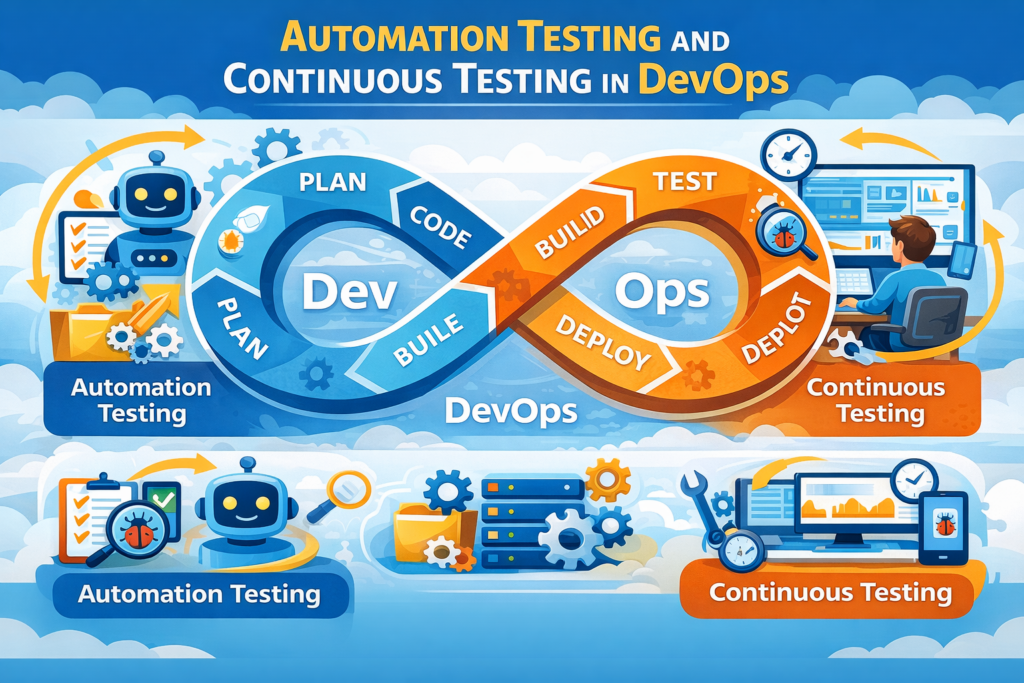
Automation testing uses tools and scripts to execute predefined test cases consistently across multiple builds. It eliminates human error in repetitive scenarios, accelerates regression validation, and scales coverage without increasing team size proportionally.
Continuous testing extends automation into the DevOps pipeline, triggering execution automatically at every code commit. This approach is especially important for teams building cloud native application environments, where frequent deployments demand automated validation.
These types of software testing provide immediate quality feedback, helping teams catch defects at the exact point of introduction and maintain release velocity without sacrificing validation thoroughness across deployment cycles.
Popular tools like the Selenium automation framework enable teams to automate regression and cross-browser testing efficiently.
Unit testing validates individual components in isolation, confirming each code unit produces correct outputs for defined inputs. This is particularly critical in complex backend development architecture where server-side logic drives application behavior.
Early defect detection at this level of QA testing techniques is significantly cheaper than issues discovered downstream in the release cycle. These software testing methods are making it one of the most fundamental types of software testing in the development lifecycle.
Integration testing examines how connected modules behave together, catching data mismatches, API contract violations, and unexpected dependencies that individual unit tests cannot detect. This is especially important when validating API integration in modern applications, where multiple services exchange data continuously.
System testing validates the complete integrated application against technical specifications. These types of software testing evaluate complete workflows and data flows across all modules.
Acceptance testing verifies whether the software meets the actual business Requirements and user expectations before final release. It is typically conducted by stakeholders and serves as the definitive confirmation gate before production deployment. Both system testing and acceptance testing are important types of software testing that ensure the application meets technical standards as well as real business needs before release.
High-quality web application development services embed these testing layers directly into the development pipeline to maintain reliability across production environments.
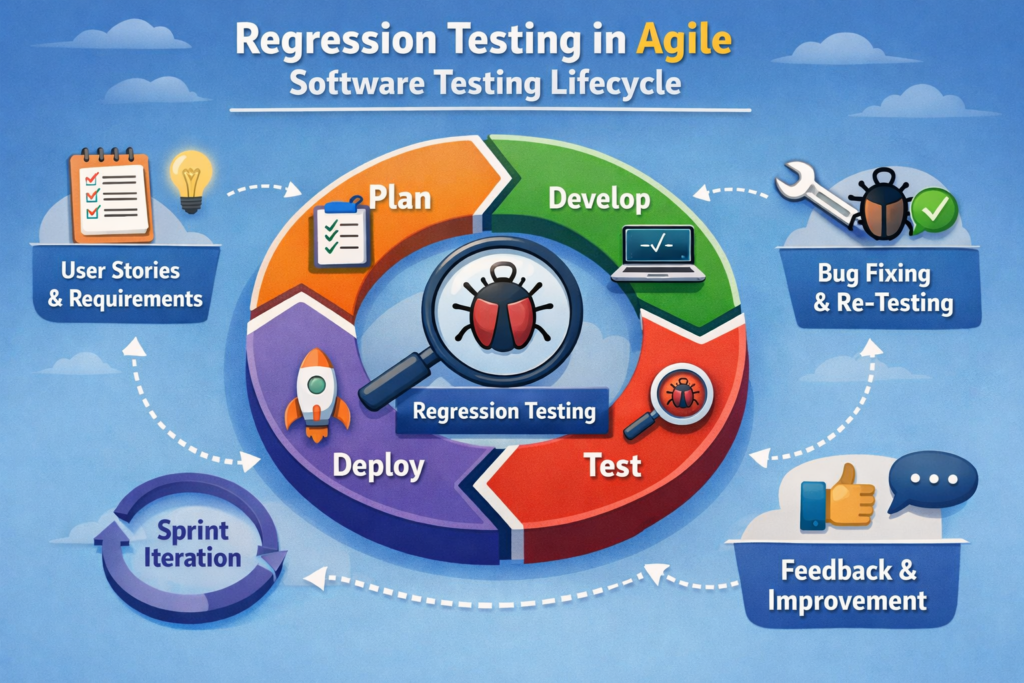
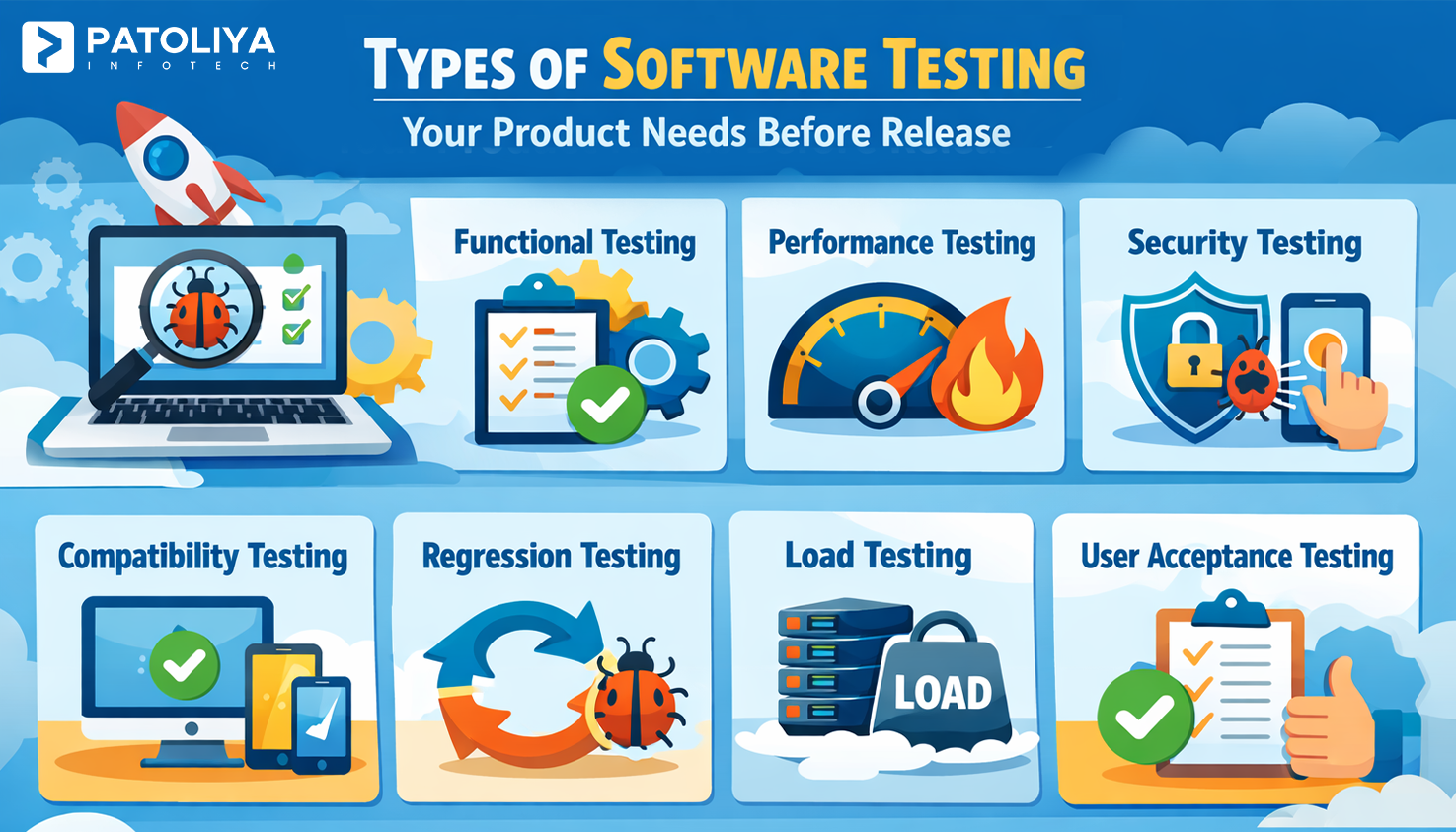
Regression testing confirms that new code changes have not broken existing validated functionality. In agile environments where sprint releases happen frequently through QA testing techniques, every deployment risks introducing unintended side effects across interconnected features. Regression testing is one of the critical types of software testing used to maintain stability in fast-paced development cycles.
Automation testing is almost always applied to regression coverage because manual re-execution is required after every sprint of software testing methods. These types of software testing are neither practical nor scalable for continuously growing codebases.
Frequent releases increase the risk of unintended side effects across interconnected features. Applying structured risk management practices in software projects helps teams prioritize testing coverage and reduce deployment risks.
Performance testing measures how a system behaves under expected and peak workloads, evaluating response time, throughput, and system stability of QA testing techniques.
Load testing simulates concurrent user volumes to identify how the system handles real traffic demands. Both types of software testing approaches surface bottlenecks that functional testing cannot detect, preventing critical production failures during high-traffic events like product launches or seasonal demand spikes.
Security testing identifies vulnerabilities and weaknesses that could expose the application to unauthorized access or data breaches. These types of software testing cover authentication, input validation, encryption, and API security controls in the software testing lifecycle.
Vulnerability validation actively probes the system to confirm whether weaknesses can be exploited. In regulated industries such as finance and healthcare, security testing is a mandatory compliance requirement, not an optional activity.
Usability testing evaluates how easily real users navigate and complete tasks within the application. These software testing methods focus on interface clarity and workflow logic. Accessibility validation ensures the application is usable by people with disabilities, covering screen reader compatibility and WCAG 2.1 compliance. Both types of software testing directly influence product adoption, user retention, and long-term satisfaction across diverse audience segments.
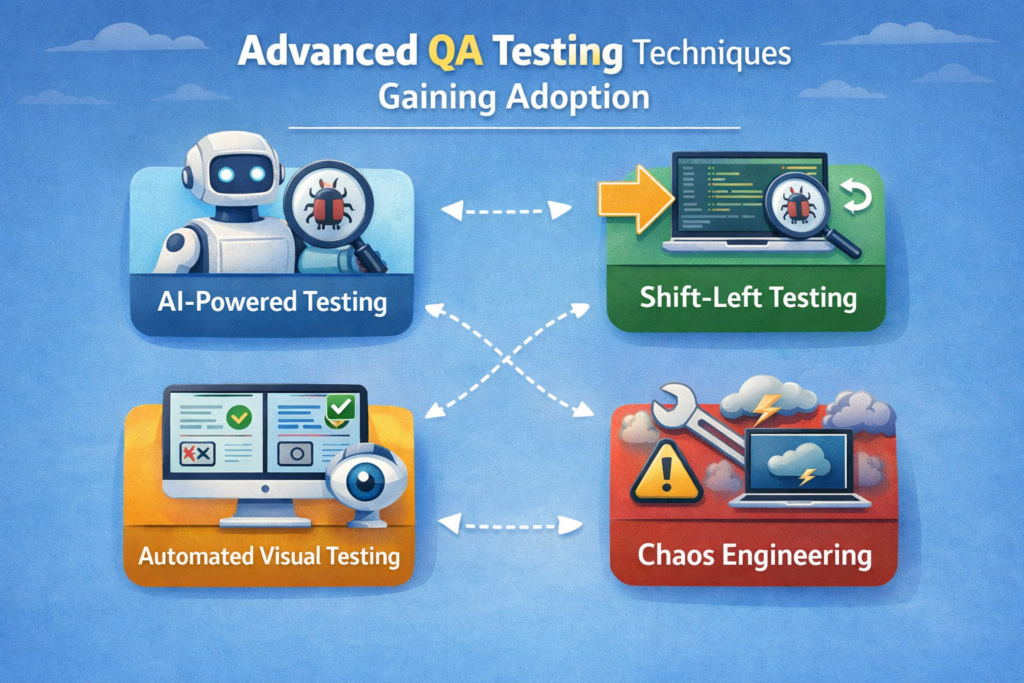
Selecting the right types of software testing depends on your project's specific demands rather than a universal checklist. Business goals, regulatory obligations, technical complexity, and user scale all influence which testing layers deserve priority.
Two factors carry the most weight in this decision of the right types of software testing.
Risk exposure and regulatory requirements determine your minimum validation threshold for types of software testing. Applications handling financial data or health records face compliance mandates that make security testing and performance testing non-negotiable in the software testing lifecycle.
Product complexity and expected user traffic define the scope of validation required. A simple internal tool needs a very different strategy than a consumer platform handling millions of concurrent sessions. Aligning your software testing methods to these two factors of types of software testing ensures effort is concentrated where it delivers the greatest quality impact.
Patoliya Infotech brings a structured, lifecycle-driven approach to the types of software testing that modern digital products demand. Its QA practice is built around measurable outcomes, ensuring each engagement produces actionable quality improvements rather than surface-level reports.
The team's expertise spans automation testing, regression testing, performance testing, and security testing across web, mobile, and enterprise platforms. Patoliya Infotech designs scalable validation frameworks that maintain coverage integrity as products grow in features and user volume.
Its QA testing techniques are grounded in industry experience across finance, healthcare, and e-commerce. Continuous testing integration into client DevOps pipelines enables faster releases without compromising stability. Clients consistently benefit from reduced defect escape rates, stronger release confidence, and transparent reporting that connects testing outcomes directly to measurable business results.
Many technology teams benefit from having experts evaluate their QA strategy to identify testing gaps and improve release confidence.
Mastering the types of software testing determines whether software holds up under real-world conditions. Teams that apply functional testing rigorously, validate non-functional requirements thoroughly, and adopt modern QA testing techniques will consistently deliver more stable and scalable products.
No single testing type is sufficient alone in the software testing lifecycle. Combining unit testing, integration testing, regression testing, performance testing, and security testing creates a layered defense that individual software testing methods cannot provide independently.
As release cycles shorten and system complexity grows, selecting the right types of software testing approaches for each project context becomes a direct competitive advantage. Build your strategy around risk, complexity, business impact, and quality of QA testing techniques that will be followed consistently at every release stage.