Table of Contents
Telemedicine has progressed from a convenience feature to a primary delivery route for US healthcare organizations. Hospitals, clinics, and digital health businesses are now expected to provide virtual care experiences that are secure, scalable, and in compliance with US healthcare standards.
The need for telemedicine software development services that go beyond simple video conversations and include comprehensive clinical workflows, documentation, and interoperability has grown greatly as a result of this change. Many healthcare providers collaborate with a reliable custom software development company to ensure scalable and secure virtual care infrastructure.
Modern healthcare businesses rely on structured telehealth app development and strategic telemedicine app development to create platforms that interact with EHR systems. This enables safe communication and HIPAA compliance while providing measurable patient outcomes.
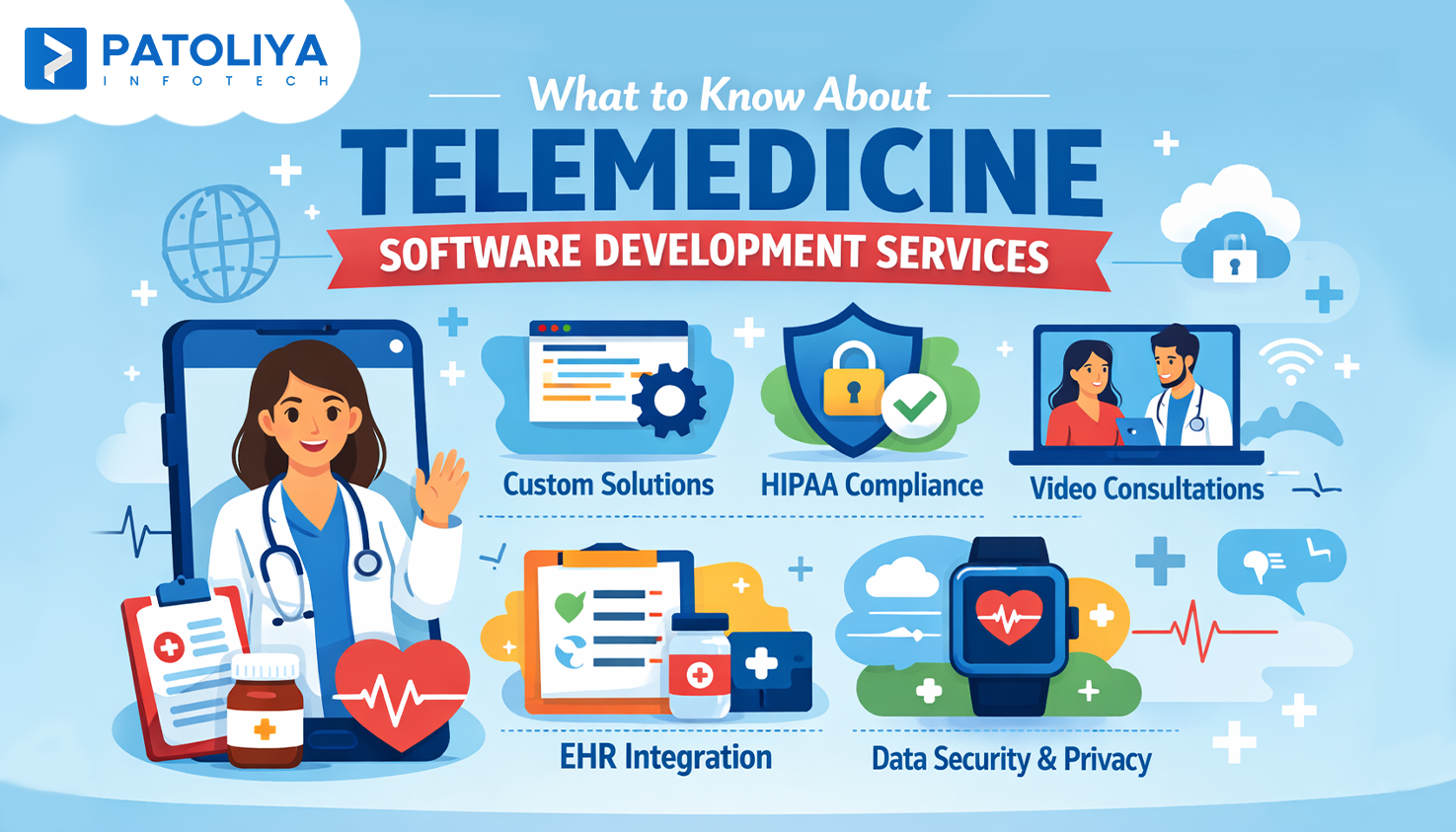
Secure video consultations, appointment scheduling, e-prescriptions, clinical documentation, and patient messaging are common features of US telemedicine platforms. Reliable telemedicine software development services ensure that these modules work together.
For instance, A primary care network that incorporates automated triage forms before visits allows clinicians to examine symptoms in advance and reduces consultation time. Within structured telemedicine software development services, Role-based dashboards for doctors, nurses, and administrators improve operational visibility. Standard components to maintain accountability and comply with US healthcare regulations include audit logs and consent tracking.
In the United States, telemedicine software development services must prioritize HIPAA compliance, encrypted communication, and secure cloud infrastructure. Developers should consider role-based access controls, multi-factor authentication, and secure data storage.
State-specific licensing and reimbursement policies must also be considered while developing a telemedicine app through telemedicine software development services. Strong audit trails, documentation, and breach response procedures show operational maturity and lower legal risk for medical professionals who use telehealth app development services.
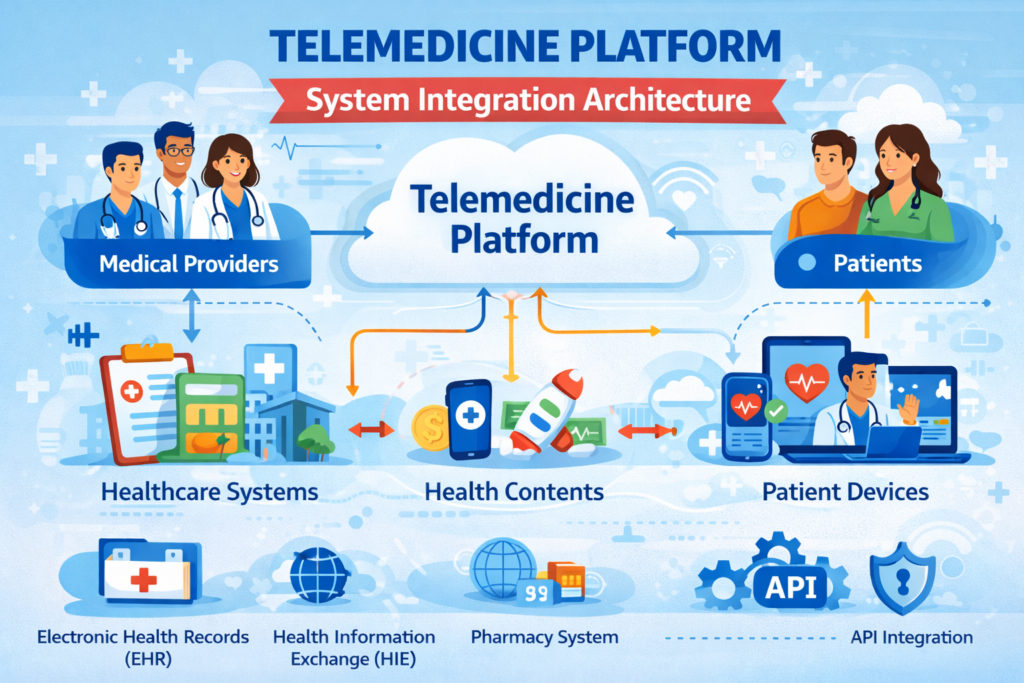
It is crucial to integrate with laboratory platforms, pharmacy networks, billing systems, and EHRs seamlessly as part of structured telemedicine software development services. APIs developed with FHIR or HL7 standards promote interoperability.
These integrations are typically supported by structured web application development services that ensure secure API connectivity and scalable system architecture.
For instance, automatically entering remote consultation notes into an existing EHR enhances clinical accuracy, decreases administrative load, and gets rid of unnecessary data entry.
Exceptional telemedicine software development services are defined by an effective design for healthcare video conferencing and a secure video consultation platform. Secure, quick video, adaptive bit rate streaming, and complete encryption are required for seamless consultations.
Additionally, mature telemedicine software development services incorporate uptime monitoring and redundancy design, particularly for use cases in behavioral health and urgent care. To ensure service quality across multi-provider networks, well-structured telehealth app development services incorporate session security measures and performance metrics.
The patient portal development promotes safe communication, appointment booking, lab result access, and prescription reminders. Portals provide organized clinical documentation and follow-up procedures as part of full telemedicine software development services.
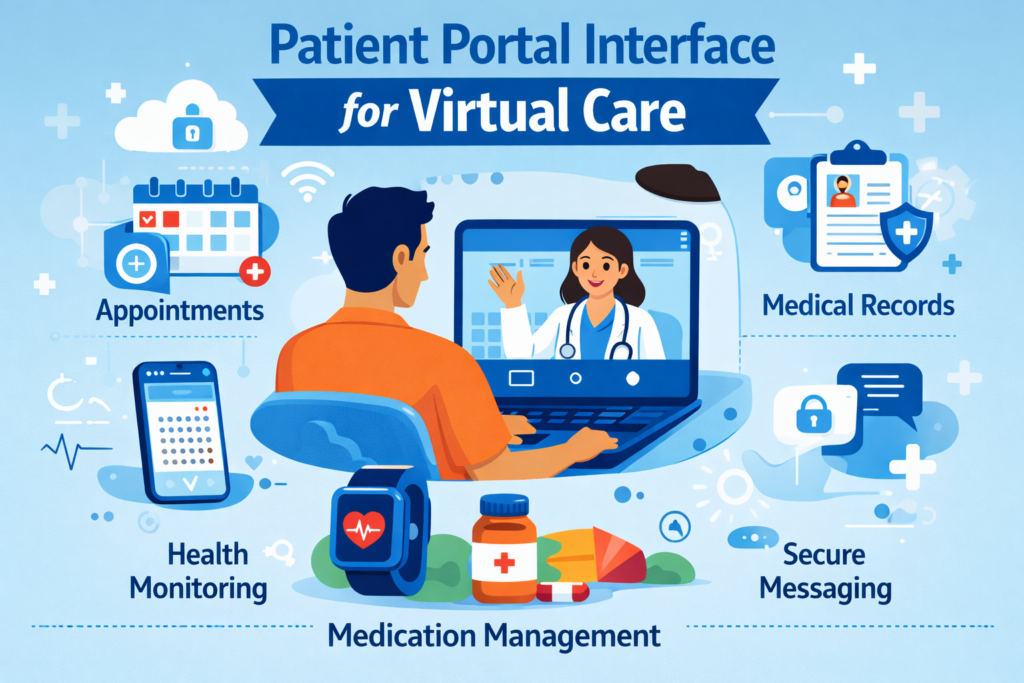
Patients can input daily vitals and receive feedback for chronic illness management programs. This is improving treatment continuity beyond online appointments with the help of telehealth app development services.
Wearable technology and Internet based medical devices are connected to the platform through remote patient monitoring integration. Reliable telemedicine software development services provide real-time warnings and safe data transfer.
For instance, Hypertension monitoring devices can send messages to providers when readings surpass safe levels. This helps for early intervention and better patient outcomes.
Prioritizing diversity and accessibility is essential for developing successful telemedicine apps with the help of telemedicine software development services. Multilingual populations, geriatric patients, and those with disabilities should all be supported via interfaces. Long-term involvement in virtual care programs is strengthened, and adoption rates are increased through ADA-aligned design, easy onboarding, and clear navigation.
The cost of a telemedicine app development varies according to workflow customization and feature richness. Development scope is expanded by AI-based triage, advanced clinical routing, and specialized templates. A trustworthy telemedicine software development services provider evaluates operational needs before projecting expenses.
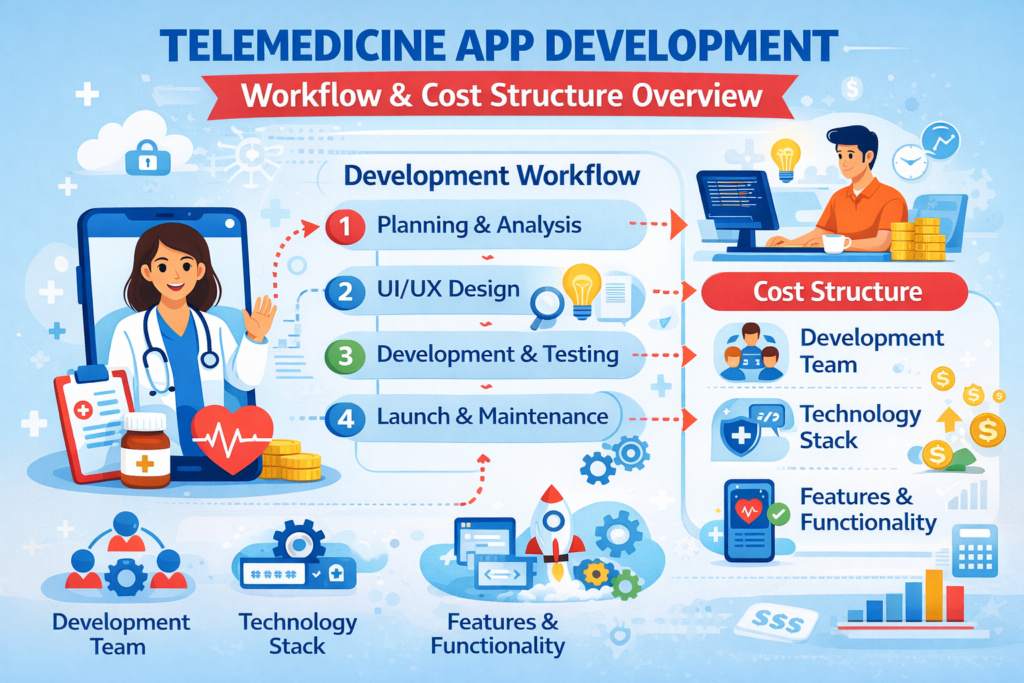
Adding structured documentation modules or automated scheduling systems increases initial expenditure while improving efficiency and long-term ROI. Carefully planned telehealth app development services ensure that functionality is in line with practical provider processes and not needless feature expansion.
The security architecture has a big impact on project budgets. It takes specialized engineering resources to implement audit procedures, encrypted databases, penetration testing, and HIPAA-compliant hosting. Proficient telemedicine software development services incorporate risk evaluations, documentation, and compliance validation to minimize legal liability. These expenditures enhance organizational credibility and protect patient data.
Technical complexity is increased by integration with payment gateways, insurance verification tools, and EHR systems. Within structured telemedicine software development services, the patient portals development and scalable infrastructure have an impact on the total cost of telemedicine app development.
The system can manage growing patient loads without experiencing performance degradation if scalability planning is done correctly. This promotes the expansion of virtual care in a sustainable manner.
Patoliya Infotech offers telemedicine software development services with an architecture that prioritizes compliance and is adapted to US healthcare laws. Security preparation starts with the design phase and includes secure APIs, role-based access control, HIPAA-aligned encryption, and detailed audit logs.
This systematic approach ensures that documentation is ready for audits and reduces legal responsibility. Development procedures incorporate risk assessments, penetration testing, and secure cloud configuration to protect private patient information.
Specialized telehealth app development services allow solutions to be designed for actual healthcare workflows. Each telemedicine app development project may incorporate specialized documentation, e-prescription modules, and appointment scheduling software integration.
A multispecialty clinic can set up distinct intake forms and routing logic for dermatology, mental health, and primary care in one cohesive system. Our organized telehealth app development services and telemedicine app development ensure that these modules support measurable operational efficiency, enhance care coordination, and comply with clinical guidelines.
Systems that are cloud-natively designed can grow across several providers and states without seeing a drop in performance. When supported by structured telemedicine software development services, this architecture ensures reliability even as patient demand increases. Incorporating remote patient monitoring software facilitates ongoing data tracking and proactive chronic care management. Planning for infrastructure allows for growing patient volumes while retaining system stability and availability.
Complete telemedicine software development services cover everything from implementation and continuous optimization to compliance evaluation and discovery. Over time, healthcare businesses are expected to retain operational efficiency and regulatory alignment through constant monitoring, updates, and performance enhancements.
Many organizations benefit from having specialists evaluate their virtual care strategy to identify compliance gaps, integration risks, and scalability limitations.
It takes more than just comparing features and costs to choose the best telemedicine software development services for virtual care delivery in the US. Healthcare providers need to evaluate the impact on patient experience, scalability planning, integration depth, and compliance readiness. Reputable telemedicine software development services start with process optimization, interoperability standards, and HIPAA protections.
Long-term sustainability is ensured by collaborating with professionals who are skilled in telemedicine app development and structured telehealth app development services aligned with US regulatory frameworks. Organizations can create compliant, scalable virtual care systems that enhance clinical results and operational performance by putting a high priority on secure infrastructure, appointment scheduling software efficiency, and remote patient monitoring software integration.