Table of Contents
Adaptive software development is becoming more essential for businesses that operate in fast-paced environments. The current market is always changing with new technology and trends taking their place. Detailed planning and execution are not sufficient because you never know what will happen the next day.
A chef who uses only old recipes will struggle. They must adapt to new tastes. They should also collaborate with the team for suggestions. This impacts how people view traditional recipes. They may prefer recipes updated for modern tastes, such as double-cheese pizza.
This is how the adaptive software development technique works. This is a platform for constant collaboration and adapting to market developments. You are constantly learning and adapting to new technologies as your plans change. This is useful for staying current with the world.
Collaboration and project tools are useful in an adaptive software development framework. This framework improves work quality while allowing for faster progress to the market. This also comes with uncertainty about the future, but it is manageable.
ASD means Adaptive Software Development. ASD is a framework or methodology that combines interactive and agile processes. In other words, it is a recurring process of ongoing planning, collaboration, and market-driven learning.
It all comes down to adjusting to new knowledge instead of relying on preparation. This makes it possible for the software development process to be more innovative and flexible.
The technology sector was quick to move from routine planning to unpredictable initiatives in the 1990s.
It was around that time when rapid application development (RAD) first came to market. It represents a framework that prioritizes speed. Around the middle of the 1990s, James Highsmith was a major contributor to the development of adaptive software development (ASD).
James Highsmith's book Adaptive Software Development (ASD) was released in 2000. In which he described the key ideas and cycle of speculation, collaboration, and learning for adapting to market change. Highsmith's work had a direct impact on the Agile Manifesto, which he contributed to writing in 2001. This established ASD as an important component of the larger Agile movement.
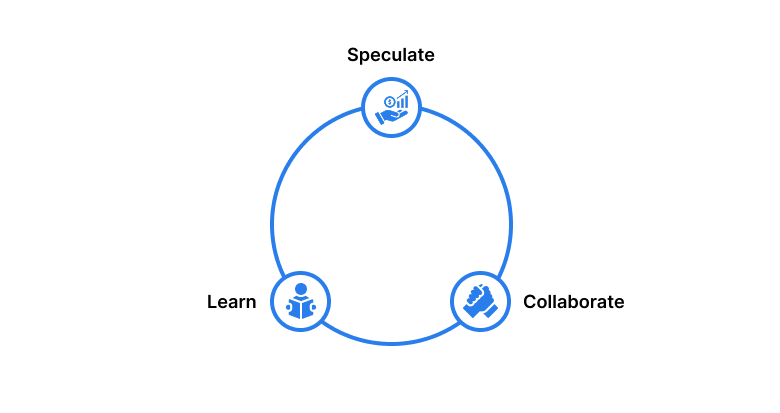
The three iterative stages of the Adaptive Software Development framework are Speculate, Collaborate, and Learn.
ADS prioritizes corporate goals and a clear vision over task completion. This enables the group to ascertain what is actually crucial for the company and its clients.
Providing users with useful and functional features is how progress is evaluated. This makes sure the team is developing something helpful rather than just executing tasks.
Short cycles of a set length, such as two to four weeks, are used for development. This creates rhythm and urgency. It helps in taking little steps toward a larger goal in a fast and consistent manner.
To reduce the probability of failure, high-risk components are taken care of early on. When determining what to modify next, this helps in the learning phase.
New developments are viewed as opportunities by adaptive software development (ASD), which incorporates them into the workflow. As a result of fresh information and strategy, the company grows fast.
The entire process includes ongoing learning and collaboration among teams. The team's mindset should be problem-solving and communicative. Teamwork is an essential component.
Learning from user feedback and teamwork are the foundations of the adaptive software methodology. This creates an exceptional quality.
| Benefit | Description | Real-Life Example |
| Fast time to market | Everyone can create software features in a short time. This helps to a faster introduction of software to the market. | A clothes retailer wants to add a virtual element to its app. Using ASD, the team developed a simple version in weeks. They added more outfit alternatives and increased accuracy over many short cycles. This speeds up the entire process by allowing them to respond to market changes on time. |
| Higher Quality Products | Continuous feedback and testing ensure that products are better matched with user requirements. This results in fewer faults. | A major bank worked with ASD to develop its new mobile app. A small number of users are given access to the beta version. Every two weeks, feedback is collected. The group is correcting errors. Features that have been requested by users are implemented. This got a 4.8-star app rating. |
| Enhanced Innovation | Self-organizing teams that use ASD are more likely to explore and come up with creative solutions to issues. | During the Netflix platform development phase, they allowed teams to experiment with new algorithms. This allows them to create a very innovative and user-friendly platform. This is impossible using the traditional approach. |
| Improved Team Morale | A collaborative and learning-oriented environment reduces burnout, and everyone enjoys their work. | A gaming development studio has adopted ASD. They celebrated each development element of gaming in a short period of time. They are driven by how they are progressing and feel as if they have reached the end of their game trip. |
| Greater Stakeholder Alignment | Regular demos and feedback meetings make sure business leaders and project teams are always in sync with the project's goals. | A large organization was creating a new internal communication tool. The team provides stakeholders with weekly progress reports. This section provides information about the feature and collects feedback from other teams.This involves the entire organization in the growth process. |
| Challenge | Explanation | How to Overcome It | Real-Life Example |
| Resistance to Change | ASD is a continual process that lacks specific planning. This makes it difficult for the team to adapt due to the uncertainty of the future. | Create a culture of psychological safety in which teams can experiment and learn from mistakes without fear of consequences. | A big financial institution has turned to agile software development. They didn't force it on everyone at once. Instead, they started with a small team. The team's performance with experiments was excellent because it was flexible and did not require planning. |
| Lack of Documentation | Traditional methods rely on comprehensive recording of each stage, whereas ASD focuses on only the most important documents, which will change over time. | Create documents using collaborative tools such as a shared digital whiteboard or wiki. This is simple to update and immediately supports the existing work. | A logistics product team replaced extensive written documentation with an online whiteboard. This visual method gave quick plan updates and immediate feedback. |
| Measuring Progress | Traditional progress reports that quantify the amount of completion are ineffective since plans are always changing. This may frustrate stakeholders who are used to firm goals and stable deadlines. | Set measurements that emphasize delivering client value rather than simply completing tasks. | The healthcare industry began measuring work based on the number of features that are beneficial to patients. This is not a percentage of x features that are introduced. |
| Maintaining Focus | Sometimes it feels like a never-ending loop of trends for the team. | Empower the team to treat each step as a celebration. Give them a clear mission statement, and the selective trend will follow. | The marketing software team was continually developing functionality. To stay focused, they developed a single objective. This goal helped them to reject fresh ideas that did not advance their main goal. |
| Feature | Adaptive Software Development (ASD) | Agile philosophy | DevOps |
| Type | A specific methodology and framework. | A broad philosophy with guiding principles and values. | A set of practices and a culture of collaboration. |
| Primary Goal | To deliver working software by continuously adapting to change and new information. | To create a flexible, customer-centric approach to development by responding to change. | To automate and streamline the software delivery process from development to operations. |
| Focus | The how of development. It focuses on the project management and development loop. | The why of development. It focuses on values like people over processes and working software over documentation. | The what of delivery. In order to connect the development and operations teams, it focuses automation and tools. |
| Technologies & Frameworks | Jira and Trello for project management. Git for version control, and Miro for collaboration. | Scrum, Kanban, and Extreme Programming (XP) are common frameworks for Agile. | Jenkins, GitLab, and CI/CD for automation. Docker and Kubernetes for containerization. Ansible and Terraform for infrastructure as code. |
| Relationship | A practical framework based on Agile concepts.It is one of the Agile techniques. | The framework under which ASD and others, such as Scrum and Kanban, function. | Similar to ASD. An ASD team may create the software, and a DevOps pipeline can automatically deliver it. |
As new consumer trends and technology emerge, the market is always evolving. Enterprises must grow faster in order to meet client needs. ASD helps them to adapt fast.
Large-scale projects involve a lot of moving pieces and are highly uncertain. ADS are designed to overcome problems and provide constant learning for the next level. This helps teams handle uncertainty with short development cycles.
Modern users demand regular updates and an ongoing availability of new features. ASD believes in continuously launching new features and adapting to market demands and trends.
Enterprises can detect and minimize hazards early by releasing and testing small features. They evaluate the performance of a given feature and make changes based on client expectations.
A large retail company develops adaptable software development for e-commerce platforms. Instead of large company launches, they introduced smaller ones with new features. They use A/B testing to ensure a fast response to the customer. It helps them to be consistent with the demands of customers.
These are some of the industries that stand to benefit the most from ASD:
The healthcare sector is always evolving to provide improved patient care. For the protection of patients from innovation, the government is changing and developing new rules and regulations. ASD aids with the adoption of new technology, such as mHealth apps, as well as compliance with new regulations.
The world is going towards rapid payments and security. This is the focus following compliance and rules. ASD helps the implementation of new features, the adaptation of new policies, and the rapid solution of security concerns.
Consumer behavior and industry trends can change at any time. Rapid product adoption is required in response to changes in the market. Adaptive software development helps industries to identify new features and develop them quickly.
As the digital sector constantly introduces new features, businesses must adapt to those systems and features quickly. Adaptive software development helps to address it. The company may adapt to new technologies and offer new features at any moment during the short product development cycle.
The manufacturing and supply chain industries often involve large-scale projects. To finish these big projects, organizations must divide them into short cycles and work in a regular manner. Companies must react to any changes that occur. The adaptive software development methodology helps to meet these short cycles by adapting to new trends.

Many businesses have worries about how ASD will integrate with existing systems and processes. ASD can be added to existing enterprise architecture rather than requiring new systems for integration. It is simple for any organization to implement. The following ideas and approaches may help you with this.
Enterprises can maintain important legacy systems, such as ERP or banking systems, to automate record-keeping. ADS can be used with any internal tool, specific project-related system, or anything. This can assist in maintaining both the legacy and new systems.
Companies can use APIs, microservices, and modular systems. This helps ASD-driven teams to easily adapt and develop new solutions without ever disrupting the fundamental activities stored in legacy systems.
Teams can focus on small areas of the project with a short timetable. This helps with project governance and feedback. This reduces risk and maintains consistency. This is also useful for following rules and compliance at all stages and getting approvals from stakeholders.
| Feature | Traditional Development | Adaptive Software Development (ASD) |
| Planning | Before any work begins, it is necessary to conduct extensive planning. | High-level speculation determines the direction. The detailed planning develops continuously. |
| Change | Any change is perceived as an expensive disruption and project risk. | Changes are a normal component of the learning process. |
| Process | One step must be completed before the next begins. | The Speculate, Collaborate, Learn loop happens regularly. |
| Feedback | Usually, near the end of a project or after a long duration. | Occurs continually in every short cycle, allowing for fast adaptability. |
| Goal | To stick to the original plan exactly, regardless of market changes. | To maximize corporate value, react to the market and consumer feedback. |
| Key Metrics & KPI | What It Measures | Why is it important for ASD |
| Lead Time for New Features | How fast new functionality goes from concept to production. This represents the whole cycle time. | Measures speed and efficiency. A shorter lead time indicates the adaptive cycle is working and resulting in faster market response. |
| deployment Frequency | The number of successful releases in a month or quarter. | Measures agility and flexibility. High deployment frequency proves that the team continually delivers value. |
| Customer Feedback Scores | Whether adaptable releases increase user satisfaction or not. This includes the Net Promoter Score and Customer Satisfaction. | Measures both value and alignment. ASD's success is determined by whether frequent adaptations improve the product experience for the end user. |
| Defect Density | The number of problems discovered in production following release. | Evaluation of product quality. ASD's constant testing and learning cycles could reduce the number of problems. |
| Business Value Delivered | Measured in terms of business impact. This includes revenue effect, user adoption rates, and lower operating costs. | Measures return on investment (ROI). This indicates that the features being offered are the proper ones and solve actual business concerns. |
Successfully deploying ASD needs to change how people work and think, rather than installing new technologies. Follow these essential steps to guide your organization's adaptation.
Get senior management to fully support and drive the change in their organization. ASD is a culture and routine to which you must adapt, so you will need help building it.
Do not go all in at once. Choose a little project to test the technique and gain confidence.
Built teams with all of the talents necessary to execute a project. This ranges from design to development, testing, and final deployment.
Provide training for tools and systems. Provide practical information about the ASD cycle of Speculation, Collaboration, and Learning.
Provide the team with a long-term vision for the project. The team's activities and decisions must be guided by a clear, shared vision for the project.
Here are the best practices for long-term success with Adaptive Software Development (ASD).
The future of Adaptive Software Development (ASD) is not about technology, but about integrating software methodology into a core business strategy for the entire organization.
Future ASD will be intimately integrated with Artificial Intelligence (AI) and Machine Learning (ML). This automatically analyzes large amounts of client data, such as clicks, reviews, and behavior. This integration improves feedback loops even more. This enables teams to gather predictive insights and anticipate what customers want next. This improves the learning phase of ASD.
Automation technologies will handle all of the complicated and repetitive tasks involved in developing and distributing software. This includes testing and setting up environments.
This allows creative people to focus only on generating new features and solving challenges faster.
Applying ASD's principles like quick cycles, fast feedback to non-IT departments like Marketing, HR, and Finance. This makes the entire company responsive to the market, not just the people writing code.
The idea is to make planning, budgeting, and strategy flexible and adaptive. When the market or competition changes, the company can change direction fast.
ASD is more than just a framework for developing software. It is a framework that motivates organizations to speculate, interact, and learn constantly. It helps teams to face ambiguity and react to new knowledge. Also, instead of being hesitant about change, answer with confidence.
Enterprises can create actual economic value faster by concentrating on collaboration and short cycles. This helps reduce risks and keep customers engaged with products that fit their demands.
The future of ASD goes beyond IT. Companies use AI and automation to design software and run their entire business. Adaptability will become the new foundation for growth, including marketing, supply chain, and finance.
It takes expertise to implement the strategy of adaptive software development. Patoliya Infotech has exceptional expertise in this field. Let's adapt ADS together.