Table of Contents
mHealth is the use of smartphones, tablets, and wireless technology to support healthcare delivery and personal well-being for mobile health. In a world where over 6.9 billion people use mobile devices and internet usage is continuously increasing, mHealth is transforming how people track, manage, and improve their health. It is more important than ever because it clearly puts medical care in people's hands while minimizing geographical, time, and expense obstacles.
The growth of mobile healthcare solutions is not less than notable. The global mHealth market, the price of about $62.7 billion in 2023, is estimated to exceed $158.3 billion by 2030, inspired by focusing telemedicine adoption, AI-based diagnosis, and preventive care. From rural communities to virtual counseling are gaining access to urban patients, monitoring chronic conditions in real -time, mHealth is re -shaping health care distribution globally. (SRC)
For businesses, this bounce represents a fertile ground for innovation. There is an increasing demand for solutions that merge healthcare expertise with spontaneous mobile experiences-apps that personalize health insight, platforms that immediately associate patients with experts, and equipment that take advantage of health data for better decision making. Companies that work now can put themselves at the forefront of an area that is not only growing, but is also redefining the health care landscape worldwide.
mHealth apps deliver value across the healthcare ecosystem. For patients, they provide 24/7 access to care, personal treatment insight, and distance monitoring, active health management. Providers benefit from streamlined workflows, rapid decision making and improving the patient's busyness, while healthcare systems obtain cost reduction, preventive care and data-driven insight that optimize resources and increase population health.
By integrating these advantages, mHealth apps are not just tools—they are redefining the healthcare experience, making it faster, smarter, and more human-centric.
mHealth apps provide a price in the healthcare ecosystem. For patients, they provide 24/7 access to care, personal treatment insight, and distance monitoring, active health management. Providers benefit from streamlined workflows, rapid decision making and improving the patient's busyness, while healthcare systems obtain cost reduction, preventive care and data-driven insight that optimize resources and increase population health.
By integrating these benefits, mHealth apps are not just tools-they are redefined the experience of healthcare, making it rapid, clever and more human-focused.
Telemedicine & Virtual Consultation Apps - Immediately connect to doctors by video, chat or voice calls. Suitable to reduce remote diagnosis, follow -up and clinic visits.
Mental Health & Wellness Apps - Support emotional well -being with attention guides, therapeutic sessions, stress management equipment and mood tracking.
Chronic Disease Management Apps - Track and manage situations such as diabetes, hypertension and asthma. Get reminders, warnings and insights to be on top of your health.
Women’s Health Apps - Period tracking, pregnancy monitoring, reproductive planning and maternity care help - in a convenient application.
Medication Management Apps - Never miss the volume with reminder, prescription refill alert and simple drug tracking for better compliance.
Fitness & Lifestyle Apps - Monitor workouts, daily activity, sleep and nutrition. Many are integrated with oral for a complete health observation.
Remote Patient Monitoring (IoMT Integration) - Collect real -time health data from connected equipment and sensors, so that the provider can monitor remote patients.
Hospital & Clinical Apps - Patient portal, EMR, lab results and appointment programs to streamline hospital interactions.
Emergency & First Aid Apps - Step-by-step first aid instructions, emergency contacts and fast, sharing location for life-saving support.
To stand out in a crowded market, an mHealth app must combine usability, safety and functionality. A user-friendly panel and intuitive design ensure effortless navigation, while hipaa's authentication and compliance protects sensitive patients from patients.
The main features include appointment scheduling, telehealth video integration, and health data tracking, usually paired with the vestable integration for real -time monitoring. Health insights and chatbots fed by AI improve customization and support, while multi-platform accessibility ensures that users can get involved via iOS, Android or web. Resources such as payment and integration of insurance and multilingual accessibility make the application include and practical for a broad audience.
Creating a successful MHealth application requires a strategic approach that combines a deep -minded understanding of healthcare needs with the implementation of strong technology. This tour begins with the purpose and target audience of the application. Understanding whether your application is for chronic disease management, telemedicine, fitness tracking or mental health, ensures that the features correspond to the actual user's needs and make a meaningful engagement.
Next, choosing the right tech stack and platform is crucial. IOS, Android and web support, with API for cloud infrastructure, database systems and interoperability, creates a reliable and scalable application. Connecting this with thoughtful UI/UX design principles is essential in healthcare, where intuitive researchers, clear data visualization and accession can significantly affect user compliance and satisfaction.
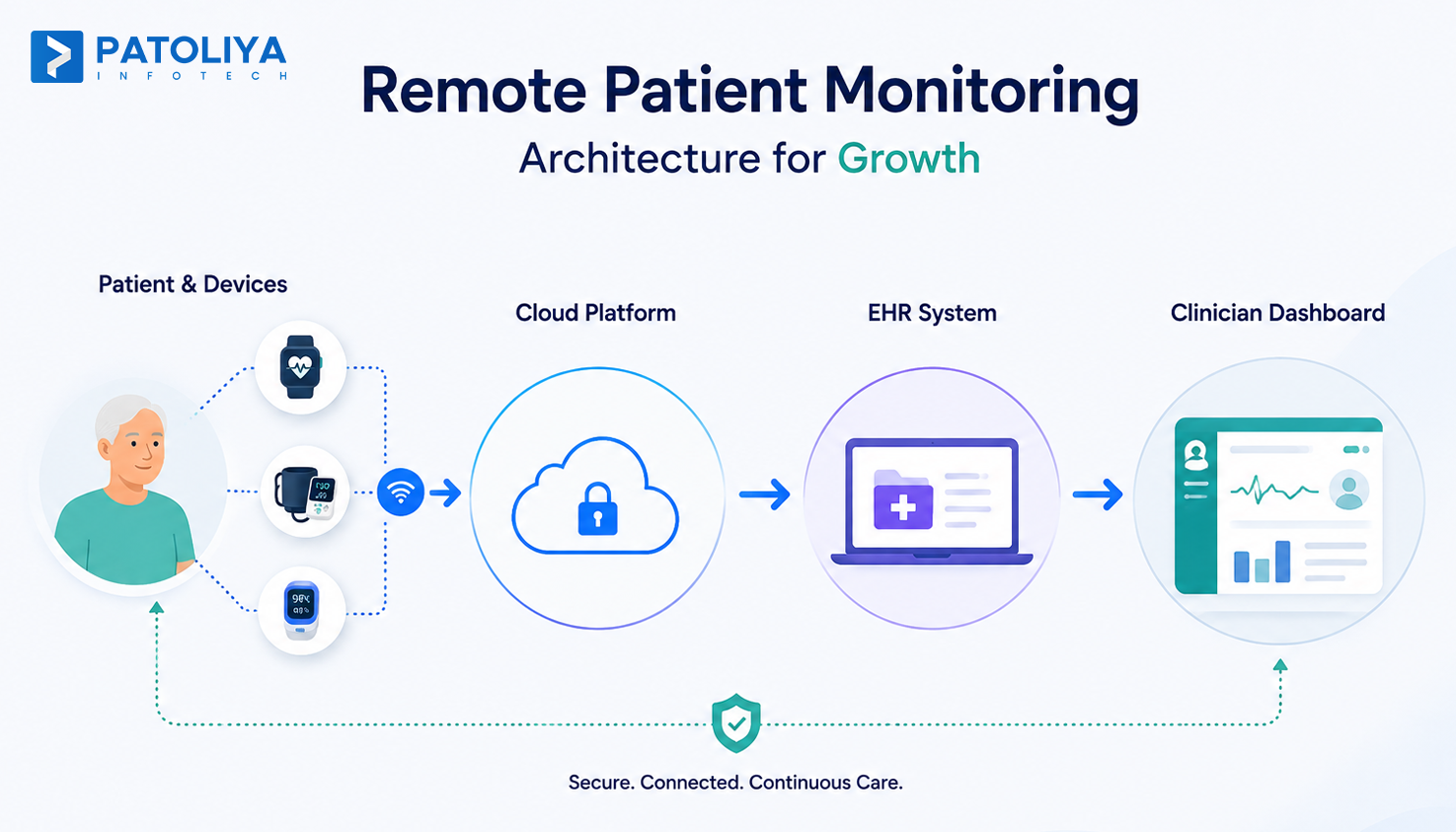
Integration capabilities increase the functionality of the application. The combination of IOMT devices and EHR system enables the integrated continuity of real -time data storage, distance monitoring and care. In addition to integration, data privacy and security are non-cooperative. Compliance with rules such as Hipaa and GDPR protects sensitive health information and creates a user trust.
The development process usually begins with a Minimum Viable Product (MVP), which occurs after advanced features, to validate the main functions and collect user feedback. To prevent errors, ensure accuracy and maintain reliability, the quality and rigorous testing of healthcare applications is important.
Finally, post -launch maintenance and facility upgrades respond to the application related, secure and healthcare requirements. Continuous updates based on user feedback and technological advancement ensures that application is a uniform reliable tool for patients, providers and health systems
The mHealth Landscape is developing rapidly, powered by emerging technologies that increase patient care, provide well -organized workflows, and improve data protection. Artificial intelligence (AI) and machine learning (ML) are at the forefront, power predictive analysis, personal remedy recommendations, and intelligent chatbots that help patients and providers equally.
Blockchain technology patients are changing health data management by maintaining safe, tampering-proof storage and uninterrupted sharing of medical records while maintaining privacy. Meanwhile, voice-active health assistants provide hand-free support to reach health information, access to health information and improve drugs, access and improve convenience.
Integration with IOMT (Internet of Medical Things) and connected medical devices allows the patient to make a real -time monitoring of important, remote diagnostics and continuous data collection, helping the providers to make timely and informed decisions. In addition, for medical training, patient education, rehabilitation programs and surgical planning, adding a new dimension to the distribution of patient engagement and health care, Augmented Reality (AR) and Virtual Reality (VR) for medical training, patient education, rehabilitation programs and surgical planning.
These technologies are not just innovation-they reshape how healthcare is felt, making it more smarter, more efficient and quickly patient-centered.
Nevertheless, the MHealth applications provide immense potential, and developers face various crucial challenges that must be focused on success. Regulatory compliance is one of the main priorities - ensures legal operations to take advantage of standards such as HIPAA, GDPR and local health rules and create user confidence. Actively working with legal experts during development helps to avoid expensive traps.
Data privacy concerns are another major obstacle. With sensitive health information at stake, robust implementation, safe authentication and anonymous data handling to protect users and maintain credibility.
User adoption and engagement usually determine the long -term viability of the application. Intuitive design, custom resources, gamification and continuous education of the user can help overcome resistance and boost consistent use.
Interoperability with existing health systems has technical challenges. Perfect integration with EHRS, EMRS, weather devices and hospital systems requires careful planning, standard protocols, and API -based solutions to ensure that data flows without problems without error.
Scalability for global markets is essential for growth. The composition of the application with multilingual support, cloud infrastructure and adaptive features ensures that it can deal with a user base increase and expand between regions without compromising.
By expecting these challenges and applying attentive strategies, developers can create a safe, effective, and widely adopted mHealth application.
Developing the mHealth application includes multiple cost things, which are influenced by features, complexity and regulatory requirements. Factors affecting development costs include the functionality of the application (telemedicine, AI capabilities), platform support (iOS, Android, web), design complexity, security and compliance requirements and third-party integration such as EHRS or payment gateway.
In addition to initial development, ongoing maintenance and scaling costs are essential considerations. Regular updates, security patches, facility growth, server scaling and compliance adjustments usually require 15-20% of the initial development costs. The appropriate budget for this cost ensures that the application remains functional, secure and competitive over time.
Get Expert Advice for No Cost and with No Obligation
Patoliya Infotech specialize in creating an innovative mHealth solution that improves patient care and simplifies health operations. Our portfolio includes applications that improve patient occupation, activate remote monitoring and many more.
Customers choose us because we combine deep health care knowledge with technical expertise, ensuring that apps are safe, obedient and user friendly. Our development approach focuses on research, MVP verification, agile repetitions and rigorous testing, which has a continuous post-launch support to keep the apps reliable and future-oriented.
With our experience, Patoliya Infotech help the healthcare providers and startups effectively, scalable and intuitive mHealth apps to the market efficiently.
mHealth's future is changing beyond simple well-being monitoring towards precision medication, in which applications help tailor remedies for genetic facts, lifestyle and health. Data-Driven preventive healthcare will allow early detection of dangers by enabling users and companies to take proactive measures before conditions get worse.
In addition, customized AI health companions should become par excellence, showing real -time direction, reminders and insights mainly based on the exclusive fitness profile of all consumers. These trends are reformulating the mHealth of a convenience tool in a strategic partner for smarter, more proactive and more personalized healthcare.
mHealth is no longer just a futuristic concept - it has become an essential part of modern health care, which also offers accessibility, efficiency and personal care for patients and providers. From telemedicine and wearable integration, the possibilities are expanding rapidly from ideas moved to AI and emerging technologies such as blockchain and AR/VR.
Although challenges such as regulatory compliance, privacy and data interoperability are pending, careful planning, strong technology and user -centered design, can eliminate these barriers. With the correct strategy, the current development method and support, mHealth applications can improve measurable benefits, cost savings and patient results.
Looking to the future, trends such as precision medicine, preventive healthcare, and AI health companions promise to make mHealth more integral for the provision of health services. By accepting these innovations, health professionals and companies can be ahead of the curve and give users around the world smarter, more personal and accessible care.
1. Can mHealth applications be used for serious medical conditions?
Yes. Many mHealth applications support chronic disease management, remote patient monitoring and telemedicine consultations. However, they should complement, not replace, professional medical care.
2. Are mHealth apps secure for storing patient data?
When developed with proper encryption, secure authentication and regulatory compliance (Hipaa, GDPR), mHealth applications can safely store and manage sensitive health information.
3. How can wearable devices integrate with mHealth apps?
Wearables collect real -time health data such as heart rate, activity, sleep and glucose levels. By integrating APIs and IOMT, this data can synchronize with Mhealth applications for continuous monitoring and actionable insights.
4. How long does it take to develop a custom mHealth app?
Development deadlines vary according to complexity. A basic application can take 3 to 4 months, while a resource -rich application with telesaúde integration, IA and EHR can take 6 to 12 months or more.
5. What regulations apply to healthcare mobile apps?
Health applications should comply with privacy and data security regulations such as Hipaa (US), GDPR (EU) and local health standards, depending on the target market and the type of medical data treated.