Healthcare Automation: Streamline Care Processes
Table of Contents
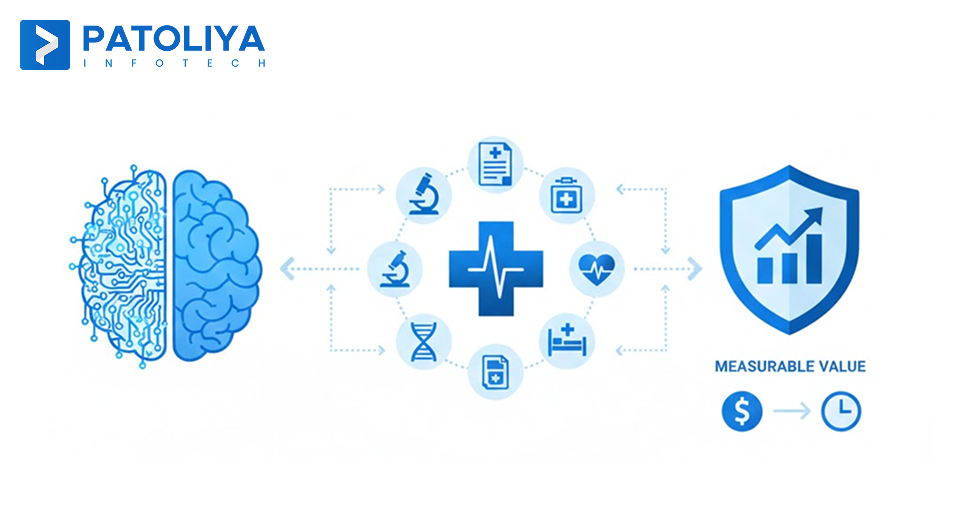
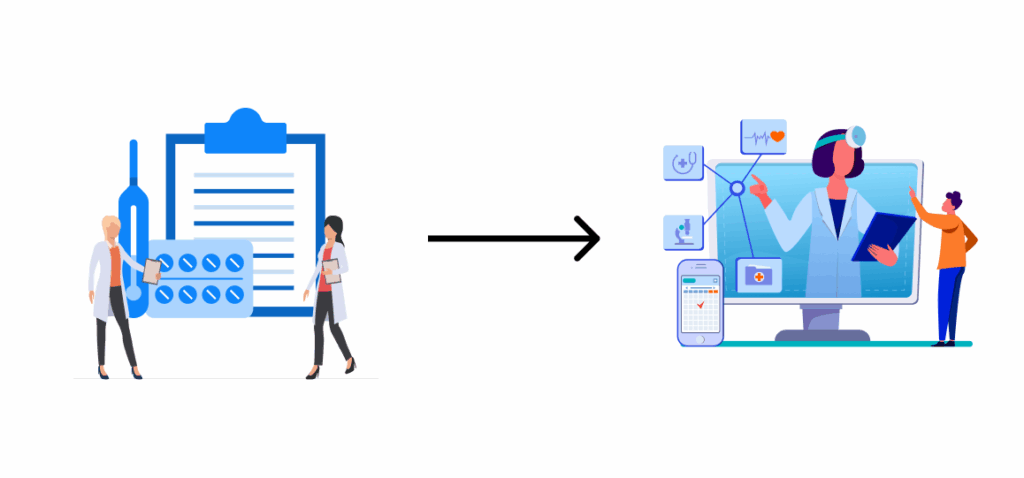
The healthcare industry is known for its complicated medical operations. This approach requires constant input from human experts. Artificial Intelligence (AI), Robotic Process Automation (RPA), and machine learning are healthcare automation technologies.
These automation technologies are changing many aspects of the healthcare industry. This automation effectively handles administrative and repetitive complex data work. It helps medical professionals to focus on providing better patient care.
The COVID-19 pandemic emphasizes the role of technology, such as intelligent automation (IA), and innovation in healthcare. Automation enhances patient intake, accelerates diagnosis, and boosts research efficiency.
Key Technologies Driving Healthcare Automation
| Healthcare automation | Meaning | Uses | Examples |
| Robotics Process Automation (RPA) | RPA utilizes software robots to automate rule-based and repetitive tasks that typically require human input. | Data entryclaims processingbilling and invoicingappointment scheduling patient registration | using RPA to automate the process of sending out appointment reminders via text or email. |
| Artificial Intelligence (AI) | AI enables computer systems to identify patterns and make decisions from vast amounts of data. | Surgical robots, clinical decision support systemsvirtual assistants | An AI automation system analyzes a patient's MRI scan to detect subtle signs of a tumor or disease that a human might miss. |
| Machine Learning (ML) | ML is the process of training algorithms on data so that they can generate predictions or classifications without being manually programmed. | Image analysis for diagnosticspredictive risk modeling drug discovery | Predicting patients' health risks allows doctors to begin treatment in advance of time. |
| Natural Language Processing (NLP) | This helps computers to interpret human language in both spoken and written form to bridge the gap between human communication and machines. | Smart chatbot assistance Softwares that store medical records for research purposes AI transcribes and organizes doctor notes. | A hospital chatbot can answer frequently asked questions about visiting hours, billing, or directions |
| Internet of Medical Things (IoMT) | IoMT refers to medical devices and sensors that collect and transmit health data. These devices can be wearables, smart implants, or hospital equipment. | Remote patient monitoring (RPM) for chronic conditions, automated medication dispensing systems time tracking of medical equipment | A patient with diabetes uses a continuous glucose monitor (CGM) that is an IoMT device. This helps doctors monitor conditions and prescribe medicine on a remote basis |
| Blockchain | A decentralized digital list of records, or blocks, that are connected and protected by encryption, is called a blockchain | enhancing data security and patient privacy in data exchange between different healthcare systems. | Patients have total control over who can access their medical history because it is recorded on a blockchain |
To take advantage of technology, you need someone with expertise who is trusted around the world. Patoliya Infotech has highly skilled experts and is recognized for its quality work by a global family of clients.
The Impact of automation in healthcare
Better patient care is not only one goal of healthcare automation or AI automation, it also aims to improve the healthcare sector. This automation is handling the most difficult challenges in administration, clinical, and patient engagement areas.
Administrative Tasks
Appointment Management
Healthcare automation is replacing the manual appointment scheduling, repetitive patient reminders, and data management methods of the past. This is resolved by digital health solutions, which enable online booking and rescheduling for patients and automatically send out reminders.
An AI automation tool such as Sully.ai increased efficiency threefold by reducing the amount of time spent on each patient from 15 minutes to just one to five minutes.
EHR Integration
Electronic health records( EHR) store and promote the smooth exchange of medical information. During medical treatment, sharing information with an EHR speeds up the procedure. This improves data exchange and ensures that all lab or medical information is accessible at all times.
Claims Management & RCM Process
Healthcare automation speeds up claims processing, payments, and the correction of billing problems prior to submission. Cost reduction and automation of claim processing are enhanced up to 30%, according to a research paper on ResearchGate.

Clinical Operations
AI-powered diagnostics
AI automation models, such as generative AI and Google Health's AI system, are more efficient in the diagnosing process than radiology and pathology. Healthcare automations do rapid analysis of retinal pictures, have excellent accuracy in detecting diabetic retinopathy, and provide rapid diagnosis.
Remote Patient Monitoring (RPM)
Healthcare automation, such as IOMT sensors or devices, can monitor patient conditions outside of the clinic. Digital health solutions, such as Mhealth apps, inform patients about their medications, appointments, and symptoms. This allows doctors to conduct e-consultations and patients to track their health and receive therapy before any risks appear.
An apple heart study included 400,000 people. This study focuses on remote healthcare using Apple smart watches. This study demonstrated that smart watches boost user medical evaluation and timely intervention.
Patient Engagement
Enhanced Health Access and Communication
AI automations such as chatbots provide 24/7 access to information. A virtual assistant provides constant updates and access to consumers. So the issue of long wait times on hold on calls has been resolved. Appointment reminders are provided by automated service software at healthcare automation systems.
Why Intelligent Automation Matters in Healthcare
| Impact of AI | Specific automated Tasks | How AI Achieves It |
| Increased Efficiency and Reduced Costs | Scheduling, billing, medical coding, and patient data entry | AI automates repetitive tasks, improving staff productivity and lowering operating costs. |
| Minimized Errors | Patient record updates, medical transcriptions, and insurance claims processing | AI manages and analyzes data more accurately and consistently. |
| Enhanced Patient Care | Appointment coordination, prescription refill requests, and patient follow-up communication | AI can take on both administrative and operational tasks. This allows doctors to focus on providing better care and allows staff to perform more important tasks. |
| Improved Outcomes | Analyzing medical images like X-rays and MRIs, predicting disease risks, and interpreting lab results, | AI can quickly analyze complex and large data. AI may detect early signs of disease, allowing clinicians to prevent them before they occur. |
| Better Staff Experience | Managing paperwork, maintaining patient records, and handling inventory tracking | AI automates repetitive operations and handles complex data or tasks, reducing staff burnout. |
How to use automation in healthcare
Implementing RPA in healthcare
RPA means robotic process automation. RPA automations have tools, or we can say bots, to automate repetitive and high-volume tasks.
Use Cases for RPA in Healthcare
| Patient Onboarding | Compliance and Auditing |
| Appointment Scheduling and Reminders | Discharge Instructions |
| Medical Billing and Claims Processing | Data Entry and Records |
Popular RPA Tools
- UiPath
- Automation Anywhere
- Microsoft Power Automate
- Blue Prism
How to Implement RPA in Healthcare
- List all your repetitive tasks.
- Set up a process that doesn't require human interaction.
- Select the appropriate RPA tools for the platform.
- Create bots with RPA tools.
- Integrate RPA automation tools with digital health solutions.
- Track progress and make changes as required.
With a strong background in the automation industry and experience at a top tech company in healthcare, Patoliya Infotech offers tailored RPA solutions.
Implementing AI in Healthcare
AI in the healthcare industry involves not only automation but also machine learning, natural language processing (NLP), predictive analytics, and a variety of other technology integrations.
Use cases for AI in healthcare
| Medical Diagnosis | Predictive Analytics |
| Personalized Treatment Plans | Drug Discovery and Clinical Trials |
| Patient Communication | Image Analysis |
How to Implement AI in Healthcare
- Select the problem-related areas you want to solve with AI.
- Create structured databases such as medical records and all.
- Choose an AI model based on the problem you wish to tackle.
- Integrate AI models into workflows.
- Track progress and make changes as required.
Challenges in Adopting Healthcare Automation
The Initial Costs
This expense includes hiring new staff to manage the increased technology and upgrading the servers and infrastructure. Data cleaning costs a lot, and using AI and RPA solutions certified by regulatory agencies like the FDA is essential to ensure compliance. This process is expensive.
Integration with Legacy Systems
New technology cannot be merged with outdated systems. Using this integration to manage patient data leads to mistakes and data loss.
Data Security and Compliance
Patient data is highly sensitive. Therefore, any new technology must be secure and comply with strict regulations like HIPAA. It is also important for automation solutions to have effective logging and audit trails. The ability to monitor every action taken with patient data is a key requirement for compliance.
Resistance to Change
Staff may worry about losing their jobs, and new systems can disrupt their daily routines. Meanwhile, patients are concerned about privacy and fear that automation will eliminate the personal connection they have with their healthcare providers.
Important Aspects For the Implementation Of Automation
- Automate repetitive and large-volume tasks that you want to enhance.
- Provide appropriate training and clear communication regarding tools to the team.
- Implement strong security measures to protect data and follow regulations.
- Adopt technology integration slowly rather than all at once.

Healthcare Automation in 2025 and Beyond
By 2025, the worldwide healthcare automation industry is expected to be worth approximately $80.38 billion. It is predicted to expand at a rate of 10.7% each year to 2026. The anticipated market value in 2029 is $129.37 billion. (Src)
From scientists to surgeons, everyone wants healthcare automation for greater accuracy and assistance. Automation in healthcare has a future that lasts and will improve patient care.
One study of chronic illnesses such as congestive heart failure (CHF) shows that artificial intelligence (AI) can spot early symptoms of disease. This led to a 71% drop in 30-day hospital readmissions among CHF patients through remote monitoring.
Final perception on Healthcare Automation
Automation in healthcare is redefining the future for patients, scientists, and surgeons. This is not about better care or automation. AI in automation prevents sickness before it occurs. This sounds like you know what is going to happen in the future. AI integration with machine learning, EHR, and other technologies dramatically improves overall efficiency in work.
While challenges like initial expenses, integration with legacy systems, and opposition to change are important, they are overcome by a huge opportunity for improvement. As we look ahead to 2025 and beyond, the combination of generative AI and predictive analytics is going to expand our opportunities. This will lead to a future in which healthcare is truly preventive, rather than reactive.
We can make the world a better place with technology. With this belief at Patoliya Infotech, we have earned the trust of people around the globe for our healthcare and automation services. For more information, contact us now.