Table of Contents
Resource augmentation is becoming more of a strategic operating strategy in this context as opposed to a temporary employment solution. Companies in the United States are reconsidering traditional hiring practices as labor shortages, longer recruitment periods, and increased compensation demands disrupt growth plans.
It is challenging to scale teams using traditional employment alone due to competitive labor markets, changing compliance requirements, and fluctuating demand.
Fixed payroll systems can affect flexibility, particularly for new businesses and product-focused companies managing varying workloads. Structured staff augmentation services give companies access to specialist abilities without putting them at risk for long-term employment.
Many US businesses partner with a reliable custom software development company to implement scalable augmentation models aligned with long-term growth.
When properly deployed, IT augmentation allows founders, CTOs, and delivery leaders to balance speed, cost control, and operational oversight while adjusting to changing US market conditions.
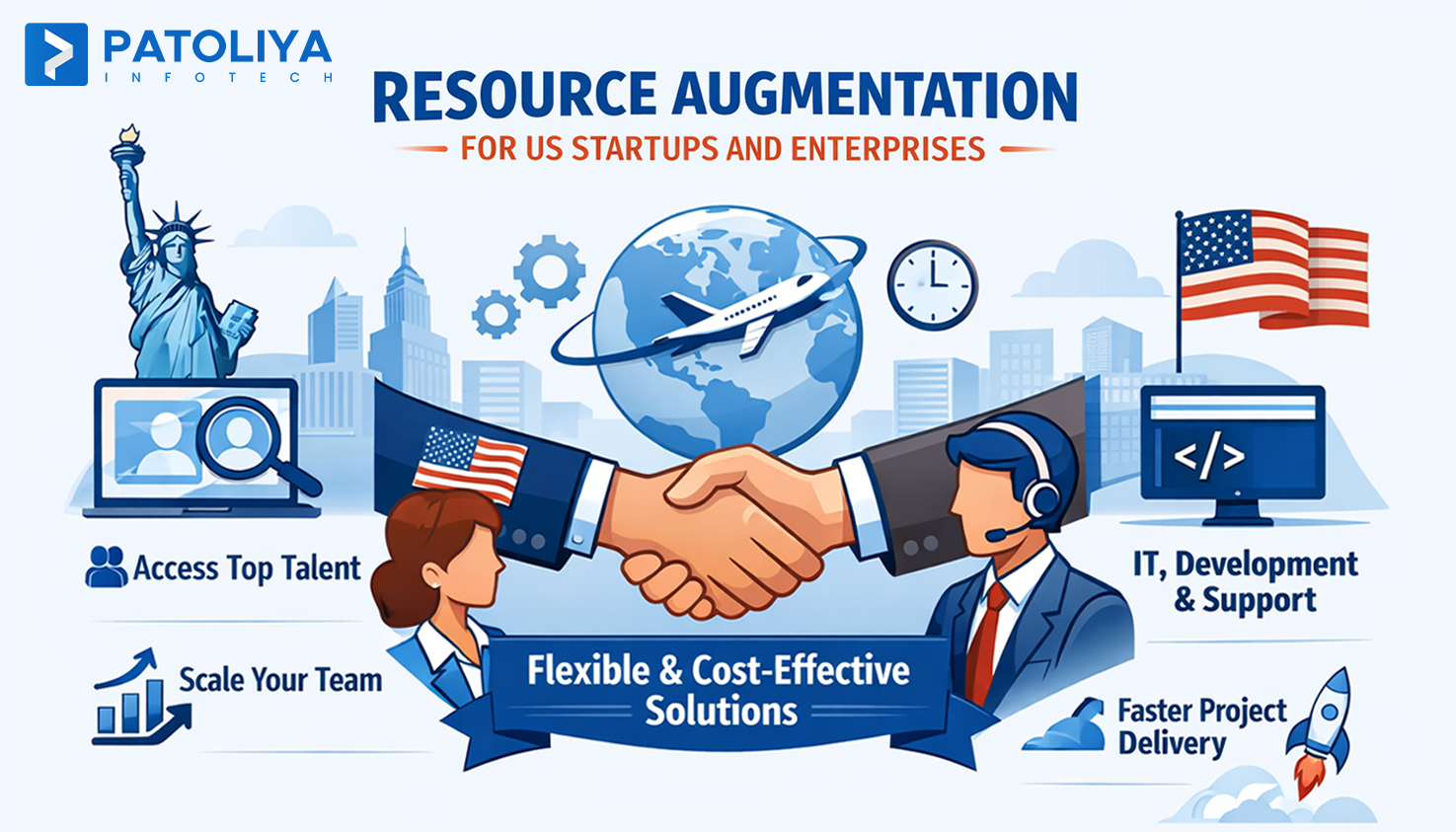
Resource augmentation is a strategic method in which US companies temporarily expand their team with external specialists to fill talent shortfalls. It allows for seamless integration into ongoing initiatives without the need for long-term hires. This ensures quality standards and deadlines are upheld.
For instance, an IT team augmentation can be used by a SaaS company with a strict release schedule to bring on an offshore Java developer for a period of three months. This speeds up feature delivery without putting internal staff under too much strain. Resource augmentation services provide cost control, scalability, and flexibility. This is perfect for projects that move quickly and require specialized expertise on demand.
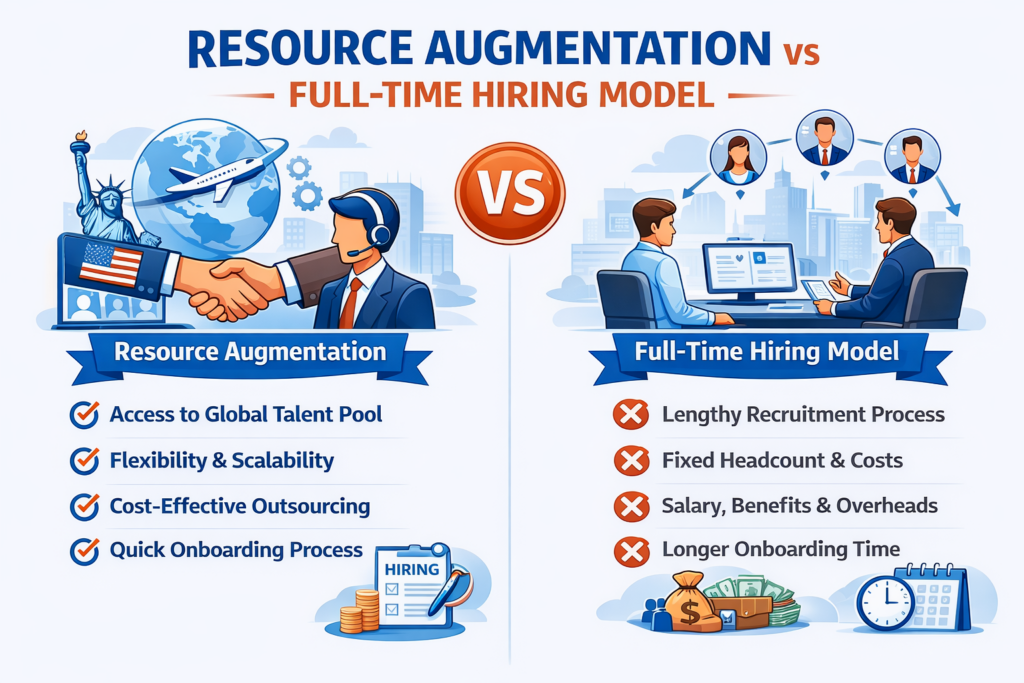
Resource augmentation eliminates long-term obligations, benefits, and overhead in contrast to full-time hiring. Businesses can scale teams as necessary according to project demands with the help of staff augmentation services. This provides flexibility while maintaining productivity and access to specific skills without the need for permanent recruitment.
Hiring in the US tech sector is delayed because of intense competition for highly skilled professionals. This issue is resolved by IT team augmentation, which offers quick access to skilled personnel without requiring long hiring cycles. Businesses can sustain project velocity even when the local hiring pipeline is slow.
In the US, full-time work entails significant expenses, such as pay, benefits, and legal requirements. The cost-effective substitute is resource augmentation. This allows businesses to hire experts when needed. Staff augmentation services guarantee high-quality delivery while optimizing expenses.
Today's US businesses need flexible teams that can grow or shrink in response to customer needs or product cycles. Many high-performing organizations now follow distributed workforce best practices to maintain productivity at scale.
Establishing a dedicated development team and implementing resource augmentation help companies stay productive and achieve operational flexibility.
This strategy is currently the preferred staffing model since it enables US businesses to react quickly to changes in the market without excessively investing resources.
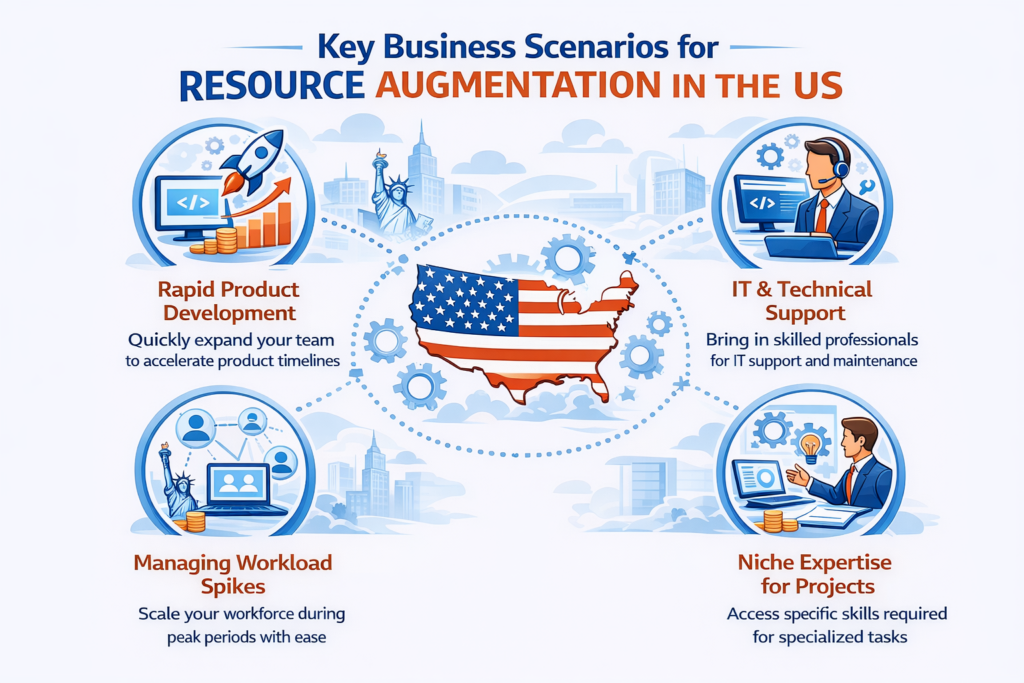
For new initiatives, US businesses frequently have to quickly expand their technical teams. With resource augmentation, short-term growth is possible without the risks associated with long-term recruiting. This ensures that teams can reach delivery targets and scale effectively.
Resource augmentation allows access to experts for initiatives that need specialized knowledge without establishing long-term internal capabilities. Businesses use IT team augmentation to acquire certain abilities at the right time. These teams often support critical initiatives through professional web application development services focused on performance, security, and scalability.
Temporary tech staffing is advantageous for projects with set deadlines. IT team augmentation approach minimizes delays and upholds quality standards by ensuring that qualified experts are available for the duration of the project.
Flexible resourcing is frequently required for client-centric projects. With resource augmentation and project based staffing, teams that are customized to meet project requirements can be put together. This is improving client satisfaction and response.
For instance, to launch a product, a US SaaS company required quick mobile app development. They successfully onboarded a team of frontend and backend engineers for three months by utilizing IT team augmentation, achieving deadlines without adding a permanent team.
When using resource augmentation, US businesses require strict IP ownership restrictions, NDAs, and enterprise-grade security standards. Sensitive data must be protected with role-based permissions, encryption, and clear access controls.
Companies that use IT team augmentation anticipate that their providers will adhere to US legal and regulatory requirements. Providers typically align their engagement frameworks with official US employment compliance guidelines to reduce legal and operational risk. Effective IT augmentation ensures audit trails, documentation, and clearly defined security duties right away.
Offshore teams have to comply with US reporting guidelines and regulatory requirements when using staff augmentation services. Many organizations combine augmentation with structured IT outsourcing models to balance flexibility and governance. Smooth cooperation happens with VPN access, secure infrastructure, and organized workflows. To retain flexibility while fulfilling security and operational standards, many businesses combine on demand developers with IT team augmentation.
The US organization retains project ownership even in resource augmentation. Measurable results are ensured via performance reporting, sprint reviews, and clearly defined KPIs. This strategy offers flexibility without sacrificing accountability, control, or delivery standards.
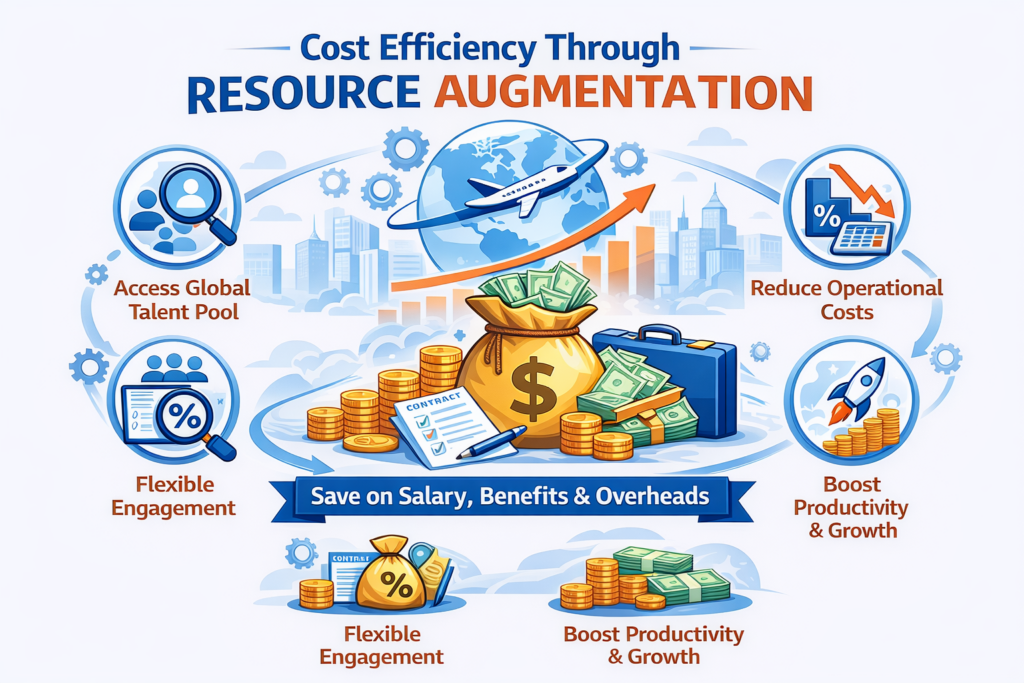
Fixed personnel costs are changed into variable operating expenses through resource augmentation. Companies save long-term salary, payroll taxes, healthcare benefits, and infrastructure expenses in contrast to full-time staffing. By using staff augmentation services, businesses can hire qualified workers without increasing their permanent workforce.
In resource augmentation, cost transparency is ensured via well-defined contracts and engagement terms. Companies are able to predict monthly costs with accuracy while keeping a constant level of output quality.
Project based staffing allows businesses to ensure delivery of short-term initiatives without incurring long-term payroll obligations.
For instance, A US SaaS startup needed five developers for a six-month AI integration project. Instead of adding full-time personnel, they used augmentation support to maintain delivery quality while avoiding increased payroll and other costs.
Patoliya Infotech uses agile sprint reporting and US business hours to structure resource augmentation. Clear communication channels, regular updates, and milestone tracking promote transparency and smooth collaboration with US stakeholders. In many cases, US companies benefit from having specialists assess their workforce strategy to identify scaling risks and delivery gaps.
The organization provides deeply qualified engineers via specialized staff augmentation services and remote staff augmentation models tailored for distributed teams. Technical proficiency, domain knowledge, and adaptability for remote work are assessed for each professional. This shortens onboarding time, decreases training requirements, and ensures engineers can seamlessly integrate into existing US teams without affecting productivity.
Businesses can build teams as needed in response to client demands, finance phases, and development cycles due to flexible engagement choices. Structured availability and overlapping work hours ensure steady progress and quicker turnaround.
Patoliya Infotech has provided scalable engineering support to enterprise platforms, fintech companies, and SaaS businesses. This enables them to maintain consistent delivery performance, meet compliance requirements, and optimize releases.
Selecting flexible staffing solutions requires US organizations to match their workforce strategy with operational objectives and compliance criteria. A systematic assessment ensures budgetary control, delivery stability, and long-term scalability.
Workforce flexibility is essential in the quick and expensive contexts in which modern US companies operate. By enabling rapid scalability, access to global knowledge, and improved cost management compared to traditional employment, resource augmentation helps companies support this reality. When organized staff augmentation services are used, businesses can maintain operational oversight while boosting technical capacity. Compared to treating augmentation as a temporary solution, management should view it as a strategic workforce model that links talent investment to evolving business goals and market conditions.