Healthcare Revenue Cycle Management: Full Guide

Table of Contents
Every healthcare provider, whether they are a huge hospital network or a tiny sanatorium, relies on a well-functioning sales device to keep things moving smoothly. Every consultation, procedure, or diagnostic test has a mechanism in place to guarantee that the provider is paid in a timely, suitable, and compliant manner. Healthcare Revenue Cycle Management (RCM) is the term used to describe that approach.
From scheduling and registration to the final charge, RCM is the detailed account of a patient's financial interactions with a provider. By connecting scientific care to economic results, it bridges the gap between what has been provided and how, or whether, it may be provided.
Even high-performing healthcare businesses run the danger of revenue loss, late payments, or compliance problems in the absence of effective revenue cycle management. Creating an integrated process that promotes accurate coding, prompt billing, clean claims, and open patient communication is more important than just filing claims.
Every step of the cycle is important, including follow-up, insurance verification, charge capture, coding, patient access, claims submission, and payment posting. When properly handled, RCM guarantees constant cash flow, lowers rejections, and improves the financial experience for patients.
RCM is a major advantage for revenue leaders and healthcare executives, not merely a back-end function. Long-term viability in a financially stressed sector depends on knowing how it operates and how to make it better.
What Is Healthcare Revenue Cycle Management Software?
Given the size, complexity, and compliance requirements of the modern healthcare environment, managing a healthcare enterprise's sales cycle manually is no longer an option to consider. Software for Healthcare Revenue Cycle Management may be found in this category. The whole impacted person-to-charge process may be automated and optimized with the help of this generation of digital backbone.
The purpose of RCM software is to optimize every stage of the sales cycle. It combines tasks including impacted person registration, eligibility verification, fee seizure, medical coding, claims filing, denial management, and charge posting all inside a single system, from the front desk to the finance branch. Reduced human error, accelerated payback, and consistent financial performance throughout the company are its main goals.
But more than just performance, RCM software changes the way medical professionals handle the financial aspect of treatment. Prior to being sent to payers, it guarantees that claims are seamless and compliant, enhances visibility throughout the sales system, and highlights issues before they become costly errors. Administrators may monitor important performance metrics including rejection prices, days in money owing receivable, and first-skip declare repute with its help thanks to its support for real-time analytics.
The benefits are as important for those who suffer. Better billing readability, lower marvel costs, and more convenient pricing options are all made possible by digitizing the revenue cycle. Integrating RCM software with patient portals and electronic health records (EHR) makes healthcare more connected and transparent.
A scalable, data-driven approach to revenue control that satisfies the needs of both today's carriers and the healthcare environment of the future is what the switch to RCM software is all about, not so much modernization.

Common Types of RCM Software Modules
Software for healthcare revenue cycle management is usually made up of multiple specialized modules, each of which is intended to manage a critical revenue-generating function. Together, these modules create a whole system that lowers friction, improves accuracy, and speeds up reimbursements.
The most common RCM software components are broken down here, along with how they help create a more seamless, environmentally friendly revenue cycle.
1. Claims Submission and Management
The inception, verification, and electronic submission of claims to payers are all automated by this module. It makes it easier to ensure that claims are full and accurate, thereby reducing rejections and delays. Real-time tracking of claim popularity and automated alerts for rejections or necessary revisions are also supported by several systems.
2. Billing and Invoicing Automation
Billing modules simplify the process by which payer bills and patient statements are produced by providers. They reduce the number of days in accounts receivable and guide attempt by helping in maintaining uniformity in charges, applying accurate estimates, and sending out appropriate bills more quickly.
3. Patient Eligibility and Insurance Verification
This module examines an impacted individual's coverage status, coverage limits, and co-pay information in real-time prior to providing. By identifying coverage issues early on, it lowers declaration rejections and guarantees that patients are fully informed about their financial responsibilities up front.
4. Medical Coding and Charge Capture
This module aids coders in capturing all billable services and converting clinical documentation into standardized codes (ICD-10, CPT, and HCPCS). To increase accuracy and lower the possibility of underbilling or compliance problems, several systems use computer-assisted coding (CAC) features.
5. Payment Posting and Reconciliation
This module posts the money to the best bills after it has been received from insurers or victims and compares it to expected reimbursements. It can identify underpayments, inconsistencies, or missing invoices, guaranteeing that no money is lost.
6. Denials Management and Appeals Tracking
One significant source of revenue loss is denied claims. This module facilitates effective resubmission of claims, timeline management for appeals, and root cause identification. Certain systems even employ AI to automate appeal paperwork or recommend remedial measures.
7. Patient Portals for Engagement and Self-Pay
Patients can read statements, make payments, and create payment plans with the help of patient-facing capabilities that are frequently included in modern RCM platforms. These platforms facilitate easier financial responsibility management for patients and increase transparency.
8. Financial Analytics and Revenue Forecasting
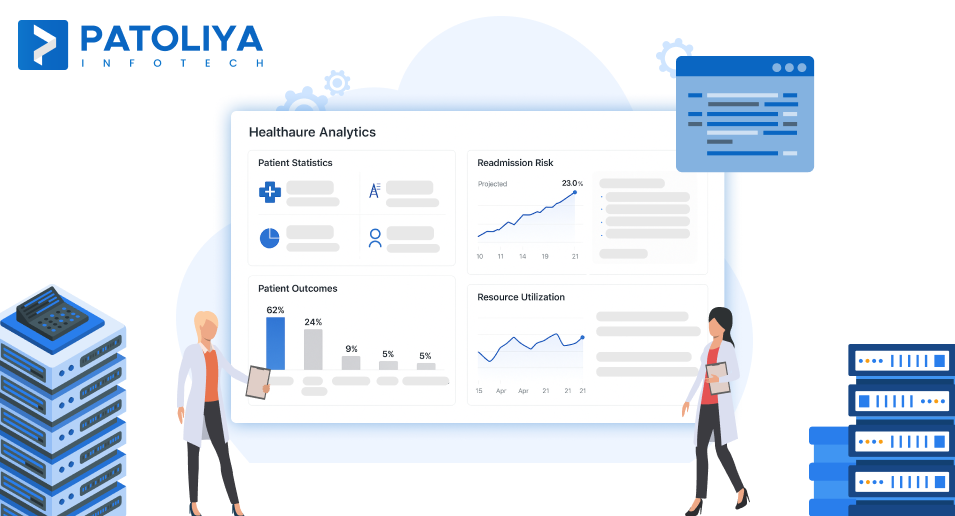
Making strategic decisions requires data-driven insights. This module gives financial teams the visibility they need to maximize performance by offering dashboards and reports on important data including denial rates, collection trends, payer performance, and revenue estimates.
RCM software offers far more than administrative efficiency by integrating these modules into a cohesive system; it lays the groundwork for long-term financial stability, regulatory compliance, and improved patient financial experiences.
These 10 Tech Companies Are Transforming Healthcare—You’ll Want to Know Who They Are.
End-to-End Workflow: How RCM Software Works
Software for healthcare revenue cycle management is made to smoothly manage the entire revenue process, from the time a patient makes an appointment until the issuer receives the final bill.
The first step is patient registration and scheduling, during which the software gathers important insurance and demographic data. This information is then automatically validated against insurance databases to confirm your eligibility and insurance before service is provided, preventing later claim denials.
RCM software works with Electronic Health Records (EHR) and exercise management systems to capture costs and clinical records as the patient stumbles. This interface ensures accurate clinical coding and fee collection without requiring duplicate access to statistics.
After it is created, the software program tracks the declared fame and immediately identifies any errors or rejections before sending it electronically to payers or clearinghouses. After that, payment posting and reconciliation take place automatically, minimizing the amount of work required and guaranteeing effective bill processing.
By automating repetitive tasks like eligibility checks, claims scrubbing, and patient billing, RCM software reduces errors, speeds up collections, and improves cash flow. Because of its end-to-end automation, healthcare providers can focus more on delivering high-quality care and less on administrative hassles.

Challenges in Healthcare RCM – And How Software Solves Them
A provider's operational effectiveness and financial performance may be impacted by a number of ongoing problems with healthcare revenue cycle management. Thankfully, contemporary RCM software is built to directly address these issues.
High Claim Denial Rates
When claims are rejected, payments are postponed and administrative costs increase. By verifying claims for correctness and compliance before submission and providing staff with timely feedback on errors, RCM software helps reduce denials by allowing them to address issues before they worsen.
Manual Errors in Coding or Billing
Coding or billing errors made by humans are common sources of lost revenue. Billing procedures and automated coding support included into RCM software improve accuracy, reduce errors, and guarantee that the most recent coding standards are followed.
Revenue Leakage and Data Silos
Disconnected data and fragmented systems cause missed charges or payments to slip between the cracks. Integrated RCM systems break down these silos and reduce revenue loss by integrating patient, billing, and payment data into a single system.
Delays in Insurance Verification and Pre-authorization
Slow or inadequate insurance checks lead to denials of claims and delays in treatment. RCM software automation helps clinicians verify coverage before providing services by expediting the pre-authorization and eligibility verification processes.
Compliance and Audit Readiness
It's critical that you stick by changing healthcare laws to prevent penalties. RCM software makes it easier to prepare for both internal and external audits by maintaining audit trails, enforcing coding standards, and facilitating regulatory reporting.
RCM software helps healthcare organizations get past these challenges so they can save money, reduce administrative burdens, and focus on delivering high-quality care.
Tired of Data Chaos and Delays? Discover CRMS Tools That Simplify, Comply, and Accelerate Research Success.
Building Custom RCM Software: Why It Matters
- Off-the-Shelf vs. Custom RCM Solutions:
While off-the-shelf software allows for quick setup, custom solutions enable workflows that are suited to the particular requirements of health care providers, increasing productivity and decreasing manual labor. - Tailoring Workflows to Fit Specific Healthcare Needs:
Whether it's specialty-specific coding, unusual billing cycles, or patient involvement models, custom RCM software ensures a perfect match with your practice's operations. - Adapting to Regulatory Changes and Practice Growth:
Legislation pertaining to healthcare and payer criteria are constantly evolving. Custom software can be easily expanded and upgraded to meet expanding operations and maintain compliance without affecting revenue flow. - Enhanced Data Security and HIPAA Compliance:
Strong, modern security measures designed specifically to protect sensitive patient and financial data can be implemented by building RCM software from the ground up, immediately ensuring HIPAA compliance.
Key Features to Include in a Custom RCM System
The following features must be included in a custom healthcare revenue cycle management system in order to optimize efficiency and financial performance:
- Real-Time Insurance Eligibility Checks:
Reduce the number of claims that are denied by automatically confirming patient coverage and benefits at the time of registration. - Smart Billing Rules Engine:
Reduce errors and accelerate payment cycles by automating billing according to payer-specific regulations and contract terms. - Role-Based Access and Admin Controls:
Limit system access in accordance with user roles and responsibilities to ensure data security and compliance. - Custom Dashboards and KPI Reporting:
Using customized dashboards that monitor important metrics like denial rates, cash flow, and claim status in real-time, you can deliver actionable insights. - Machine Learning for Denial Prediction:
To identify high-risk claims and avoid rejections prior to submission, use predictive analytics. - Secure Patient Payment Gateways:
Increase patient satisfaction and collections by providing patients with safe, practical ways to pay their bills online or on their phones. - Multi-Location or Multi-Specialty Support:
Provide features that manage different workflows and billing needs across several locations or specialties to accommodate complex healthcare organizations.

Conclusion
Investing in a custom-built Healthcare Revenue Cycle Management system is about more than just technology—it’s about strengthening your organization’s financial foundation. Off-the-shelf solutions often force providers to adjust their processes to fit the software, but custom systems are built around how you work. This means fewer errors, faster payments, and workflows that actually support your staff rather than complicate their day.
For healthcare leaders, the real benefit lies in the long-term impact: a system that grows with your practice, adapts to regulatory changes, and improves patient billing transparency. These factors come together to reduce revenue loss and improve cash flow—critical for maintaining the quality of care and investing in the future.
A well-designed custom RCM system isn’t just a tool—it’s a vital part of how your organization runs smoothly and stays financially healthy. That’s why many successful providers choose customization: it delivers results that off-the-shelf solutions simply can’t match.
Ready to Build an RCM Solution That Works for You?
Let’s tackle your revenue cycle challenges head-on with a system designed specifically for your organization’s needs.
Connect with our healthcare software experts for a free discovery call — and take the first step toward smoother, more reliable revenue management.
Frequently Asked Questions
1. How much time does it normally take to create a unique RCM system?
Depending on features and complexity, development times vary, but most bespoke RCM projects take six to twelve months from the start of design to the end of deployment. Time spent on requirements collecting, design, programming, testing, and staff training is included in this.
2. Can our current EHR and practice management systems be integrated with your RCM software?
Yes, seamless integration is a primary goal. Custom RCM solutions are designed to interact with your current EHR and practice management systems to minimize workflow disruptions and enable smooth data interchange.
3. How customizable is your RCM software?
Almost everything may be changed, from billing processes and reporting dashboards to security protocols and patient interaction tools. The goal is to create a system that exactly matches your business's unique operational needs.
4. Does your RCM software adhere to HIPAA and other standards about healthcare?
Yes, definitely. Fundamental elements of compliance include stringent data security procedures, audit trails, and privacy controls that meet HIPAA and other relevant regulatory standards.
5. After deployment, do you provide continuing assistance and software updates?
Yes, we provide continuous support, which includes regular upgrades to incorporate new features, keep the software up to date with changing regulations, and ensure optimal performance as your practice grows.