Table of Contents
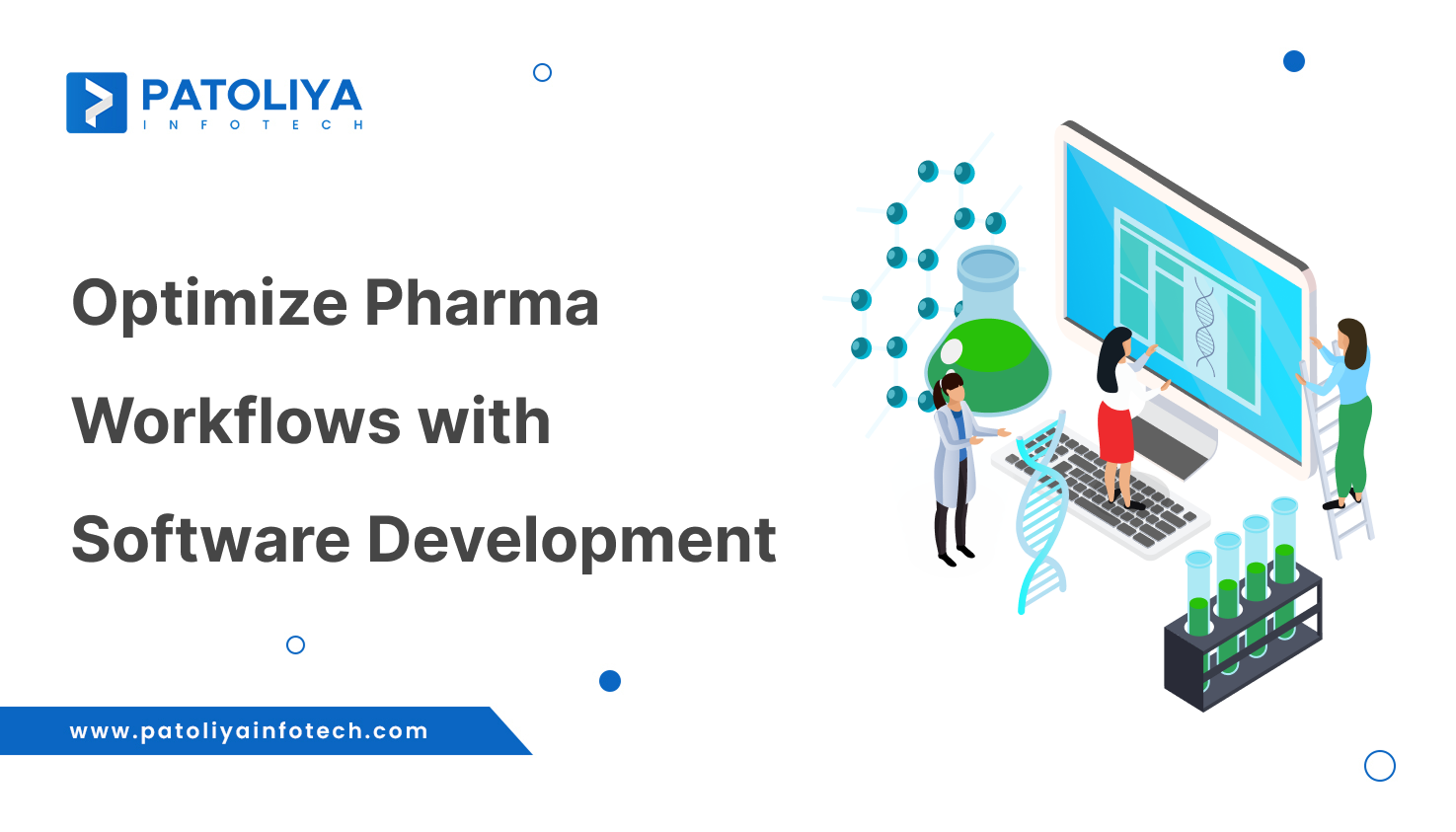
Pharmaceutical software development is the key to meeting the complex processes of the pharmaceutical industry. Every pharmaceutical business has a unique process and is under pressure to comply. Relying on generic software is no longer sustainable due to rising R&D expenses, worldwide supply chains, and strict regulations.
Offshore software offers flexibility for medication research, but it cannot meet the needs of your manufacturing. Pharmaceutical software is designed especially for complicated manufacturing ecosystems, integrated workflows, and regulated environments.
The pharmaceutical industry has to adhere to strict regulations while continuing to increase R&D, maintain a very complex supply chain, and meet the demand for speedier drug delivery to market. With this complexity, businesses prefer specialised pharmaceutical software development. Off-the-shelf solutions cannot meet these requirements.
Custom solutions guarantee flexibility, accuracy, and integration features for the individual workflow of a business.
Custom solutions automate manual data entry, digitise bulk records, clinical data, and speed up internal approvals. Clinical trial times are reduced by weeks or months.
A single error in pharmaceutical production might cost millions of money. There are dangers to patient safety.
Custom software incorporates alerts, automated validation, and real-time quality checks.
Strict traceability is required by laws like EU Annex 11, GxP, GMP, FDA 21 CFR Part 11, HIPAA and nation-specific regulations.
Included in custom pharmaceutical software development are:
The process of pharmaceutical software development begins with an understanding of existing workflows, challenges, and regulatory requirements. For this, a business analyst and pharma domain specialist can assist you. They help you map operational steps, find inefficiencies, and create designs.
A custom software partner emphasizes compliance-driven engineering and follows tight standards. This includes:
This ensures that documentation, approvals, audit trails, electronic signatures, and validation processes are fully aligned with regulatory requirements.
Modern pharmaceutical operations depend on an intelligent web of tools and machinery. Custom pharmaceutical software development is designed with integration at its heart. In that way, one system removes the silos and enhances data visibility.
Custom solutions seamlessly integrate onto existing platforms such as:
Pharmaceutical software development enables real-time synchronization, automated procedures, and transparent data flow across departments. The benefits include reduced manual work, duplication, and compliance hazards.
New modules, automation layers, analytics dashboards, and integrations can be added without reinstalling the entire system. The custom pharmaceutical software development scales with the organization, just as the business requires.
This can include increasing production capacity, releasing new drug lines, or expanding to global operations.

For FDA audits, a compliant platform provides full traceability, audit logs, controlled access, and secure electronic documents.
Every batch, change, user action, and exception must be trackable. Strong audit trails minimize anxiety during inspections and cut down on audit preparation time.
Seek automation that lowers batch variances, SOP errors, and manual data entry.
Teams should have real-time visibility into production status, yield losses, OEE measurements, and potential obstacles with a pharmaceutical app development solution.
Your software needs to develop alongside you. If expansion is part of your plan, global templates, centralized reporting, multi-facility rollout, and multilingual support are important.
| Evaluation Criteria | Custom Software | Generic Tools |
| Compliance readiness | Built for industry standards | Requires extensive customization |
| Process fit | Matches your workflows perfectly | Teams must adapt to the software |
| Long-term cost | Lower total cost of ownership over time | Hidden costs for modifications add up |
| Scalability | Designed to grow with your business | Limited flexibility and expansion |
This is the point at which you have a thorough understanding of both the regulatory requirements and the actual issues on the manufacturing floor.
What takes place at this stage?
Here, the concepts become a functional flow, screens, and a blueprint.
What takes place at this stage?
These days, the program is developed gradually with consumers.
What takes place at this stage?
Let’s say understanding through development sprints:
Pharmaceutical software development needs to be verified. This stage is the most controlled.
What takes place at this stage?
IQ: Qualification for installation
OQ: Testing for functionality
PQ: Actual batch modeling
Audit-ready documentation like URS, FRS, RTM, and test scripts.
While being tested:
IQ:
Verify the installation is accurate.
Check user permissions and roles.
Verify the environment's requirements
OQ:
Verify digital signatures and lock records.
Check the accuracy of the audit trail
Verify whether alarms are triggered by an out-of-range temperature.
PQ:
A mock batch is physically run by operators.
They finish the entire batch record by adhering to the computerized instructions.
To guarantee a seamless transition, the system goes live progressively.
What takes place at this stage?
After becoming live, the system changes in response to actual usage.
What takes place at this stage?

The engineering and validation effort increases with workflow complexity.
A little app for training? Simple to do.
A continuous calculation system for digital batch records? That is a complete research and development effort itself.
Each module adds data points, logic, user panels, and, of course, documentation.
Each of these expands the scope: equipment integration, CAPA, e-signatures, and audit trails.
Pharma never ships anything untested, even software and tablets.
Data integrity tests, GAMP 5 validation, and 21 CFR Part 11 compliance can easily increase the whole effort by 40–60%.
Ideal for tasks involving the development of scalable pharmaceutical software.
Companies with stringent internal IT policies prefer this.

Any pharmaceutical company must prioritize operational and workflow efficiency. This has an impact on research and development demand, as well as regulatory needs. Custom pharmaceutical software development reduces risks and inefficiency, providing measurable ROI. Custom pharmaceutical software offers scalable architecture and artificial intelligence to help in drug discovery.
Pharmaceutical firms are frequently under pressure to maintain high-quality standards and operational excellence, which drives them to focus on high-quality manufacturing. Strict regulatory and compliance measures are also common. Custom pharmaceutical software enables them to focus on high-quality manufacturing while keeping to compliance rules.
Great software technologies are essential for seamless workflow and automation. This software's quality and technology are dependent on custom software providers. Trust Patoliya Infotech since we have the vision and years of expertise to give these kinds of software development solutions.