Table of Contents
Custom software solutions help businesses move beyond generic tools that rarely match how teams actually operate. Modern companies do not struggle with a lack of applications; they struggle with misalignment between software and real workflows. Off-the-shelf platforms often force teams to reshape their processes, creating inefficiencies and limiting innovation. This is where custom software provides long-term value. Through strategic enterprise custom software development and structured planning, organizations can build systems that support growth, integration, and measurable performance outcomes. When aligned correctly, custom solutions become a strategic asset rather than just another operational expense. Many organizations choose to work with an experienced technology consulting partner to align software investments with long-term business objectives.
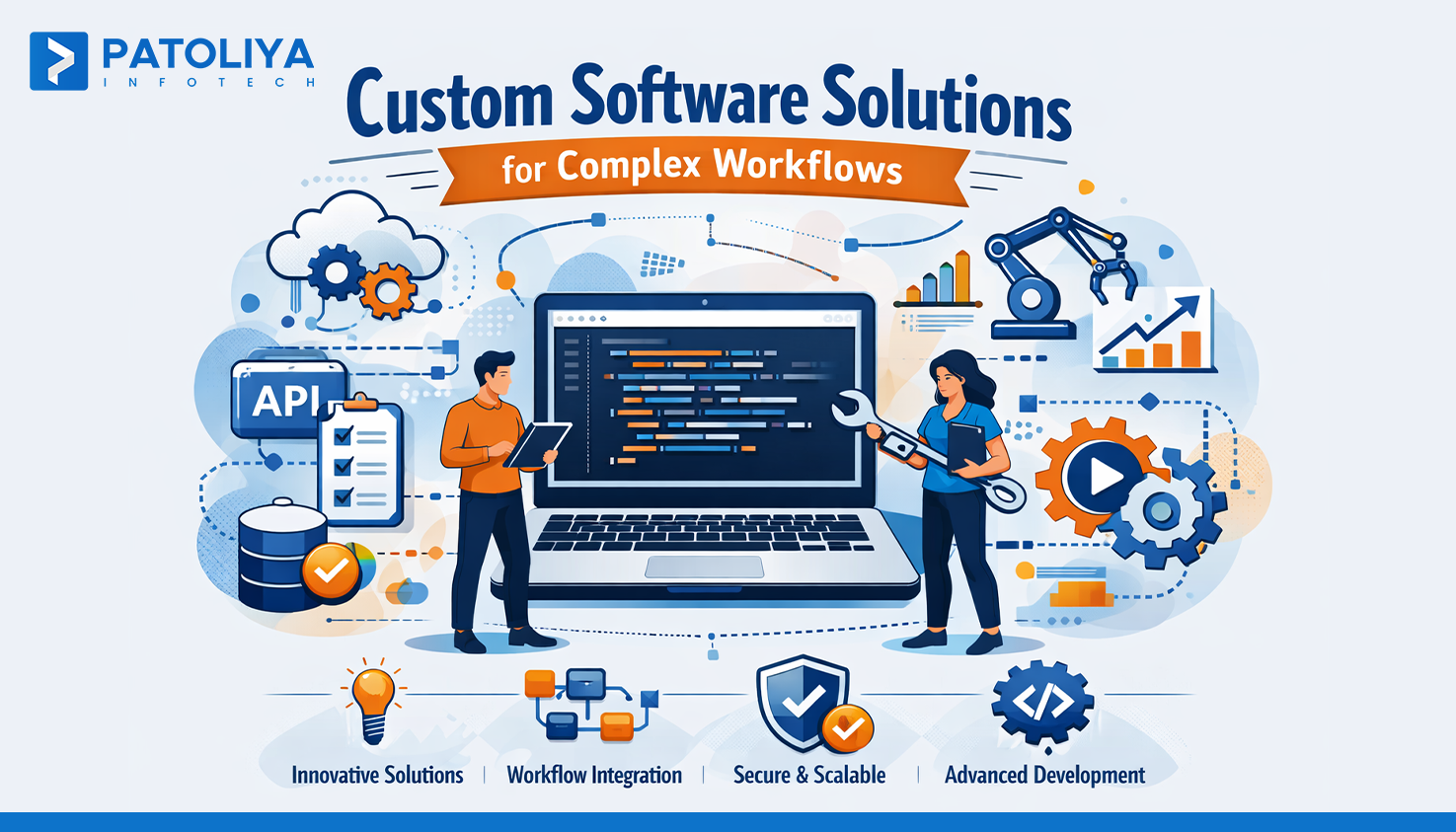
Custom software solutions are built around specific operational models, not generic market assumptions. These initiatives often fall under structured application development services that focus on scalable architecture and integration readiness. Unlike off-the-shelf systems, they adapt to internal workflows, reporting structures, and compliance needs. This flexibility allows businesses to design features that reflect real decision paths and approval hierarchies. As a result, custom enterprise software solutions provide greater control over integrations, scalability, and security policies than standardized platforms.
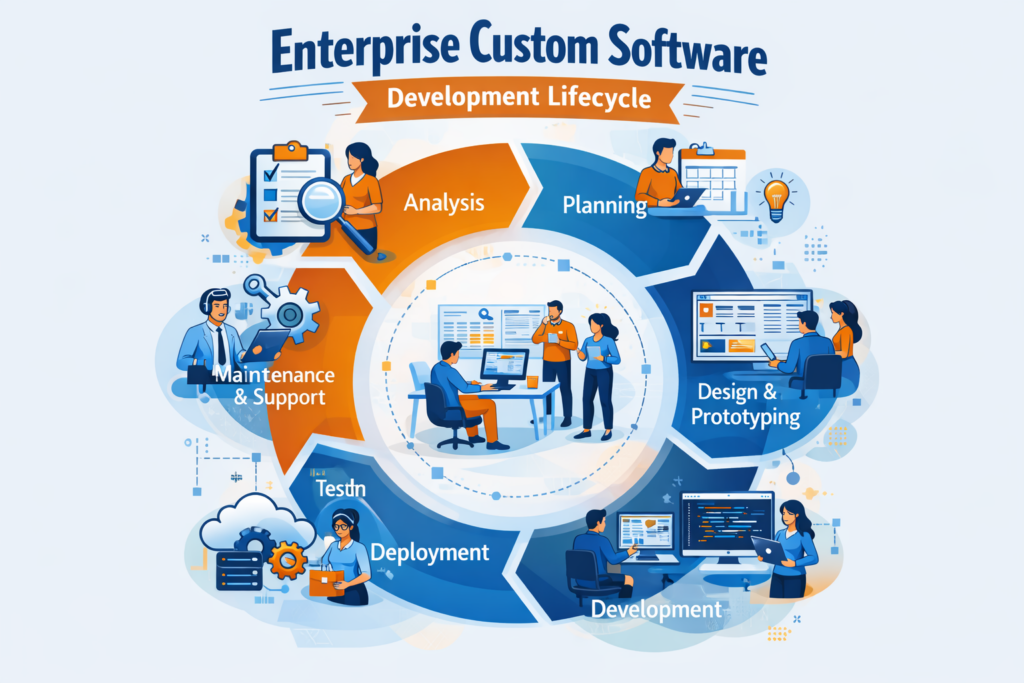
Organizations turn to enterprise custom software development when operational complexity begins limiting efficiency. Repeated manual processes, disconnected systems, and compliance risks often indicate the need for tailored systems. At this stage, custom software solutions become strategic infrastructure rather than optional upgrades.
Healthcare environments supported by specialized healthcare technology solutions, along with finance, logistics, and manufacturing sectors, frequently require structured custom enterprise software development due to regulatory demands and multi-layered workflows. In such industries, industry specific software solutions enhance accuracy, reduce risk exposure, and support scalable growth through systems designed for industry-specific realities.
Effective custom software solutions begin with understanding operational bottlenecks. Instead of prioritizing features, organizations evaluate inefficiencies, workflow delays, and data gaps. For example, structured workflow automation software can eliminate repetitive approval emails and accelerate internal coordination.
Clear performance indicators strengthen enterprise custom software development initiatives. Measurable goals, such as improvements in processing speed or reporting accuracy, help ensure that custom software solutions remain aligned with tangible business outcomes.
Collaboration across executives, managers, and technical teams ensures custom enterprise software development reflects real operational needs. Stakeholder engagement increases adoption and ensures that custom software solutions support long-term strategic direction.
Strong software solution architecture determines whether custom software solutions can scale without performance decline. Modular design allows organizations to expand functionality without rebuilding core systems. Early planning protects investment value and supports flexibility. Many engineering teams reference established software architecture patterns to ensure modular scalability and long-term maintainability.
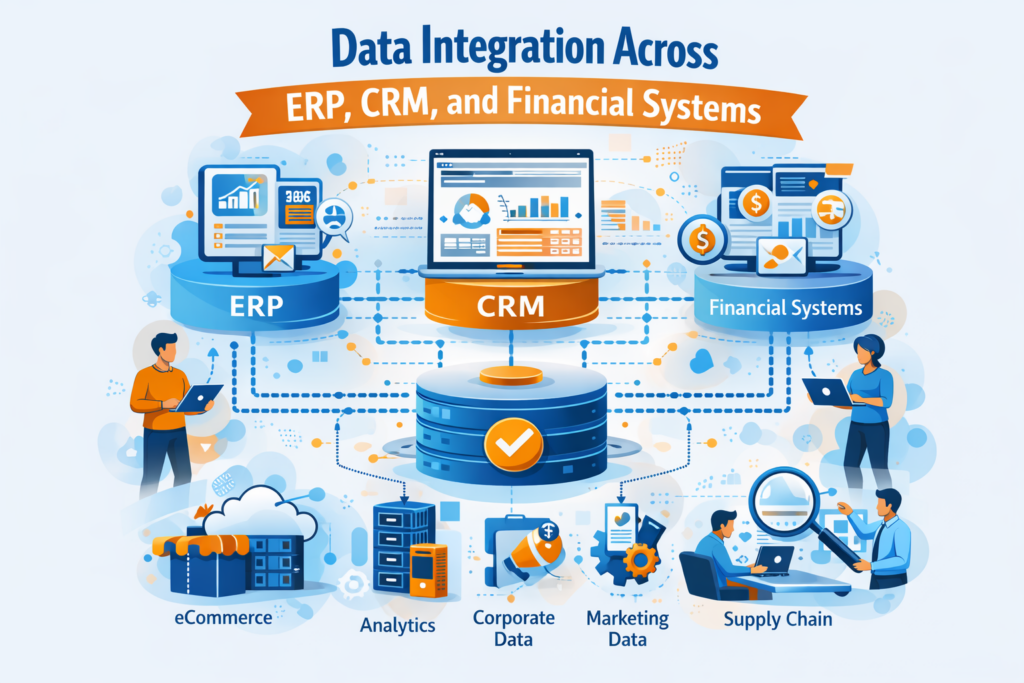
Enterprises commonly operate ERP platforms, accounting tools, and CRM for enterprise systems simultaneously. Reliable data integration solutions ensure consistent communication across platforms. Integrating CRM for enterprise data with financial systems enhances forecasting accuracy and eliminates duplication.
Through disciplined enterprise custom software development, organizations implement encryption standards, role-based access controls, and load testing protocols. Secure, performance-focused custom software solutions reduce operational risk while maintaining system reliability under growth pressures.
User experience plays a central role in business process digitization. Well-designed interfaces simplify complex workflows and reduce training dependency. Effective custom software solutions prioritize usability to encourage adoption across departments.
When building workflow automation software, teams align automation logic with actual business sequences. Structured CRM for enterprise ensures scalability as transaction volumes increase. Mature custom software solutions eliminate repetitive tasks and improve accountability through automated triggers and status visibility.
For instance, a mid-sized logistics company replaced manual shipment approval emails with automated workflow routing inside their custom enterprise software solutions. Approval time dropped by 35 percent, and management gained real-time tracking visibility across regional branches.
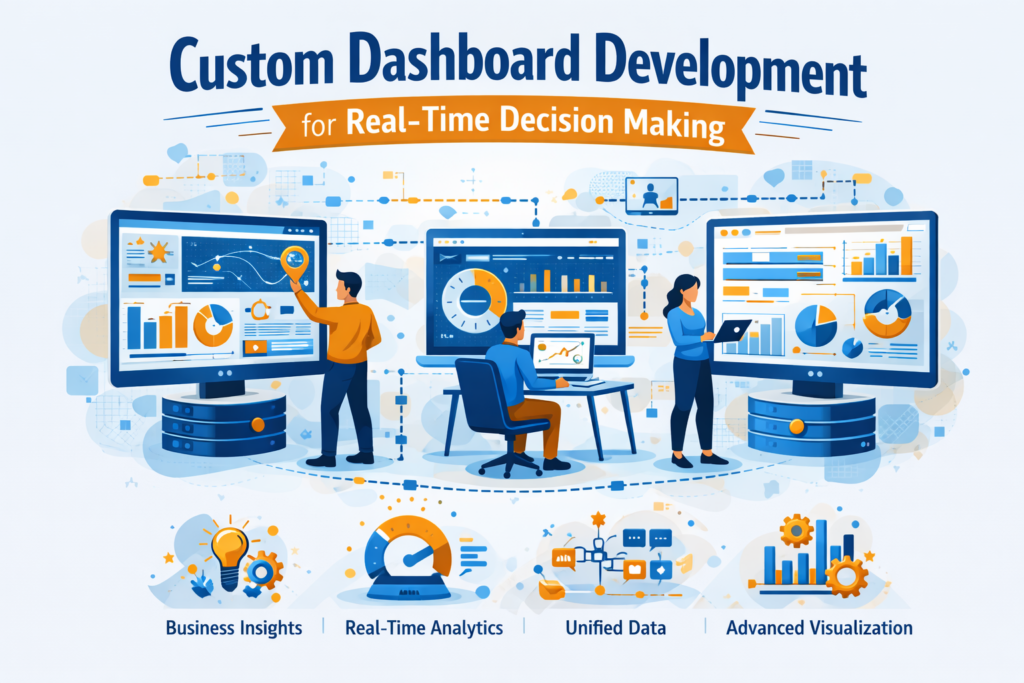
Strategic visibility is enhanced through custom dashboard development, allowing executives to monitor KPIs in real time. Integrated dashboards transform raw operational data into actionable insight. Within broader custom software solutions, dashboards strengthen data-driven decision-making and support agile leadership responses.
Before launch, custom software solutions must be tested against real operational conditions. This includes workload simulations, security checks, and compliance validation. For example, an eCommerce platform should be stress-tested during peak traffic events to ensure stable performance. Scenario-based testing helps confirm that integrations, reporting logic, and automation workflows function correctly outside controlled environments.
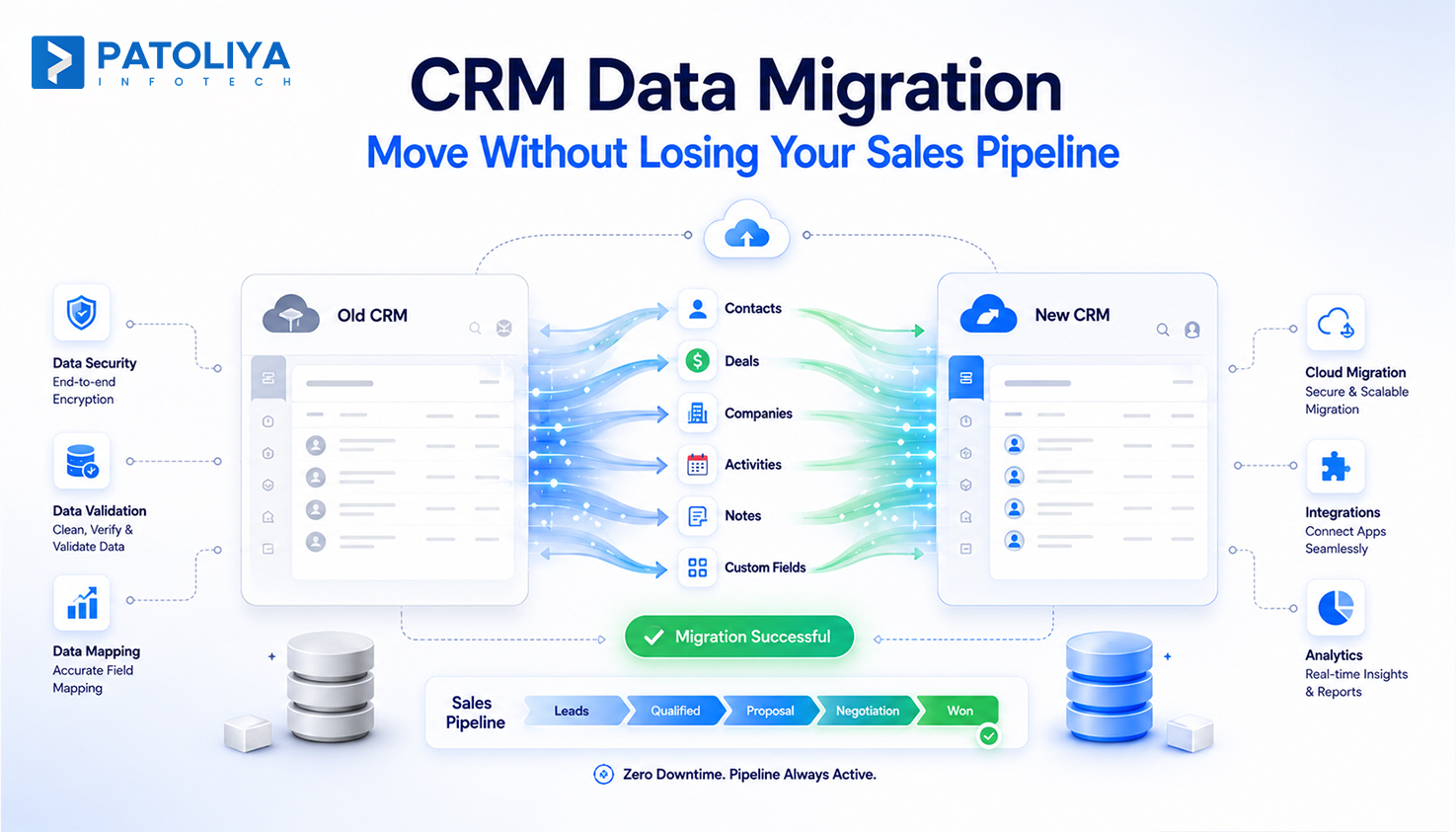
Phased rollouts are common in enterprise custom software development. A finance team, for instance, may migrate modules gradually to avoid reporting disruptions. Structured migration planning ensures data integrity and minimal downtime.
For instance, a manufacturing enterprise transitioning to new custom software solutions first deployed the inventory management module while keeping legacy accounting active. After stabilizing data synchronization and validating reports, they migrated financial operations, ensuring uninterrupted production and accurate financial reporting throughout the transition.
Successful custom enterprise software development also requires structured onboarding sessions, role-based training workshops, and detailed documentation. Post-launch monitoring, user feedback collection, and quick issue resolution help teams adapt confidently. Continuous optimization ensures custom software solutions deliver measurable performance improvements over time.
Patoliya Infotech prioritizes measurable outcomes in custom enterprise software development. By analyzing workflows before development begins, they ensure custom software solutions directly support operational efficiency and scalability.
Their expertise includes implementing scalable CRM for enterprise platforms integrated with analytics and automation systems. Through structured CRM for enterprise, they build unified ecosystems that strengthen collaboration and reporting accuracy within custom software solutions.
Beyond deployment, Patoliya Infotech offers optimization, upgrades, and performance monitoring. This long-term commitment ensures custom enterprise software solutions evolve alongside business growth rather than becoming static systems.
Custom software solutions are not about building technology for the sake of control. They are about designing systems that reflect how a business truly operates and where it is headed. Through structured enterprise custom software development and strategic custom enterprise software development, organizations create scalable infrastructures aligned with long-term goals. When supported by strong architecture and reliable data integration solutions, custom enterprise software solutions become powerful enablers of operational efficiency, security, and sustainable growth.