Benefits of Healthcare Software – A Strategic Guide for Healthcare Providers

Table of Contents
Healthcare software has evolved from a tool to a strategic imperative in a field where accuracy, speed, and patient outcomes are non-negotiable. Carriers are facing pressure to reevaluate how they provide care, handle data, and optimize operations as we go farther into the digital fitness era. Here's where medical software comes into play.
Electronic health records (EHRs), practice management systems, AI-powered diagnostic tools, and patient engagement systems are just a few of the many virtual solutions available in healthcare software that are made to meet the very complicated requirements of today's healthcare environments. However, this is actually not replacing paper files with screens. It is about building smarter, more connected ecosystems that empower doctors, reduce burnout, and improve the experience of the affected person.
Expectations are changing along with technology in 2025 and beyond. Patients anticipate smooth digital interactions and are more knowledgeable. There is pressure on providers to provide better treatment with fewer resources. Regulatory environments are becoming stronger. The one-size-fits-all software model is also quickly becoming outdated.
As a result, more healthcare companies are looking for bespoke solutions that fit their particular workflows, regulatory needs, and growth objectives. Despite their simplicity, off-the-shelf technology sometimes fails to recognize the minor differences between a surgical center and a mental health facility, or between a clinic and a hospital. Features are just one element of customized software; another is integrating technology with your team's workflow rather than the other way around.
Choosing the right development partner is just as important. Coding is no longer the sole prerequisite; understanding the healthcare sector, navigating legal frameworks like HIPAA or GDPR, and having the foresight to design scalable, future-ready structures are all essential. Instead of just a dealer passing along a difficulty, the right partner becomes a strategic ally in your digital transformation journey.
This guide will break down the advantages of healthcare software from a strategic standpoint. Staying proactive, compliant, and person-targeted in the years to come requires knowing how to take advantage of the period, whether you're a hospital administrator, personal practice owner, or virtual fitness pioneer.
Understanding the Landscape of Healthcare Software
Healthcare software is not a single product; rather, it is a group of specialized technologies that each concentrate on a different facet of service delivery, administration, or patient interaction. Healthcare providers may find it easier to identify where digital investments will provide the most results if they have a solid grasp of the primary categories.
Electronic Health Records (EHR) Systems
The core of contemporary healthcare software is EHRs. They centralize patient data so that departments and care teams can access, safeguard, and use it. The main advantage here is continuity of care; better clinical judgments and fewer mistakes are made when clinical history, test data, and medications are available in real-time. EHRs with good integration also lower administrative costs and increase compliance to legal requirements.
Telemedicine and Remote Care Platforms
Virtual care solutions were crucial during the epidemic and will be important in 2025 and beyond. These initiatives reduce avoidable hospital stays, enhance access for underserved populations, and eliminate geographic barriers. There are two benefits, mostly for practices dealing with a scarcity of clinicians: a greater reach of affected individuals and improved operational performance.
Medical Billing & Revenue Cycle Management
Billing strategies that are automated provide accurate coding, fewer denied claims, and quicker payments. Healthcare carriers benefit from better cash flow and financial equilibrium. Equipment for sales cycle management protects the bottom line while freeing up employees to focus on patient care by lowering manual errors and compliance violations.
Clinical Decision Support Systems (CDSS)
These systems provide information-driven scientific insights to vendors at the point of treatment, whether in the form of diagnostic hints, medication interactions, or remedy suggestions. The advantages are clear: greater results and safety for affected persons over time are achieved through improved diagnostic accuracy and adherence to best practices.
Patient Engagement and Portal Solutions
The focus of modern healthcare is shifting from the company to the patient. Patients can access their information, appointments, and communication tools through engagement systems and portals. The benefit here is improved adherence to care plans, improved fitness literacy, and stronger issuer-affected person relationships, all of which lead to improved long-term outcomes.
Healthcare CRM & Communication Systems
Patient relationship management, follow-up automation, and communication personalization are all made easier by CRMs made specifically for the healthcare sector. The primary advantage is patient retention; patients who are more involved are far more likely to follow instructions, return, and recommend others. Internally, employee workflows become more organized and adaptable.
IoT-Based Remote Patient Monitoring Software
Continuous monitoring of patients with chronic diseases or post-operative desires is made possible by linked devices. These technologies provide real-time data to clinicians, enabling early intervention. Better continuous illness management, reduced care expenditures, and fewer readmissions to hospitals are the benefits.
Clinical Research Management Software
Specialized platforms make it easier for companies doing research or trials to comply with regulations, track participants, and plan studies. Faster, more efficient research cycles with clearer data are the results, as also more collaboration between researchers and clinicians.
These software categories all support the development of a more patient-centered, data-driven, and flexible healthcare environment. When healthcare software is well thought out and implemented, its benefits go far beyond simple usability; they fundamentally alter the way that care is delivered, managed, and received.
Strategic Benefits of Healthcare Software: A High-Level Perspective
Using healthcare software is a strategic investment with long-term effects on operational, financial, and medical aspects; it is not a tactical IT decision. Healthcare suppliers who incorporate the right digital technologies into their operations not only boost output but also set up their companies for success in the future.
- Driving Digital Transformation in Care Delivery
Software innovations allow clinicians to reimagine care paradigms, from online consultations to in-person visits, and from proactive monitoring to reactive therapy. As a result of this shift, agencies are now at the forefront of innovation, creating scalable solutions that adapt to the evolving demands of patients and care standards. - Enhancing Operational Efficiency Across the Lifecycle
Instead of being a tactical IT choice, the use of healthcare software is a strategic investment that will have a lasting impact on operational, financial, and medical difficulties. In addition to increasing efficiency, healthcare providers who incorporate the right digital technologies into their operations also position their companies for future growth. - Real-Time Access to Unified Patient Data
Patient data fragmentation has long been an issue in the healthcare sector. Integrated software platforms incorporate diagnostics, imaging, clinical notes, and records into a single perspective. This real-time visibility helps clinicians make better, faster decisions, especially when time is short, such as when giving emergency treatment or treating chronic illnesses. - Secure, Compliant Data Management
Compliance is now required as data privacy laws become increasingly stringent. The top healthcare software programs meet and surpass standards like HIPAA, HL7, and FHIR. In addition to safeguarding patient information, access restrictions, audit trails, and integrated security procedures reduce the possibility of expensive breaches and non-compliance fines. - Customization for Specialty Needs and Unique Workflows
The subtleties of complex issuer networks or specialization practices are frequently missed by generic software. Whether you are a multi-location clinic system, behavioral medical facility, or cardiology health center, you can customize healthcare solutions to fit certain scientific and administrative procedures. This customization enhances adoption, usability, and, eventually, results.
The benefits of healthcare software on a strategic level extend well beyond the IT department. Ensuring compliance, helping patients, empowering practitioners, and enabling growth in a digital-first future are all affected by them.
Stakeholder-Centric Benefits
For Healthcare Providers (Doctors, Nurses, Specialists)
Healthcare software improves medical workflows and lessens administrative burdens, allowing suppliers to concentrate on patient care. AI-driven diagnostic tools improve decision-making by reducing mistakes and offering real-time insights. Custom interfaces increase accuracy without sacrificing time by speeding up reporting and documentation.
For Patients
Through portals or applications, patients may easily access clinical information and test results, empowering them to take charge of their own health. Increased participation in care groups is encouraged by improved communication technologies. Telemedicine solutions provide individualized and pleasant remote consultations by eliminating access restrictions.
For Administrators and Organizations
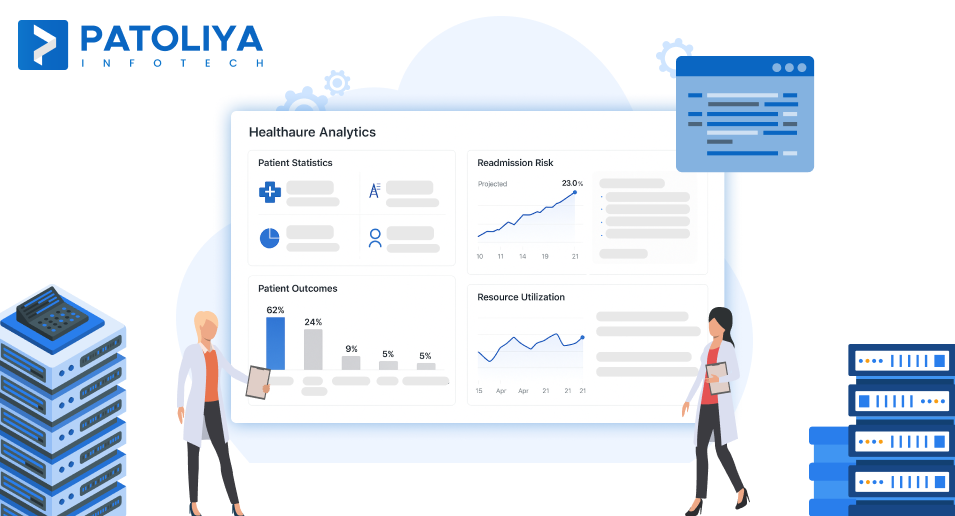
Automating claims processing, billing, and audits reduces expensive mistakes and delays while streamlining sales cycle management. Software that is efficient leads in lower operational expenses and more income. Dashboards for advanced analytics provide managers with actionable information that enable intelligent, data-driven choices.
Why Choose Custom Healthcare Software Over Off-the-Shelf Solutions?
Custom healthcare software gives you unparalleled freedom to properly meet the specialization requirements and clinical procedures of your hospital or clinic. It changes with your needs, facilitating smooth integration with emerging technology and growing with your company, unlike generic packages.
Security and compliance must be given top priority in healthcare businesses. Custom solutions provide you greater control over data protection procedures, allowing you to remain ahead of regulations like HIPAA and FHIR. This control boosts patient confidence while lowering risk.
Moreover, custom software promotes innovation, which provides you with a competitive edge by providing features created especially for your offerings. By reducing technological debt, reducing costly workarounds, and avoiding excessive license charges, it gradually becomes more cost-effective.
Custom solutions, to put it simply, are strategic assets made to expand with the objectives and challenges of your business. They are not only software.
Leveraging Advanced Technologies in Custom Healthcare Solutions
Businesses may benefit from current technology that is customized to meet their unique needs by using custom healthcare software, which improves patient outcomes and promotes operational excellence.
Artificial Intelligence for Predictive Diagnosis
AI systems may predict fitness hazards and recommend early interventions by analyzing patient records, allowing for proactive care that enhances results and reduces expenses.
IoMT (Internet of Medical Things) Integration
A constant stream of data is produced for real-time monitoring when wearables and clinical equipment are connected, allowing for prompt scientific responses and customized treatment plans.
Telemedicine + Wearables: A Custom Ecosystem
Wearable technology and telemedicine platforms work together to deliver seamless remote care, enabling continuous monitoring and customized patient experiences outside of regular visits.
NLP for Intelligent Patient-Doctor Communication
Natural language processing powers intelligent chatbots and transcribing software that speed up paperwork, enhance communication effectiveness, and enable multilingual patient engagement.
Healthcare providers may maintain their leadership position while offering improved care and operational agility by integrating these cutting-edge technologies with experts software.
Challenges We Solve in Custom Development
Custom software development for healthcare addresses several of the most pressing issues that businesses face when updating their systems.
Legacy System Integration
By bridging the gap between outdated infrastructure and modern solutions, we make sure statistics flow naturally without interfering with continuing business processes.
Data Silos and Interoperability
Our solutions eliminate silos by integrating diverse information sources, enabling full, real-time access to patient data across departments.
Resistance to Digital Transformation
We provide simple, easy-to-use structures that facilitate healthcare organizations' transitions, lowering obstacles and accelerated uptake.
Budget Alignment and ROI Communication
Our development methodology focuses on achieving quantifiable, transparent results, helping stakeholders comprehend costs rather than benefits, and guaranteeing financial self-belief.
Ensuring User Adoption (Clinician-Friendly Interfaces)
We prioritize the needs of clinicians by creating unique interfaces that optimize software utilization, simplify workflows, and enhance growth satisfaction.
Custom software will serve as a catalyst for long-lasting digital change in healthcare organizations if those issues are addressed head-on.
Unlock the Future of Research—Explore the 2025 Guide to Smarter Clinical Trial Management Today.
Our Approach to Long-Term Collaboration with Healthcare Clients
We think a successful healthcare software application develops with your company rather than being created and then forgotten.
Dedicated Teams for Post-Launch Support
Our professionals stay by your side following deployment to guarantee continued help, upgrades, and scenario-specific troubleshooting.
Agile Iteration Based on Real-Time User Feedback
We are the ultimate of agile methods, quickly integrating user feedback to enhance features and enhance system usability in real time.
Scalable Infrastructure (Cloud-Native, Containerized)
Our solutions, which are based on adaptable, cloud-local architectures, scale well to meet growing user bases and record requests without sacrificing efficiency.
Partnership Mentality Over One-Off Projects
We place a higher priority on long-term collaborations than on producing individual software products, instead concentrating on your changing needs and strategic objectives.
This collaborative, adaptable strategy will ensure that your healthcare software remains a useful asset as your company grows and evolves.
Conclusion
The future of healthcare lies in customized technology—solutions designed to meet the unique requirements of both patients and clinicians. Custom healthcare software is more than simply tools; it creates ecosystems that increase efficiency, enhance outcomes, and grant more power to everyone involved in the care process.
Custom software adoption is now a strategic move for healthcare organizations ready to transform patient care and operational procedures. Together, we may develop solutions that anticipate future possibilities while also addressing current issues.
One development at a time, let's influence the direction of healthcare.
Frequently Asked Questions
In comparison to off-the-shelf options, what are the main benefits of custom healthcare software?
Custom software, which is tailored to your specific procedures and compliance requirements, offers more flexibility, scalability, and long-term cost advantages. It offers improved integration with current systems and innovation.
How Do You Manage Dedication to GDPR and HIPAA Regulations in the Healthcare Industry?
We include compliance into every step of development by putting in place robust security mechanisms, encryption standards, and audit procedures in order to comply with regulatory frameworks and protect patient data.
Can Our Current Medical Devices and Third-Party Systems Integrate with Custom Software?
Yes. Using industry standards like FHIR and HL7, we provide compatible solutions that ensure seamless data transmission between your new apps and your current infrastructure.
How Can Training and Change Management Be Supported to Guarantee Staff Adoption?
We offer customized training plans and intuitive user interfaces that reduce resistance. The software is improved to match physician workflows through ongoing feedback loops, which guarantees easier uptake.
What Happens After the Software Is Launched? Do You Offer Scalability and Feature Enhancements?
Yes. We provide scalable architecture, continuous maintenance, and support so that your software may grow over time to meet the evolving demands of your company and add new features.