Table of Contents
Clinical solutions for hospital improvement offer intelligent care through mitigating the lack of connectivity between the departments. A doctor does not have to search for the report when only one diagnosis is required, especially in the case of an emergency.
Smarter clinical solutions have been integrated into hospitals for healthcare quality improvement. Clinical solutions reduce errors and help in better decision-making by integrating AI/ML and predictive analytics.
Cloud-based platforms and artificial intelligence (AI) can guarantee software quality and compliance with regulations. Strong safety regulations and compliance help in the protection of hospital credibility, while healthcare technologies optimize clinical workflows and the capital cycle.
Clinical solutions for hospitals include the use of digital tools and integrated systems with healthcare technology to improve data administration, work automation, and patient care.
This covers three areas of clinical solutions for hospital improvement. These are,
Clinical Operations: AI-powered diagnostics and Hospital EMR Systems enable correct patient diagnosis and treatment planning.
Patient Care Management: This includes remote monitoring and patient engagement tools.
Administrative & Financial Tasks: Logistics tracking, billing systems, or compliance security solutions make processes more efficient and improve quality improvement software security.
| Component | Primary function | Clinical impact |
| EHR (Electronic Health Record) | A complete record of a patient's health history from multiple healthcare departments. | This offers a detailed view of the patient's medical background and coordinated treatment. Healthcare quality improvement is critical for reducing wasteful testing and improving care. |
| EMR(Electronic Medical Record) | A digital version of the paper chart that emphasizes patient treatment within the hospital. | It integrates critical alerts with the streamlined documentation of the clinical environment, thereby reducing the risks associated with ordering and administration of the prescription. |
| LIS(Laboratory Information System) | This ensures the laboratory workflow, from the administration of the test to the results, is well organized and handled by the healthcare team. | This speeds up diagnosis by reducing manual errors and delivering data quickly for timely treatment decisions, hence driving a major lead in the improvement of healthcare quality. |
| PACS | It is based on medical imaging technology in order to store, retrieve, and display images like CT scans, MRIs, or X-rays. | Experts can easily review and work on the images to arrive at a diagnosis, and this helps to improve the performance level with clinical solutions for hospital improvement. |
| HIS | The underlying framework for operations like healthcare, finances, and management of the entire hospital. | This helps optimize hospital management resources, thus ensuring efficiency in the hospital’s operations. This contributes to the infrastructure required for continuous healthcare quality improvement. |
Read More: Learn how EHRs, HIS, LIS, PACS, and administrative platforms work together to reduce workload, improve accuracy, and enhance patient experience.
The problem is that hospitals are not able to ensure smooth patient flow and services for this very reason. Enhancing patient and administration workflow is essential for overcoming inefficiency problems.
Critical patient information is frequently maintained in different silos of the system that do not allow rapid access to all patient information. Uninterrupted data flows can be substantially beneficial for patient safety through clinical solutions for hospital improvement.
The major concern is the securing of private patient data from certain online threats. Therefore, strong security in hospitals and HIPAA compliance needs to be followed in order to protect data integrity and avoid a costly government fine.
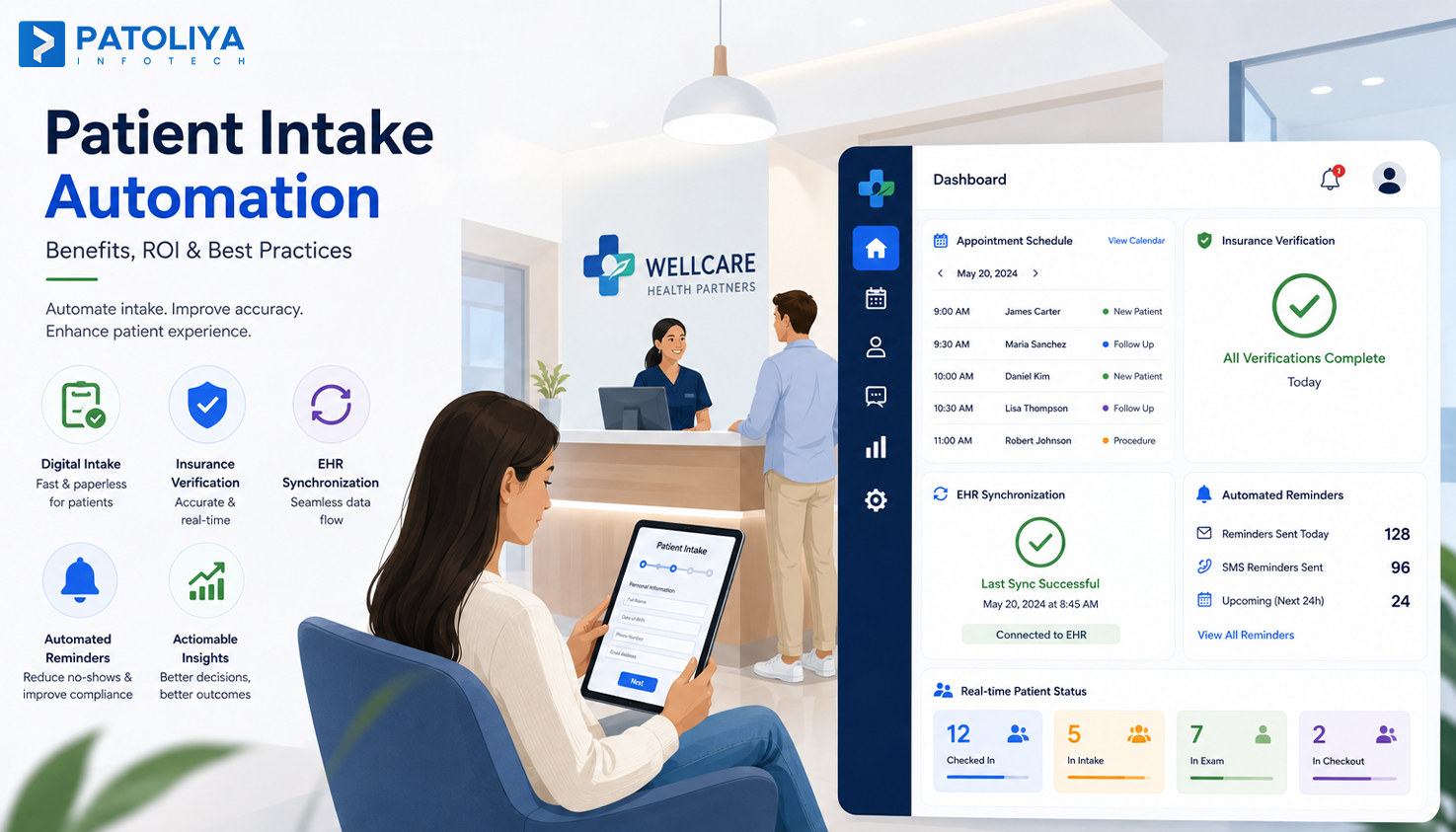
Integrated systems, like EHRs, have automated routine functions and activities like scheduling, documentation, and the ordering of laboratory work. The result is less paperwork, giving healthcare professionals more time to devote to healthcare delivery.
Providing patient safety can be termed as one of the major advantages of the clinical solution. Continuous Clinical Decision Support helps to point out the most critical points, like drug interactions and patient allergies.
Clinical solutions and their centralized nature allow information from the lab, pharmacy, and imaging departments to be brought together. This results in complete integration between various departments through clinical solutions for hospital improvement.
With all the information about the patients in one place, care teams can make quick decisions, which can be important in emergency cases.
Leveraging Technology for Better Outcomes
Contemporary solutions for healthcare success in hospitals give a clear direction for achieving success through the use of digital technology for better outcomes.
Enhancing Processes and Operational Efficiency
Removal of unnecessary tasks is the first step towards optimizing efficiency. An efficient workflow minimizes waste, maximizes worker productivity, and helps hospitals focus patient care efforts where it matters most in clinical solutions for hospital improvement.
Implementing Patient-Centered Approaches
The standard approach towards quality growth is patient-centered care. The patients get increased engagement, along with improved quality indicators for better healthcare, through personalized care plans.
Strengthening Team Collaboration and Engagement
Digital tools will help clear communication and remove departmental silos. Well-connected teams supported by optimized workflows deliver more coordinated, effective care.
Practical Tips for Healthcare Quality Improvement
Start with small, measurable changes through the PDSA cycle: Plan, Do, Study, Act. Track key metrics, including readmission rates and benchmark performance, to ensure long-term quality improvement through constant, data-driven efforts with clinical solutions for hospital improvement.
Transforming Patient Care with Artificial Intelligence
AI supports personalized treatment and helps in the prediction of patient decline; thus, AI is a key clinical solution for hospital improvement.
The Role of Telemedicine in Modern Hospital Services
Telemedicine increases the reach of a hospital through virtual visits and remote patient monitoring. Such solutions improve access to care while reducing pressure on physical facilities.
Supporting Clinical Decisions Through Advanced Systems
Clinical Decision Support (CDS) systems continuously offer evidence-based guidance to clinicians. They minimize errors and ensure that care is provided according to current medical standards, reinforcing the quality of care.
Seamless Patient Care via Integrated Electronic Health Records
The resulting integrated cloud-based electronic health record databases allow for all patient information to be stored in one place, giving instant access for all departments.
Optimizing Hospital Resources Using Data-Driven Insights
By using predictive analytics, leaders are able to predict patient volumes and staffing requirements, which is part of clinical solutions for hospital improvement.
Tools Designed to Enhance Patient Safety
Patient safety devices, like automated medication dispensers and intelligent infusion pumps, minimize the likelihood of error and promote constant improvement in healthcare quality.
Boosting Team Coordination with Clinical Communication Solutions
Reliable clinical communication solutions can help replace outdated technologies such as pagers and fax machines, enabling faster response times.
Solutions Focused on Improving the Patient Experience
The use of technology such as patient portals or follow-up reminders simplifies patient interactions, increases patient engagement, and increases patient satisfaction.
Understanding Quality Improvement (QI) in Healthcare
Quality improvement is a continuous process of making health care systems safer and more effective. It involves efforts made to improve performance on health care quality indicators.
Applying Evidence-Based Practices to Enhance Outcomes
Evidence-based practices provide better outcomes. QI teams rely on current research to standardize care practices, ensuring that each patient receives effective and proven care.
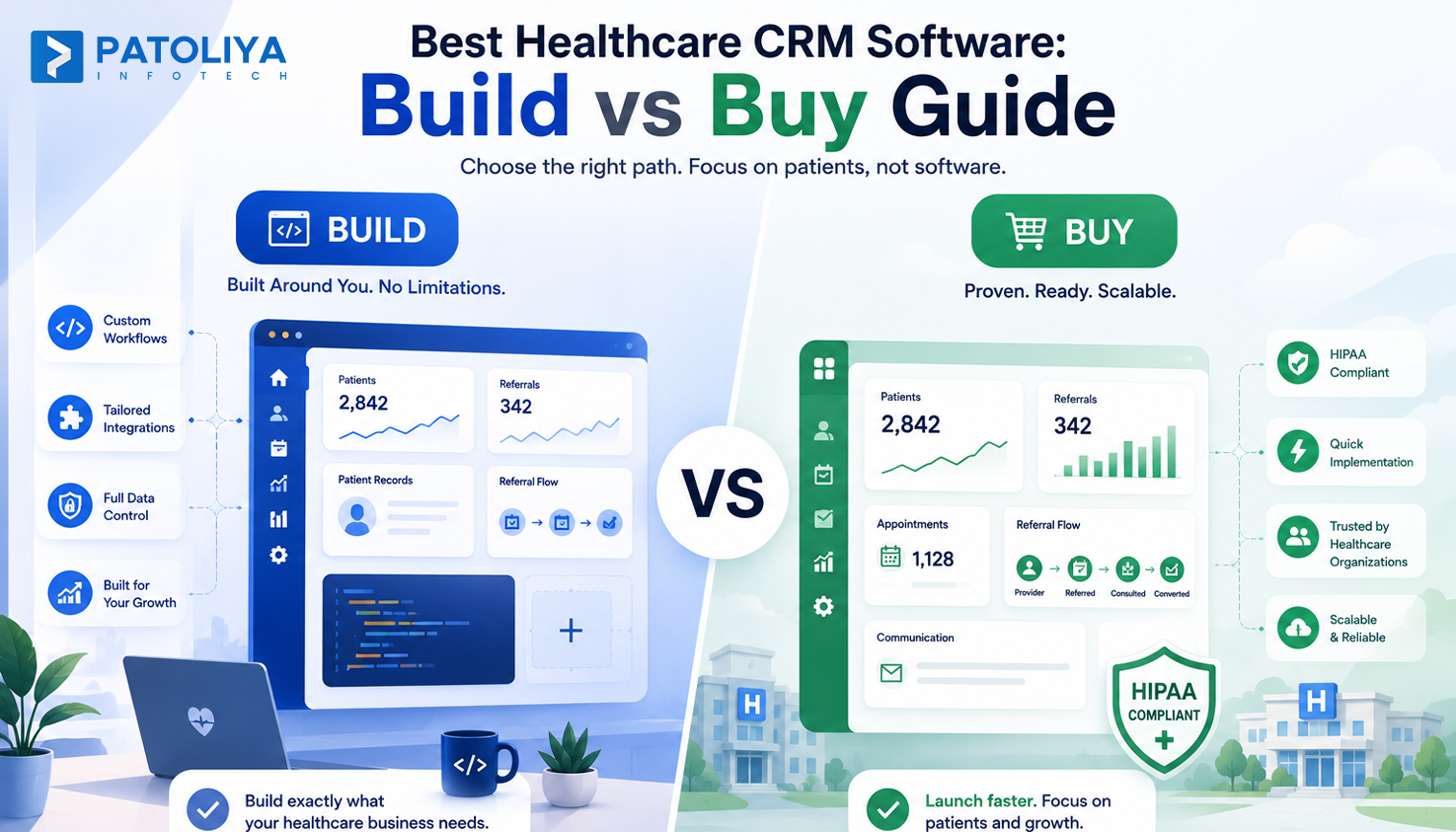
| Advantages | Disadvantages |
| Perfect Workflow FitThe application was created from the ground up to fit your exact clinical procedures. This reduces the number of clicks, workarounds, and annoyances that nurses and doctors experience. | High Upfront CostFrom the start, a large initial investment is required for design, development, and testing. |
| Seamless IntegrationIt is made to work perfectly with the systems you already have. This could be labs, billing, or imaging. | Longer Deployment TimeThe time required for planning, coding, and testing could be months or years. |
| Competitive Advantage and ScalabilityYou can add unique features, such as an AI-powered patient tool, and you own the code. This allows us to innovate faster and scale precisely with your organization's growth. | Maintenance It requires a dedicated IT team for maintenance, bug repairs, updates, and continuing compliance. |
| Total Control & OwnershipThe owner has control over the features, security protocols, and frequency of updates. They can participate in the development journey. | Risk of Over-EngineeringTeams may be tempted to include too many features without strict preparation. This results in a complex method to utilize. |
| Advantages | Disadvantages |
| Quick DevelopmentThis allows software to be quickly installed and configured. You get to use it almost right away. | Limited CustomizationThe system uses standard workflows. Your employees will have to adjust their routines to meet the software's design. |
| Lower Initial CostThe upfront expense is lower. This is typically a subscription or licensing charge. This is ideal for small practices or those with limited funds. | Ongoing Fees Add UpAnnual license, subscription, and upgrade fees are ongoing and can add up over time. |
| Proven Reliability & SupportWith thousands of organizations utilizing these solutions, they provide proven reliability with vendor support for maintenance and compliance, which helps ensure consistent healthcare quality improvement. | Integration ChallengesIntegration with non-standard or legacy systems can be difficult and may involve additional, expensive integration modules, which should be taken into consideration when choosing clinical solutions for hospital improvement. |
| Regulatory ComplianceMajor companies regularly upgrade their software to suit the most recent government and regulatory standards. Taking that load off your shoulders. | Vendor Lock-InYour organization relies on the vendor for upgrades, support, and future direction. Switching afterward might be hard and expensive. |
LOS (Average Length of Stay): Reduced LOS minimizes hospital expenses, enhances the management of patient flow, and increases bed availability.
Bed Utilisation Rate: Balancing occupancy, surge readiness, and operational efficiency, optimal bed utilisation variously helps the management of hospital capacity.
Clinician Time Spent on Documentation: Automation reduces the time that is used for documentation, thus optimizing clinical workflows, improving patient contact, and reducing clinician burnout.
Cost per Case: Better control over hospital costs, standardized treatment processes, and optimized use of resources are factors responsible for lower treatment costs per case.
Days in Accounts Receivable (AR): By reducing AR days in the health revenue cycle, better cash flow and predictability can be achieved.
Revenue Leakage due to Rejected Claims: Claim denial resolution and removal are essential to improve compliance, billing, and margins in clinical solutions for hospital improvement.
Readmission Rate: This measure indicates lower readmissions for patients, which signifies better outcomes under value-based care coordination.
Medication Error Rate: Lower rates are associated with more effective clinical governance and improved management of patient safety.
Results of the Compliance Audit: A reduced number of audit problems contributes towards decreased regulatory risk and increased readiness for accreditation and compliance with healthcare.
Encrypt your device's data for security purposes. People can only access the files they need for their employment.
This two-part encryption and limited access strategy is the most successful. This is useful for preventing hackers and averting data breaches.
All users must use Multi-Factor Authentication (MFA) to protect their access. This calls for identity verification using more than just a password. Employees must receive regular training because human error is the primary source of the majority of breaches. This explains how to use secure passwords and spot phishing.
Your system requires an audit trail. This digital record keeps track of all file accesses and verifies compliance. a strategy that specifies exactly who to contact and what to stop. In the case of a security breach, this is crucial. The possible harm may be reduced as a result.
AI enhances clinical solutions for hospital improvement by helping hospitals in the early diagnosis of diseases such as cancer and heart problems.
AI helps in predictive healthcare by predicting risks and potential readmissions based on the analysis of patient data. By combining AI with medical data, healthcare becomes more efficient, safe, and faster.
IoMT devices enable the remote monitoring of patients through wearables and sensors, which enhances chronic and hospital care. Real-time data from devices further improves the accuracy of AI.
Data silos are broken down by standards like HL7 and FHIR. It integrates labs, pharmacies, and EHRs, shattering data silos and allowing for real-time access to patient information. This enhances care coordination and fuels innovative healthcare solutions.
Clinical solutions for hospital improvement form the foundation for safer, faster, and more connected healthcare. By integrating clinical operations, patient care, and administrative systems, hospitals can break down silos, minimize errors, and deliver fully coordinated care. From AI-driven diagnostics and predictive analytics to integrated electronic health records and telehealth, these solutions empower physicians to make better decisions, while allowing teams to act quickly when it counts most.
To improve the quality of healthcare, becoming a priority, hospitals have to make informed decisions about the systems they choose to implement that are secure, interoperable, and scalable. The right clinical technology leads to better patient outcomes, improved efficiency, and regulatory compliance.
A deep understanding of healthcare solutions is essential for enhancing quality. Technology integration can only be executed with a leading software development company. Patoliya Infotech is among the top providers of software development services. Let's work together to innovate.