Complete Product Engineering Services Lifecycle Guide
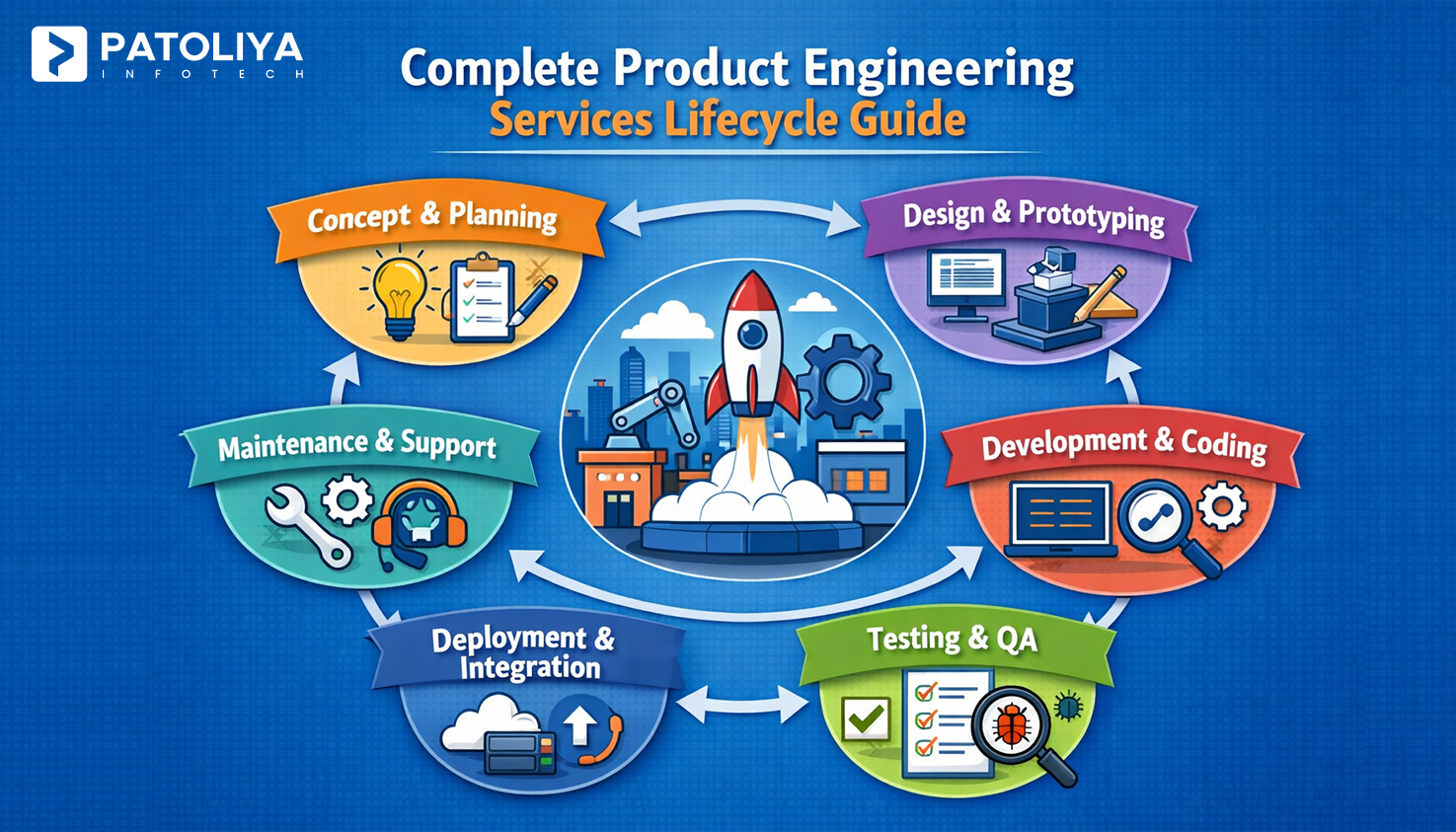
Table of Contents
Every successful product you use today, whether a mobile banking app, a smart wearable device, or a SaaS platform, passed through a structured, disciplined process before it reached you. That process is what product engineering services cover completely.
Businesses that rely on ad hoc development often struggle with missed deadlines, poor product-market fit, and costly post-launch fixes. Product engineering services solve that by bringing together design, software, hardware, testing, and lifecycle management under a single coordinated framework. Many organizations collaborate with a trusted custom software development company to structure product engineering efforts around long-term scalability and business outcomes.
In 2026, with shorter product cycles and higher user expectations, having a structured engineering partner is not just an advantage, it is a competitive necessity. This guide walks you through the full product engineering lifecycle, practical steps at each stage, and why choosing the right service provider shapes the outcome of your product.
What Are Product Engineering Services
Product engineering definition refers to the complete set of technical and strategic activities needed to take a product from initial idea through design, development, testing, launch, and ongoing support. Product engineering services refer is not limited to coding or hardware assembly; it covers the entire product engineering lifecycle.
A full-scope offering typically includes product strategy, UX and UI design, software and firmware development, systems integration, quality assurance, compliance validation, deployment, and post-launch maintenance. Depending on the product type or product engineering lifecycle, it may involve embedded systems, cloud infrastructure, mobile applications, or physical hardware, often all at once.
What makes product engineering services distinct from generic IT services is the outcomes-first mindset. The goal is not just to build what was specified; it is to deliver something that works reliably, scales under demand, and continues to create value over its full lifecycle. Think of it as the difference between a contractor who builds to a blueprint and an architect-led team that builds for long-term performance.
Why Businesses Need Product Engineering Services
Most product failures are not caused by bad ideas. They result from poor execution, misaligned timelines, or inadequate testing of the product engineering lifecycle. Product engineering services directly address four core business challenges: speed to market, product quality, innovation capacity, and risk management.
Consider a mid-sized healthcare company building a patient monitoring app. Without structured engineering services, they might ship a version that fails on hospital iOS devices or misses HIPAA compliance requirements discovered only after launch, both costly outcomes. With the right engineering partner, those risks are identified and mitigated early in the product engineering process.
Two major trends of Product engineering services are shaping demand in 2026. First, AI and automation integration: products increasingly need embedded intelligence, requiring specialized expertise that most in-house teams do not have. Second, compressed launch windows: markets reward the first mover, and structured engineering services cut wasted iteration cycles significantly.
Product Engineering Services Step By Step Guide
Step 1: Ideation and Market Research
Before writing a single line of code or sketching a single screen, the effective product engineering process starts with validating whether the idea is worth building. This stage of product engineering steps combines user research, competitor analysis, and technical feasibility assessment to sharpen the product strategy.
For instance, a fintech startup planning a micro-lending app might discover through research that their target segment already uses WhatsApp for financial decisions, a finding that completely changes their UX approach before any development begins.
Key outputs from this stage of the product engineering lifecycle include a validated product concept, a prioritized feature list, and a realistic technical scope. Skipping this step is one of the most common reasons products fail, not because of poor Product engineering services, but because the wrong thing was built.
Step 2: Design and Prototyping
Once the concept is validated, the team moves into product design and development planning of Product engineering services. This means translating requirements into tangible prototypes, either digital wireframes and interactive mockups for software products or CAD models and proof-of-concept builds for hardware.
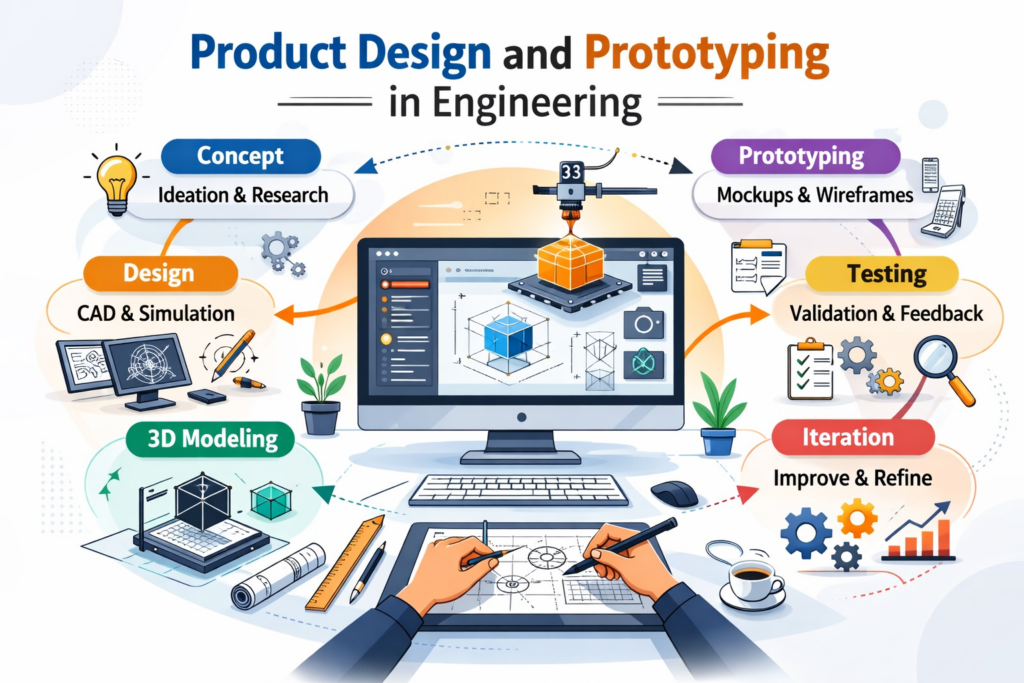
Virtual prototypes of product engineering steps during the product engineering process are especially valuable because they surface usability issues early, when fixing them costs hours, not months. A clickable prototype shared with ten real users often reveals more than weeks of internal review.
This design and prototyping in engineering stage also covers architectural decisions: technology stack selection, database design, system components, and integration touchpoints. Getting these choices right early prevents expensive rewrites later in the product engineering lifecycle of Product engineering services.
Step 3: Development and Integration
Development of the product engineering steps is where the product takes shape through Product engineering services. Using agile methodology, engineering teams work in short sprint cycles, typically two weeks, delivering working increments that can be reviewed, tested, and adjusted without derailing the entire project.
Many engineering teams follow the core Agile Manifesto principles to ensure iterative development and rapid feedback cycles. For digital platforms, this stage often overlaps with structured web application development services focused on scalable architecture and seamless integrations.
For products that combine software and hardware, such as a connected medical device, cross-functional collaboration between firmware engineers, backend developers, and cloud architects is critical at this product engineering process stage. Siloed development between these disciplines is a common source of integration failures.
Third-party integrations, payment gateways, ERP systems, and external APIs are also handled here. Each integration point is a potential failure surface, so product engineering teams document dependencies carefully and build with fallback logic where critical.
Step 4: Testing and Quality Assurance
Quality assurance is not a final gate. It runs in parallel with development throughout the product engineering steps of Product Engineering Services. Automated unit tests, integration tests, and regression suites catch issues as they are introduced rather than after they compound.
Testing at this stage covers functional correctness, performance under load, security vulnerabilities, accessibility compliance, and regulatory requirements such as GDPR, HIPAA, or ISO standards, depending on the industry.
Organizations operating in regulated industries often align with ISO quality management standards to ensure structured engineering governance.
An e-commerce platform that skips load testing during the product engineering process before a high-traffic sale event risks complete downtime and an outage that directly translates to lost revenue and damaged brand trust. Rigorous QA eliminates these scenarios before they become crises in Product engineering services.
Step 5: Deployment and Launch
A well-planned deployment is as important as product engineering steps as a well-built product during the product engineering lifecycle. Product engineering teams use phased rollout strategies during product testing and deployment. This is often starts with an MVP released to a limited user group to gather real-world feedback before scaling to the full audience.
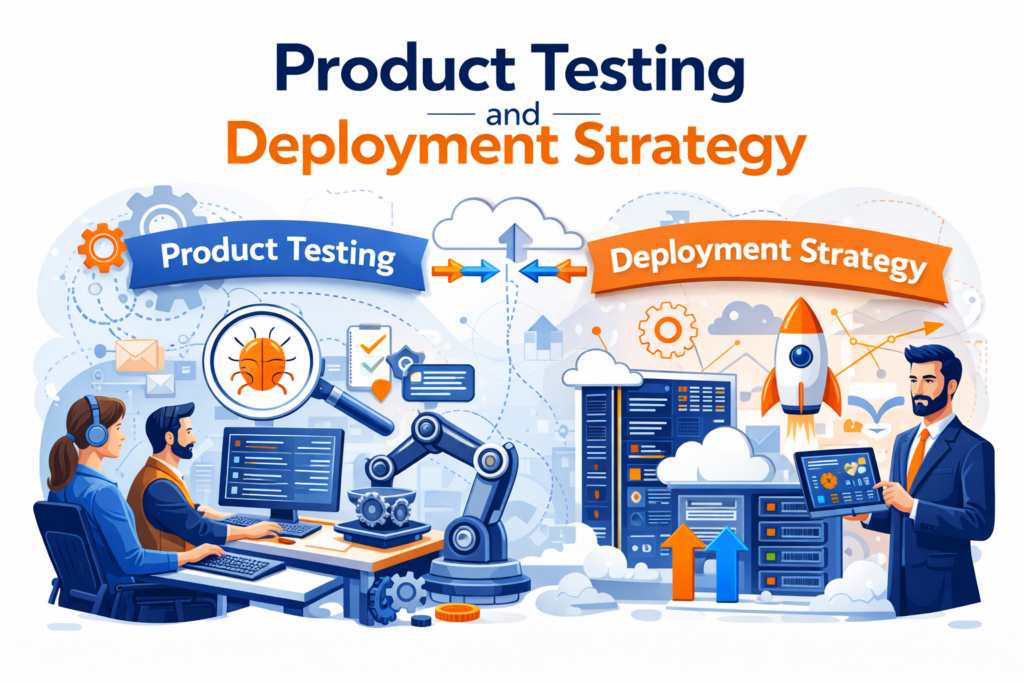
CI/CD pipelines automate deployment steps, reducing manual error and enabling rapid iteration. Monitoring tools are configured before launch so the team has real-time visibility into performance, error rates, and user behavior from day one. The launch is a milestone of Product engineering services, not the finish line.
Step 6: Support and Maintenance
Post-launch product support of the product engineering steps is where long-term value is created or eroded during the product engineering process. This product engineering lifecycle stage covers bug fixes, performance optimization, OS and dependency updates, security patching, and feature enhancements based on user feedback.
Products that go unmaintained after launch rapidly lose users. Platform updates on iOS, Android, or cloud infrastructure consistently break older implementations, and a product without an active maintenance plan has a shrinking lifecycle from day one.
Strong support structures, including SLA-backed response times and proactive monitoring, separate product engineering services from simple build-and-release contracts. This is where end to end engineering services demonstrate their full value.
Key Benefits of Product Engineering Services
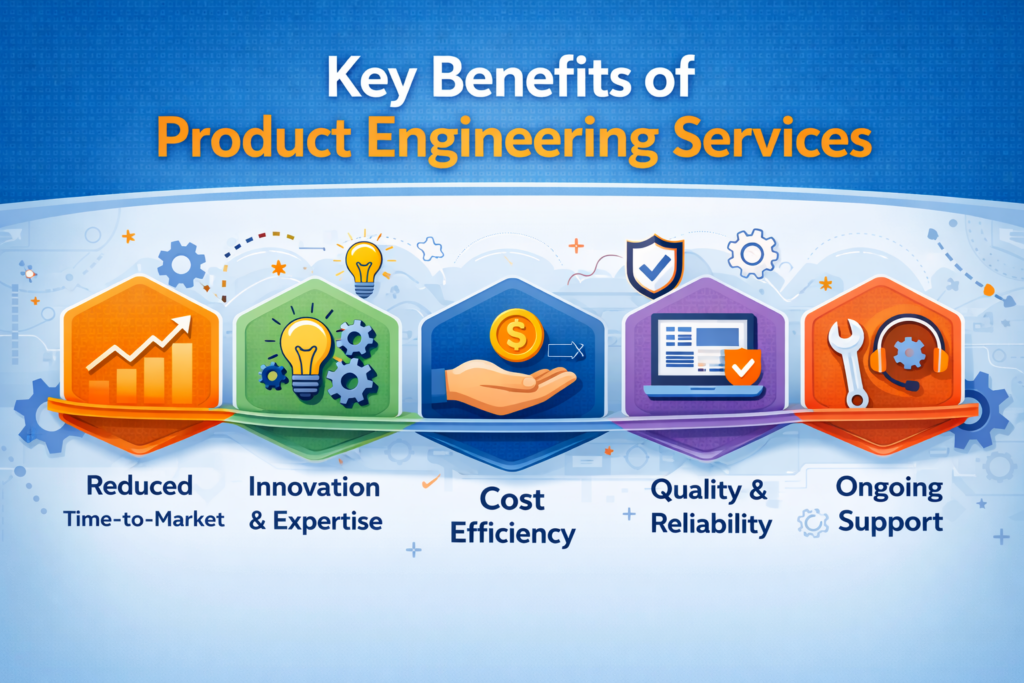
- When product engineering services are executed well, the business results are measurable, clearly demonstrating product engineering benefits for business.
- Structured workflows and expert teams eliminate guesswork, cutting development cycles significantly compared to unstructured in-house efforts.
- Catching defects in development costs far less than fixing them post-launch, which reduces the total cost of ownership over time.
- Iterative testing embedded throughout the product engineering process means fewer defects reach end users, improving overall product quality.
- Architecture decisions made early allow products to handle substantial user growth without requiring a full rebuild.
- Products that launch completely, perform reliably, and receive consistent updates retain users significantly better than those that do not.
- These outcomes of the product engineering process explain why businesses, from funded startups to global enterprises, invest in structured Product engineering services rather than building ad hoc internal capability from scratch.
Why Patoliya Infotech Is Important for Product Engineering Services and Why It Excels
Choosing the right engineering partner is as consequential as the technology decisions made during development. Patoliya Infotech delivers product engineering services that cover the full product lifecycle management from ideation workshops and architecture design to deployment, monitoring, and long-term product support.
The team brings end to end engineering capability, meaning clients do not need to manage multiple vendors across the product engineering services stages. Agile methodology ensures short sprint cycles, transparent reporting, and continuous delivery.
This is giving clients visibility and control at every product engineering steps. Cross-industry experience across healthcare, fintech, logistics, and retail reduces learning curves and mitigates domain-specific risks before they surface.
Modern technology integration across cloud platforms, mobile ecosystems, embedded systems, and AI-driven features means clients are never constrained by narrow technical capability.
Consistent on-time delivery and strong post-launch outcomes reflect a team culture built around client success, not just task completion. For businesses ready to build a product engineered to last, Patoliya Infotech is a long-term Product engineering services partner, not just a vendor.
Many growth-focused organizations benefit from having experts evaluate their product roadmap to identify scalability gaps and technical risks early.
Conclusion
Product engineering services are the operational backbone behind every market ready product process. The structured product engineering lifecycle from ideation through maintenance ensures that good ideas survive contact with reality: technical complexity, competitive markets, and demanding users. This should be aligned with effective product innovation strategies.
Skipping product engineering steps in the product engineering process does not save time; it borrows it from later, at a much higher cost. Businesses that follow a disciplined, step by step approach consistently produce better products faster, with fewer post-launch emergencies.
If your organization is planning a new product launch or scaling an existing one, engaging a professional product engineering services partner is one of the highest-leverage decisions you can make. The right team does not just build what you specify; they help you build the right thing.
FAQs
What are product engineering services?
Product engineering services cover the full lifecycle of a product from ideation, design, and development to testing, deployment, and post-launch support delivered as a structured, end-to-end technical engagement.
How does product engineering differ from product development?
Product development covers business strategy, pricing, and market planning. Product engineering services focus specifically on technical execution like architecture, development, testing, and ongoing support. One defines what to build; the other determines how to build it right.
What are the main stages in product engineering services?
The core stages of product engineering steps are ideation and research, design and prototyping, development and integration, testing and QA, deployment and launch, and post-launch support and maintenance, each stage directly feeding into the next.
When should a business outsource product engineering services?
Outsource when your team lacks specific technical expertise, timelines are too tight for hiring, or the product requires compliance knowledge in regulated industries like healthcare or finance that your in-house team does not currently have. Many companies adopt flexible resource augmentation models to scale engineering capacity without long-term hiring risk.
How do product engineering services improve time to market?
Experienced teams avoid known pitfalls, rapid prototyping resolves design issues early, and automated CI/CD pipelines eliminate manual release bottlenecks, collectively cutting the time between a validated idea and a live product significantly.