Cloud Transformation Services What You Must Know

Table of Contents
Businesses today operate in a rapidly evolving digital landscape where flexibility and innovation are essential, which is why many organizations work with an experienced custom software development company to modernize their technology foundations.
This is why cloud transformation services are becoming a core part of modern IT strategies. Rather than simply moving applications to the cloud, cloud transformation services help organizations redesign infrastructure, processes, and systems to take full advantage of cloud technology.
By adopting cloud transformation services, companies can modernize outdated systems, improve collaboration, and scale operations efficiently. The process often involves evaluating existing infrastructure, implementing modernization frameworks, and aligning technology investments with business goals.
Successful transformation depends on clear planning and a structured roadmap. Organizations must carefully assess workloads, choose the right cloud environment, and develop a sustainable cloud transformation strategy.
With the right approach, cloud transformation services enable companies to innovate faster, improve operational efficiency, and prepare their IT environment for future technological advancements.
What Are Cloud Transformation Services
Cloud transformation services help organizations redesign their IT infrastructure to operate effectively in cloud environments. The cloud transformation meaning goes beyond moving workloads; it includes modernizing applications, improving workflows, and aligning technology with business goals. Through enterprise cloud transformation, companies can create scalable systems that support innovation and operational agility.
How They Differ from Cloud Migration
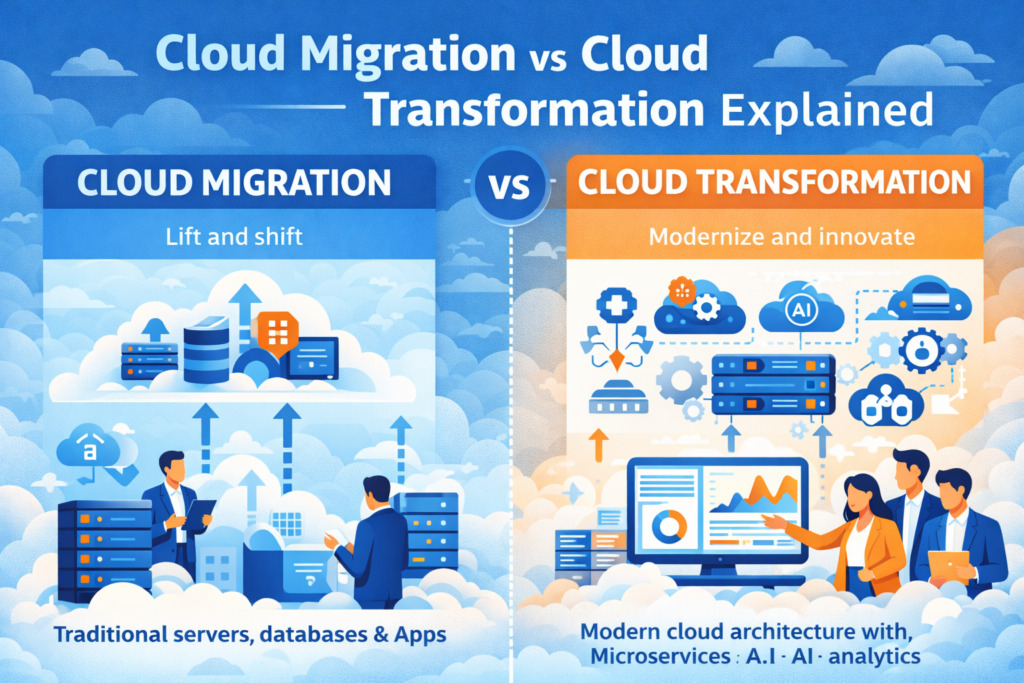
Understanding cloud migration vs transformation is important. Migration simply moves applications to the cloud, while cloud transformation services improve how systems function within the cloud. Businesses often adopt cloud modernization services to redesign architecture, optimize resources, and create a flexible digital environment that fully leverages cloud technology capabilities.
Key Benefits of Cloud Transformation Services
Enhanced Scalability and Cost Efficiency
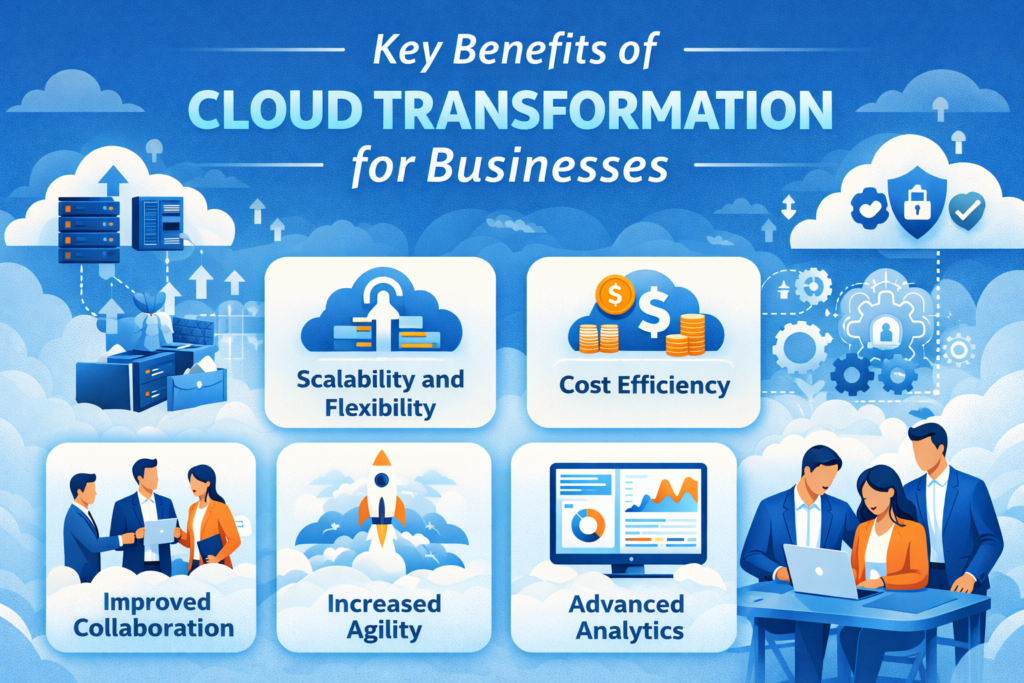
One of the biggest cloud transformation benefits is scalability. Through cloud transformation benefits, organizations can adjust computing resources according to demand, gaining clear cloud scalability advantages. This flexibility allows businesses to avoid costly infrastructure investments while maintaining performance during peak workloads.
Another important cloud transformation benefit is improved cost efficiency. Companies pay only for the resources they use, which helps reduce operational expenses and increases financial flexibility.
Improved Security and Collaboration
Security improvements are another key reason businesses adopt cloud transformation services. Cloud platforms offer advanced monitoring, encryption, and identity management tools that protect sensitive data.
These improvements represent important benefits of cloud adoption, allowing teams to collaborate securely across locations. By implementing cloud transformation benefits, organizations strengthen security while enabling faster communication and more efficient workflows.
Security teams increasingly implement the zero trust security framework to protect distributed cloud environments and reduce unauthorized access risks.
Core Components of a Successful Cloud Transformation Strategy
Assessment and Planning
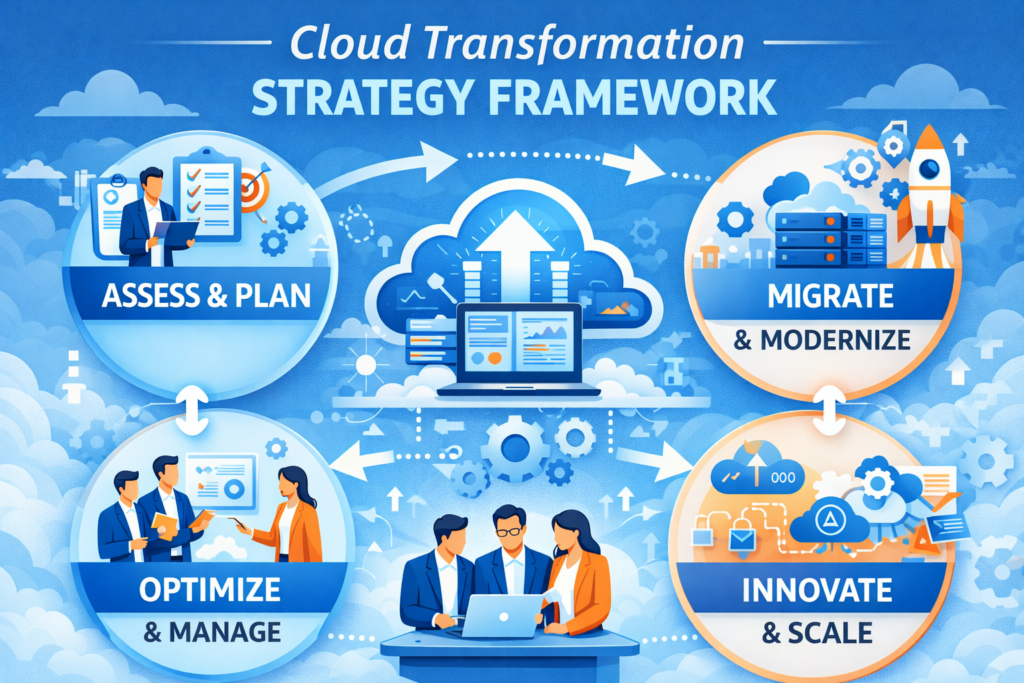
Every effective cloud transformation strategy begins with a detailed assessment of existing infrastructure. Organizations implementing cloud transformation services must analyze applications, data structures, and dependencies to identify modernization opportunities.
This evaluation also helps businesses anticipate potential cloud transformation challenges, such as integration issues or outdated systems. By establishing clear goals during the planning stage, companies ensure their cloud transformation benefits align with broader business objectives.
Choosing the Right Cloud Model
Selecting the right architecture is a critical part of a successful cloud transformation strategy. Businesses adopting cloud transformation services may choose public, private, or hybrid cloud approaches depending on performance and security requirements.
Reliable cloud service providers play an important role in this process. With the right infrastructure partner, organizations can implement cloud transformation benefits that deliver scalability, flexibility, and long-term operational efficiency.
Common Challenges in Cloud Transformation Services
Legacy System Integration and Complexity
While cloud transformation services provide significant advantages, businesses often encounter technical barriers during implementation. Legacy applications may not integrate easily with modern cloud systems, creating compatibility issues.
These cloud transformation challenges require careful architecture redesign and modernization planning. Organizations must analyze dependencies and ensure data stability while implementing cloud transformation benefits.
Skills Gap and Change Management
Another challenge many organizations face involves expertise. Implementing cloud transformation services requires knowledge of cloud infrastructure, automation, and security.
Without experienced professionals, companies may struggle to execute a clear cloud transformation strategy. Training programs and strategic partnerships can help bridge these gaps and support smoother cloud adoption.
Current Trends Shaping Cloud Transformation in 2026
Multi Cloud and Hybrid Strategies
Modern organizations increasingly adopt multi-cloud environments to increase flexibility. Businesses implementing cloud transformation services often distribute workloads across platforms to improve reliability and reduce dependency on a single provider.
Hybrid architectures combine on-premise infrastructure with cloud environments, giving organizations better control and scalability.
Many organizations follow a hybrid cloud architecture model recommended by major cloud research bodies to balance scalability with regulatory control.
AI and Analytics Integration
Artificial intelligence and advanced analytics are transforming how businesses use cloud transformation services. Cloud platforms provide powerful computing resources that support real-time data analysis.
By integrating AI tools with cloud transformation services, organizations gain insights that improve decision-making, automate processes, and enhance operational efficiency.
Best Practices for Implementing Cloud Transformation Services
Organizations should start their journey by defining clear goals before implementing cloud transformation services. Whether the focus is innovation, efficiency, or scalability, having measurable objectives ensures that transformation efforts remain aligned with business priorities.
Following proven cloud strategy best practices also helps businesses structure their transformation roadmap effectively.
Continuous Optimization and Monitoring
Successful cloud transformation services require continuous evaluation and improvement. Businesses must monitor system performance, security configurations, and operational costs to ensure long-term success.
Applying effective cloud optimization techniques helps organizations maintain efficient resource usage and improve performance. Regular reviews of the cloud transformation strategy ensure that technology investments continue delivering value as business needs evolve.
At this stage, many organizations choose to discuss their cloud transformation roadmap with specialists to validate architecture choices and avoid costly redesign later.
Why Patoliya Infotech Is Important for Cloud Transformation and Why It Excels
Implementing cloud transformation services successfully often requires guidance from experienced technology partners. Patoliya Infotech supports businesses by delivering structured and customized cloud transformation services designed to meet specific organizational goals.
The company begins by analyzing existing infrastructure and identifying opportunities for modernization. This detailed assessment helps businesses design an effective cloud transformation strategy that supports scalability, security, and operational efficiency.
Patoliya Infotech provides comprehensive cloud transformation services including planning, migration support, architecture design, and ongoing optimization. Their experts ensure businesses transition smoothly to cloud environments while minimizing risks and downtime.
Beyond initial implementation, Patoliya Infotech focuses on performance monitoring and infrastructure optimization. Their team continuously refines cloud transformation services to improve efficiency and system performance.
With strong technical expertise and a strategy-focused approach, Patoliya Infotech enables organizations to maximize the value of cloud transformation services and build resilient digital infrastructure that supports long-term business growth.
Conclusion
Adopting cloud transformation services is becoming essential for businesses aiming to modernize operations and remain competitive in a digital economy. These services help organizations move beyond traditional infrastructure and build scalable, flexible technology environments.
Companies that implement cloud transformation services effectively gain improved performance, stronger collaboration, and better adaptability to changing market demands. However, successful transformation requires careful planning, the right expertise, and continuous optimization.
By following a structured cloud transformation strategy and partnering with experienced technology providers, organizations can unlock the full potential of cloud transformation services and position themselves for sustainable digital growth.
FAQs
What exactly are cloud transformation services?
Cloud transformation services include planning, implementing, and optimizing cloud environments to support business goals. Unlike basic migration, these services modernize infrastructure, improve workflows, and help organizations adopt cloud technologies strategically. The objective is to create scalable, secure, and efficient digital systems that improve performance and long-term business innovation.
How are cloud transformation and cloud migration different?
Migration focuses on moving applications or data to cloud infrastructure. Cloud transformation services go further by redesigning systems, modernizing applications, and improving operational processes. Transformation ensures organizations fully benefit from cloud technology rather than simply relocating existing workloads.
What industries benefit most from cloud transformation?
Industries such as finance, healthcare, ecommerce, and enterprise IT gain significant advantages from cloud transformation services. These sectors require scalable infrastructure, secure data management, and rapid innovation. Cloud environments enable them to improve operational agility while maintaining strong security and performance standards.
How long does a typical cloud transformation take?
The timeline for cloud transformation services depends on infrastructure complexity, organizational size, and transformation goals. Smaller projects may take several months, while large enterprise transformations may require phased implementation over a year or more. Careful planning and expert guidance can significantly accelerate the process.
What risks should businesses watch for?
Organizations implementing cloud transformation services should monitor risks such as security misconfigurations, data migration errors, and vendor lock-in. Proper governance policies, strong security frameworks, and experienced cloud specialists help minimize these risks and ensure a smooth transformation journey.
Can small businesses use cloud transformation services?
Yes. Small businesses can benefit from cloud transformation services by improving infrastructure efficiency, reducing operational costs, and gaining access to scalable technology platforms that support long-term growth and digital innovation.