What Is Inventory Management Software In E-Commerce?
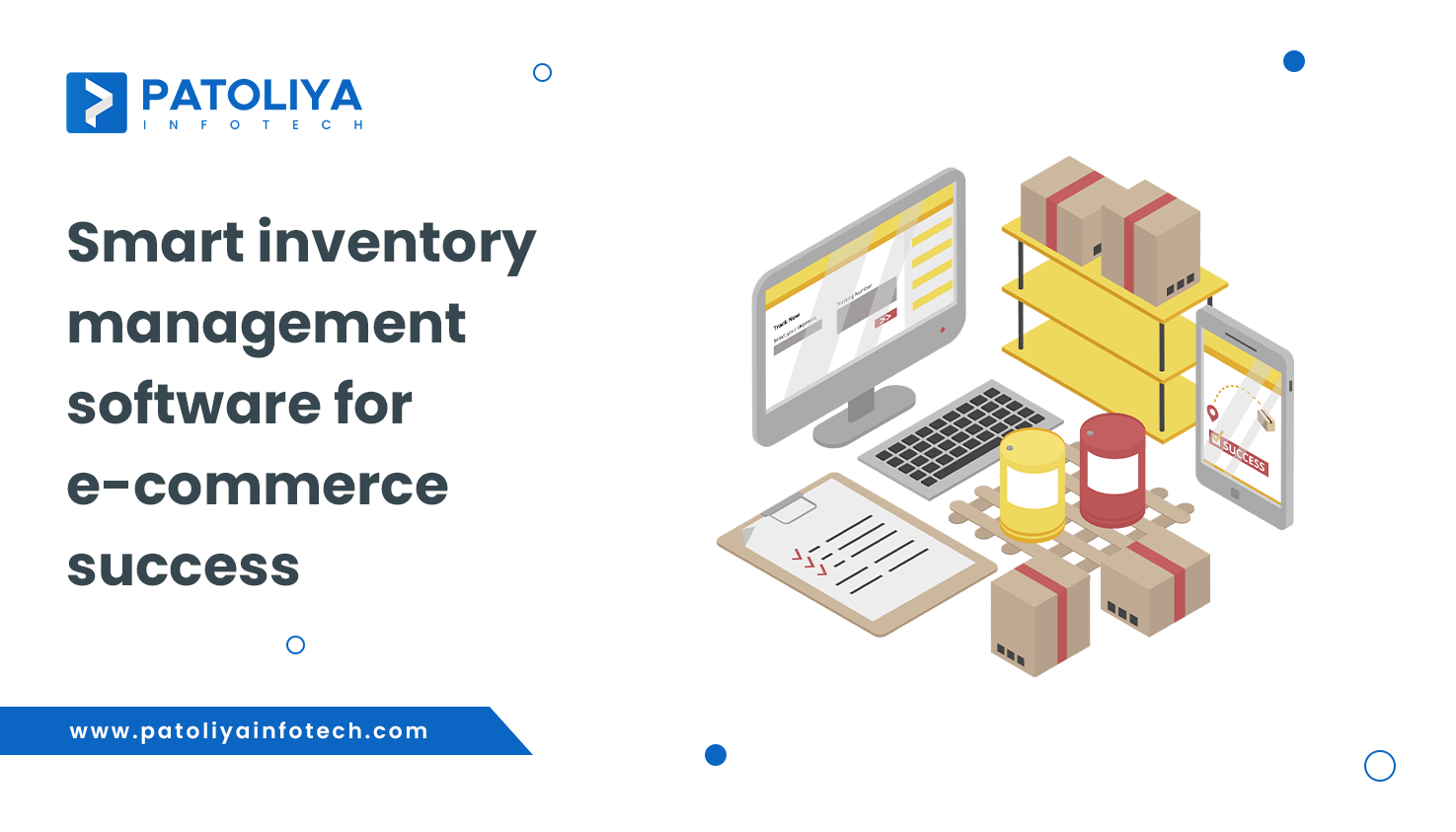
Table of Contents
Inventory management software for E-commerce is an excellent solution for digital businesses. This is ideal for tracking products over multiple sales channels. When you sell products online using platforms such as your own website, Amazon, and Shopify. Product inventories must be tracked independently when selling using these channels. As businesses grow, inventory management becomes more complex.
Here comes the inventory management software for e-commerce to the market. This software provides selling dashboards for each selling platform. When a product is sold through any channel, the system updates the stock count across all other channels. Inventory software sends you an alert when stocks are low. Also, Demand forecasting and record automation make the process easier.
Artificial intelligence, machine learning, robotics, and other technologies are changing the future of inventory management software as an e-commerce trend. (Src)
What is Inventory Management for E-commerce?
Inventory management for e-commerce is the strategic process of sourcing, storing, tracking products at all stages to shipping it. It is all about meeting customer demands with products at the right time and place.
What is Inventory Management Software for E-commerce?
Inventory management software is a digital solution that allows organizations to manage their inventory in a digital environment. This helps to the automation of order processing and the continuous tracking of all product steps. This is also useful for demand forecasting and data analysis.
This is a cloud-based platform that centralizes all inventory processes in one place. Shopify, Amazon, and eBay are systems that connect directly to your web store. This helps to manage and update your product inventory from different locations at the same time.
Why is Inventory Management Software for E-commerce Important?
Ensures customer satisfaction
This prevents stockouts ( products that are no longer available) and backorders (products that are temporarily unavailable). This helps businesses to supply products when customers demand them at the right place and time. This increases consumer satisfaction.
Increases opportunities for sales and revenue
Make sure that high-demand products are always available in your inventory. This helps you to learn about market demand and execute important inventory-related actions.
Reduces costs
It gives the data required to avoid overstocking and reduce unnecessary storage costs.
Enhances operational efficiency
It automates important tasks such as reordering, order fulfillment, and reporting. This saves time and reduces manual errors.
Supports financial management
It gives you a clear and accurate image of how much all of your products are worth. Knowing this helps you manage your money better and prepare for the future. This increases your overall profitability.
Important Elements of E-commerce Inventory Management
A comprehensive e-commerce inventory management system includes all components that lead to increased productivity and profitability. Inventory management software for e-commerce plays an important role in these elements.
| Accurate Inventory Tracking Know exactly what you have, where it is, and its current state. This continuous detail serves as the foundation for all further inventory operations. |
| Effective Supply Procedures To make sure that you can always fulfill demand, create efficient procedures and clear reorder points to add products before they run out. |
| Analysis and Product Categorization ABC analysis To categorize products according to their value and sales volume. This allows you to focus management efforts on your most profitable goods. VED Analysis Classifies products based on their importance to your operations (Vital, Essential, Desirable). This allows you to prioritize tasks that are important to company operations. FSN Analysis Organizes products according to how rapidly they sell (Fast, Slow, and Non-moving). This allows you to better manage product demand and plan future reorders. HML Analysis Inventory is classified according to its unit cost (high, medium, low). This allows you to focus on managing your most expensive things to control spending. |
| Inventory Performance Management Monitor your inventory turnover (the rate at which your products are sold) and storage costs regularly. This allows you to maximize profit. |
Core Features of Inventory Management Software for E-commerce

Live Stock Tracking
Helps you to know how many things you have and where they are in real time. There will be no more guesswork.
Sync with All Your Stores
When you sell a product on your website, the inventory management software for e-commerce updates the stock on Amazon and eBay right away, ensuring that the same product does not sell again.
Automated Tasks
The software can automatically reorder products and produce shipping labels. This is saving your time and preventing errors.
Smart Predictions
It analyzes your previous sales to predict which products will be in demand next, allowing you to purchase sufficient quantities and avoid missing out on sales.
Compatible with Other Tools
It integrates easily with the apps you currently use. This can be your accounting software and website.
Smart Alerts
Inventory management software alerts you when a product is running short of capacity. This helps you to address the shortage before it gets out of hand.
Key Performance Indicators (KPIs)
KPIs are indicators that measure inventory performance. They inform you how quickly you sell products (turnover) and how often you can fulfill an order (fill rate).
Perpetual vs. Periodic Systems
Perpetual systems make use of software to track data in real time. Periodic systems are manual and inaccurate, making them unsuitable for e-commerce.
The Difference from a Warehouse Management System (WMS)
Inventory Management Software tells you what you have and how many of each of them.
The Warehouse Management System (WMS) shows you exactly where each product is in your warehouse.
Modern systems frequently combine these functions to provide you with complete control over your number and physical location.
Benefits of Inventory Management Software for E-commerce
| Benefit | How the Software Does It | Real-Life Example |
| Real-time Visibility | Offers a single and continuous picture of inventory across all of your warehouses and sales channels. | A customer purchases an outfit online. The software automatically updates the stock count on your website, Amazon store, and physical boutique. |
| Eliminate costly errors | Automatically syncs stock levels across all platforms where you sell, reducing errors. | You have one laptop left. A consumer purchases it using Shopify. The software quickly designates it as out of stock on Amazon, so you cannot sell it twice. |
| Boost operational efficiency | Automates repetitive and time-consuming processes such as reordering and order processing. | When a product's quantity falls below a certain amount, the software immediately creates a buy order for your supplier. |
| Maximize profitability | Uses data to prevent overstocking and stockouts. | The software expects a 20% increase in demand for scarves during the winter. You order accordingly to avoid extra inventory and capture all sales. |
| Enable data-driven decisions | Provides simple reporting and analytics on sales trends and product performance. | It gives you information like blue mugs sell three times faster than red mugs. You use this information to order more blue mugs and fewer red cups. |
| Enhance customer satisfaction | Ensures faster, more accurate, and error-free fulfillment. | When an order is received, the software routes it to the closest warehouse with the product in stock. This makes sure that the consumer receives their product as soon as possible. |
| Ensure Scalability | Manages an increasing number of products, orders, and locations through a single central system. | As your business expands and you establish a second warehouse, the software easily integrates the two locations, allowing you to manage both from a single dashboard. |
Efficient inventory management software for e-commerce requires the right kind of knowledge and expertise. This software is essential to the complete inventory management cycle. Patoliya Infotech has years of expertise in developing high-quality software.
Challenges of Using Inventory Management Software for E-commerce
| Challenges | How It Happens | Real-Life Example |
| High initial cost | The program requires an initial investment or costly monthly subscriptions, which may impact a small business's budget. | A startup with a limited budget discovers that the membership for a top-tier system consumes an important amount of its monthly earnings. This is expensive for them. |
| Complex integration | Connecting the program to your existing e-commerce platform, accounting software, and shipping tools can be challenging. This requires technical knowledge. | A business owner tries for weeks to get their new inventory software to sync properly with their old accounting system. This leads to inaccurate sales and financial data. |
| High Learning Curve | Employees used to manual processes require time and training to adjust to a new automated system. This may temporarily delay operations. | A warehouse team used to utilizing spreadsheets takes several weeks to become proficient with the new mobile barcode scanner software. This results in a temporary decrease in fulfillment speed. |
| Scalability Issues | The tool is not designed to handle a big product catalog or a rapid increase in order volume, which can cause the system to slow down or even crash. | A rapidly developing brand has a viral marketing moment. Their software, which was meant to handle 100 orders per day, malfunctions when they receive 1,000 requests, resulting in huge delivery delays. |
| Data Accuracy Dependency | The software's result is only as good as the data entered by the user. A minor human error may bias the entire dataset. | An employee incorrectly scans a carton of 20 products as a single product. The program reports a larger stock count than is correct. This results in a surprise stockout when a consumer attempts to purchase the final product. |
How to Choose the Right Inventory Management Software for E-commerce
Is it connected to your store?
Make it integrates easily with your website, such as Shopify or BigCommerce. Other places where you sell include Amazon and eBay.
Can it develop with you?
Choose a system that can handle new goods and orders as your business grows.
How does it benefit you?
Look for crucial features that will save you time. This can include automating orders and tracking products using barcode scanners.
Is it easy to use?
The greatest software is easy for you and your team to understand and use every day. It helps you to get started faster.
Inventory Management Methods Supported by Software
Modern software helps implement proven inventory methods:
| Method | Core Purpose | How It Works | Benefit |
| Just-in-Time (JIT) | Reduces storage expenses. | Products are only ordered and received when they are required to fulfill orders. | Avoiding surplus stock saves storage expenses and waste. |
| ABC Analysis | Prioritizes management efforts. | products are classified into three categories: A (most valuable), B (mid-value), and C (least valuable). | To optimize returns, allocate resources to the most profitable products. |
| First-In, First-Out (FIFO) | Manages perishable or aged stock. | The oldest inventory products are sold and shipped before the fresher ones. | Prevents products from expiring, falling out of trend, or becoming outdated. |
| Last-In, First-Out (LIFO) | Primarily for accounting. | The most recent inventory received is sold or used before the older stock. | In periods of rising expenses, it can help reduce taxable revenue by valuing inventory at its most recent and highest cost. |
Key Metrics for Software Helps Track
All of these measures are essential and may be calculated using formulas. This calculation becomes more difficult as turnover increases. Inventory management software in e-commerce makes the process faster and more accurate.
| Inventory Turnover and Movement Inventory Turnover Ratio - How rapidly you sell and replace your inventory. A high figure indicates strong sales. Sell Through Rate – The proportion of stock sold during a certain period. A high rate shows that products are selling successfully. | Financial and Efficiency Metrics Days Sales of Inventory (DSI) - The average number of days required to sell your inventory. A smaller number is preferable. Holding Cost Percentage - the overall cost of storing your inventory (warehousing, insurance, etc.). It should be as low as possible. |
| Customer Service and Availability Stockout Rate - How frequently do you run out of stock when a consumer wants to purchase a product? A high rate equates to lost sales. | Bonus Metric: Order Accuracy Fill Rate - The percentage of orders that can be entirely fulfilled with your current inventory. A high rate makes clients happier. |
How Does Inventory Management Software for e-commerce Help You?
- It collects data and executes complex formulas. This reduces the need for manual work and spreadsheets.
- To give a fast and accurate view of your inventory levels and performance indicators. This allows businesses to respond fast to changes.
- It combines all metrics into a single dashboard. This allows companies to easily monitor the stock and make informed business decisions.
Best Practices for Effective Inventory Management Software for E-commerce

Prioritize monitoring in real time
- Use inventory management software that provides accurate records of your stock levels.
- This allows you to better understand what you have and where it is. This reduces errors and costly overselling.
Organize and analyze your inventory
- Use a Stock Keeping Unit (SKU) system to track all products.
- Other methods, such as ABC Analysis, could help you focus on the most valuable products.
Master of Reverse Logistics
- Establishing a quick and efficient process for handling consumer returns and excess inventory.
- This system keeps track of inventory and restocks returned products in the first manager.
Continuously analyze performance
- Review key metrics regularly, such as inventory turnover, sell-through rate, and stockout rate.
- This study helps you in optimizing your buying strategies and implementing continuous improvement efforts.
Future Trends in E-commerce Inventory Management Software
AI & Machine Learning
- AI and machine learning are moving beyond forecasting. These technologies evaluate massive amounts of data with great accuracy.
- This helps to forecast customer demand and identify sales patterns.
RFID (Radio-Frequency Identification)
- This helps to understand how inventory is tracked.
- Unlike barcodes, which require a line of sight, RFID tags may be read from a distance.
- This means faster and more accurate constant monitoring of all products in a warehouse.(Src)
Robotics & automation
- This trend focuses on automating the physical aspects of inventory management.
- Warehouses use robotics and advanced automation for picking, organizing, and packing. This speeds fulfillment and reduces human mistakes.
- The key technologies are Autonomous Mobile Robots (AMRs), Automated Storage and Retrieval Systems (AS/RS), and Robotic Arms.
Glossary
SKU (Stock Keeping Unit)
- This is a unique code for every product. This is designed to contain product attributes such as brand, product type, color, and size.
- It helps you fast discover products in the warehouse and determine which variations, such as size or color, are selling the best. This ensures a consistent and accurate inventory count.
Reorder Point
- This is the stock level that indicates you should buy more.
- This technology automates the reordering procedure. A company can avoid manual checks by using a computed reorder point.
- This makes sure that new inventory arrives just in time to avoid a stockout.
Safety Stock
- This is an emergency supply of extra products.
- It means that you can continue to fulfill orders and provide high levels of client satisfaction.
Dead Stock
- These could be products that you can no longer sell.
- Strategies for dealing with it involve offering quick sales and packaging it with other products. Also, consider liquidating or donating it to regain some value.
Reverse Logistics
- The process of processing returns and exchanges.
- It includes the entire process from the client requesting a return to the final disposition of the product, such as repairs, recycling, or reselling.
- It can increase customer satisfaction and help a business recover lost value.
3PL (Third-Party Logistics)
- This company handles your shipping and storage for you.
- These services include warehousing, inventory management, picking and packing orders, and shipping products for a business.
- A 3PL collaboration helps a business to fast increase operations by outsourcing all logistics. This is useful for avoiding large investments in warehousing and staffing.
Conclusion
Inventory management software for e-commerce focuses on increasing business efficiency and profitability. This is a low-cost way to get real-time results. Making hard tasks easier using technological forecasting. AI and ML technology provide strategic advice to robots, assisting many factories with their complete inventory. Automation of various task analyses leads to a faster inventory management process.
This may provide certain challenges in terms of initial costs and personnel training, but this is common for any new technical installation. This can be beneficial in the long run. The future of inventory management software in e-commerce is sustainable and opens up new potential for online enterprises.
FAQs
What is the best way to manage and track inventory using inventory management software?
Using software that allows for continual tracking and automated reordering. Also, it syncs across all sales channels and provides smart alerts. This maintains stock accuracy, reduces errors, and saves time.
What is the difference between inventory management and a warehouse management system (WMS)?
Inventory management displays which products you have and in what quantities. A warehouse management system (WMS) shows the exact location of each item in your warehouse. Many current systems combine the two for complete control.
How does software help me with returns?
It monitors returned products, automatically adjusts inventory, and optimizes reverse logistics. This is useful for reselling, recycling, or restocking returned goods.
How long will it take to implement inventory management software in e-commerce?
Most systems may be set up in a few days to a few weeks. This depends on the size of your store, the quantity of products, and the integrations with other software. Startup companies take weeks to months, and big companies require longer than 6 months to a year.
What kind of features should to look for in inventory software?
Look for real-time tracking, multi-store syncing, and automatic tasks. Also, for smart alerts, data analytics, and seamless interaction with your website and accounting software.