Table of Contents
The selection of the correct model is central to the overall success of your projects. Nearshore and offshore development are two of the prominent options, each with its own advantages and challenges.
In this detailed guide, we will talk about the subtle aspects of both approaches to help you make an informed decision that aligns with your company's vision and goals.
Nearshore development refers to the outsourcing of software development tasks to a neighbouring or nearby country. The primary advantage lies in geographical proximity, which fosters better communication, collaboration, and real-time interaction.
This approach is gaining traction due to the shared time zones and cultural similarities, reducing the challenges often associated with global collaborations.
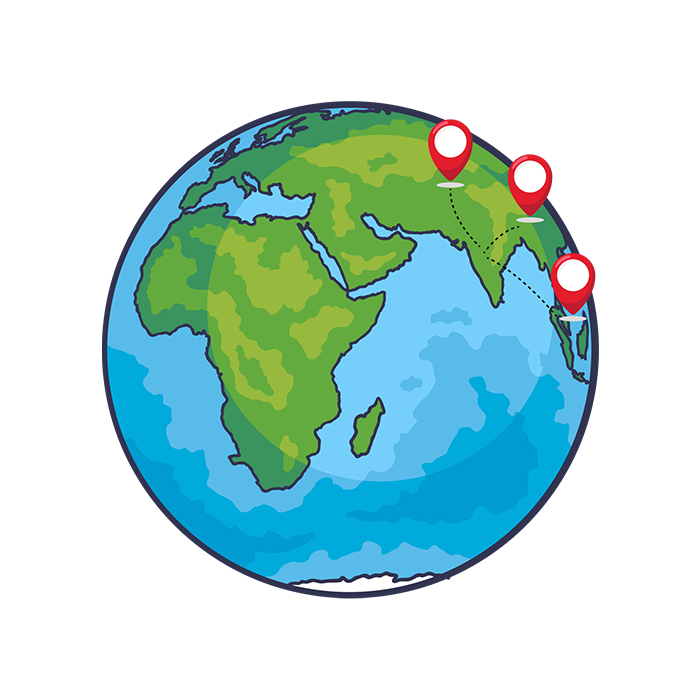
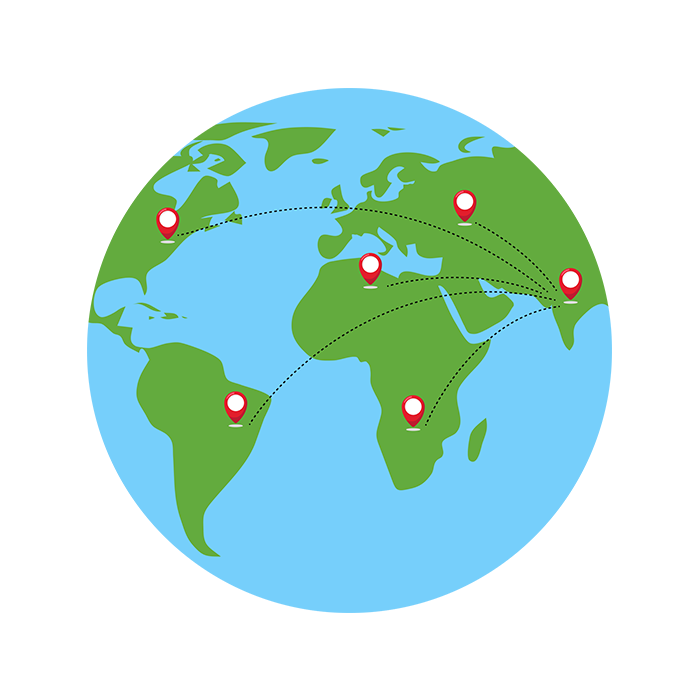
In contrast, offshore development involves outsourcing software development tasks to a more distant, often overseas, location.
This model gained popularity for its potential cost savings and access to a vast pool of skilled professionals.
However, it comes with challenges related to time zone differences and potential communication barriers.
Also, Check for Explore Our Comprehensive UX Design Services
| Criteria | Nearshore Development | Offshore Development |
| Cost | Compared to hiring a team locally, costs will be 20-40% lower. It is an excellent choice if cost and quality are important considerations. | It is 50 to 70% less expensive than outsourcing locally, and is ideal for large-scale projects that demand low prices. |
| Time Zone Alignment | It is great for agile cooperation, especially when people have to attend numerous meetings. it enhance team communication. | This leads to a huge gap in time zones and a communication challenge. However, it is capable of supporting continual improvement. |
| Availability of Talent | Access to experienced developers with domain knowledge. | Tap into a global talent pool of experienced people with any skill requirements. This contains every skill requirement for complex jobs. |
| The Communication Challenges | Communication obstacles are less complex with methods, cultures, and languages. Misunderstandings are rare. | Probably experiencing feedback loop delays, cultural difficulties, or a language barrier. This can be documented and supported with good communication structures. |
| Best Use Cases | Projects that require ongoing cooperation with an Agile team, unwavering support, a solution-oriented UX/UI approach, medium-sized SaaS builds, and regular iteration requirements. | Major business projects, cost-effective development, AI/ML, Cloud, DevOps, R&D, Scale, QA, and Maintenance teams, and Long-term technical support. |
| Common Industries | The industries that are characterized by high information exchange speed and decision-making speed are FinTech, Retail, Logistics, TravelTech, EdTech, and Media. | Industries characterized by a requirement for scalability, skill sets, and cost competitiveness include healthcare, e-commerce, information and communication systems, manufacturing, and cybersecurity. |
| Risk Level | Because of cultural similarities and general corporate rules, there is less concern. Because of teamwork, conflicts can be resolved easily. | Moderate risk, IP protection, compliance, cultural alignment, and communication delays need to be managed. Strict security procedures, ISO standards, and NDAs help professional offshore partners reduce this. |
Read More: Explore why offshore agile development is often chosen for cost-efficient, scalable delivery.
As the code and concepts pass through the hands of many teams being involved, IP protection becomes an essential consideration when either nearshoring or offshoring the development process.
There needs to be access control based on roles, protected repositories, and NDAs to make sure the designs, information, and the product entirely belong to you.
Offshore and nearshore development organizations must follow industry standards such as SOC 2, GDPR, HIPAA, and PCI DSS.
The right development partner reduces the risks associated with a failure to strictly comply with industry rules in terms of specified procedures and strong data practices.
The area in which major concern arises for nearshore and offshore development service providers is linked to security.
The best players have implemented Multi-Factor Authentication, VPN connectivity, and encrypted communications, and they are continuously monitoring all processes in accordance with ISO 27001, SOC 2, and DevSecOps.
This safeguards your ecosystem and your data against cyber attacks on the internet.
With the outlining of terms on confidentiality, IP, and data management, NDAs set the legal foundations for secure nearshore or offshore development.
Finally, when combined with SLAs and MSAs, they ensure that the client owns both the assets and the designs.
Read More: Compare offshoring and outsourcing models to better understand global delivery options.
Setup & Onboarding: Beginning the project entails goal setting and the creation of responsibilities. It also entails the issuance of access for GitHub, Slack, and Jira. it is aligned with the workflow and timelines.
Communication Workflow Setup: Global teams remain on the same page by implementing communication through escalated pathways, document systems, sprint reviews, and daily stand-ups.
Sprint Planning and Execution: In this process, the agile teams collaborate with the onsite teams and work on sprints to refine user stories and resolve bugs.
Continuous QA and Testing: For ensuring quality and integrity of the code at all levels of the release version, continuous testing is carried out by the QA teams using automated as well as manual testing.
Delivery & Implementation: Once the secured environment for the implementation of CI/CD is established for the deployment of the completed feature functionality to the production stage, validation on UAT and deployment to the production stage will follow.
Knowledge Sharing: Information such as documentation, architecture, and support instructions is shared after every milestone to ensure a smooth process for maintenance.
Read More: Understand how staff augmentation compares with managed services in distributed teams.
When evaluating whether a nearshore solution is a good match for a project, it is important to consider the following points:
In case you need cost-effectiveness and access to the best talent, offshore development can prove to be the best option for you. These are the factors you need to consider:
For optimal potential for the project, it is important to have the right type of vendor. Partner with Patoliya Infotech, as we have great expertise in the development sector.
Read More: Evaluate whether staff augmentation is the right approach for scaling your development team.
| Key Factor | Nearshore Development | Offshore Development |
| Cost Model | Primarily, OpEx aligns better with software development capitalization in terms of controlled delivery and documentation. | Instead of emphasizing asset creation, the OpEx model focused on service consumption. |
| Monthly Cost Level | Medium, it is a balance between control, collaboration, and cost-effectiveness. | Low, optimized to reduce expenditures over time. |
| Upfront Investment | Minimal, there is no investment in setup, infrastructure, or employees. | Minimal, no fixed overhead and capital commitments. |
| Cost Predictability | High, real-time collaboration reduces unnecessary delays. | medium, Time zone differences and coordination overhead have an impact on the estimates. |
| Difficulty of CapEx Capitalization | Simple, straightforward sprint tracking, clear ownership, and audit-ready documentation. | Unless properly managed, these are frequently classified as third-party services. |
| Governance & Control | Strong, consistent touchpoints, faster growth, and better visibility. | Medium requires defined SLAs, reporting, and management models. |
| Hidden Cost Risk | Fewer misunderstandings and fewer feedback loops. | Potential costs from medium, rework, delays, or additional QA. |
| Scalability and Flexibility | Moderate, scaling is controlled and deliberate. | Loud teams can expand or contract quickly based on demand. |
| Best Fit For | Core platform, compliance-heavy, or long-term strategic product. | Cost-sensitive measures, large-scale production, and extended development. |
Read More: Explore adaptive development approaches suited for large, distributed enterprise teams.
Your software development journey starts with an important decision: nearshore or offshore? Each path presents unique benefits and obstacles. Consider nearshore to be pleasant sailing over familiar seas; cultural understanding and overlapping time zones facilitate communication and collaboration.
However, its expenses are comparable to higher-priced fuel. On the other hand, offshore allows you to expand into new global talent pools while remaining inside your budget. You save money, but understanding cultural differences and time zone gaps might be challenging, potentially hindering your progress.
Ultimately, your path depends on your unique needs. Does cultural fit matter in your project? Do you need continuous communication? Or is cost your priority? Consider these variables carefully; they will help you achieve smoother teamwork or a cost-effective solution. There is no single option that works for everyone.
Patoliya Infotech understands your concerns and has expertise in the development field. For any kind of query, feel free to reach out.