5 Biggest Challenges of Cloud Computing & How to Approach Them!
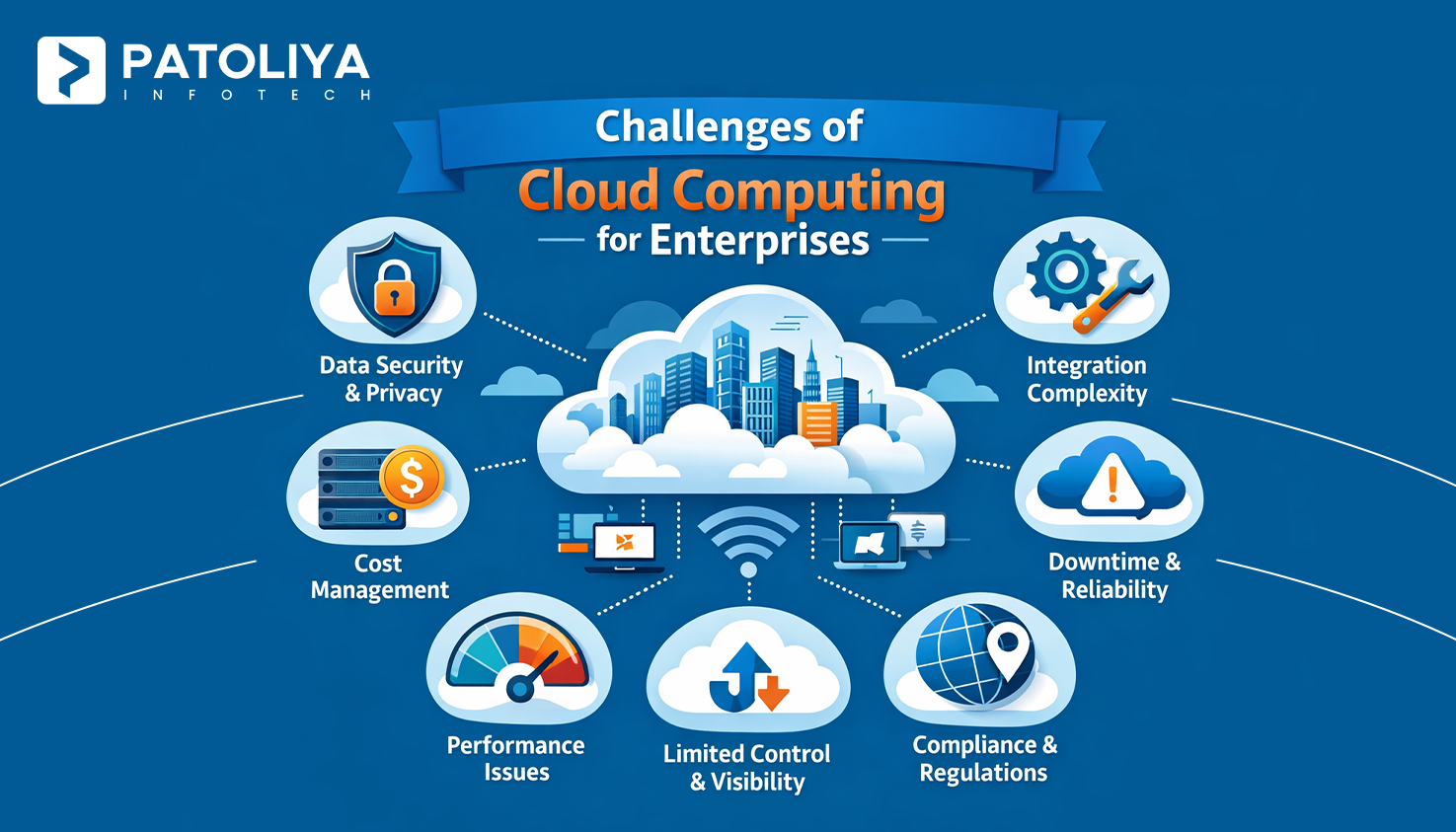
Table of Contents
The challenges of cloud computing have gained significant attention as cloud adoption moves from being a competitive advantage to being a corporate requirement. Workloads are being quickly moved to the cloud by organizations in an effort to increase operational speed, scalability, and agility. But the change is rarely smooth.
To navigate these challenges effectively, many organizations rely on professional cloud services solutions that ensure secure, scalable, and cost-efficient infrastructure.
Significant concerns associated with data security, regulatory compliance, variable costs, and vendor dependence accompany innovation and flexibility in cloud computing.
If these cloud adoption challenges are not handled strategically, they may cause operational disruptions and financial pressure. Businesses may find it difficult to retain visibility and control in the absence of appropriate governance, risk assessment, and cost control procedures.
Proactively addressing these challenges of cloud computing ensures a safe, scalable, and long-lasting cloud conversion process.
Challenges of Cloud Computing Related to Security and Data Protection
Why cloud security challenges continue to grow
As businesses move their operations to the cloud, the challenges of cloud computing are changing. Keeping sensitive data secure is becoming challenging due to increasing data volumes, complex hybrid setups, and multi-cloud deployments. Cyber threats, including ransomware, phishing, and insider breaches, exploit vulnerabilities in security measures.
The concept of shared responsibility can be complex to overcome the challenges of cloud computing. It is often unclear which security functions the cloud provider performs and which functions the organization must manage. This resulted in cloud security challenges.
Real world impact on business operations
Cloud computing risks have real-world implications. Regulatory fines, legal liabilities, and reputational damage are the consequences of data breaches. Operations are disrupted, transactions are delayed, and consumer confidence is affected by system disruptions. These challenges of cloud computing are caused by threats or misconfigured security.
Businesses that ignore these threats risk disrupted processes, delayed recovery times, loss of critical data, and challenges of cloud computing. Partnering with a reliable custom software development company can help organizations build secure, compliant, and resilient digital systems to reduce these risks. Because of this, cloud security is now a major operational concern.
How to approach cloud security challenges
Risk assessment and implementation of strong access restrictions, encryption, and frequent audits are the first steps in a viable methodology. According to leading cybersecurity guidelines, organizations should also follow internationally recognized security frameworks to strengthen cloud protection. The combination of compliance tuning, employee training, and automated monitoring ensures that security measures stay current with changing threats and challenges of cloud computing.
Companies should take a proactive approach and consider cloud security as an ongoing process to overcome cloud adoption challenges. It reduces cloud computing risks and protects important business information.
Cloud Computing Challenges Around Cost Visibility and Overspending
The hidden nature of cloud cost management
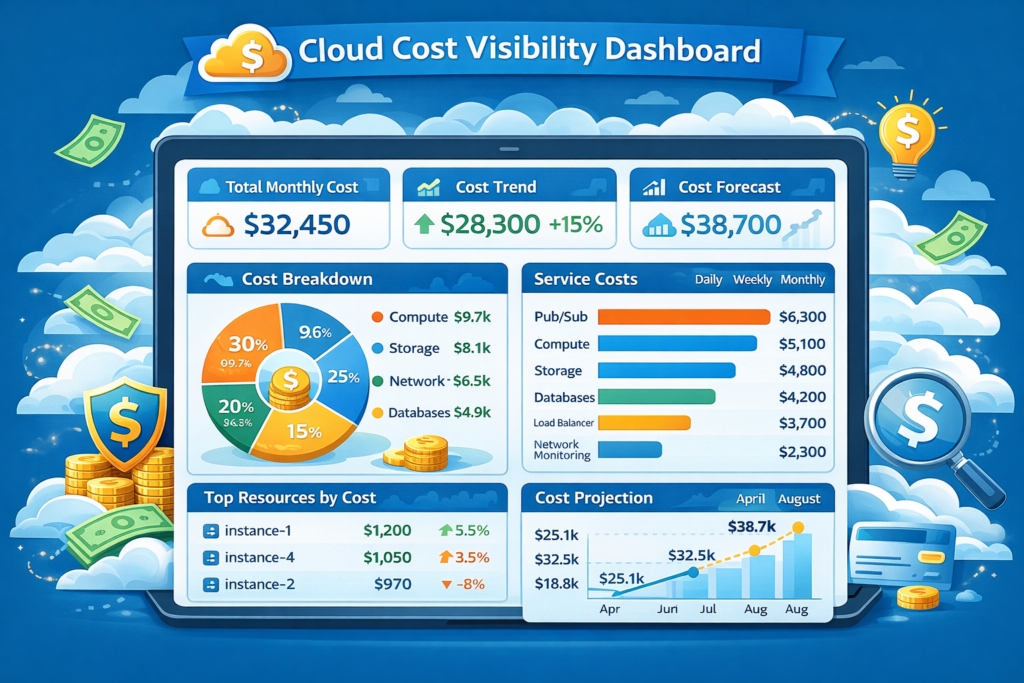
The challenges of cloud computing are that the costs are often unknown and unpredictable. Cloud services charge based on usage, which can vary daily, making it difficult to accurately track costs.
For instance, a business may inadvertently increase its expenses by leaving unnecessary virtual computers running all night. If resource usage is not controlled, such cloud computing risks can increase rapidly.
Why cloud adoption challenges budgets
Rapid cloud adoption can often lead to unexpected expenses and challenges of cloud computing. Without recognizing the total cost, teams can install more storage and launch new test environments.
For instance, one company found that its monthly expenses doubled after scaling up its servers to handle the increase in traffic. Such cloud adoption challenges make budget forecasting difficult and increase financial risk.
How to approach cloud cost management
It is important to put cloud cost management processes into practice to overcome the challenges of cloud computing. Use automated alerts to monitor resource usage, flag cloud assets for accountability, and conduct regular audits. Industry reports also recommend adopting structured cloud financial management (FinOps) practices to control spending and improve ROI. Predict budgets, optimize underutilized resources, and maintain visibility to avoid overspending and still benefit from cloud scalability.
Cloud Computing Risks Related to Compliance and Regulatory Requirements
Understanding cloud compliance issues
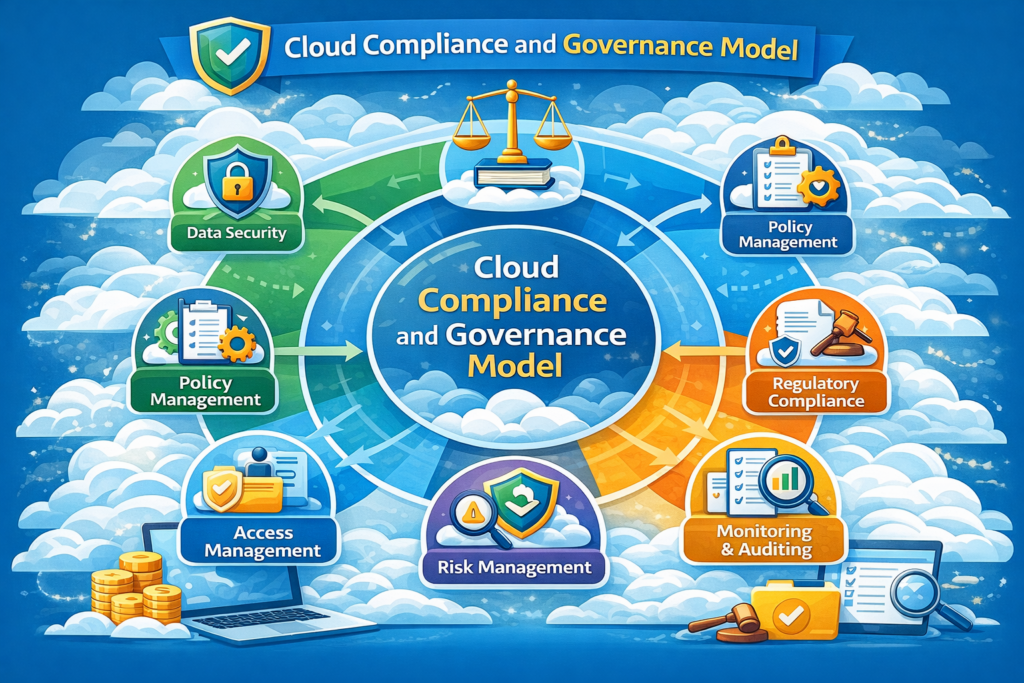
One of the key challenges of cloud computing is ensuring compliance to regulatory standards. Businesses have to deal with a variety of laws, industry-specific restrictions, and global data protection obligations.
Cloud compliance issues include audit requirements, data residency regulations, unclear roles, and encryption requirements.
The results of non-compliance can include fines, damage to reputation, and interruptions to operations.
Where businesses struggle the most
Businesses face cloud computing risks in a variety of areas. It is challenging to ensure complete compliance while preserving operational effectiveness because of the shortcomings and challenges of cloud computing.
- Monitoring and recording compliance with various cloud services.
- Controlling user permissions and access restrictions.
- Keeping uniform security guidelines in multi-cloud or hybrid settings.
- Adapting to changing rules and guidelines.
How to approach compliance in cloud environments
A proactive strategy involves regular audits, automatic compliance monitoring, sensitive data encryption, and employee training. Clear policies and cooperation with cloud providers ensure secure and scalable cloud adoption while lowering regulatory risk in the challenges of cloud computing.
Cloud Vendor Lock In as a Long Term Cloud Adoption Challenge
Why cloud vendor lock in happens
Being limited to a single vendor due to proprietary technology, specialized APIs, or specialized platform services is a major challenges of cloud computing.
Some cloud capabilities may be adopted by organizations for cost or efficiency reasons, but they can make it challenging to transfer workloads to another provider.
Dependence on a single supplier over time can reduce flexibility and negotiation power in the challenges of cloud computing. Lock-in of cloud providers occurs when changing providers will be too costly, time-consuming, and technically demanding.
Business impact of limited portability
Cloud Vendor lock-in can have expensive results and challenges of cloud computing. For instance, a company that wanted to move its apps to a new cloud had to change the storage format and rewrite some of the code, delaying the project by months. These limitations increase operational risk and make it difficult to adapt to changing market or business requirements.
How to approach vendor lock in risks
To mitigate cloud adoption challenges, organizations should prioritize multi-cloud strategies, adopt open standards, and consider portability when designing workloads. Long-term adaptability is ensured by regularly reviewing contracts and maintaining architectural flexibility, while reducing the burden of cloud provider dependency and challenges of cloud computing.
Cloud Migration Risks That Affect Performance and Continuity
Common cloud migration risks
Ensuring that transfers run smoothly without disrupting operations or performance is one of the biggest challenges of cloud computing. Cloud computing risks for organizations include data loss, poorly designed workloads, inadequate testing, and migration disruptions.
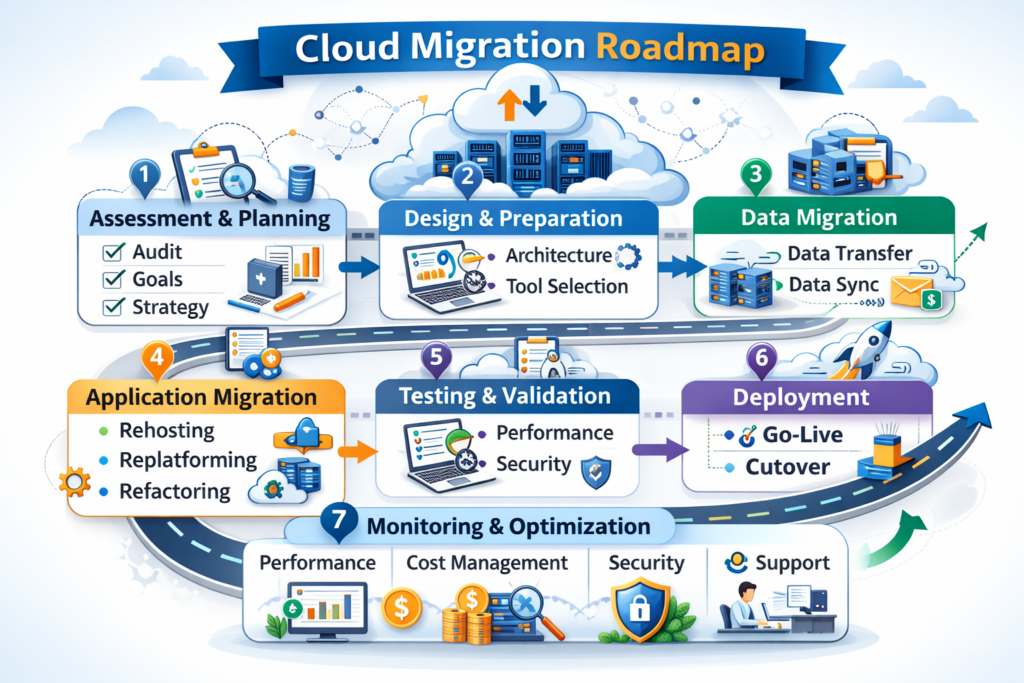
A poorly planned migration can potentially result in security vulnerabilities or compliance issues. To prevent operational disruptions, cloud migration risks should be carefully considered before migrating workloads, databases, or applications.
Why lift and shift fails
Applications often fail when moved to the cloud without being redesigned to overcome the challenges of cloud computing. For instance, a company migrated its old database to the cloud without changing the performance parameters. This causes frequent interruptions and slow response times. These issues underscore the importance of designing for workload optimization and architectural optimization.
How to approach cloud migration safely
A secure migration strategy involves a gradual rollout, extensive testing, and evaluation. Organizations should optimize their apps for cloud settings. This includes using monitoring tools to track performance and ensuring robust backup practices to overcome the challenges of cloud computing. Effective preparation reduces cloud adoption challenges and ensures continuity while leveraging cloud scalability.
How Patoliya Infotech Helps Overcome Cloud Computing Challenges
Patolia Infotech starts by conducting a comprehensive analysis of existing infrastructure, applications, and business requirements to help businesses overcome the challenges of cloud computing. They provide a roadmap that guarantees a smooth transition, optimal workloads, and quantifiable business results by addressing potential cloud computing risks of data, such as security flaws, compliance issues, and performance challenges.
The group practices a scalable and secure cloud infrastructure that is optimized to meet business needs. Patolia Infotech supports expansion while ensuring regulatory compliance, strong access controls, and risk mitigation through the use of cloud governance best practices.
This strategy provides agility and flexibility to overcome the challenges of cloud computing. This is helping businesses keep pace with changing operational requirements without compromising security in cloud computing risks.
Through the integration of performance analysis, resource optimization, and proactive monitoring, Patoliya Infotech assists businesses in optimizing cloud efficiency while lowering operating expenses. Their solutions are built for long-term scalability. This reduces the challenges of cloud computing while ensuring that businesses can expand and develop with confidence.
This is why many growing businesses choose to get expert input before scaling further, ensuring their cloud environments remain secure, efficient, and compliant.
Conclusion
Cloud computing presents some obstacles, but with suitable preparation and proactive steps, enterprises can conquer them. Adoption success depends on addressing challenges of cloud computing, like security flaws, compliance problems, cost control, vendor reliance, and migration challenges.
Businesses can reduce possible risks by putting strong governance in place, choosing reliable vendors, and making scaling plans. Understanding these cloud adoption challenges ensures smoother transitions, but also optimizes cloud technology benefits. Thus, businesses can innovate, grow effectively, and keep their digital environment secure and legal.
FAQs
What are the biggest challenges of cloud computing for growing businesses?
Concerns about data security, erratic expenses, compliance requirements, vendor lock-in, performance problems, and handling cloud adoption challenges without specialized expertise or governance frameworks are the main barriers to cloud computing for expanding companies.
How do cloud computing risks affect data security?
Misconfigurations, inadequate access controls, data breaches, insider threats, and non-compliance with regulations are some of the ways that cloud computing risks affect data security. Sensitive data is exposed to cyberattacks and illegal access in the absence of adequate monitoring and encryption, leading to challenges of cloud computing.
Why is cloud cost management difficult for organizations?
Variable pricing schemes, overprovisioned resources, hidden service fees, lack of usage awareness, and inadequate financial governance make cloud cost management challenging. Because of these challenges of cloud computing, forecasting and budgeting are difficult during the rapid expansion of the cloud.
What causes cloud vendor lock in?
When companies rely significantly on proprietary tools, unique APIs, and platform-specific services, cloud vendor lock-in happens. These challenges of cloud computing restrict flexibility and multi-cloud methods while making migration complicated, expensive, and technically challenging.
How can businesses reduce cloud migration risks?
Businesses can mitigate cloud migration risks by performing workload assessments and developing phased migration plans. Data backup, performance testing, security control implementation, and staff training to properly manage post-migration environments are all part of overcoming the challenges of cloud computing.
What role does governance play in cloud adoption challenges?
Governance helps businesses handle cloud adoption challenges by enforcing security regulations, compliance standards, cost limits, access management, and performance tracking. This ensures the long-term viability, accountability, and risk reduction of cloud computing projects in the face of related challenges of cloud computing.